
Desserts
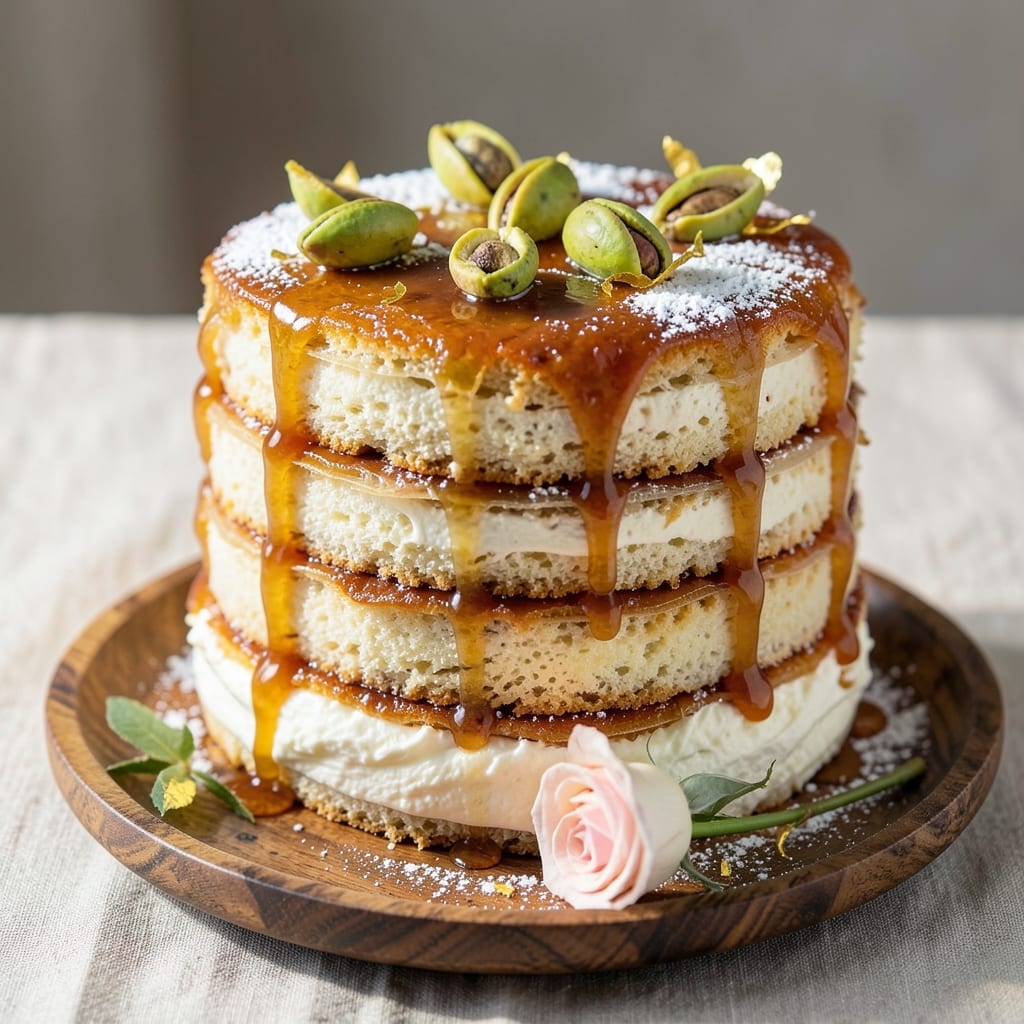
This Arabian cake recipe brings the fragrant essence of the Middle East to your kitchen with layers of tender semolina cake infused with rosewater and cardamom. 💛 The delicate balance of floral and spiced notes creates a dessert that feels like a warm embrace—perfect for celebrations or quiet evenings. What makes this recipe special is its authenticity, using traditional ingredients like semolina flour, rosewater, and ground cardamom to deliver a texture that’s light yet rich.
The secret to this cake lies in its layers—each one infused with rosewater and cardamom for a subtle, aromatic depth. The batter is simple yet precise, requiring just a few key techniques to achieve the perfect crumb and moistness. Baking at the right temperature ensures a golden finish without drying out the layers, while the final touch of powdered sugar adds a touch of elegance.
By the time you slice into this cake, you’ll be greeted with a tender, fragrant dessert that’s as beautiful as it is delicious. The rosewater adds a delicate floral note, while the cardamom brings warmth, creating a flavor profile that’s both familiar and exotic. This cake is versatile enough for holidays or everyday indulgence, but its cultural roots make it feel truly special.
Whether you’re serving it at a gathering or treating yourself, this recipe delivers a taste of tradition with every bite. The layers hold together beautifully, making it easy to slice and share. Here’s how to bring this Arabian classic to life in your own kitchen.
Ingredients for arabian cake
Gather these fragrant ingredients for an Arabian cake that tastes like a Middle Eastern dream.
| Ingredient | Amount | Notes |
|---|---|---|
| All-Purpose Flour 🌾 | 2 ½ cups | Sifted for light texture |
| Semolina Flour 🌾 | 1 ½ cups | Fine-ground for smooth batter |
| Granulated Sugar 🍚 | 2 cups | White or light brown |
| Unsalted Butter 🧈 | 1 cup | Room temperature, full-fat |
| Large Eggs 🥚 | 4 whole | Room temperature, separated |
| Rosewater 🌹 | 1 tbsp | Pure, food-grade quality |
| Ground Cardamom 🌿 | 1 ½ tsp | Freshly ground preferred |
| Baking Powder 🧂 | 2 tsp | Diamond Crystal preferred |
| Salt 🧂 | ½ tsp | Fine sea salt |
| Powdered Sugar 🍚 | 1 cup | For dusting layers |
| Vanilla Extract 🌸 | 1 tsp | Pure vanilla preferred |
| Milk 🥛 | 1 cup | Whole milk for richness |
The rosewater is non-negotiable here—look for pure, food-grade quality at Middle Eastern markets or specialty stores like Whole Foods. The cardamom should be freshly ground (the Penzeys brand is my go-to for that authentic spice kick). Semolina flour gives this cake its signature tender crumb, so don't skip it—Bob's Red Mill has a great fine-ground version. For the butter, Plugrá is my secret weapon for that perfect texture, but any full-fat brand works. Room temperature is key—soften it in warm water for 10 minutes if needed.
No rosewater? Orange blossom water at half the amount is a decent swap, though it won't be identical. Freshly ground cardamom is ideal, but if you're using pre-ground, check the date—it loses potency fast. For the milk, any dairy works, but whole milk gives the richest texture. The baking powder matters here—Diamond Crystal is twice as potent as others, so don't double it. Want to make this nut-free? Skip the semolina and use extra all-purpose flour (though the texture will differ slightly).
Store the cake in an airtight container at room temperature for up to 3 days, or in the fridge for 5 days if you want it to last longer. The layers stay moist, but the powdered sugar might clump—just dust fresh before serving. Freeze for up to 3 months by wrapping tightly in plastic. I always make a double batch—this cake disappears fast, especially when you've got powdered sugar on hand for that final touch.
Why You'll Love This Recipe
- No Mixer Needed: I’ll admit, I don’t own a stand mixer—and this cake doesn’t miss it one bit. The butter and sugar get creamed by hand in minutes, then the flours (that semolina gives it texture, by the way) just fold in like butter. No electric whirring, no waiting for appliances. Just you, a bowl, and a spoon.
- Butter-Sugar Magic: That moment when you taste the first bite? The butter and sugar caramelize just enough to give it this subtle sweetness that lingers, while the eggs keep it rich but not heavy. Honestly, the way the semolina adds that faint crunch without overpowering the soft crumb? It’s the kind of balance that makes you go back for seconds before you even realize it.
- Crowd-Pleaser Any Day: Between us, this cake shows up at every gathering—birthdays, potlucks, even my mom’s book club meetings. The semolina makes it sturdy enough for slicing (no crumbly mess), and the butter richness means it’s not just dessert—it’s the thing people actually want when coffee’s served. I’ve even wrapped slices in foil for lunchboxes. Works every time.
Step-by-step instructions for Arabian cake
This delicate cake layers floral rosewater and warm cardamom for a truly aromatic experience.
👨🍳 Step 1: Prepare the Dry Ingredients
In a medium bowl, whisk together the 2.5 cups All-Purpose Flour and 1.5 cups Semolina Flour until completely combined. Sift in the 2 tsp Baking Powder and 0.5 tsp Salt, whisking again to evenly distribute. This ensures your cake will rise properly and have a tender crumb. I like to press the mixture through a fine-mesh sieve to break up any lumps—this creates a lighter texture.
In a separate small bowl, combine the 1.5 tsp Ground Cardamom with the 2 cups Granulated Sugar. Cardamom's warm, citrusy notes will complement the rosewater beautifully. If you're using freshly ground cardamom, you'll notice the aroma intensify—this is your first whiff of the cake's signature flavor profile.
👨🍳 Step 2: Cream Butter and Eggs
In a large mixing bowl, beat the 1 cup Unsalted Butter (at room temperature) and 4 whole Large Eggs on medium speed for 3-4 minutes until light and fluffy. You're looking for a pale, ribbon-like consistency that nearly doubles in volume. This step is crucial—it incorporates air that will help your cake rise beautifully.
Gradually add the 1 tbsp Rosewater and 1 tsp Vanilla Extract while mixing. The rosewater has a delicate floral aroma that will become the cake's signature scent. I like to add it slowly so the flavor can fully integrate without overpowering the other ingredients. The mixture should smell like a spring garden at this point.
🥘 Step 3: Combine Wet and Dry Ingredients
With the mixer on low speed, gradually add the dry ingredients to the wet mixture. Start with about half of the flour mixture, then alternate with the 1 cup Milk in three additions. This gradual incorporation prevents gluten development, which keeps the cake tender rather than dense. Mix just until combined—you should still see some flour streaks.
Once fully incorporated, let the batter rest for 10 minutes at room temperature. This resting period allows the flour to fully hydrate and the flavors to meld. I know it seems like a long wait, but trust me—it makes a noticeable difference in the final texture. The batter should be smooth and slightly thick, like heavy pudding.
🔥 Step 4: Bake the Layers
Preheat your oven to 350°F. Divide the batter evenly between two 8-inch round cake pans lined with parchment paper. Bake for 25-30 minutes or until a toothpick inserted in the center comes out clean. The edges should be golden brown, but the tops might still look slightly underdone—that's normal for this delicate cake.
I recommend baking one layer at a time to maintain even oven temperature. As soon as one layer is done, transfer it to a wire rack to cool completely. The cake layers should be moist but not wet—this ensures they'll absorb the syrup beautifully without becoming soggy.
👨🍳 Step 5: Assemble with Rosewater Syrup
While the layers cool, prepare the syrup by combining 1 cup Powdered Sugar with 2 tbsp Rosewater and 2 tbsp Milk in a small saucepan. Heat gently over low heat, stirring constantly until the sugar dissolves completely. The syrup should be smooth and glossy—this will become the cake's signature moistening layer.
Once both layers are completely cool, place one layer on a serving plate. Brush it lightly with half of the rosewater syrup, then dust with a thin layer of powdered sugar. Repeat with the second layer, then gently press them together. The syrup will create a delicate, floral bond between the layers. Chill the assembled cake for at least 1 hour before serving to let the flavors fully develop.
Pro Tips For Making Arabian Cake
- Sift the Semolina: Mix the semolina and all-purpose flour together before measuring—this prevents clumps that turn your cake into a dense brick. I learned this the hard way when my first batch turned out like a sponge instead of the light, crumbly texture it should be.
- Cream Butter Slow: Let the butter sit at room temperature for at least 2 hours before creaming—cold butter traps air poorly, and your cake will taste flat. I used to rush this, and the texture always suffered. Trust the process.
- Don’t Overmix the Batter: Stop folding in the flour as soon as it’s just combined—overworking it develops gluten, which makes the cake tough. The semolina needs to stay coarse, not turn into a paste. Two minutes max with a spatula.
- Use Room-Temp Eggs: Cold eggs curdle when mixed with warm butter, creating weird lumps that ruin the texture. Take them out of the fridge 30 minutes before starting—your future self will notice the difference.
Make-ahead tips for arabian cake
Prep Ahead Strategy
This cake is perfect for making ahead—prepare the batter up to 24 hours in advance and store it in an airtight container in the fridge. The flavors deepen as it rests, and the batter will be perfectly chilled when you're ready to bake. I always make the batter the night before so the layers bake fresh the next day. 💫
Layer Baking Tips
Bake one layer at a time to maintain consistent oven temperature—this prevents uneven baking. Once baked, let layers cool completely on a wire rack before assembling. If you're short on time, you can bake both layers simultaneously, but expect the second layer to take 2-3 minutes longer to avoid overbrowning.
Syrup Prep
Make the rosewater syrup 1 day ahead and store it in a sealed jar in the fridge. The flavors intensify over time, and it's ready to use straight from the fridge—no reheating needed. This step is non-negotiable for that authentic Arabian moisture. I keep extra syrup on hand for other desserts too!
Assembling in Advance
Assemble the cake layers up to 3 days ahead and store them in the fridge. The syrup will keep the cake moist, but the powdered sugar may clump slightly—just dust fresh before serving. For a week ahead option, freeze the assembled cake (unfrosted) for up to 3 months. Thaw overnight in the fridge before serving.
Serving Prep
Dust the cake with powdered sugar right before serving to keep it looking fresh. If you're serving at room temperature, let it sit out for 30 minutes to soften slightly. For a restaurant-worthy presentation, garnish with edible rose petals or a sprinkle of toasted pistachios. 🌹
Portioning for Events
For gatherings, cut the cake into 12 equal wedges before serving. This ensures everyone gets a perfect slice with both layers. If you're using a serrated knife, dip it in hot water between cuts to get clean slices. Store individual portions in a cake carrier to keep them secure during transport.
Nutrition facts
Frequently asked questions about Arabian cake
What makes this cake authentically Arabian?
The signature flavors come from rosewater and cardamom, two essential ingredients in Middle Eastern desserts. The semolina flour gives it that signature tender crumb, while the delicate rosewater syrup between layers is a traditional technique that keeps the cake moist. These elements combine to create a dessert that truly transports you to Arabian bakeries.
Can I substitute rosewater if I can't find it?
Yes! For a similar floral note, use orange blossom water at half the amount (½ tbsp instead of 1 tbsp). If you don't have either, a pinch of vanilla extract (½ tsp) or a few drops of almond extract can add subtle depth, though the flavor won't be identical. The cardamom will still shine through, but the floral aroma will be different.
Why does my cake turn out dense instead of light?
Overmixing the batter or skipping the 10-minute rest before baking are common culprits. Also, make sure your butter and eggs are at room temperature—they should be soft but not greasy. If your oven runs hot, reduce the temperature to 340°F and check for doneness at 25 minutes. Finally, don't overbake—pull it when a toothpick comes out clean, even if the top looks slightly underdone.
How do I store leftovers to keep them fresh?
Store the cake in an airtight container at room temperature for up to 3 days, or in the fridge for 5 days. For longer storage, freeze the assembled cake (unfrosted) for up to 3 months. When serving, dust with fresh powdered sugar—it absorbs moisture over time, so this keeps it looking beautiful. The syrup between layers helps maintain moisture, but the powdered sugar needs refreshing.
Can I make this cake without semolina flour?
Yes, but the texture will differ slightly. Replace the 1.5 cups semolina with an extra 1.5 cups all-purpose flour for a lighter texture, or use 1 cup all-purpose flour + ½ cup cornstarch for a more delicate crumb. Keep in mind the semolina gives the cake its signature tender, slightly gritty texture that pairs perfectly with the rosewater. The flavor won't change, but the mouthfeel will be different.