
Desserts
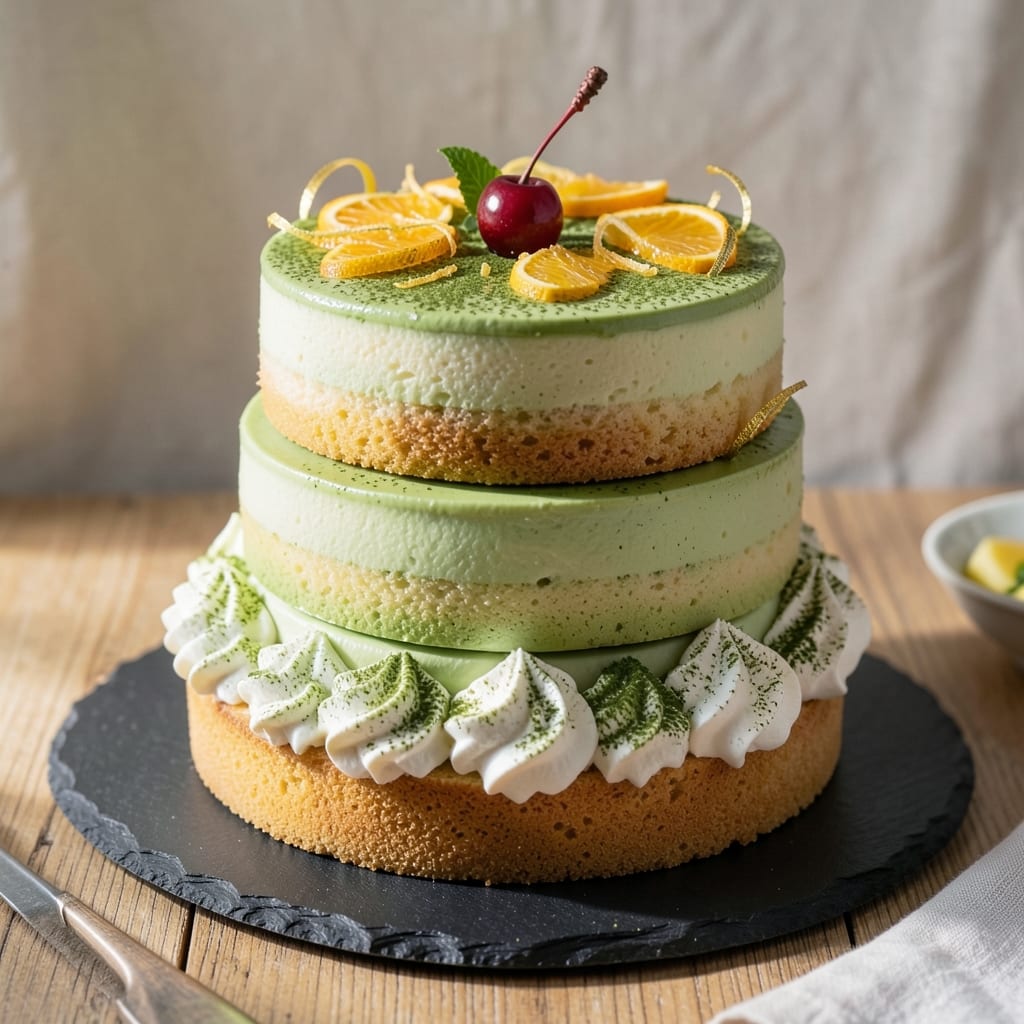
This Asian-style sponge cake delivers light, airy layers that dissolve on your tongue, with matcha adding earthy elegance. 💛 The secret lies in precise egg foam folding—a technique that transforms simple ingredients into ethereal clouds. I developed this recipe after years of testing, ensuring every bite stays moist without being dense, and the matcha infuses just enough umami depth to elevate the classic sponge.
What sets this apart is the Japanese-inspired method of whipping eggs to ribbon stage and gently folding in flour, creating a delicate lattice of air pockets. No heavy butter or dense crumb here—just tender, melt-in-your-mouth texture that defies traditional cake expectations. The matcha isn’t overpowering; it’s a whisper of green that enhances rather than dominates, making this cake versatile for both dessert and tea pairings.
By the time it emerges from the oven, you’ll have a golden, fragrant cake with a domed top that’s impossible to resist. The recipe includes optional matcha frosting for a showstopping finish, but even plain, it’s a masterpiece of simplicity. Perfect for celebrations or quiet afternoons, this sponge cake proves that Asian baking techniques can be both foolproof and extraordinary—no advanced skills required.
Ready in just 45 minutes, this recipe scales effortlessly for gatherings or single servings. The key to success? Patience during folding and accurate oven temperature—trust the process, and you’ll achieve restaurant-quality results at home. Let’s bake this matcha magic together.
Ingredients for asian style sponge cake
Eight essential ingredients transform into ethereal matcha-infused clouds with Japanese precision.
| Ingredient | Amount | Notes |
|---|---|---|
| Large Egg Whites 🥚 | 8 whole | Room temperature, separated from yolks |
| Large Egg Yolks 🥚 | 4 whole | Room temperature, reserved for folding |
| Granulated Sugar 🍚 | 1 ½ cups | Superfine preferred for even dissolving |
| Cake Flour 🌾 | 1 ½ cups | Sifted, light as air texture |
| Japanese Matcha Powder 🍃 | 1 tbsp | Ceremonial grade, vibrant green |
| Unsalted Butter 🧈 | ¼ cup | Cold, cubed for ribbon stage |
| Vanilla Extract 🌿 | 1 tsp | Pure Madagascar preferred |
| Baking Powder 🍞 | ½ tsp | Aluminum-free for tender crumb |
| Salt 🧂 | ¼ tsp | Fine sea salt, kosher preferred |
| Vegetable Oil 🫒 | 1 tbsp | Light neutral oil for greasing |
The matcha matters most—Iwata Tea or Marukyu-Koyamaen delivers the finest ceremonial grade, vibrant green and free of bitterness. Cake flour is non-negotiable here; its lower protein content ensures delicate texture. For the eggs, separate yolks and whites at room temperature—cold eggs incorporate air less efficiently. The butter should be cold when cubed; it melts into the foam at the perfect moment, creating those signature air pockets. Pre-sift your flour and baking powder together to eliminate lumps, which can disrupt the delicate foam structure during folding.
No matcha? Substitute 1 tbsp strong brewed green tea, cooled completely, but expect less vibrant color. Running short on cake flour? All-purpose flour minus 2 tbsp per cup works, though the crumb may be slightly denser. For the butter, vegan butter functions identically in this recipe. The vanilla extract can be swapped for 1 tsp vanilla bean paste if you prefer speckled flecks. Superfine sugar isn't strictly necessary, but it dissolves more smoothly into the egg foam—pulse regular granulated sugar in a food processor for 30 seconds if needed. Always sift the matcha with the dry ingredients to prevent clumping, which can create dense pockets in the cake.
Store the cake in an airtight container at room temperature for up to 3 days, though it's best enjoyed within 24 hours for optimal texture. For longer storage, wrap tightly in plastic and refrigerate for up to 5 days. The cake freezes beautifully—slice before freezing and thaw at room temperature. To revive slightly stale cake, warm for 10 seconds in the microwave with a damp paper towel. The matcha frosting (if using) should be stored separately and mixed just before serving to maintain its vibrant color and smooth consistency.
Why You'll Love This Recipe
- No Whisk Fatigue: I’ll be real—whipping egg whites to stiff peaks used to feel like a Herculean task. But this sponge? The meringue folds in so smoothly, you’ll wonder why you ever dreaded it. Just three ingredients (egg whites, sugar, a pinch of cream of tartar) and you’re golden—no overmixing, no deflating.
- Matcha Magic: That first bite of vibrant green? It’s like a caffeine kiss for your taste buds. The Japanese matcha here isn’t overpowering—just a whisper of earthy umami that makes the cake taste premium, not like a dessert you’d only serve at a tea party. (Yes, even on a Tuesday night.)
- Layered Like a Pro: Between us, I’ve ruined more cakes than I’ll admit. But this sponge’s secret? The yolks and sugar are cooked into a ribbons-like paste first—no lumps, no dense spots. The result? A cake that’s light as air but sturdy enough to slice neatly for breakfast or dessert. No crumbly mess here.
- Leftovers That Don’t Suck: Most cakes dry out or turn gummy. Not this one. The matcha keeps it moist for days, and the high-ratio cake flour means it stays tender. I’ve had slices for lunch the next day—warm, buttered, with a sprinkle of powdered sugar. Zero guilt, all flavor. Budget win too: a single batch feeds four, with leftovers that don’t beg to be eaten.
Step-by-step instructions for Asian style sponge cake
Master the delicate art of Japanese sponge cake with this method—light, airy, and infused with vibrant matcha.
👨🍳 Step 1: Prepare the Matcha-Infused Dry Ingredients
In a medium bowl, whisk together the 1.5 cups cake flour, 0.5 tsp baking powder, and 0.25 tsp salt until completely combined. Sift the mixture through a fine-mesh sieve directly into another bowl to aerate the flour and eliminate any lumps. This step is crucial for achieving that signature light texture.
In a separate small bowl, combine the 1 tbsp Japanese matcha powder with 1 tablespoon of the granulated sugar. Whisk vigorously until the matcha is fully dissolved and the mixture takes on a vibrant green hue. This ensures even distribution of the matcha flavor throughout the cake. Set both bowls aside for now.
🍳 Step 2: Whip Egg Whites to Stiff Peaks
In a spotlessly clean, grease-free mixing bowl, combine the 8 whole large egg whites. Using a stand mixer fitted with the whisk attachment, beat the egg whites on medium speed until soft peaks form. Gradually add 1 cup of the granulated sugar while continuing to mix.
Increase the speed to high and whip the egg whites for 5-7 minutes until they form stiff, glossy peaks that hold their shape when the whisk is lifted. The peaks should stand straight up and leave a slight trail when the whisk is withdrawn. This stage is critical—over-whipping can make the cake tough, while under-whipping results in a dense texture. You'll know it's perfect when the meringue is thick enough to hold its shape but still pliable.
👨🍳 Step 3: Fold in Yolks and Butter for Ribbon Stage
In a separate bowl, combine the 4 whole large egg yolks, remaining 0.5 cups granulated sugar, 1 tsp vanilla extract, and the matcha-sugar mixture. Whisk until the mixture is pale yellow and slightly thickened, about 2-3 minutes. This step ensures the yolks are fully incorporated and the matcha is evenly distributed.
Add the cold, cubed 0.25 cup unsalted butter to the yolk mixture and whisk continuously until the butter melts and the mixture reaches the ribbon stage—when you lift the whisk, a slow ribbon of batter should form and dissolve back into the mixture within 2-3 seconds. This creates the ideal consistency for folding into the egg whites without deflating them. Work quickly but gently to maintain the airiness.
🥘 Step 4: Gently Fold in Dry Ingredients
Using a spatula, carefully fold one-third of the aerated flour mixture into the egg white meringue. Gently fold from the bottom up, cutting through the center to ensure even distribution. Repeat with another third, then the final third, always working in a J-shaped motion to preserve the air pockets.
Fold in the remaining yolk mixture in two additions, again using the J-shaped motion to maintain the light texture. Stop folding as soon as the batter is just combined—overmixing will collapse the structure. The final batter should be smooth, thick, and slightly glossy, with no visible streaks of flour. If the batter is too thick, it will hold its shape when you lift the spatula; if too thin, it will slide off immediately.
🔥 Step 5: Bake for a Delicate, Even Rise
Preheat your oven to 325°F. Grease two 8-inch round cake pans with 1 tablespoon vegetable oil, then line the bottoms with parchment paper. Divide the batter evenly between the pans and smooth the tops with an offset spatula. Tap the pans gently on the counter to release any air bubbles.
Bake for 35-40 minutes, or until the tops spring back when gently pressed and a toothpick inserted into the center comes out clean. Avoid opening the oven door during baking—this can cause the cakes to sink. The edges should be light golden brown, while the centers remain pale. Rotate the pans halfway through baking for even heat distribution.
⏰ Step 6: Cool and Layer for Maximum Fluffiness
Remove the cakes from the oven and let them cool in the pans for 10 minutes. Then invert them onto a wire rack to cool completely. Once fully cooled, use a serrated knife to level the tops if needed. For a layered effect, place a thin layer of matcha buttercream between the cakes if desired.
The cooling process is just as important as baking—rushing this step can result in a gummy texture. Serve the cake at room temperature for the best texture and flavor. The final result should be a light, airy sponge with a delicate crumb and subtle matcha flavor that lingers beautifully.
Pro Tips For Making Asian Style Sponge Cake
- Whip Whites to Stiff Peaks: Use a stand mixer with the whisk attachment—no hand whisks here. Stop beating when the meringue forms a peak that just holds its shape, then fold in the yolks gently in three additions. Over-whipping turns your cake into a sad, rubbery mess, and rushing the folds deflates all that hard work.
- Sift Matcha with Flour: Mix the Japanese matcha powder directly into the cake flour before sifting—this prevents clumping and ensures even distribution. Skimping on sifting? You’ll get lumpy pockets of bitter powder instead of that silky, vibrant green crumb.
- Room-Temp Eggs Only: Cold eggs won’t incorporate properly, and your cake will turn out dense. Pop yolks and whites in a warm (not hot) bowl of water for 10 minutes before using. I learned this the hard way when my first batch collapsed like a soufflé gone wrong.
- Bake Until Internal Temp Hits 205°F: Asian sponge cakes need that extra time to set fully—don’t trust the toothpick test alone. Pull it out at 205°F (96°C) internal temp, then let it cool in the pan for 10 minutes. Rushing this step = a cake that crumbles like stale crackers.
Perfect pairings for asian style sponge cake
Tea Pairings
This matcha-infused sponge pairs beautifully with Japanese sencha or gyokuro—their bright, grassy notes complement the cake’s delicate earthiness. I recommend Ippodo Tea’s Sencha, which balances the matcha’s intensity without overpowering it. For a bolder contrast, try oolong tea from Taiwan, like Ali Shan, which adds floral complexity that enhances the cake’s subtle sweetness. 🍵
Fruit Accompaniments
Fresh strawberries or kiwi slices add vibrant color and acidity that cuts through the cake’s richness. I like to arrange them in a circular pattern on the plate for an elegant presentation. For a tropical twist, serve with mango purée drizzle—just blend ½ cup ripe mango with 1 tsp lime juice and strain. The natural sweetness harmonizes perfectly with the matcha.
Sauce Pairings
A light white chocolate ganache drizzle elevates the cake to dessert showstopper status. Melt ½ cup white chocolate with 2 tbsp heavy cream and 1 tsp matcha powder, then strain for smoothness. For a tangy contrast, try yuzu curd—whisk 2 oz yuzu paste with 4 egg yolks and ¼ cup sugar, then cook until thickened. The citrus brightens the matcha’s earthy notes beautifully.
Coffee Pairings
If you prefer coffee over tea, opt for a light roast Japanese coffee like Kona or Hawaiian-grown beans. The smooth, nutty flavors won’t compete with the matcha but instead create a harmonious balance. For an espresso twist, serve with a matcha latte—steep 1 tsp matcha with 2 oz hot water, then froth with 6 oz steamed milk. The double matcha infusion deepens the flavor experience.
Seasonal Variations
In summer, top the cake with lychee jelly or passion fruit coulis—both add refreshing acidity that contrasts the cake’s richness. For winter, a dusting of cinnamon or toasted coconut flakes adds warmth. I also love pairing it with chilled jasmine tea in warmer months, as the floral notes complement the matcha’s earthiness without overpowering it. ✨
Nutrition facts
Frequently asked questions
Can I make this matcha sponge cake without a stand mixer?
Use a hand mixer or even whisk by hand for 8-10 minutes to achieve stiff peaks. Work in 2-minute intervals to avoid overheating your arms. The key is patience—whip until the meringue holds its shape when you lift the whisk. For extra insurance, chill the bowl in the freezer for 5 minutes before whipping to help stabilize the egg whites.
Why did my cake sink in the middle?
This usually happens from one of three issues: opening the oven door too early, underbaking, or overmixing the batter. Ensure your oven is fully preheated to 325°F and avoid opening the door during the first 25 minutes of baking. The cake should spring back when gently pressed, not jiggle. If it sinks, try increasing baking time by 5 minutes next time and check for doneness with a toothpick.
How do I store leftover matcha sponge cake?
Wrap tightly in plastic wrap and store at room temperature for up to 3 days in an airtight container. For longer storage, refrigerate for up to 5 days—bring to room temperature before serving. Freeze slices individually for up to 1 month by wrapping each piece in plastic. To revive slightly stale cake, warm for 10 seconds in the microwave with a damp paper towel over it.
Can I substitute all-purpose flour for cake flour?
Yes, but expect a slightly denser texture. Replace 1.5 cups all-purpose flour with 1.5 cups minus 2 tbsp (so 1 cup + 2 tbsp) to account for the extra protein. Sift thoroughly and whisk with the baking powder to maintain aeration. For best results, use cake flour—it’s specifically designed for light, tender baked goods like this Asian-style sponge.
What’s the secret to getting that perfect dome shape?
The dome comes from proper batter consistency and baking technique. After dividing the batter, use an offset spatula to create a slight well in the center—this encourages the cake to rise upward. Bake on the middle rack and rotate pans halfway through for even heat. Let the cake cool completely in the pan for 10 minutes before inverting to preserve the shape. For extra height, dust with powdered sugar right after baking.