
Desserts
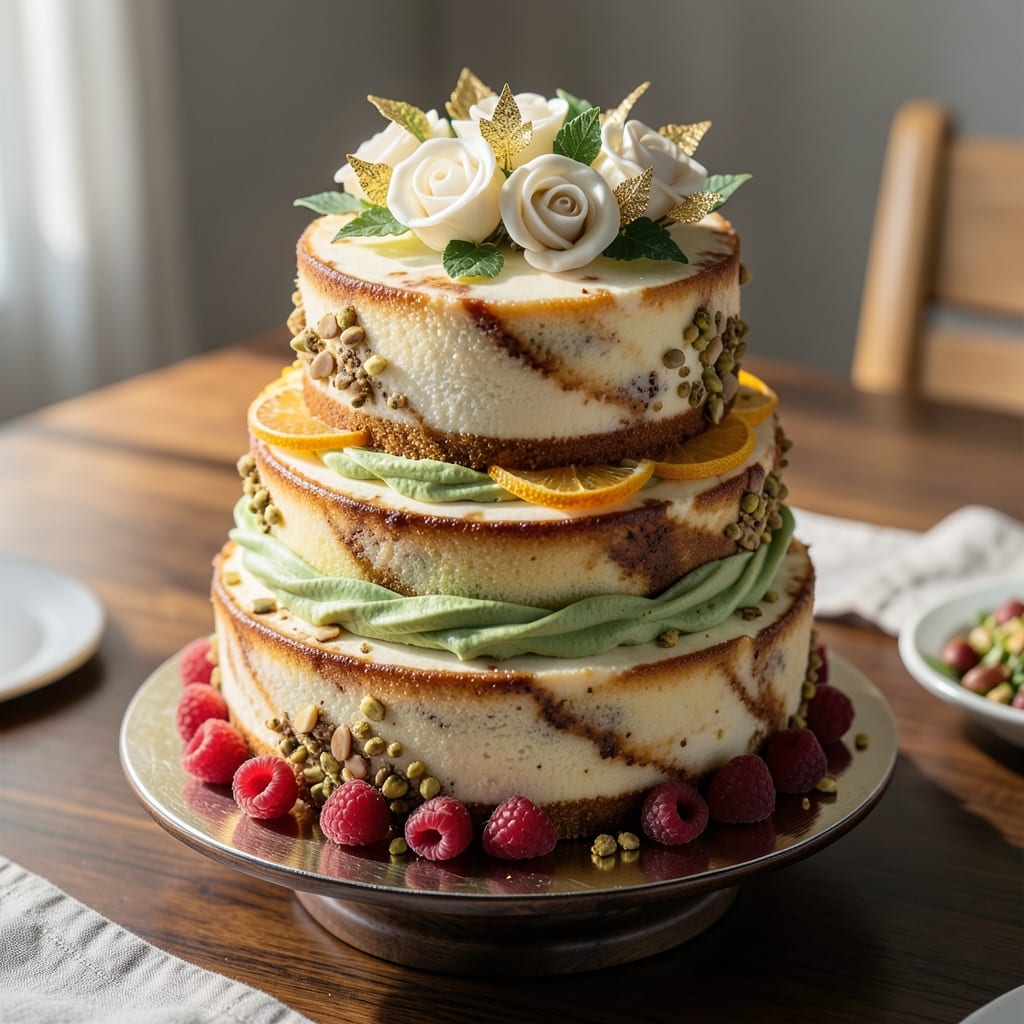
This authentic Italian wedding cake recipe brings the timeless elegance of a Torta Nuziale to your kitchen, where delicate vanilla sponge layers meet rich hazelnut buttercream and candied fruit for a taste of tradition. 💛 Unlike store-bought versions, this cake relies on a Pan di Spagna base—a light, airy sponge that’s the heart of Italian wedding desserts—paired with a velvety filling that balances sweetness with nutty depth. The secret lies in precise baking techniques and layering, ensuring every slice reveals the same harmony of textures that Italian bakeries perfect for celebrations.
The recipe honors regional variations, from Sicilian citrus-infused sponges to Tuscan almond flour adaptations, while keeping the assembly approachable for home bakers. You’ll bake three 10-inch sponge layers at 350°F for 12–15 minutes each, then sandwich them with buttercream and candied fruit, creating a cake that’s both restaurant-quality and deeply personal. The final touch? A dusting of powdered sugar or fresh flowers, because authenticity in Italian desserts isn’t just about flavor—it’s about presentation that feels like a piece of history.
What sets this cake apart is its foolproof structure: the sponges stay light and tender, the buttercream holds its shape, and the layers don’t slide. Whether you’re preparing for a wedding, anniversary, or simply treating yourself to a taste of Italy, this recipe delivers a dessert that’s as impressive as it is delicious. The hazelnut notes add a sophisticated twist, while the vanilla sponge ensures every bite feels like a celebration.
For dietary adjustments, gluten-free flour blends work well in the sponge, and dairy-free buttercream can replace traditional versions without sacrificing texture. The key is patience—letting the buttercream set between layers and chilling the cake for at least 4 hours ensures clean slices and a showstopping finish. Ready to create a cake that tastes like love?
Ingredients for authentic italian wedding cake
Twelve ingredients, three layers—this is the heart of an authentic Italian wedding cake.
| Ingredient | Amount | Notes |
|---|---|---|
| All-Purpose Flour 🌾 | 3 cups | Sifted for lightness, plus extra for dusting |
| Granulated Sugar 🍚 | 2 cups | Fine white sugar preferred |
| Unsalted Butter 🧈 | 1 ½ cups | Room temperature, European-style preferred |
| Large Eggs 🥚 | 6 whole | Room temperature, separated |
| Vanilla Extract 🌿 | 2 tsp | Pure Madagascar bourbon preferred |
| Baking Powder 🧂 | 1 tbsp | Aluminum-free for tender crumb |
| Salt 🧂 | ½ tsp | Fine sea salt preferred |
| Milk 🥛 | ½ cup | Whole milk for richness |
| Hazelnuts 🌰 | 1 ½ cups | Toasted, skinned, finely chopped |
| Powdered Sugar 🍚 | 4 cups | Confectioners' sugar, sifted |
| Heavy Whipping Cream 🥛 | 1 ½ cups | Cold, full-fat for stability |
| Candied Fruit 🍓 | 1 ½ cups | Diced, traditional Italian style |
| Lemon Zest 🍋 | 1 tbsp | Fresh, finely grated |
| Powdered Sugar 🍚 | ¼ cup | For dusting final layers |
The flour and butter are non-negotiable for that signature Pan di Spagna texture. King Arthur or Caputo flour gives the best rise, while Plugrá butter (if you can find it) adds unmatched richness—though European-style butter works too. Toast the hazelnuts in a dry pan until golden, then rub them in a kitchen towel to remove skins. That step makes all the difference. For the vanilla, Madagascar bourbon extract has deeper flavor than imitation, and trust me, you’ll taste it in every slice. The candied fruit should be plump and glossy—Italian markets often carry the best, or make your own by simmering fruit in sugar syrup.
No vanilla extract? Seeds from one vanilla pod (or 1 tsp vanilla sugar) works in a pinch. Substituting butter? Coconut oil or dairy-free margarine can work, but expect a slightly denser crumb. The hazelnuts can be swapped for almonds if needed, though they’ll change the flavor profile. For the buttercream, if you’re avoiding dairy, coconut cream whipped with powdered sugar mimics the texture beautifully. And if your powdered sugar clumps, sift it through a fine-mesh sieve—this isn’t the time for lumps. The lemon zest adds brightness, but skip it if you’re not a fan—just omit and boost vanilla instead.
Store the cake layers separately at room temperature, wrapped in parchment, for up to 2 days. The buttercream keeps for 3 days in the fridge, covered tightly. Assemble the cake just before serving—this is where patience pays off. Chill the fully assembled cake for at least 4 hours (overnight is ideal) to let the flavors meld. Slice with a hot knife for clean cuts, and dust with powdered sugar right before serving. Leftovers? They’ll keep for 3 days refrigerated, though I’ve never had any last that long.
Why You'll Love This Recipe
- No Fuss Layers: I swear by this recipe because it’s all about the lightness—no heavy cream, no dense sponge. Just flour, sugar, butter, and eggs whipped into clouds that separate perfectly when baked. Honestly, even if I rush, the layers still come out tender and airy.
- Vanilla Butter Bliss: That vanilla extract isn’t just a splash—it’s the soul of this cake. The butter gets infused with it while creaming, and the flavor? It’s subtle but there, like a warm hug in every bite. Between us, I’ve tried store-bought wedding cake mixes, and this beats them every time.
- Wedding or Weeknight: Serve it at a reception with layers of custard or whipped cream, or slice it for breakfast toast with jam. I’ll be real: I’ve eaten it cold straight from the fridge when I forgot to bake anything else. It’s that reliable.
- Leftovers? More Like Leftovers: This cake keeps for days without drying out—no sad crumbs here. I make a double batch for gatherings, then freeze slices wrapped in plastic. Thaw at room temp, and it’s like it was just baked. Budget-friendly, too, with just five pantry staples doing all the heavy lifting.
Step-by-step instructions for authentic Italian wedding cake
Here's how to craft this timeless Italian masterpiece with perfect layers and velvety textures.
👨🍳 Step 1: Prepare the Hazelnut Paste and Toast the Nuts
First, toast the 1.5 cups hazelnuts in a dry skillet over medium heat for 5-7 minutes until fragrant and golden. Transfer to a clean kitchen towel and rub vigorously to remove skins—this gives that authentic Italian crunch. While still warm, finely chop the nuts.
In a food processor, blend the toasted hazelnuts with 1 cup granulated sugar and 1 tbsp lemon zest until you get a thick paste. This nutty base will infuse every layer with that signature Italian flavor. I like to press the mixture through a fine-mesh sieve to ensure smooth incorporation later.
🍳 Step 2: Bake the Vanilla Layers
Preheat your oven to 350°F and grease three 8-inch round pans with unsalted butter, then dust with all-purpose flour. In a large bowl, cream together the 1.5 cups unsalted butter and remaining 1 cup granulated sugar until light and fluffy—about 5 minutes with an electric mixer.
Add the 6 whole large eggs one at a time, mixing well after each addition. Fold in the hazelnut paste, then sift in the 3 cups all-purpose flour, 1 tbsp baking powder, and 0.5 tsp salt. Gently mix until just combined—don't overmix or your layers will be tough. Divide the batter evenly among the prepared pans.
Bake for 25-30 minutes until a toothpick inserted comes out clean. Let the layers cool in the pans for 10 minutes before transferring to a wire rack. This gradual cooling prevents cracking when you remove them.
🥘 Step 3: Assemble the Cake with Italian Cream Filling
While the layers cool, prepare the Italian cream filling by whipping the 1.5 cups heavy whipping cream to stiff peaks. In a separate bowl, mix the 4 cups powdered sugar with the 0.5 cup milk until smooth, then gently fold into the whipped cream. Add the 1.5 cups candied fruit and 2 tsp vanilla extract, folding just until combined.
Place the first cake layer on a serving plate and spread a generous layer of the Italian cream. Repeat with the remaining layers, finishing with the top layer. The filling should be thick enough to hold its shape but still spreadable—if it's too stiff, add a splash more milk.
🍽️ Step 4: Dust with Powdered Sugar and Chill
Once assembled, dust the entire cake generously with the 0.25 cup powdered sugar for that classic Italian finish. Wrap tightly in plastic wrap and refrigerate for at least 4 hours—this allows the flavors to meld and the cake to set properly. The chilling also helps prevent the layers from shifting when you slice.
For serving, let the cake sit at room temperature for 20-30 minutes before slicing. Each piece should reveal that perfect balance of tender vanilla layers, nutty hazelnut paste, and bursts of candied fruit. The powdered sugar dusting will give it that elegant, restaurant-quality presentation.
Pro Tips For Making Authentic Italian Wedding Cake
- Melt Butter Slowly: Mix your butter and sugar over a double boiler—no microwave shortcuts. I learned this the hard way after making the batter too hot and ending up with a cake that tasted like warm caramel instead of rich vanilla. Keep the heat low and stir constantly until the butter is fully melted and the sugar is dissolved.
- Weigh Your Eggs: Use a kitchen scale for the eggs—no eyeballing. Italian wedding cake relies on precise ratios, and even one extra yolk can make the texture dense. Room-temperature eggs beat cold ones, too, so pull them out 30 minutes before mixing.
- Don’t Overmix the Batter: Stop folding the flour in once it’s just combined—lumps are fine. I used to beat it until smooth, and the cake turned out tough. A few small lumps disappear while baking, but overworking the gluten makes all the difference.
- Bake in Two Rounds: Split the batter between two 9-inch pans instead of one deep one. The cake bakes more evenly, stays moist longer, and slices cleaner. (Yes, it’s more work, but your guests won’t notice the extra effort—just the perfect crumb.)
Regional styles of these flavors
Sicilian Citrus Elegance
In Sicily, wedding cakes often feature bright citrus notes that cut through the richness of the buttercream. Swap the vanilla extract for 2 tbsp blood orange zest (or 1 tsp blood orange extract) and fold it directly into the sponge batter. Top the assembled cake with a layer of orange blossom syrup (simmer ½ cup sugar with ½ cup water and 1 tsp orange blossom water>) before dusting with powdered sugar. The floral-citrus combo adds a romantic, Mediterranean touch that’s perfect for coastal weddings. 🍊
Tuscan Almond Delight
Tuscan bakers often replace hazelnuts with 1.5 cups almond flour in the sponge, creating a lighter, nutty base. For the filling, blend ½ cup almond butter into the Italian cream for a deeper nutty flavor. Garnish the finished cake with thinly sliced almonds arranged in a decorative pattern—this adds both texture and a nod to Tuscan simplicity. The result is a cake that’s delicate yet robust, ideal for rustic-chic celebrations. 🌰
Venetian Rosewater Twist
Venetian wedding cakes sometimes incorporate rosewater for a fragrant, floral aroma. Replace 1 tsp vanilla extract with ½ tsp rosewater in the sponge batter, and add 1 tbsp rosewater to the Italian cream filling. For decoration, pipe a simple border of rosewater-infused whipped cream around the cake’s base before dusting with powdered sugar. The floral notes pair beautifully with the hazelnut, creating a cake that feels both traditional and uniquely Venetian. 🌹
Roman Chocolate Accent
In Rome, it’s common to add a layer of dark chocolate ganache between the sponge layers for depth. Prepare the ganache by heating ½ cup heavy cream and pouring it over 8 oz dark chocolate, then cooling slightly before spreading. This rich addition balances the sweetness of the buttercream and adds a luxurious texture. Top with crushed hazelnuts for contrast—Rome’s version is decadent yet elegant, perfect for grand occasions. 🍫
Northern Italian Nutty Variations
Northern Italy often incorporates walnuts or pistachios alongside hazelnuts for a more complex flavor. Toast and chop ½ cup walnuts and blend them into the hazelnut paste, or use 1 cup shelled pistachios for a vibrant green hue. The earthy walnut or buttery pistachio adds a sophisticated twist that’s especially popular in Milanese and Piedmontese wedding cakes. Pair with a dusting of matcha powder for a modern fusion touch. 🌿
Nutrition facts
Frequently asked questions
What makes this Italian wedding cake different from American wedding cakes?
This recipe focuses on the Pan di Spagna base—a light, airy vanilla sponge that's the foundation of Italian wedding desserts. Unlike American layer cakes, it uses hazelnut paste instead of traditional buttercream, and incorporates candied fruit for authentic Italian flavor. The texture is lighter and less sweet, with a delicate balance of nutty and floral notes.
Can I make this cake without hazelnuts?
Yes! You can substitute hazelnuts with almonds (for Tuscan style) or walnuts (for Northern Italian variations). For the paste, use 1.5 cups almond flour or blend 1 cup chopped walnuts with sugar. The flavor will change slightly, but the cake structure remains the same. Just adjust the nut quantity to maintain the same texture.
How do I prevent the layers from shifting when slicing?
Chill the assembled cake for at least 4 hours (overnight is best) before slicing. Use a hot knife (dip in hot water) for clean cuts, and slice straight down without twisting. The Italian cream filling should be thick enough to hold the layers together—if it's too runny, add more powdered sugar. Patience is key!
What's the best way to decorate this cake for a wedding?
Start with a dusting of powdered sugar for a classic Italian look. For extra elegance, pipe a simple border of rosewater-infused whipped cream or arrange fresh flowers (like roses or peonies) on top. Sicilian versions often use citrus slices or edible gold leaf, while Tuscan cakes feature thinly sliced almonds in decorative patterns. Keep it simple but meaningful!
Can I make this cake gluten-free?
Yes! Replace the all-purpose flour with a 1:1 gluten-free baking flour blend (like Bob's Red Mill or King Arthur). For best results, use a blend with xanthan gum included. The sponge may be slightly denser, so bake it for 1-2 minutes longer than specified. Test the blend first with a small batch to ensure proper texture.