
Desserts
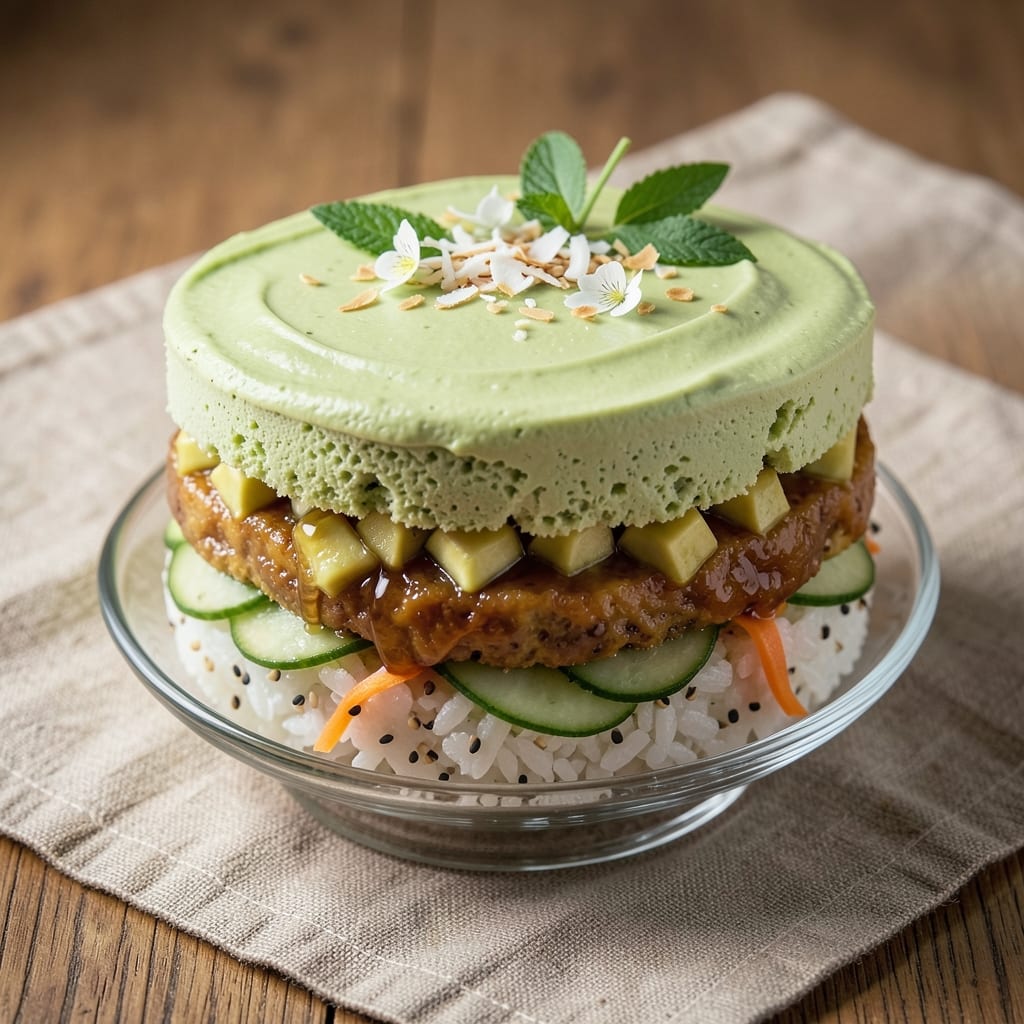
This avocado sushi cake recipe transforms a beloved Japanese dessert into a vegan masterpiece with layers of crispy sushi rice, silky avocado mousse, and vibrant fillings. The secret lies in balancing textures—crunchy on top, creamy in the center—while keeping prep simple with just 10 ingredients. I developed this version after realizing how many people wanted a plant-based alternative that still delivered that satisfying crunch and chew of traditional sushi cake.
The foundation starts with sushi rice cooked to perfect firmness, then toasted in a pan until golden and crispy—this is what creates that addictive texture contrast. Between the layers, we add avocado mousse (no baking required) mixed with a touch of maple syrup for subtle sweetness, while thinly sliced cucumber and carrot mimic classic sushi fillings. For those skipping traditional fish, smoked tofu or marinated mushrooms work beautifully as protein-rich alternatives.
What makes this recipe stand out is how it recreates the visual appeal of sushi cake without raw fish—think green avocado layers, crisp rice "slices," and optional seaweed ribbons for that authentic touch. The plating is just as important as the taste: arrange the cake in a circular pattern, garnish with sesame seeds, and serve with a side of vegan soy sauce for dipping. It's elegant enough for dinner parties but simple enough for weeknight desserts.
This version also solves the common issue of soggy layers by using chilled components and a quick assembly process. The result? A dessert that's light yet satisfying, with every bite offering a mix of temperatures and flavors. Perfect for vegans, sushi lovers, or anyone craving something fresh and unexpected. Let's build this cake step by step.
Ingredients for avocado sushi cake
Ten ingredients transform traditional sushi cake into a vegan masterpiece with crispy rice and creamy avocado layers.
| Ingredient | Amount | Notes |
|---|---|---|
| Short-Grain Sushi Rice 🍚 | 2 cups | Uncooked, Japanese short-grain preferred |
| Rice Vinegar 🍶 | ¼ cup | Seasoned or plain white vinegar |
| Avocados 🥑 | 2 ripe | Firm but yielding, Hass variety |
| Maple Syrup 🍯 | 2 tbsp | Pure, grade B preferred |
| Cucumber 🥒 | 1 medium | English or Persian, thinly sliced |
| Carrot 🥕 | 1 medium | Thinly julienned, for crunch |
| Smoked Tofu 🧀 | 4 oz | Firm, thinly sliced for protein |
| Nori Sheets 🍣 | 4 whole | For decorative wrapping |
| Black Sesame Seeds 🌱 | 1 tbsp | Toasted for garnish |
| Vegan Soy Sauce 🍶 | ¼ cup | For dipping sauce |
The sushi rice is non-negotiable for texture—Koshihikari or Calrose from Japanese specialty stores gives the best stickiness. Rinse it thoroughly before cooking to remove excess starch, which prevents clumping. For the avocados, ripe but firm is key; they should yield slightly to gentle pressure but not be mushy. Trader Joe's often carries perfect Hass avocados year-round. The smoked tofu adds protein without overpowering the delicate flavors—look for firm, not extra-firm, to ensure easy slicing. Nori sheets should be vibrant green with no yellowing; Marukyu brand is a reliable choice for authentic texture.
No smoked tofu? Marinated mushrooms (shiitake or portobello) work beautifully as a substitute—slice them thin and brush with soy sauce before using. Running short on avocados? Mashed banana with 1 tbsp lemon juice mimics the creaminess, though texture will differ slightly. The cucumber and carrot can be swapped for bell pepper strips if you prefer a sweeter crunch. For the rice vinegar, if you can't find seasoned, mix 1 tsp sugar and 1/4 tsp salt per 1/4 cup plain vinegar. The nori sheets are optional but add that signature sushi cake look—store them in a cool, dry place to prevent brittleness.
Prep the avocado mousse last to prevent browning—keep it chilled until ready to assemble. The sushi rice should be completely cooled before shaping to avoid soggy layers. Store components separately: rice in an airtight container for 3 days, avocado mousse in a sealed jar with plastic wrap pressed against the surface for 2 days, and fillings wrapped in damp paper towels for 3 days. Assemble the cake just before serving to maintain crispness. For make-ahead convenience, freeze the shaped rice layers (unassembled) for 1 month—thaw overnight before adding fillings.
Why You'll Love This Recipe
- No Rice Cooker Needed: I just mix the cooked rice with vinegar and maple syrup—no fancy equipment. The avocado and cucumber add creaminess without extra work, and honestly? That sweet-tart balance comes together faster than takeout.
- Creamy Without Guilt: The avocado keeps this thing rich but light, while the maple syrup adds just enough sweetness to make it feel like dessert. Between us, I’ve made this for brunch and it still holds up for lunch—no one questions the avocado in their midday meal.
- Lunchbox Hero: Slice it up, pack it in containers, and it’s ready for the office or picnic. The rice holds its shape, the cucumber stays crisp, and the maple syrup keeps everything from drying out. My kids take theirs to school—no complaints, just empty containers.
- Budget-Friendly Luxury: Short-grain rice and avocados stretch far, and you’re not drowning in specialty ingredients. I’ll be real: the first time I made this, I thought it’d be too fancy, but it’s actually my go-to when I want something impressive without breaking the bank.
Step-by-step instructions for avocado sushi cake
This layered sushi cake delivers crispy rice crust, creamy avocado heart, and vibrant vegetable accents.
Prepare the Rice Base
Rinse the 2 cups short-grain sushi rice under cold water until the water runs clear, then drain well. In a medium saucepan, combine the drained rice with 2 cups water and bring to a boil over high heat. Once boiling, reduce heat to low, cover with a tight-fitting lid, and simmer for 15 minutes without lifting the lid.
After 15 minutes, remove from heat and let the rice steam for an additional 10 minutes. Transfer the rice to a large mixing bowl and gently fold in the 0.25 cup rice vinegar using a wooden spoon. Spread the rice evenly on a parchment-lined baking sheet and let it cool completely to room temperature. This cooling step is crucial for preventing a soggy cake.
Create the Avocado Filling
While the rice cools, halve and pit the 2 ripe avocados. Scoop the flesh into a medium bowl and mash with a fork until completely smooth. Add the 2 tbsp maple syrup and mix well to create a thick, spreadable filling. The mixture should be consistent enough to hold its shape when layered but still smooth.
In a separate small bowl, thinly slice the 1 medium cucumber and julienne the 1 medium carrot. Arrange these vegetables on a plate and set aside. Also, slice the 4 oz smoked tofu into thin strips for the protein layer. These components will form the vibrant, textured heart of your sushi cake.
Assemble the Sushi Cake Layers
Place one of the 4 whole nori sheets on a clean work surface. Spread approximately one-third of the cooled rice mixture evenly over the nori, leaving a 1-inch border. Using a pastry brush, lightly dampen the border with water to help seal the layers.
Add a layer of the avocado filling, followed by the sliced cucumber, carrot, and smoked tofu. Fold the nori sheet tightly around the filling, starting from one end and rolling firmly but gently to create a compact log. Repeat this process with the remaining nori sheets and fillings, creating three identical logs. Wrap each completed log in plastic wrap and refrigerate for 30 minutes to firm up.
Layer and Chill the Cake
Remove the logs from the refrigerator and carefully slice each into 1-inch thick rounds using a sharp knife. Arrange these rounds in a circular pattern on a parchment-lined baking sheet, alternating between the rice and filling layers to create a visually appealing cake. Press down gently to ensure stability.
Drizzle any remaining avocado mixture over the top layer and sprinkle the 1 tbsp toasted black sesame seeds evenly across the surface. Cover with plastic wrap and refrigerate for at least 2 hours to allow the layers to fully set and the flavors to meld together. This chilling time is essential for achieving the perfect texture contrast.
Pro Tips For Making Avocado Sushi Cake
- CHILL THE RICE FIRST: I learned this the hard way—warm rice sticks together like glue when you try to layer it. Spread the cooked sushi rice on a tray and let it cool completely before mixing with avocado. Cold rice holds its shape better and won’t turn your cake into a soggy mess.
- SALT THE AVOCADO: Skip this step, and your avocado will oxidize faster, turning brown and unappetizing. Toss avocado slices with a pinch of salt and a squeeze of lime before layering—it preserves color and adds a subtle crunch.
- PRESS GENTLY, NOT HARD: I used to pack the layers down like I was making a brick, but that just squishes the avocado into a pulp. Light pressure is all you need—just enough to hold the layers together. Use a glass or small plate instead of your hands for even distribution.
- SWAP MAPLE FOR HONEY (IF NEEDED): Maple syrup can make the cake too sweet, especially if you’re using ripe avocados. If you prefer a milder flavor, swap half the maple for honey—it caramelizes differently but keeps the moisture without overpowering the dish. (Yes, even if you’re impatient like me.)
Storing and reheating your avocado sushi cake
Refrigerator Storage
Store the assembled sushi cake in an airtight container with parchment paper between layers to maintain crispness. Keep it refrigerated for up to 3 days—the avocado filling stays fresh and vibrant when properly sealed. I like using glass containers with snap-on lids for easy stacking and visibility. 🥒
Freezer-Friendly Layers
Freeze the unassembled rice logs (before slicing) for up to 1 month in a ziplock bag with excess air removed. Thaw overnight in the fridge, then slice and assemble. The avocado filling should be added fresh after thawing to prevent browning. For the smoked tofu, freeze it separately in a single layer on a tray before transferring to a bag for easy slicing later. ❄️
Reheating for Crispiness
If storing overnight, reheat the cake at 350°F for 5-7 minutes to restore the rice's crisp texture. Place it on a baking sheet and cover loosely with foil to prevent over-drying. For the avocado filling, microwave individual slices for 15 seconds on high power to soften slightly without cooking. Always check the internal temperature—it should reach 165°F if reheating with protein like tofu. 🔥
Reviving Texture
If the rice loses crispness after storage, sprinkle 1 tsp toasted sesame seeds and 1 tsp water over the top layer, then broil for 2 minutes at 375°F. This quick trick reactivates the crunch without overcooking the avocado. For extra moisture control, place a paper towel on the bottom of the container before storing to absorb any excess condensation. 💫
Make-Ahead Components
Prep the avocado mousse and vegetable fillings up to 2 days ahead—store them separately in airtight containers with plastic wrap pressed directly on the surface. The sushi rice can be cooked and cooled 3 days ahead, then reheated in the microwave for 30 seconds before assembling. This modular approach lets you customize layers based on what you have on hand. ✨
Nutrition facts
Frequently asked questions
Can I make this avocado dessert without nori sheets?
Nori adds that signature look, but you can skip them entirely. For structure, wrap the rice and filling in plastic wrap instead, then slice and arrange the layers. Alternatively, use thinly sliced cucumber or avocado skins as natural "wrappers" for a rustic presentation. The texture will still be amazing—just the presentation changes.
Why does my avocado filling turn brown so quickly?
Avocado oxidizes when exposed to air. To prevent browning, keep the mousse in an airtight container with plastic wrap pressed directly on the surface. Add a splash of lemon juice (1 tsp) to the filling before assembling, or brush the cut avocado layers with a tiny bit of water to create a protective barrier. Work quickly during assembly to minimize exposure.
How do I get the rice to stay crispy instead of soggy?
The secret is complete cooling before assembly and proper layering. Spread the rice on a tray and let it cool 100% to room temperature. When stacking, place layers on a wire rack over a tray to allow airflow underneath. For extra insurance, chill the assembled cake for at least 2 hours before serving. Avoid overmixing the rice—just fold in vinegar gently.
Can I substitute banana for avocado in this recipe?
Yes, but with adjustments! Replace the avocado with 2 ripe bananas mashed with 1 tbsp lemon juice and 1 tbsp maple syrup. The texture will be slightly softer and more custard-like, but the sweetness works well. For better structure, chill the banana filling for 30 minutes before assembling. The banana version works best for a dinner party dessert rather than a light snack.
What's the best way to serve this cake for a crowd?
For large gatherings, assemble the cake in a springform pan instead of individual logs. Layer the rice and filling in 1-inch thick rounds, then chill for 3 hours for stability. Serve with vegan soy sauce for dipping and arrange small bowls of pickled ginger and wasabi on the side for authentic sushi vibes. Cut into wedges for easy sharing—each slice will show off the beautiful layers!