
Desserts
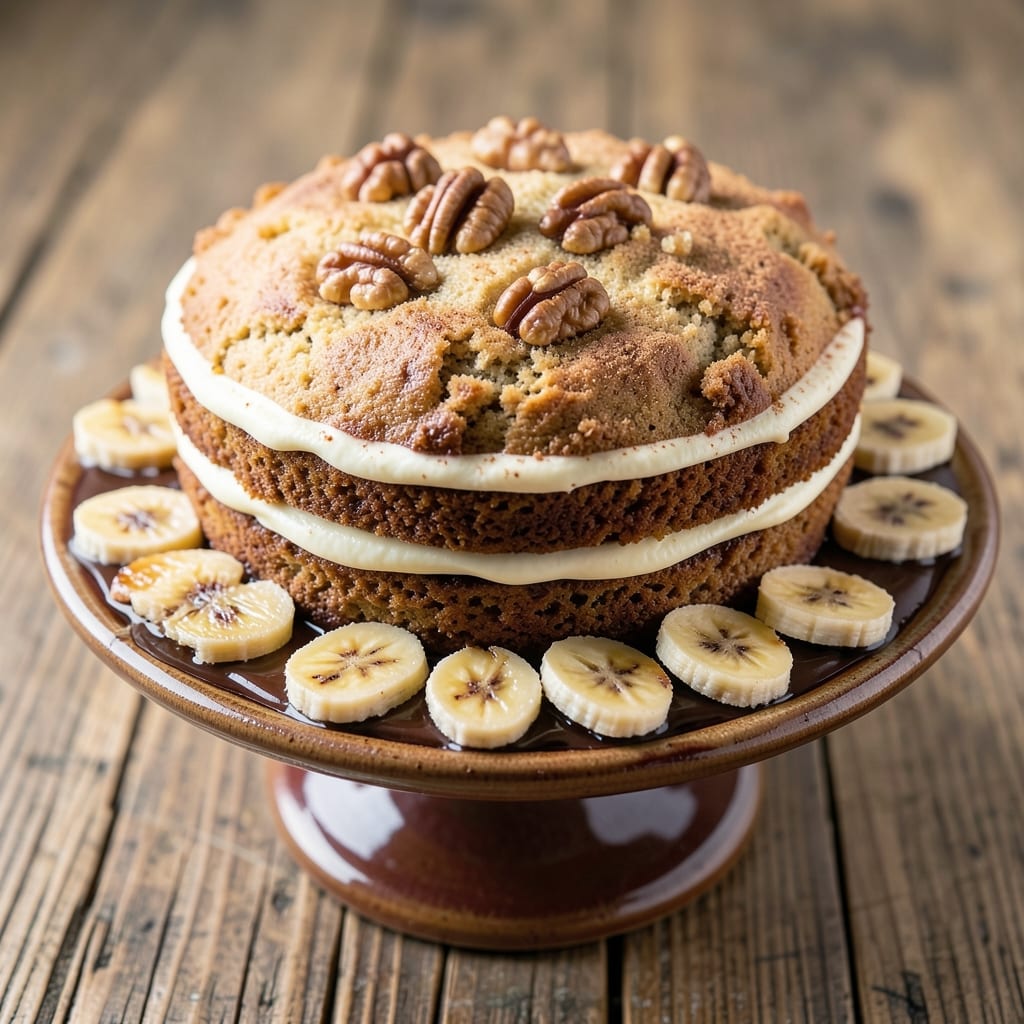
This banana bread cake recipe UK delivers the perfect marriage of moist, spiced banana bread layers and tender cake crumb—ideal for British bakers who crave texture contrast. 🌟 The secret lies in a balanced blend of ripe bananas, warm spices, and a touch of cinnamon that infuses every bite with comforting depth. Unlike traditional banana bread, this recipe achieves a cake-like crumb while keeping that signature moistness.
What sets this apart is the foolproof technique for achieving consistent layers without overmixing, ensuring a tender yet sturdy texture that holds together beautifully. Using self-raising flour (a UK pantry staple) and metric measurements makes it accessible for home bakers, while optional gingerbread spice variations add a festive twist for special occasions.
By the time it emerges from the oven, you’ll have a golden-topped cake with a slightly domed shape, perfect for slicing. The moist banana layers release their natural sweetness, while the cake crumb provides just enough structure to make each slice satisfying. It’s the kind of dessert that feels homemade yet impressive enough for guests.
Serve warm with a dusting of icing sugar or a dollop of whipped cream for the full British café experience. The recipe scales easily for gatherings, and leftovers reheat beautifully. Here’s how to make it—no dry cake here!
Ingredients for banana bread cake recipe uk
Eight essential ingredients blend moist banana layers with tender cake crumb—perfect for British baking.
| Ingredient | Amount | Notes |
|---|---|---|
| Ripe Bananas 🍌 | 3 medium | Spot brown and squishy |
| Self-Raising Flour 🌾 | 2 ¼ cups | UK standard, no baking powder |
| Light Brown Sugar 🍚 | 1 ½ cups | Packed firmly for moisture |
| Unsalted Butter 🧈 | ¾ cup | Softened but not melted |
| Large Eggs 🥚 | 2 whole | Room temperature preferred |
| Pure Vanilla Extract 🌿 | 1 tbsp | High-quality Madagascar preferred |
| Ground Cinnamon 🌶️ | 2 tsp | Freshly ground for warmth |
| Ground Ginger 🌿 | 1 tsp | Freshly grated preferred |
| Ground Nutmeg 🌶️ | ½ tsp | Freshly grated for depth |
| Salt 🧂 | ½ tsp | Fine sea salt preferred |
| Plain Greek Yogurt 🥛 | ½ cup | Full-fat for moisture |
| Milk 🥛 | ½ cup | Whole milk preferred |
| Icing Sugar 🍚 | ¼ cup | For dusting finished cake |
The bananas are non-negotiable—ripe to the point of squishiness ensures maximum sweetness and moisture. Tesco or Sainsbury's usually carry perfectly ripe ones, or look for bananas with dark brown spots at your local greengrocer. Self-raising flour is crucial here—it's the UK's baking staple, and the leavening agent built right in prevents that dense, heavy cake texture. For the spices, Penzeys or Waitrose carry freshly ground options that make all the difference. The ginger and nutmeg should be freshly grated if possible, as pre-ground spices lose their punch quickly.
No Greek yogurt? Substitute with sour cream or mashed ripe avocado for moisture, though yogurt adds that signature tang. Short on brown sugar? White sugar plus 1 tsp molasses works in a pinch. The vanilla extract matters—Madagascar bourbon has deeper flavor than imitation extracts. For a festive twist, swap half the cinnamon for ground cloves or allspice. The butter should be softened but not melted—this ensures proper creaming without making the batter too runny. If your bananas aren't ripe enough, place them in a paper bag with an apple overnight to speed up the process.
Store any leftovers tightly wrapped at room temperature for 2 days, or refrigerate for up to 5 days. The cake reheats beautifully—wrap a slice in foil and warm in the oven at 300°F for 5-10 minutes to restore moisture. For make-ahead convenience, bake the cake a day in advance—it actually develops deeper flavor overnight. The icing sugar dusting? Use a fine-mesh sieve for an even, professional finish. This cake freezes well too—slice before freezing, then thaw at room temperature.
Why You'll Love This Recipe
- No Mixer Needed: I swear by this—just mash those bananas with a fork, fold in the flour and butter, then pour. The self-raising flour does all the lifting, so no whisking, no sifting, no fuss. Honestly, it’s the kind of recipe that makes me feel like a baking genius.
- Caramel-Kissed Magic: That light brown sugar? It’s not just sweet—it’s deep. The bananas caramelise just enough to give every slice a sticky, buttery richness, while the eggs keep it moist without being heavy. (Yes, even on a Tuesday night.)
- Leftovers That Last: This cake keeps beautifully for days—slice it for breakfast, pack it in lunchboxes, or freeze portions for when you’re too tired to bake. Between us, I’ve had it cold the next morning and it was still ridiculously good.
- Pantry Staple Power: You’re using ingredients you already own: overripe bananas, flour from last week, butter from the fridge. No fancy swaps, no last-minute shop runs. It’s the kind of recipe that turns “I’ve got nothing” into “dinner’s sorted.”
Step-by-step instructions for banana bread cake with warm spice infusion
Here's the professional method for creating a perfectly moist banana bread cake with rich spice layers.
👨🍳 Step 1: Prepare the Banana Mixture
Start by mashing the 3 medium ripe bananas in a large mixing bowl until completely smooth. I like to use a fork first to break them up, then a hand mixer for about 30 seconds to ensure no lumps remain. The bananas should be spot brown and squishy—this indicates perfect ripeness for maximum sweetness and moisture.
Add the 1.5 cups packed light brown sugar and mix until fully combined. The sugar will begin to dissolve into the banana puree, creating a thick, syrupy base. This is where the cake gets its signature moisture—don't skip this step or the texture will suffer. The mixture should be smooth and well incorporated at this stage.
👨🍳 Step 2: Incorporate Wet Ingredients
In a separate bowl, whisk together the 2 whole large eggs, 1 tbsp pure vanilla extract, 0.5 cup plain Greek yogurt, and 0.5 cup milk. This mixture should be smooth and homogeneous. The eggs provide structure while the yogurt adds tender moisture and depth of flavor. I always use room temperature eggs—they incorporate better and create a lighter texture.
Gradually pour the egg mixture into the banana-sugar mixture, whisking continuously. Add the 0.75 cup softened unsalted butter and mix until fully combined. The butter should be softened but not melted—you should be able to press it with your finger and leave a slight indent. This ensures proper emulsification without making the cake greasy.
👨🍳 Step 3: Combine Dry Ingredients
In a medium bowl, sift together the 2.25 cups self-raising flour, 2 tsp ground cinnamon, 1 tsp ground ginger, 0.5 tsp ground nutmeg, and 0.5 tsp salt. The self-raising flour contains baking powder, which is essential for achieving that perfect rise. I recommend sifting to prevent any lumps from forming, which could result in dense pockets in the cake.
Gently fold the dry ingredients into the wet mixture using a spatula, being careful not to overmix. You're looking for a thick batter with just a few streaks of flour remaining—this indicates proper incorporation without developing excess gluten. The batter should be smooth and well combined, with a consistency similar to thick pancake batter.
🔥 Step 4: Bake to Perfect Moisture
Preheat your oven to 350°F (175°C) and grease two 8-inch round cake pans or one 9x5-inch loaf pan with butter, then dust with flour. Divide the batter evenly between the pans. For a loaf pan, I like to use a kitchen scale to ensure equal distribution—this prevents uneven baking.
Bake for 35-40 minutes until a skewer inserted into the center comes out clean and the top springs back when gently pressed. The cake should have a golden brown hue but shouldn't be overly dark. I find that baking in round pans gives a more even texture, but a loaf pan creates that classic banana bread shape. Let the cakes cool in the pans for 10 minutes before transferring to a wire rack to cool completely.
🍽️ Step 5: Finish with Icing Sugar
Once completely cool, dust the top of each cake layer with 0.25 cup icing sugar using a fine-mesh sieve. This step adds a delicate sweetness and professional finish. I like to dust just before serving to prevent the sugar from absorbing into the cake. For an extra touch, you can also brush the top with a simple syrup made from equal parts sugar and water, heated until dissolved.
The final cake should have moist, tender layers with a perfect balance of sweetness from the bananas and spices. Each slice should be rich, flavorful, and just slightly sticky—this is the hallmark of a properly made banana bread cake. Serve warm for the best texture and experience.
Pro Tips For Making Banana Bread Cake Recipe Uk
- Mash Bananas Properly: Use a fork to smash them—don’t blend into mush. You want small chunks, not a smooth paste, so the texture stays tender and the banana flavour shines. (Yes, even if you’re impatient like me.)
- Weigh Your Flour: Self-raising flour is finicky—spoon it in, don’t scoop. A cup measurement adds air, which makes the cake dense. Use a scale for accuracy, especially if you’re baking in a high-altitude UK kitchen.
- Don’t Overmix the Batter: Stir just until combined—lumpy is fine. Overmixing develops gluten, and that turns your moist cake into a dry brick. Fold in any extra ingredients gently, like walnuts or chocolate chips, at the last second.
- Test for Doneness Early: Start checking at 45 minutes with a skewer—it should come out with a few moist crumbs, not wet batter. UK ovens vary, so if the top browns too fast, tent with foil. Underbaking is easier to fix than overbaking.
Common mistakes when making great banana bread cake recipe uk
Overmixing the Batter
This is the #1 mistake I see with banana bread cakes—overmixing the batter creates a tough, dense texture instead of the tender crumb we want. Once you've folded in the dry ingredients, stop mixing as soon as you see just a few streaks of flour remaining. Overmixing develops gluten, which makes the cake rubbery. I recommend using a spatula and folding gently rather than whisking vigorously. 🌾
Underripe Bananas
Using underripe bananas is a game-changer for texture. The starch in unripe bananas makes the cake dense and dry. Always choose bananas that are spot brown and squishy—these will give you that signature moist, sweet flavor. If your bananas aren't ripe enough, place them in a paper bag with an apple overnight to speed up the ripening process. The flavor difference is night and day!
Incorrect Oven Temperature
Baking at the wrong temperature can ruin your cake's texture. Too low (325°F) and it won't rise properly, too high (375°F) and the outside will burn before the center cooks. Stick to 350°F (175°C) for even baking. I also recommend placing your cake pans on the middle rack—this ensures even heat distribution throughout the baking process. A good oven thermometer is worth the investment!
Skipping the Cooling Step
Many people can't wait to slice into their cake, but rushing this step leads to crumbling layers. Always let your cake cool in the pan for 10 minutes before transferring to a wire rack. This allows the moisture to redistribute and the structure to set properly. I've seen cakes fall apart completely when sliced too soon—don't be that person!
Using the Wrong Flour
Self-raising flour is non-negotiable in this recipe—it contains the leavening agent needed for proper rise. Using plain flour plus baking powder creates an uneven texture. The UK's self-raising flour is perfect for this cake, with its balanced protein content that gives just enough structure without heaviness. If you're in the US, look for "self-rising flour" which contains both flour and baking powder.
Overfilling the Pans
Filling your cake pans more than ⅔ full leads to overflow and uneven baking. The batter should come about ¾ of the way up the sides of your pan. I like to use a kitchen scale for precision—this ensures consistent results every time. Overfilling also makes it harder for heat to circulate properly, leading to potential underbaking in the center. 🍞
Nutrition facts
Frequently asked questions
Can I make this banana bread cake in a loaf pan instead of round tins?
This recipe works beautifully in a 9x5-inch loaf pan for that classic banana bread shape. Simply reduce the baking time to 45-50 minutes and check for doneness with a skewer. The texture will be slightly denser than round layers but still moist and flavorful.
What's the best way to store leftovers?
Wrap individual slices tightly in cling film or store in an airtight container at room temperature for 2 days. For longer storage, refrigerate for up to 5 days. To reheat, wrap a slice in foil and warm at 300°F for 5-10 minutes—this restores the moisture perfectly.
Can I substitute Greek yogurt with something else?
Yes! For 0.5 cup Greek yogurt, use sour cream (same amount) or mashed ripe avocado (0.4 cup). The yogurt adds tang and moisture—sour cream works well, while avocado gives a slightly different texture but keeps the cake tender. Always use room temperature substitutes for best results.
Why did my cake turn out dense instead of moist?
This usually happens from overmixing or underripe bananas. The batter should be thick but not stiff—stop mixing once you see just a few flour streaks. For bananas, choose ones that are dark brown and squishy. If yours weren't ripe enough, place them in a paper bag with an apple overnight before using.
Can I add chocolate chips or nuts to this recipe?
Fold in 0.5 cup chocolate chips or 0.5 cup chopped walnuts after mixing the wet ingredients. For nuts, toast them first at 350°F for 5 minutes to enhance flavor. Just be careful not to overmix after adding extras, as this can make the cake tough.