
Desserts
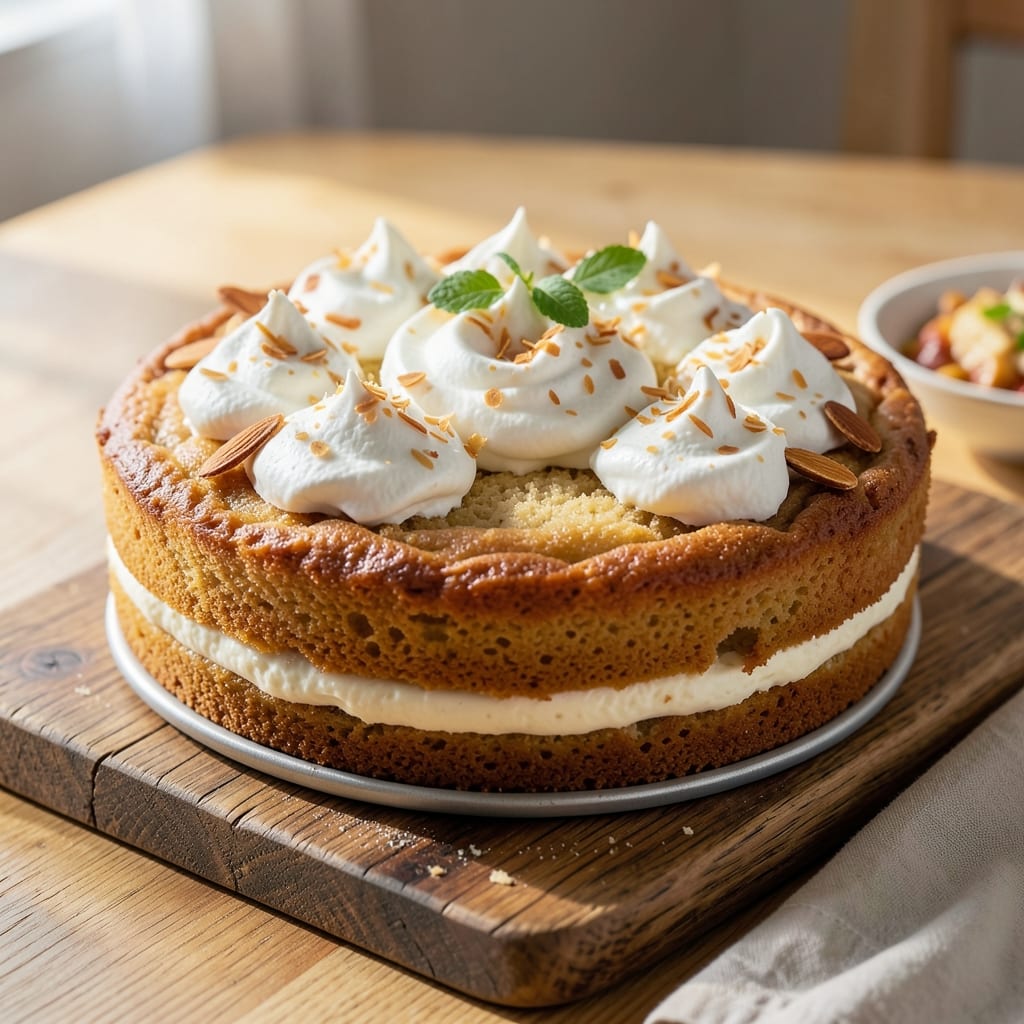
This almond flour yogurt cake delivers the perfect balance of lightness and moisture without the dense, heavy texture of traditional flour cakes. The secret lies in almond flour's natural tenderness and yogurt's ability to keep every bite airy and fluffy—no sinky centers here. I developed this recipe after years of perfecting gluten-free baking, and it's become my go-to for gatherings where dietary restrictions shouldn't limit dessert options.
The magic happens with a simple technique: combining almond flour with yogurt creates a tender crumb that stays moist for days. No special equipment is needed—just a mixing bowl, whisk, and standard oven. The cake rises beautifully with its signature domed top, and the subtle almond flavor pairs perfectly with the tangy yogurt base. This recipe is foolproof for beginners but impressive enough for any occasion.
What you'll end up with is a cake that's light as a cloud yet sturdy enough to hold toppings like fresh berries or a dusting of powdered sugar. The texture is consistently tender from edge to edge, with no risk of dryness or heaviness. It's the kind of dessert that disappears quickly but leaves everyone asking for seconds.
Perfect for brunch, afternoon tea, or holiday desserts, this cake adapts easily to both dairy and plant-based yogurts. Let's get baking—your taste buds will thank you for this lighter, brighter approach to cake.
Ingredients for almond flour yogurt cake
Eight simple ingredients transform into a cloud-like cake with no sinky centers.
| Ingredient | Amount | Notes |
|---|---|---|
| Almond Flour 🌰 | 2 ½ cups | Finely ground, unsweetened preferred |
| Plain Yogurt 🍦 | 1 cup | Full-fat for best moisture, dairy or plant-based |
| Granulated Sugar 🍚 | ¾ cup | Or coconut sugar for refined option |
| Large Eggs 🥚 | 3 whole | Room temperature for even mixing |
| Unsalted Butter 🧈 | ½ cup | Melted, full-fat preferred |
| Vanilla Extract 🌿 | 1 tsp | Pure vanilla for authentic flavor |
| Baking Powder 🧂 | 1 tsp | Aluminum-free for best rise |
| Salt 🧂 | ½ tsp | Fine sea salt for balance |
| Lemon Zest 🍋 | 1 tbsp | Freshly grated for bright flavor |
| Almond Extract 🌰 | ½ tsp | Pure almond for enhanced flavor |
| Powdered Sugar 🍚 | ¼ cup | For dusting, optional |
| Fresh Berries 🍓 | 1 ½ cups | For garnish, optional |
Almond flour is the star here—Bob's Red Mill or Anthony's Goods are my go-tos for consistency. The finer the grind, the lighter your cake will be, so avoid pre-ground flour with large chunks. For yogurt, full-fat Greek yogurt gives the best moisture, but plant-based versions like Silk or Kite Hill work beautifully too. The eggs should be at room temperature—cold eggs can make your batter too thick. If you're using dairy-free yogurt, make sure it's unsweetened to avoid altering the cake's texture.
No almond extract? Vanilla bean paste at double the amount works in a pinch, though it won't have quite the same depth. Short on almond flour? Substitute with 1.5 cups all-purpose flour, but expect a denser texture. The butter matters—full-fat is non-negotiable here for that tender crumb. If you're watching calories, unsalted coconut oil works but may slightly alter the flavor. For the sugar, coconut sugar is a 1:1 swap, though it has a caramel note. The lemon zest can be dried if needed, but fresh is always better—just make sure it's finely grated to avoid gritty bits.
This cake keeps beautifully—3 days at room temperature covered loosely, or 5 days refrigerated in an airtight container. For longer storage, slice and freeze portions for up to 3 months. The domed top is intentional—don't flatten it! It's part of the cake's signature. If you're prepping ahead, mix the dry ingredients and wet ingredients separately, then combine just before baking. The batter will thicken quickly, so don't overmix. I always bake an extra cupcake—it's the perfect test piece for doneness.
Why You'll Love This Recipe
- No Mixer Needed: I swear by this—just fold the almond flour into the yogurt with a fork until it’s almost smooth. The butter and eggs do most of the work, so you’re not fighting dough here.
- Taste Like Comfort: That yogurt keeps it tender, the almond flour adds nutty depth, and the sugar caramelizes just enough to give it a subtle crunch. Honestly, it’s the kind of cake that disappears faster than my willpower on Sunday mornings.
- Weeknight Magic: Bake it while you prep dinner—it’s done in 30 minutes. Slice it, wrap it, and stash it in the fridge for breakfast or dessert. (Yes, even on a Tuesday night.)
- Budget-Friendly Luxe: Almond flour’s pricey, but this recipe uses less than you’d think. The yogurt and eggs stretch it further, and the butter gives it that rich finish. My secret weapon for when I want to feel fancy without breaking the bank.
Step-by-step instructions for almond flour yogurt cake
This light, airy cake relies on precise technique—let's build it layer by layer.
Preheat and Prepare Your Pan
Preheat your oven to 350°F and generously grease an 8-inch round cake pan with butter or line it with parchment paper. I like to use a light dusting of almond flour on the bottom as well—this prevents sticking without adding extra fat. Tap the pan gently on the counter to remove any air bubbles from the grease.
Place the pan on a baking sheet to catch any potential drips. The butter should be melted and ready to use—if it's not yet softened, microwave it in 10-second bursts until just melted. We'll use it to create a tender crumb rather than a dense one.
Whisk Wet Ingredients to a Smooth Batter
In a large mixing bowl, combine the 1 cup plain yogurt, 0.75 cup granulated sugar, 3 whole large eggs, 0.5 cup melted unsalted butter, 1 teaspoon vanilla extract, 1 tablespoon lemon zest, and 0.5 teaspoon almond extract. Whisk vigorously for 2-3 minutes until the mixture is completely smooth and slightly thickened.
You'll notice the batter should be pale yellow with no visible streaks of egg or butter. This step is crucial—it ensures even distribution of moisture throughout the cake. If you see any lumps, strain the mixture through a fine-mesh sieve to achieve a silky texture.
Gently Fold in Dry Ingredients
In a separate bowl, sift together the 2.5 cups almond flour, 1 teaspoon baking powder, and 0.5 teaspoon salt. This sifting step prevents dense pockets in your cake. With a rubber spatula, gently fold the dry ingredients into the wet mixture in 3 additions, just until combined.
I can't stress enough how important this gentle folding is—overmixing develops gluten in the almond flour, which leads to a tough cake. Stop mixing as soon as you see no more flour streaks. The batter should be thick but pourable, like a very rich pancake batter.
Bake Until Golden and Springy
Pour the batter into your prepared pan and smooth the top with a spatula. Bake in the preheated oven for 35-40 minutes, or until a toothpick inserted in the center comes out clean and the edges are light golden brown. The cake should spring back slightly when pressed gently in the center.
Here's where patience pays off: if you open the oven too early, the cake may collapse. The almond flour needs time to set properly. If the top browns too quickly, loosely tent the pan with aluminum foil after 25 minutes of baking.
Cool and Serve with Fresh Berries
Remove the cake from the oven and let it cool in the pan for 10 minutes. Then transfer it to a wire rack to cool completely. This gradual cooling prevents cracking. While it cools, you can prepare the berries by gently tossing the 1.5 cups fresh berries with a tiny bit of powdered sugar if desired.
Once completely cool, dust the top with the remaining 0.25 cup powdered sugar and arrange the berries on top. Serve slices at room temperature—the cake will hold its shape beautifully and maintain that light, airy texture you worked so hard to achieve.
Pro Tips For Making Almond Flour Yogurt Cake
- Mix the Batter Like a Pancake: I used to dump everything in and stir half-heartedly—big mistake. Whisk the almond flour and yogurt together first until smooth, then fold in the eggs and melted butter. The almond flour clumps like a stubborn toddler, and skipping this step means a dense, uneven cake. Take the extra 30 seconds; your crumb will thank you.
- Use Room-Temp Eggs and Butter: Cold butter and eggs make this cake fight you. Let both sit out for at least 30 minutes before mixing—yes, even if you’re impatient like me. The batter will come together lighter, and the texture stays tender instead of turning into a sad, greasy brick. Trust me, your cake will rise better and taste richer.
- Don’t Overmix After Adding Baking Powder: That almond flour is sneaky—it’ll make the batter look dry, so you’ll be tempted to keep stirring. Stop as soon as the dry ingredients disappear. Overmixing develops gluten (which almond flour doesn’t have, but the eggs do), and suddenly you’ve got a cake with the texture of a dense muffin. Fold just until combined, then let it be.
- Bake Until the Center is Almost Set: This cake’s magic is in its slight give. The edges will look done, but the center should wobble like a newborn deer when you jiggle the pan. Pull it out 2–3 minutes early—it’ll keep cooking with residual heat. Overbaking turns it dry; underbaking leaves it gummy. Use a toothpick as a guide, but don’t rely on it completely.
Essential equipment for almond flour yogurt cake
Mixing Essentials
You’ll need a large mixing bowl (I use a 4-quart stainless steel bowl from OXO) for combining wet ingredients—its depth helps prevent spills when whisking vigorously. A hand mixer or stand mixer with whisk attachment (like my KitchenAid Artisan) saves time and ensures smooth batter, but a balloon whisk works just fine if you prefer manual mixing. For the dry ingredients, a fine-mesh sieve (like Microplane’s food mill) is non-negotiable—it eliminates clumps and creates a lighter texture. 🌰
Baking Tools
An 8-inch round cake pan with removable bottom (I swear by Wilton’s Perfect Results) is ideal—it ensures even heat distribution and easy release. Line the bottom with parchment paper or use a light dusting of almond flour to prevent sticking. For testing doneness, a long, thin toothpick (or skewer) is perfect—insert it into the center to check for clean results. A baking sheet underneath the pan catches any drips during baking. 🔥
Cooling and Serving
A wire cooling rack (like OXO’s Good Grips) is essential for even cooling—it prevents soggy bottoms. For dusting powdered sugar, a fine-mesh sifter (such as Norpro’s) creates a smooth, professional finish. If you’re garnishing with berries, a small offset spatula helps arrange them neatly. A serrated knife (like Mercer Culinary’s) ensures clean slices without crushing the delicate crumb. ✨
Optional Extras
For a domed top, use a small round cake pan (like 6-inch Wilton) to press down the center of the batter before baking. A digital kitchen scale (I love OXO’s) ensures precise measurements, especially for almond flour—it’s lighter than all-purpose flour. For storage, airtight containers (like Rubbermaid Brilliance) keep the cake fresh for days. A pastry brush (like Westbloc’s) helps apply melted butter evenly for greasing. 💫
Nutrition facts
Frequently asked questions
Why does almond flour make this cake lighter than traditional flour?
Almond flour has a higher fat content than wheat flour, which creates tiny pockets of air when baked, resulting in a naturally lighter texture. Unlike wheat flour, it lacks gluten, so it doesn't develop a tough structure. The yogurt's acidity also helps tenderize the crumb while adding moisture without heaviness.
Can I substitute coconut yogurt for regular yogurt?
Yes! Coconut yogurt works perfectly and adds a subtle tropical note. For best results, use full-fat coconut yogurt to maintain moisture. The texture remains light, though the flavor will have a mild coconut undertone. Just ensure it's unsweetened to avoid altering the cake's balance.
What if my cake turns out dense instead of airy?
Overmixing is the most common cause. Gently fold the dry ingredients just until combined—no more than 10-15 strokes. Also, ensure your almond flour is finely ground and your eggs are at room temperature. If the batter seems too thick, whisk in 1-2 tablespoons of milk gradually until smooth.
How do I prevent the cake from cracking?
Cracking usually happens from rapid cooling or overbaking. Let the cake cool in the pan for 10 minutes before transferring to a rack. Avoid opening the oven door early—this causes temperature fluctuations. If cracks appear, simply cover them with extra berries or powdered sugar for a pretty finish.
Can I make this cake gluten-free and dairy-free?
Use a dairy-free yogurt (like coconut or almond-based) and ensure your almond flour is certified gluten-free. The recipe remains the same—just confirm your baking powder is gluten-free. The texture stays light and tender, with no compromises in flavor.