
Desserts
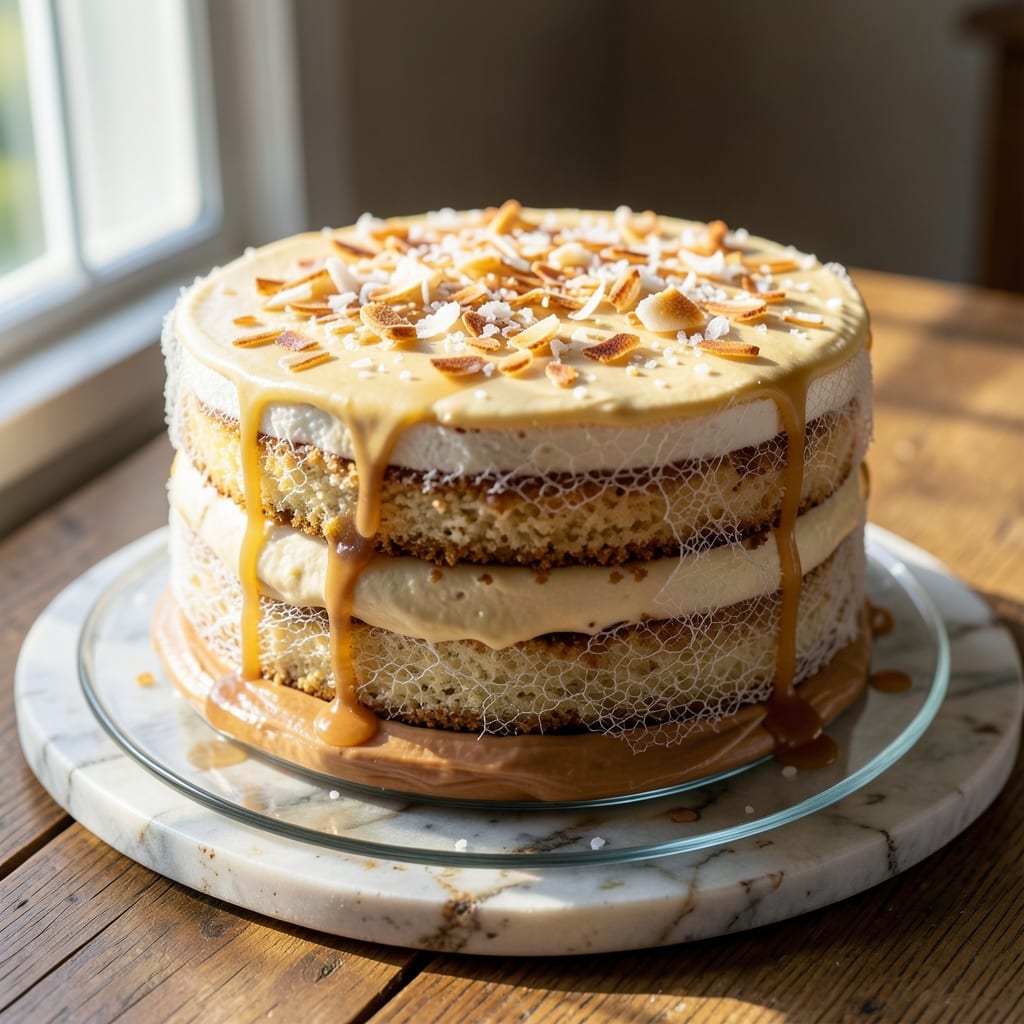
This amazing coconut cake recipe delivers tropical layers of moist coconut cake, creamy coconut buttercream, and toasted coconut flakes that taste like a vacation in every bite. ✨ I've perfected the balance between tender crumb and rich coconut flavor—no dry, crumbly cake here, just melt-in-your-mouth perfection that disappears too quickly. The secret lies in the cake batter itself: coconut milk replaces some of the water, while shredded coconut mixed into the dry ingredients ensures every slice bursts with flavor. The frosting? A velvety coconut buttercream that's light enough to spread but rich enough to hold its shape, with just a hint of vanilla to round out the tropical notes. What makes this cake truly stand out is the texture contrast—soft, moist layers with crisp toasted coconut on top and a smooth, fluffy frosting that melts on your tongue. It's the kind of dessert that gets rave reviews at dinner parties and disappears faster than you can say "piña colada." Ready to impress your guests? This recipe builds layer by layer, so we'll start with the cake batter and work our way to that showstopping finish. Let's get baking!
Ingredients for amazing coconut cake
Twelve simple ingredients create layers of tropical magic—moist cake, velvety frosting, and crisp coconut flakes.
| Ingredient | Amount | Notes |
|---|---|---|
| All-Purpose Flour 🌾 | 2 ½ cups | Sifted for light texture |
| Granulated Sugar 🍚 | 2 cups | White or light brown |
| Unsweetened Shredded Coconut 🥥 | 1 ½ cups | Toasted for extra flavor |
| Baking Powder 🧂 | 2 tsp | Aluminum-free preferred |
| Salt 🧂 | ½ tsp | Fine sea salt |
| Vegetable Oil 🫒 | 1 cup | Light, like canola |
| Coconut Milk 🥥 | 1 can | Full-fat for richness |
| Large Eggs 🥚 | 3 whole | Room temperature |
| Pure Vanilla Extract 🌿 | 2 tsp | Bottled, not imitation |
| Cream Cheese 🧀 | 8 oz | Room temperature |
| Butter 🧈 | ½ cup | Unsalted, softened |
| Powdered Sugar 🍚 | 4 cups | Sifted for smooth frosting |
| Toasted Coconut Flakes 🥥 | ½ cup | For garnish |
The coconut milk is non-negotiable—full-fat canned coconut milk makes all the difference. Thai Kitchen or Goya brands are my go-to, but any full-fat can works. Toast your shredded coconut in a dry pan for 3-4 minutes until golden—this adds that irresistible crunch. For the frosting, room-temperature cream cheese is key; it blends smoother and gives that perfect fluffy texture. If you're short on time, microwave the cream cheese for 20 seconds to soften it quickly.
No coconut milk? Substitute with equal parts milk and coconut extract—it won’t be identical, but it’ll still taste amazing. Running low on powdered sugar? Granulated sugar blended into a fine powder works in a pinch, though it’s slightly grainier. The frosting can be made a day ahead and stored in the fridge—just re-whip it before using. For extra richness, add a splash of coconut cream to the frosting. And if you’re feeling fancy, swap half the all-purpose flour for almond flour for a nutty twist.
Store cake layers in an airtight container between parchment paper for up to 3 days. The frosting keeps in the fridge for 5 days or freezes for 3 months. Toasted coconut flakes stay fresh for 2 weeks in a sealed container. To serve, slice and garnish with extra toasted coconut—it’s the little details that make this cake feel like a vacation in every bite.
Why You'll Love This Recipe
- No Mixer Needed: Mixing is just folding—no electric mixer, no fuss. I toss the dry ingredients with the wet in a bowl, then gently fold in that shredded coconut until it’s just happy. No lumps, no stress, just a smooth batter ready to bake.
- Tropical Without Trying: That shredded coconut isn’t just decoration—it’s the star. Toasted lightly in the oven, it adds this nutty, caramelized crunch that balances the soft, buttery cake underneath. Honestly, the first bite tastes like a vacation in your mouth.
- Crowd-Pleaser Any Day: Bring this to a potluck, birthday, or just because—it’s always a hit. The vanilla notes keep it classic, but the coconut makes it feel special. (Yes, even on a Tuesday night when you’re craving something sweet but don’t want to go all out.)
- Budget Bakes Better: Flour, sugar, coconut—these are pantry staples that won’t break the bank. A single batch feeds six, and leftovers? They disappear faster than I can say “second slice.” Plus, the cake keeps well for days, so you’re not scrambling for dessert last-minute.
Step-by-step instructions for tropical layers with fluffy frosting
Here's how to create a showstopping coconut cake with moist layers and velvety frosting.
👨🍳 Step 1: Mix the Cake Batter for Perfect Texture
Preheat your oven to 350°F and grease three 8-inch round cake pans, lining the bottoms with parchment paper. In a large mixing bowl, whisk together the 2.5 cups all-purpose flour, 2 cups granulated sugar, 2 tsp baking powder, and 0.5 tsp salt until completely combined. This dry mix is your foundation—make sure there are no lumps.
In a separate bowl, beat the 3 whole large eggs until frothy, then whisk in the 1 cup vegetable oil, 1 can coconut milk, and 2 tsp pure vanilla extract. Here's the thing—coconut milk adds richness, but don't overmix or your cake will be dense. Pour the wet ingredients into the dry ingredients and gently fold together just until combined. You'll see a few flour streaks remain—that's perfect.
Fold in the 1.5 cups unsweetened shredded coconut last. I like to use my hands for this to ensure even distribution. The coconut gives that tropical flavor but needs to stay evenly mixed so every bite is consistent. Divide the batter evenly among your prepared cake pans.
🔥 Step 2: Bake Until Golden and Springy
Bake the cakes for 25-30 minutes until a toothpick inserted in the center comes out clean and the edges are light golden brown. Here's where it gets tricky—coconut cakes can dry out if overbaked. Start checking at 25 minutes because ovens vary. The cakes should be set but still slightly springy to the touch.
Let the cakes cool in their pans for 10 minutes, then transfer to a wire rack to cool completely. This cooling step is crucial—it prevents the frosting from melting when you assemble. While they cool, make the frosting so everything's ready when the cakes are.
🥘 Step 3: Whip the Cream Cheese Frosting to Perfection
In a large mixing bowl, beat the 8 oz cream cheese and 0.5 cup softened butter together on medium speed until smooth and creamy. This step is non-negotiable—if your cream cheese isn't softened, you'll end up with lumps. Add the 4 cups powdered sugar gradually, mixing on low speed to avoid a powdery mess.
Once the sugar is incorporated, increase the speed to medium-high and beat for 3-4 minutes until light and fluffy. Here's the moment that matters: add the 2 tsp pure vanilla extract and mix for another 30 seconds. The frosting should be thick enough to hold peaks but still spreadable. If it's too thick, add 1-2 tablespoons coconut milk to loosen it.
🍽️ Step 4: Assemble the Cake Like a Pro
Place the first cake layer on a cake stand or plate. Spread a generous layer of frosting on top, then sprinkle with some of the 0.5 cup toasted coconut flakes for texture. Repeat with the second layer, then the third. The key here is to keep everything level—use a serrated knife to trim any domed tops for even layers.
Cover the entire cake with a thin crumb coat of frosting, then refrigerate for 15 minutes to set. This prevents crumbs from getting into your final frosting layer. After chilling, apply the remaining frosting, creating smooth sides with a spatula. For extra flair, pipe swirls or rosettes on top using the leftover frosting.
⏰ Step 5: Garnish and Serve for Maximum Wow Factor
Decorate the cake with the remaining toasted coconut flakes, pressing them gently into the frosting. For extra tropical flair, you could add fresh mango slices or pineapple chunks if you're feeling fancy. Let the cake sit at room temperature for 30 minutes before slicing to allow the frosting to set properly.
Slice into 12 perfect pieces—this cake is rich, so a generous slice is perfect. The layers should be moist with just the right amount of coconut flavor in every bite, and that creamy frosting ties it all together. Serve with a cup of hot coffee or a tropical cocktail for the ultimate experience.
Pro Tips For Making Amazing Coconut Cake
- TOAST YOUR COCONUT: I learned this the hard way—raw coconut makes the cake gummy. Spread the shredded coconut on a baking sheet and toast it at 350°F (175°C) for 8-10 minutes until golden and fragrant. This step adds depth of flavor and prevents that sad, soggy texture.
- WEIGH YOUR FLOUR: Scooping flour from the bag packs in air, which means your cake will be dense. Use a kitchen scale for precision—aim for 250g (about 2 cups) of all-purpose flour. If you’re measuring by volume, spoon it into the cup and level it off; don’t tap or shake the bowl.
- STOP WHEN THE CENTER SPRINGS: That toothpick test is overrated. Press the center of your cake gently—if it springs back slowly (not instantly) and leaves a few moist crumbs, it’s done. Overbaking dries out the coconut flavor, and underbaking leaves it gummy. Pull it out early if you’re unsure; it’ll keep cooking with residual heat.
- SWAP SUGAR FOR BROWN: Skip the granulated sugar if you want richer caramel notes. Replace half (about 125g) with light brown sugar and mix it into the wet ingredients first. The molasses in brown sugar caramelizes better, giving the cake a deeper, toastier taste—especially when paired with toasted coconut.
Common mistakes when making perfect results
Overmixing the Batter
I’ve ruined more cakes than I’d like to admit by overmixing the batter, and coconut cake is especially sensitive. Once you combine the wet and dry ingredients, stop mixing as soon as the flour disappears—just a few streaks are fine. Overmixing develops gluten, which leads to a dense, tough cake instead of that light, fluffy texture you want. 🥥
Skipping the Toasting
Untoasted coconut flakes in the batter or garnish will taste bland and underwhelming. Always toast your 1.5 cups unsweetened shredded coconut in a dry pan over medium heat for 3-4 minutes until golden brown. This step brings out the natural sweetness and adds that irresistible crunch that makes this cake feel special.
Room-Temperature Mistakes
Using cold eggs or cream cheese is a fast track to lumps and uneven texture. Let your 3 whole large eggs and 8 oz cream cheese sit at room temperature for at least 30 minutes before using. For the cream cheese, if you’re in a hurry, microwave it for 20 seconds—just don’t overdo it or it’ll separate.
Incorrect Baking Time
Coconut cakes can dry out if overbaked, but they’ll also be underdone if pulled too soon. Check for doneness at 25 minutes—a toothpick should come out clean with just a few moist crumbs. If your oven runs hot, reduce the temperature to 325°F and bake for 35-40 minutes. The edges should be golden, but the center should still feel slightly springy.
Frosting Too Thick or Thin
The frosting should be thick enough to hold its shape but still spreadable. If it’s too thick after adding the 4 cups powdered sugar, add 1-2 tablespoons coconut milk at a time until it reaches the right consistency. If it’s too thin, whip it for another 1-2 minutes to add air. I’ve seen frosting fail because it was either too runny (melting into the cake) or too stiff (cracking when sliced).
Rushing the Cooling
Assembling the cake while the layers are still warm is a recipe for disaster—the frosting will melt, and the layers will collapse. Let each cake cool completely in the pan for 10 minutes, then transfer to a wire rack to cool for at least 1 hour. Patience here ensures clean slices and a professional finish. Trust me, the extra time is worth it. 💫
Nutrition facts
Frequently asked questions
Can I make this cake without coconut milk?
Yes, but the texture and flavor will change. Replace the 1 can coconut milk with 1 cup milk and add 1 teaspoon coconut extract for flavor. The cake will still be delicious, though slightly less rich and moist. For best results, stick with coconut milk—it's what gives this cake its signature tropical flavor!
How do I store leftover cake?
Wrap the cake tightly in plastic wrap and store at room temperature for up to 2 days. For longer storage, refrigerate for up to 5 days or freeze for 3 months. To serve, let it sit at room temperature for 30 minutes to restore the frosting's texture. The cake actually tastes better the next day as the flavors meld!
Can I use almond flour instead of all-purpose flour?
For a nutty twist, swap half the 2.5 cups all-purpose flour with 1.25 cups almond flour. You'll need to add 1 extra egg to help bind the batter since almond flour absorbs more liquid. The texture will be slightly denser but still moist and delicious. Just be sure to toast the almond flour for 5 minutes first to remove any raw taste.
Why did my cake turn out dry?
Dry cake usually means overbaking or not enough moisture in the batter. Check your baking time—25-30 minutes at 350°F is perfect. For extra moisture, try adding 2 tablespoons coconut cream to the batter or brushing the layers with coconut syrup before frosting. Also, make sure your coconut milk is full-fat for best results.
Can I make this cake gluten-free?
Yes! Replace the 2.5 cups all-purpose flour with a 1:1 gluten-free baking flour blend (like Bob's Red Mill). Add 1 teaspoon xanthan gum to help bind the cake. You may need to increase the coconut milk by 2 tablespoons since gluten-free flours absorb more liquid. The texture will be slightly different but still delicious!