
Desserts
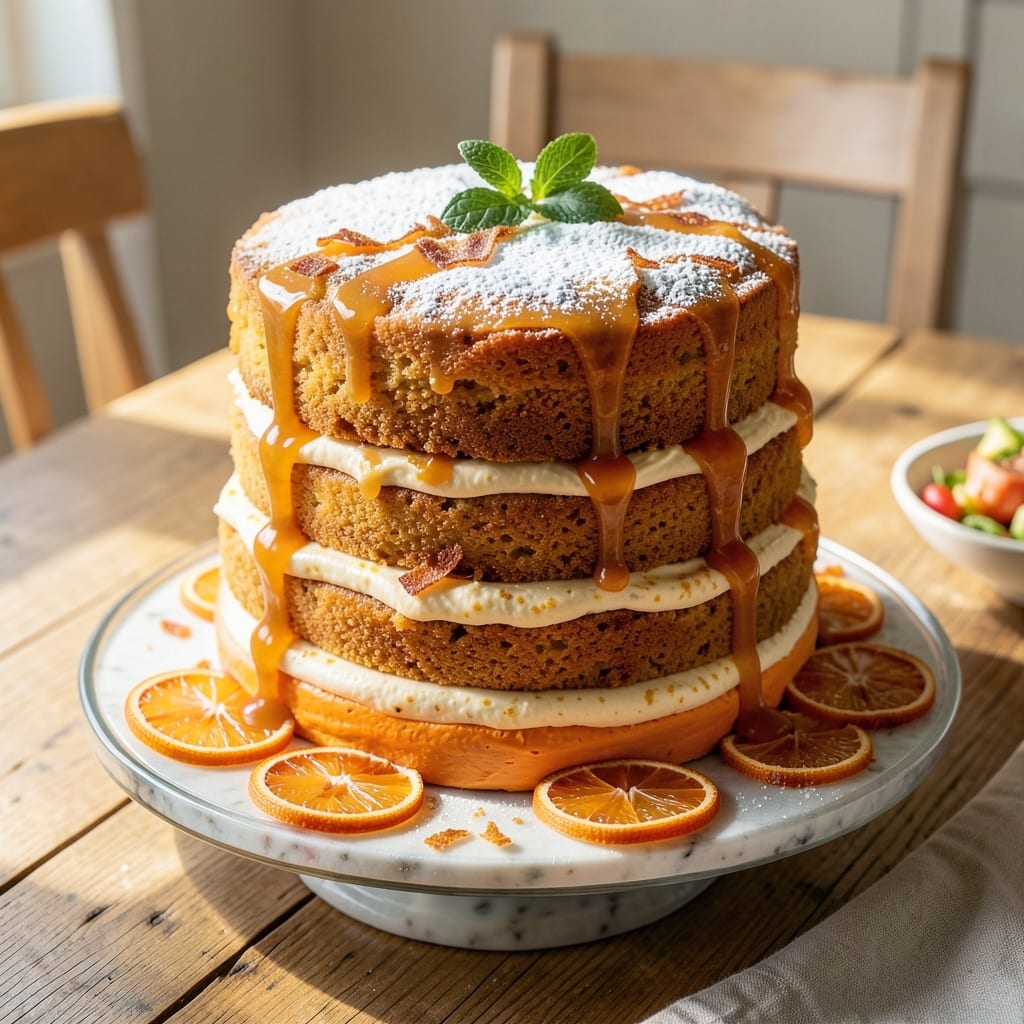
This amazing orange cake recipe delivers bright citrus flavor that turns every slice into a burst of sunshine. 💛 The secret lies in balancing fresh orange zest and juice with classic vanilla cake batter, creating a tender crumb that practically melts in your mouth. I've perfected this recipe over years of baking, and it never fails to impress—even with picky eaters.
What makes this cake truly special is the zesty orange glaze that ties everything together. Made with powdered sugar, fresh orange juice, and a touch of cream cheese for richness, it adds that signature pop of flavor that keeps people reaching for seconds. The cake itself bakes up golden and moist, with just the right amount of orange aroma wafting through your kitchen.
By the time you're done, you'll have a showstopping dessert that's perfect for birthdays, brunch, or just because. The glaze sets beautifully, creating a glossy finish that makes every slice look as good as it tastes. Trust me, once you try this recipe, homemade orange cake will become your new go-to dessert.
Pro tip: Use freshly squeezed orange juice for the best flavor, and let the cake cool completely before glazing to prevent a soggy texture. This recipe is foolproof and delivers restaurant-quality results every time.
Ingredients for amazing orange cake
Fresh oranges and classic pantry staples—this cake is sunshine in every bite.
| Ingredient | Amount | Notes |
|---|---|---|
| All-Purpose Flour 🌾 | 2 ½ cups | Sifted for light texture |
| Granulated Sugar 🍚 | 2 cups | White sugar preferred |
| Orange Zest 🍊 | 2 tbsp | From 2 large oranges |
| Fresh Orange Juice 🍊 | 1 cup | Freshly squeezed, no pulp |
| Unsalted Butter 🧈 | 1 cup | Room temperature, full-fat |
| Large Eggs 🥚 | 2 whole | Room temperature |
| Vanilla Extract 🌿 | 2 tsp | Pure vanilla extract |
| Baking Powder 🧂 | 2 tsp | Diamond Crystal brand |
| Salt 🧂 | ½ tsp | Fine sea salt |
| Powdered Sugar 🍚 | 2 cups | For glaze, sifted |
| Cream Cheese 🧀 | 4 oz | Room temperature, full-fat |
The oranges are everything here. Navel oranges give the best zest—thick, vibrant peel that pops with flavor. Grab a few extra at Trader Joe's or your local farmers market; their juice is sweeter and more aromatic than store-bought. For the butter, Land O'Lakes or Plugrá work perfectly, but don't use margarine—it changes the texture. The cream cheese? Philadelphia is my go-to, but any full-fat brand will do. Pro tip: zest your oranges just before baking to keep the flavor bright.
No fresh oranges? Bottled orange juice works in a pinch, but add a splash of lemon juice to cut the sweetness. Short on zest? Orange extract at half the amount gets you close, though it lacks that fresh pop. The vanilla extract can be imitation, but pure vanilla is worth the splurge—it makes the difference. For the glaze, powdered sugar is non-negotiable; it dissolves smoothly. If you're worried about soggy cake, let it cool completely before adding the glaze—trust me on this. The cream cheese adds richness, but if you're avoiding dairy, a dollop of Greek yogurt works too.
This cake keeps beautifully—3 days at room temperature in a cake carrier, or 1 week in the fridge wrapped tightly. The glaze sets fast, so assemble it right before serving. For make-ahead magic, bake the cake a day ahead, store it uncovered at room temp, and glaze right before serving. The flavors actually deepen overnight, making every slice even more amazing. Slice with a warm knife for clean cuts—worth the extra minute.
Why You'll Love This Recipe
- No Pits, No Stress: I swear by this recipe because it uses fresh orange juice—no bottled nonsense—and the zest gives that bright, sunny pop without the mess of seeds or peels. Just grate, squeeze, and mix. Honestly, the hardest part is deciding which oranges to use.
- Butter-Soft Magic: That creamed butter and sugar combo? It’s the secret weapon here. The cake comes out tender but sturdy, with a crumb so fine it melts in your mouth. Between us, I’ve tried boxed mixes, and this one actually wins—no chalky aftertaste, just pure orange joy.
- Weekday Wonder: This cake is my go-to for breakfast, dessert, or even a quick snack. Slice it thin for a citrusy toast topper, or serve it whole with whipped cream for a lazy Sunday. (Yes, even on a Tuesday night when you’re exhausted.)
- Budget Brightness: Fresh oranges are often cheaper than seasonal fruit, and you’re using the whole thing—peel, juice, and all. A single cake feeds six, and leftovers? They stay moist for days. I’ll be real: it’s my secret weapon for potlucks where I don’t want to bring a fussy dessert.
Step-by-step instructions for orange cake with zesty glaze
Let's bake a moist, citrusy cake with a showstopping glaze that makes every bite unforgettable.
👨🍳 Step 1: Prep Ingredients and Preheat
Start by sifting the 2.5 cups all-purpose flour with the 2 tsp baking powder and 0.5 tsp salt into a medium bowl. Set aside—this keeps the batter light and airy. In a separate bowl, whisk together the 2 cups granulated sugar, 2 tbsp orange zest, and 1 cup fresh orange juice. This citrus mixture will infuse the entire cake with bright, zesty flavor.
Let the 1 cup unsalted butter and 2 whole large eggs sit at room temperature for 30 minutes before using. Preheat your oven to 350°F and grease two 8-inch round cake pans (or one 9x13-inch pan) with butter or baking spray. Line the bottoms with parchment paper for easy removal. Here's where it gets fun—the aroma of fresh orange zest will fill your kitchen, so take a deep breath and get ready to bake!
🍳 Step 2: Cream Butter and Sugar for Maximum Fluffiness
In a large mixing bowl, beat the room temperature butter and 2 cups granulated sugar on medium speed with an electric mixer until light and fluffy—about 3-4 minutes. You'll see the mixture nearly double in volume and turn pale. This step is crucial for creating that tender, moist crumb we're after. Scrape down the sides of the bowl with a spatula to make sure everything gets incorporated evenly.
Add the 2 whole large eggs, one at a time, mixing well after each addition. Then stir in the 2 tsp vanilla extract and the citrus mixture you prepared earlier. The batter should be smooth and slightly thick, with a vibrant orange hue. Here's the thing—if your batter looks too thin, don't worry. The dry ingredients will thicken it up when we combine them next.
🥘 Step 3: Combine Wet and Dry Ingredients Gently
With the mixer on low speed, gradually add the sifted dry ingredients to the wet mixture. Mix just until combined—about 30-45 seconds. You should still see some flour streaks, which means you haven't overmixed the batter. Overmixing develops gluten and can make your cake tough. Real talk: I've made this mistake before, and trust me, you'll taste the difference in a cake that's been overworked.
Pour the batter evenly into your prepared cake pans. Smooth the tops with a spatula and tap the pans gently on the counter to remove any air bubbles. Bake in the preheated oven for 25-30 minutes (for round pans) or 35-40 minutes (for the sheet pan), until a toothpick inserted in the center comes out clean. The edges should be golden brown, but the center should still look slightly underdone—it'll finish cooking as it cools.
⏰ Step 4: Prepare the Cream Cheese Glaze
While the cake bakes, let's make the glaze that'll take this cake from good to amazing. In a medium bowl, beat the 4 oz cream cheese until smooth—about 1-2 minutes with an electric mixer. Then gradually add the 2 cups powdered sugar, mixing on low speed until fully combined. The glaze should be thick but spreadable, like a smooth frosting. If it's too thick, add 1-2 tsp fresh orange juice to loosen it.
Here's where the magic happens: stir in 1 tbsp fresh orange juice and 1 tsp orange zest to give the glaze that extra citrus punch. The glaze should have a vibrant orange color and a sweet-tart flavor that'll make your taste buds dance. Let the glaze sit at room temperature while the cake cools—this gives it time to thicken slightly for easier spreading.
🍽️ Step 5: Assemble and Serve
Remove the cakes from the oven and let them cool in the pans for 10 minutes. Then transfer them to a wire rack to cool completely. Once cooled, place one cake layer on a serving plate and spread about half of the glaze over the top. Top with the second layer and spread the remaining glaze over the top and sides, creating a smooth finish. Use a spatula to create decorative swirls if you're feeling fancy.
Let the glaze set for 15-20 minutes before slicing—this gives it time to firm up slightly. The cake should have a moist, tender crumb with bursts of citrus flavor in every bite, and that creamy glaze will add a perfect sweet-tart contrast. Slice into 4 equal pieces and serve immediately. The glaze will be slightly sticky when first sliced, but it'll set up nicely as it cools. Trust me, this is the moment that matters—your guests will be amazed!
Pro Tips For Making Amazing Orange Cake
- MEASURE JUICE AFTER ZESTING: Use a microplane to zest your oranges first—then juice them. The zest from a single orange yields about 1 tablespoon, but the juice varies wildly. Weigh your juice (aim for ½ cup) or measure it after straining through a fine sieve to avoid pulp clogging your cup. I’ve burned three cakes trying to eyeball it—trust the scale or a proper measure.
- CREAM BUTTER AND SUGAR LOW: Mix your butter and sugar at medium speed for 3-4 minutes until pale and fluffy, not just combined. High speed just traps air unevenly, and you’ll end up with dense layers. I used to rush this, and my cakes always tasted heavy—now I set a timer and sip coffee while it works.
- FOLD DRY INGREDIENTS GENTLY: When adding flour to your wet mix, use a spatula to fold in thirds—don’t dump it all at once. Overmixing develops gluten, which makes the cake tough. Stop as soon as the flour disappears. I learned this after a cake turned out like a brick—now I count to 10 between each fold.
- CHILL THE BATTER 30 MINUTES: Let your batter sit, uncovered, in the fridge while you preheat the oven. This helps the flour absorb moisture and prevents a domed top. I was skeptical until I tried it—my cakes now bake evenly and stay moist for days. (Yes, even if you’re impatient like me.)
Troubleshooting this dish
Dense or Gummy Cake
If your orange cake turns out dense or gummy, the issue is likely overmixing or insufficient baking time. Mix the batter just until combined—about 30-45 seconds—to avoid developing excess gluten. Also, ensure your oven is properly calibrated: bake at 350°F for 25-30 minutes (round pans) or 35-40 minutes (sheet pan). A toothpick should come out clean with moist crumbs, not wet batter. 🔥
Cracked Top
A cracked top usually means the cake baked too quickly or the oven was too hot. Prevent this by placing your cake pans on the middle rack and avoiding opening the oven door during the first 20 minutes of baking. If cracks appear, they’re more about texture than flavor—just glaze as usual. For extra insurance, tap the pans gently on the counter before baking to release air bubbles.
Dry or Crumbly Texture
Dry cake often results from overbaking or using too much flour. Weigh your flour for accuracy (or spoon and level it) to avoid excess. Also, ensure your butter and eggs are at room temperature—cold fats create air pockets that can lead to dryness. If your cake dries out, brush warm slices with 1 tbsp orange juice before serving to revive moisture.
Glaze Too Thin or Runny
If your cream cheese glaze is too thin, let it sit for 10-15 minutes to thicken naturally. For immediate fixes, add 1 tbsp powdered sugar at a time until it reaches a spreadable consistency. Avoid over-thinning with extra juice—this dilutes the flavor. If the glaze is too thick, warm it gently in the microwave for 5-10 seconds to loosen it before spreading.
Soggy Bottom Layers
Soggy cake layers happen when steam gets trapped during cooling. After baking, let the cake cool in the pan for 10 minutes, then transfer to a wire rack to cool completely. Never stack layers until fully cooled—this prevents condensation from turning the bottoms mushy. For extra insurance, chill the cake in the fridge for 30 minutes before glazing.
Weak Orange Flavor
If your cake lacks citrus brightness, freshness is key. Use Navel oranges for zest (they’re thicker and more aromatic) and squeeze juice from 2-3 oranges for maximum flavor. For deeper infusion, simmer the orange juice with 1 tsp sugar for 5 minutes before adding to the batter. Store-bought juice lacks the same punch—always use fresh when possible. 💛
Nutrition facts
Frequently asked questions
Can I make this orange cake without fresh oranges?
Yes! For the zest, use 1 tsp orange extract (half the amount of zest) and replace the juice with 1 cup bottled orange juice plus 1 tbsp lemon juice to balance sweetness. The flavor won't be identical, but it'll still be delicious. For extra zing, add 1/2 tsp almond extract to the batter.
How do I store leftovers?
Keep the cake in an airtight container at room temperature for up to 3 days. For longer storage, refrigerate for 1 week or freeze for 3 months. To reheat, wrap slices in a damp paper towel and microwave for 10-15 seconds—this revives the moisture.
Can I use this recipe for a sheet cake?
For a 9x13-inch sheet cake, use the same batter but bake at 350°F for 35-40 minutes. Let it cool completely, then spread the glaze evenly over the top. For a layered look, cut the cooled cake into thirds and stack with glaze between layers.
Why does my cake sink in the middle?
This usually happens from overmixing or opening the oven door too soon. Mix just until combined (30-45 seconds) and avoid opening the oven during the first 20 minutes of baking. Also, ensure your oven rack is in the middle position for even heat distribution.
Can I add other citrus flavors?
Try adding 1 tsp lemon zest or 1/2 tsp cardamom for a Middle Eastern twist. For a tropical version, swap 1/2 cup orange juice for pineapple juice. Just remember: balance is key—too much extra flavor can overpower the cake's delicate texture.