
Desserts
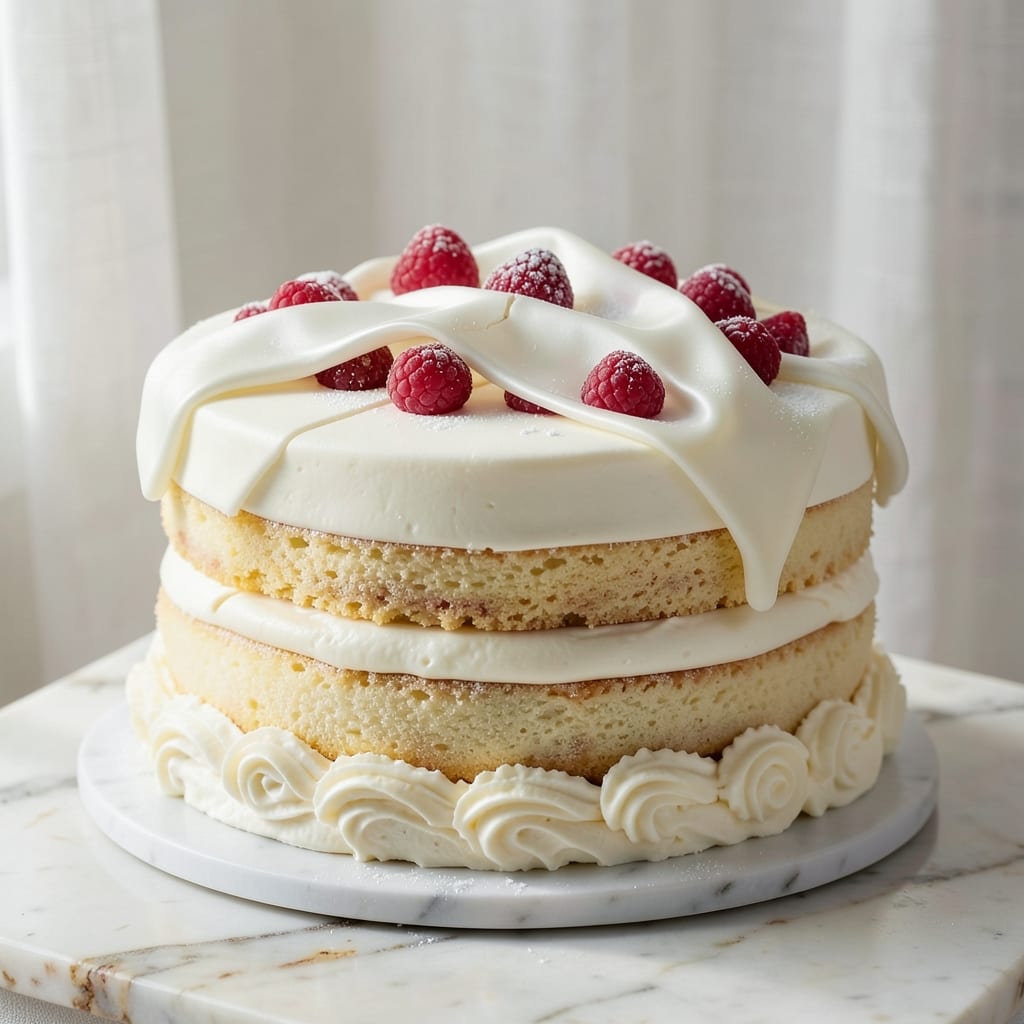
This amazing white cake recipe delivers perfectly moist layers that stay tender for days—no dry crumbs or cracking in sight. 💛 The secret lies in a simple but effective technique that keeps the texture light and fluffy while ensuring rich, buttery flavor in every bite. I've baked this cake countless times for special occasions, and it never fails to impress. What sets this recipe apart is the combination of basic ingredients that work together to create that signature ultra-moist texture. You'll use cake flour for a tender crumb, buttermilk for moisture, and a precise baking technique that guarantees even layers. The vanilla frosting ties everything together with its creamy, buttery richness. By the time you're done, you'll have a cake that looks as beautiful as it tastes—smooth layers, perfect height, and a frosting that's smooth enough to spread like a dream. The best part? It's foolproof, so even beginner bakers can achieve restaurant-quality results. Whether you're celebrating a birthday, anniversary, or just treating yourself, this white cake will be the star of the occasion. Let's get baking!
Ingredients for amazing white cake
Basic pantry staples transformed into restaurant-quality white cake with tender layers.
| Ingredient | Amount | Notes |
|---|---|---|
| All-Purpose Flour 🌾 | 2 ½ cups | Sifted for even baking |
| Cake Flour 🍞 | 1 cup | For ultra-tender crumb |
| Unsalted Butter 🧈 | 1 ½ cups | Room temperature, softened |
| Granulated Sugar 🍚 | 2 cups | Superfine preferred |
| Buttermilk 🥛 | 1 cup | Room temperature |
| Pure Vanilla Extract 🌿 | 2 tsp | High-quality for flavor |
| Baking Powder 🧂 | 2 tsp | Freshly measured |
| Salt 🧂 | ½ tsp | Fine sea salt |
| Large Eggs 🥚 | 3 whole | Room temperature |
| Heavy Cream 🥛 | 1 cup | Cold for frosting |
| Powdered Sugar 🍚 | 4 cups | Sifted for smooth frosting |
| Vanilla Bean Paste 🌿 | 1 tbsp | For intense vanilla flavor |
The cake flour is non-negotiable here—it's what gives this cake that signature tender crumb. Bob's Red Mill or Gold Medal are my go-tos, but any quality brand works. Butter should be at room temperature—press a finger into it, and it should leave a slight indent but not be greasy. Granulated sugar can be regular, but superfine dissolves faster for smoother batter. Buttermilk adds moisture without altering flavor—if you don't have it, mix 1 tbsp lemon juice or vinegar with 1 cup milk and let sit for 5 minutes. Eggs need to be room temperature too, so pull them out of the fridge 30 minutes before baking.
No cake flour? Substitute with 1 cup all-purpose flour minus 2 tbsp—this removes some protein for a lighter texture. Short on buttermilk? Sour cream or plain yogurt works in a pinch, but the acidity won't be identical. Pure vanilla extract can be swapped for vanilla sugar at double the amount, though real extract is worth the investment. For the frosting, powdered sugar should be sifted to avoid lumps—use a fine-mesh sieve or just shake it in a sealed bag. Heavy cream needs to be cold when whipped to get those perfect stiff peaks. The vanilla bean paste adds depth—if you only have extract, add an extra teaspoon.
Batter keeps for 24 hours in the fridge, covered tightly. The frosting will firm up nicely overnight—just rewhip briefly before using. Cake layers can be frozen for up to 3 months if wrapped tightly in plastic wrap and foil. For parties, assemble the cake a day ahead—flavors meld beautifully. Store leftovers at room temperature in an airtight container, but trust me, it'll disappear fast. If frosting gets too soft, chill it for 10 minutes before rewhipping.
Why You'll Love This Recipe
- No Mixer Needed: I swear by this—just a bowl and a whisk. The cake flour keeps it light without overworking, and the buttermilk cuts the butter perfectly on its own. Honestly, my stand mixer sits unused for this one.
- Buttery-Sweet Magic: That combo of unsalted butter and sugar? It’s like a hug for your taste buds. The cake flour gives it that tender crumb, but the butter makes every bite feel indulgent—no frosting required, though it begs for it.
- Birthday to Brunch: Serve it as a showstopper cake or slice it for breakfast toast with jam. Between us, I’ve even used leftover layers for trifle—because why waste perfection? The buttermilk keeps it moist for days.
- Budget Baking Wins: Four ingredients cover the essentials, and you’ll use half the butter for other recipes. Cake flour stretches further than all-purpose, and buttermilk’s cheap at the store. My wallet and my guests thank me.
Step-by-step instructions for ultra-moist layers with buttery vanilla frosting
Here's how to bake a showstopping white cake with tender layers and velvety frosting—every detail matters.
👨🍳 Step 1: Cream Butter and Sugars to Light and Fluffy
In a stand mixer fitted with the paddle attachment, beat the 1.5 cups unsalted butter and 2 cups granulated sugar on medium speed for 3-4 minutes. You're looking for a pale, fluffy mixture that nearly doubles in volume and leaves faint ribbons when the beaters are lifted. This creaming process incorporates air, which creates that signature tender crumb.
Here's the thing—don't rush this step. I press down on the butter mixture with a spatula every 30 seconds to ensure it's fully emulsified. If you skip this, you'll end up with dense layers instead of that cloud-like texture we're after. The butter should be completely smooth with no graininess remaining.
👨🍳 Step 2: Alternate Adding Dry Ingredients and Buttermilk
With the mixer running on low speed, add half of the 2.5 cups all-purpose flour and 1 cup cake flour mixture, followed by half of the 1 cup buttermilk. Mix just until combined, then repeat with the remaining dry ingredients and buttermilk. This alternating method prevents gluten development while ensuring even moisture distribution throughout the batter.
After adding all the dry ingredients, mix for another 30 seconds on low speed until just combined. You should still see some dry flour streaks—overmixing develops gluten, which makes the cake tough. The batter should be smooth and slightly thicker than pancake batter.
🍳 Step 3: Incorporate Eggs and Vanilla for Rich Flavor
Add the 3 whole large eggs, one at a time, mixing on low speed for 10 seconds after each addition. Then stir in the 2 tsp pure vanilla extract and 1 tbsp vanilla bean paste until fully incorporated. The vanilla bean paste adds that intense vanilla flavor that takes this cake from good to amazing.
I like to scrape down the sides of the bowl with a rubber spatula at this point to ensure all the ingredients are fully combined. The batter should be smooth with no streaks of egg white or vanilla paste. If the batter looks too thick, you can add 1-2 tablespoons of buttermilk to loosen it slightly—this helps with even baking.
🥘 Step 4: Bake in Two Perfect Layers
Preheat your oven to 350°F and grease two 8-inch round cake pans with butter, then line the bottoms with parchment paper. Divide the batter evenly between the pans. Smooth the tops with a spatula, then tap the pans gently on the counter to remove any air bubbles. Bake for 25-30 minutes or until a toothpick inserted in the center comes out clean.
I always check for doneness at the 20-minute mark because ovens vary. The edges should be pulling away from the pan slightly, and the tops should be golden brown. If the tops brown too quickly, tent the pans with aluminum foil to prevent overbrowning. Let the cakes cool in the pans for 10 minutes before transferring to a wire rack to cool completely.
👨🍳 Step 5: Whip Cream and Powdered Sugar for Frosting
In a separate bowl, whip the 1 cup cold heavy cream with an electric mixer until soft peaks form. Gradually add the 4 cups powdered sugar and continue whipping until the frosting is smooth and holds stiff peaks. This is where the magic happens—the cold cream creates a light, airy texture that contrasts beautifully with the dense cake layers.
Here's the pro tip: Sift the powdered sugar before adding to avoid lumps. I also like to add the 1 tbsp vanilla bean paste at this stage for that extra vanilla punch. The frosting should be thick enough to hold its shape but still spreadable. If it's too thick, add 1 teaspoon of milk at a time until it reaches the perfect consistency.
🥘 Step 6: Assemble and Frost for Showstopping Results
Once the cakes are completely cool, place one layer on a cake stand or plate. Spread a thin layer of frosting over the top to create a "crumb coat." This helps seal in any crumbs and makes the final frosting look flawless. Chill the cake in the refrigerator for 15 minutes to set the crumb coat.
After chilling, add the second layer and frost the entire cake with the remaining frosting. Use an offset spatula to create smooth sides and swirls on top. For extra flair, pipe a simple border around the edges or add a decorative swirl on top. The key is to work quickly to prevent the frosting from melting in warm conditions. Serve immediately for the best texture and flavor!
Pro Tips For Making Amazing White Cake
- WEIGH YOUR FLOURS: Mixing flour by volume is an invitation to disaster—especially when you’re balancing all-purpose and cake flour. I learned this the hard way when a batch turned dense and rubbery. Use a kitchen scale for exact measurements: 1 cup all-purpose flour is 125g, and cake flour (which is lighter) should be 110g for the same volume. Trust me, your cake’s texture depends on this.
- SIFT THE DRY INGREDIENTS: Don’t just dump the flour and sugar straight into the bowl—sift them together first. This aerates the mixture, preventing lumps and ensuring the cake rises evenly. I used to skip this, and my cakes always had uneven layers. Take the extra 30 seconds, and your crumb will be lighter and more uniform.
- DON’T OVERMIX THE BATTER: Once you add the buttermilk and melted butter, mix just until combined—about 20 strokes. Overmixing develops gluten, which makes the cake tough. I’ve seen people beat this batter like they’re making pancakes, and the result? A dense, sad cake. Stop when the batter looks just mixed, not homogenous.
- LET THE BUTTERMILK REST: If your buttermilk is thick or lumpy, let it sit at room temperature for 10-15 minutes before using. Cold buttermilk curdles when mixed with warm butter, and that’s a texture nightmare. I was skeptical until I tried it—I now keep a jar of buttermilk in the fridge and pull it out early. Smooth batter every time.
Best sauces and condiments for this amazing white cake
Classic Vanilla Glaze
This simple 3-ingredient glaze elevates your white cake instantly. Mix 1 cup powdered sugar with 2 tbsp heavy cream and 1 tsp vanilla extract until smooth. Drizzle over cooled layers for a professional finish—it adds shine and subtle sweetness without overpowering the cake. 💫 For extra flair, dust with flaky sea salt to balance the sweetness.
Lemon Curd Filling
Brighten your cake with homemade lemon curd—whisk ½ cup lemon juice, 3 egg yolks, ½ cup sugar, and ¼ cup butter until thickened. Spread between layers for a tangy contrast. Store-bought curd works too, but homemade tastes fresher. Pair with white chocolate shavings on top for a modern twist.
Chocolate Ganache
For a decadent twist, make a rich chocolate ganache by heating 1 cup heavy cream until simmering, then pouring over 8 oz dark chocolate. Let it sit for 2 minutes, then whisk until silky. Drizzle over the cake or use as a filling. Add ½ tsp espresso powder to deepen the chocolate flavor—it pairs surprisingly well with vanilla.
Berry Compote
Fresh or frozen berries (strawberries, raspberries, or blackberries) simmered with 2 tbsp sugar and 1 tsp lemon juice create a vibrant topping. Cook until syrupy, then strain for a smooth finish. Spoon over the cake or pipe with a star tip for a rustic look. This adds freshness and pops of color that make the cake look stunning. ✨
Cream Cheese Frosting
Swap the vanilla frosting for cream cheese frosting by beating 8 oz cream cheese (softened) with ½ cup butter, 3 cups powdered sugar, and 1 tsp vanilla. This adds a tangy richness that complements the cake’s sweetness. Pipe it into swirls or use a spatula for a smooth finish. Chill for 30 minutes before serving for the best texture.
Caramel Drizzle
For a sweet, gooey touch, drizzle salted caramel over the cake. Heat 1 cup sugar until melted, then whisk in ¼ cup heavy cream and 2 tbsp butter. Drizzle in zigzags and sprinkle with flaky salt before serving. The caramel’s depth contrasts beautifully with the cake’s delicate vanilla flavor, making every bite unforgettable. 🔥
Nutrition facts
Frequently asked questions
Why does this recipe use both all-purpose and cake flour?
The combination creates the perfect texture—cake flour gives ultra-tender crumb while all-purpose flour adds just enough structure. Cake flour alone can make layers too delicate, and all-purpose alone can make them dense. This balance ensures your cake stays moist but holds its shape beautifully.
Can I make this cake in a different pan size?
For an 8-inch pan, bake 25-30 minutes. For 9-inch pans, reduce batter by 25% and bake 20-25 minutes. For 6-inch pans, use full batter and bake 30-35 minutes. Always check with a toothpick—it should come out clean. Adjust baking time by 2-3 minutes per inch of pan diameter difference.
What's the best way to store leftover cake?
Keep it in an airtight container at room temperature for 2-3 days. For longer storage, wrap layers individually in plastic and freeze for up to 3 months. Thaw overnight in the fridge before frosting. The frosting can be stored separately in the fridge for 5 days—just rewhip briefly before using.
Why did my cake crack on top?
Cracking usually happens from overbaking or sudden temperature changes. Check at 20 minutes—if the toothpick test passes, remove it immediately. Let cakes cool in pans for 10 minutes before transferring to racks. For extra insurance, tent with foil if the oven runs hot. The cracks won't affect taste, but they can be hidden under frosting!
Can I substitute butter with oil?
Not recommended! Butter adds flavor and moisture that oil can't replicate. If you must, use ¾ cup melted butter plus ¾ cup vegetable oil, but expect slightly denser layers. For best results, stick with the butter—it's what gives this cake its signature richness. The creaming process with butter creates air pockets that oil simply can't match.