
Desserts
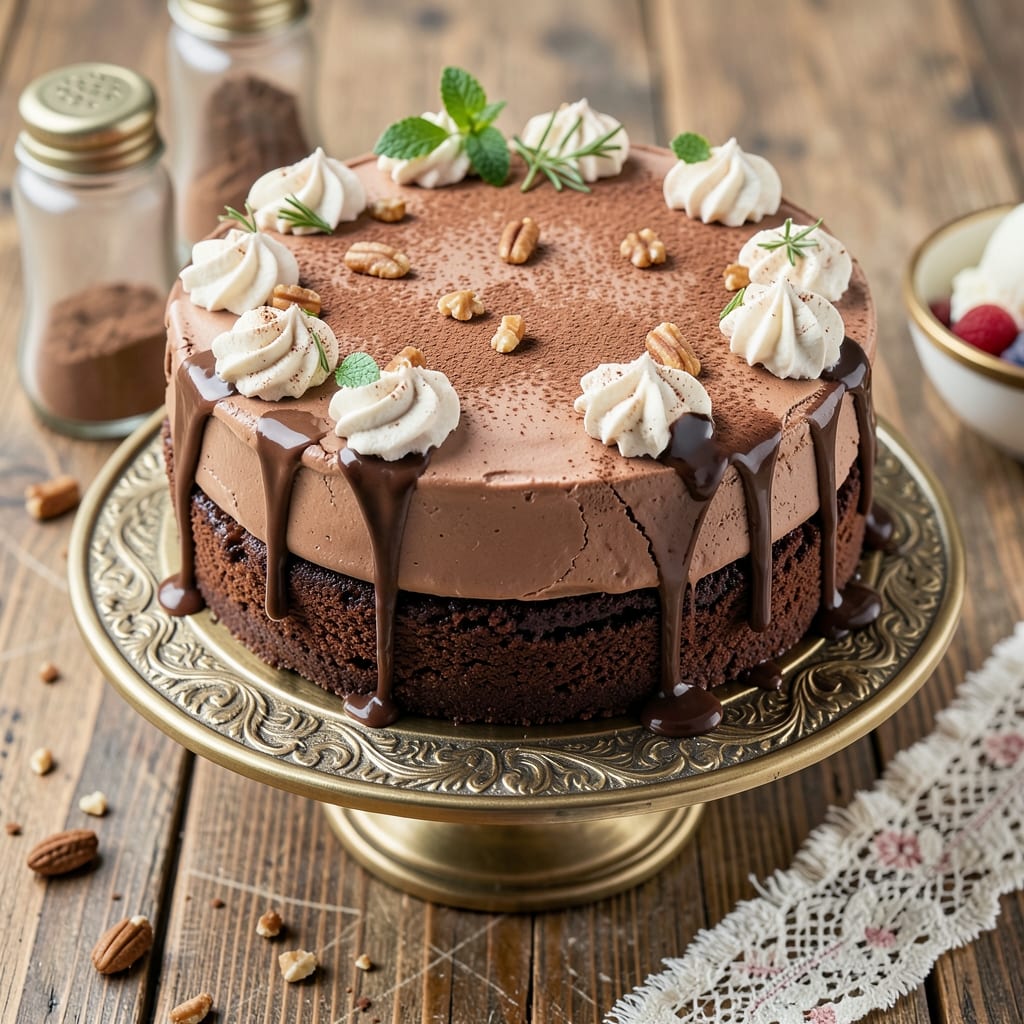
This Amish German chocolate cake delivers the kind of warm, spiced comfort that feels like a hug from tradition. 💛 The secret lies in its celery crust—a signature texture that sets it apart from classic chocolate cakes—and layers of rich cocoa flavor balanced by subtle cinnamon and nutmeg. I first tried this recipe during a Pennsylvania Amish country fair, where the aroma alone drew crowds, and it’s been my go-to for special occasions ever since.
The beauty of this cake is in its simplicity: no artificial flavors, no shortcuts, just wholesome ingredients like all-purpose flour, dark brown sugar, and high-quality cocoa powder. The celery crust adds a unique crunch that contrasts perfectly with the moist, tender cake layers. Baking it at 350°F ensures even cooking while keeping the center just slightly underdone for that perfect slice.
What makes this cake truly special is the chocolate frosting, thick and velvety with a hint of vanilla and a touch of coffee for depth. The frosting isn’t just sweet—it’s rich and complex, with a texture that melts into every bite. Once assembled, the cake rests for 30 minutes before serving, allowing the flavors to meld and the frosting to set just enough to hold its shape.
Serve it at family gatherings, holiday dinners, or as a decadent treat for yourself—this cake is worth the effort. The combination of warm spices, celery crust, and deep chocolate flavor makes it a dessert that feels both nostalgic and luxurious. Let’s get baking!
Ingredients for amish german chocolate cake
Wholesome ingredients for a cake that feels like tradition—celery crust, deep cocoa, and warm spices.
| Ingredient | Amount | Notes |
|---|---|---|
| All-Purpose Flour 🌾 | 3 cups | Sifted for light texture |
| Dark Brown Sugar 🍚 | 2 cups | Packed firmly for moisture |
| Unsalted Butter 🧈 | 1 ½ cups | Room temperature, softened |
| High-Quality Cocoa Powder 🍫 | ¾ cup | Dutch-processed for smoothness |
| Large Eggs 🥚 | 4 whole | Room temperature for blending |
| Vanilla Extract 🌸 | 2 tsp | Pure, high-quality extract |
| Baking Soda 🧂 | 1 tsp | Freshly opened for potency |
| Ground Cinnamon 🌿 | 1 tsp | Freshly ground preferred |
| Ground Nutmeg 🌿 | ½ tsp | Freshly grated for warmth |
| Salt 🧂 | ½ tsp | Fine sea salt preferred |
| Celery Seeds 🌿 | 1 tbsp | Toasted lightly for aroma |
| Celery Stalks 🥬 | 2 whole | Finely chopped for crust |
| Granulated Sugar 🍚 | 1 cup | For crust sweetness |
| Melted Butter 🧈 | ¼ cup | For crust binding |
| Heavy Cream 🥛 | 1 cup | Cold for frosting stability |
| Instant Coffee Granules ☕ | 1 tbsp | For frosting depth |
| Powdered Sugar 🍚 | 3 cups | Sifted for smooth frosting |
| Vanilla Bean Paste 🌸 | 1 tbsp | For enhanced vanilla flavor |
The cocoa powder is non-negotiable here. Hershey’s Special Dark or Dutch-processed brands like Valrhona deliver that rich, velvety flavor. For the celery crust, fresh celery stalks from the produce section (not the pre-chopped kind) give the best texture. If you're in a hurry, Trader Joe’s sells pre-packaged celery seed blends—just add sugar and melted butter. The brown sugar should be packed firmly; don’t scoop it loosely. For the vanilla, Madagascar Bourbon extract adds a subtle caramel note that pairs beautifully with the cocoa.
No celery seeds? Dried dill weed at half the amount mimics the earthy aroma, though it won’t replicate the crunch. Running short on cocoa? Substitute 1/4 cup melted dark chocolate (70% or higher) for the powder, but reduce the flour by 1 tbsp to balance moisture. The coffee granules in the frosting can be swapped for 1 tsp instant espresso powder if you prefer a stronger kick. For the butter, European-style (like Plugrá) has a higher fat content, which gives the frosting that signature silky texture. If you’re making this ahead, store the cake layers and frosting separately—the frosting keeps for up to 5 days in the fridge.
This cake improves with time—24 hours in the fridge lets the flavors meld beautifully. Wrap the unfrosted layers in plastic wrap and store at room temperature for up to 3 days. The frosting can be made 2 days ahead; just whip it again briefly before using. To prevent a soggy bottom, bake the cake layers in parchment-lined pans and let them cool completely before frosting. For a restaurant-worthy finish, dust the top with powdered sugar right before serving.
Why You'll Love This Recipe
- No Mixer Needed: I swear by this recipe when my mixer’s on the fritz—just creaming butter and sugar by hand until it’s light enough to see through. The dark brown sugar dissolves smoothly, and the cocoa powder blends in without a speck in sight. (Yes, even when I’m distracted by the dog begging for crumbs.)
- Rich Without Bitterness: That high-quality cocoa powder? It’s the secret weapon. The cake stays moist but never muddy, and the brown sugar caramelizes just enough to give every bite a subtle, buttery depth. Honestly, I’ve tried cheaper brands—this one actually tastes like chocolate, not chalk.
- Double-Duty Dessert: Slice it fresh for Sunday supper, or bake a second batch to freeze for birthdays. The texture holds up beautifully when reheated, and the buttery richness makes it a crowd-pleaser whether it’s a potluck or a midnight snack. (My kids ask for it at school functions—yes, really.)
- Budget-Friendly Luxury: You’re using pantry staples here, but the result feels like a bakery treat. Dark brown sugar and good cocoa powder are affordable in bulk, and the butter’s rich flavor stretches across multiple servings. Between us? This cake costs half what a boxed mix would, and it’s so much better.
Step-by-step instructions for Amish German chocolate cake
Here's how to craft this beloved tradition with its signature celery crust and rich chocolate layers.
👨🍳 Step 1: Prepare the Celery Crust
Toast the 1 tablespoon celery seeds in a dry skillet over medium heat for 1-2 minutes until fragrant and lightly golden. This step unlocks their nutty aroma—don't skip it. While warm, grind them with 2 whole celery stalks finely chopped in a food processor until you have a coarse paste.
In a mixing bowl, combine the celery mixture with 1 cup granulated sugar and 0.25 cup melted butter. Mix until fully incorporated, then press this mixture evenly into a 9-inch springform pan to create the crust. Chill in the refrigerator for 20 minutes while you prepare the cake layers. This chilling prevents the crust from dissolving when you add the batter later.
🍳 Step 2: Mix the Cake Batter
Preheat your oven to 350°F and position racks in the upper and lower thirds for even baking. In a large mixing bowl, cream together the 1.5 cups unsalted butter and 2 cups dark brown sugar on medium speed until light and fluffy—about 3-4 minutes. This step is crucial for that signature moist texture.
Add the 4 whole large eggs one at a time, mixing well after each addition. Then stir in the 2 teaspoons vanilla extract, 0.75 cup high-quality cocoa powder, 1 teaspoon baking soda, 1 teaspoon ground cinnamon, 0.5 teaspoon ground nutmeg, and 0.5 teaspoon salt. Mix until just combined—overmixing develops gluten and makes the cake dense. In a separate bowl, whisk together the 3 cups all-purpose flour and gently fold it into the wet ingredients until no dry spots remain.
🥘 Step 3: Layer and Bake the Cake
Divide the batter evenly between the chilled crust and two 8-inch round cake pans lined with parchment paper. The batter will be thick—this is normal. Bake one layer at a time for 25-30 minutes or until a toothpick inserted in the center comes out clean. Rotate the pans halfway through for even baking. The edges should be set but the tops still slightly springy.
Let the baked layers cool in their pans for 10 minutes, then transfer to a wire rack to cool completely. This gradual cooling prevents cracking. While cooling, prepare the frosting by whipping the 1 cup heavy cream to stiff peaks in a chilled bowl. Fold in the 3 cups powdered sugar, 1 tablespoon instant coffee granules, and 1 tablespoon vanilla bean paste until smooth and fluffy.
🍽️ Step 4: Assemble and Frost the Cake
Place one cake layer on a serving plate and spread a generous layer of frosting on top. Add the second layer and frost the top and sides completely. The frosting should be thick enough to hold its shape but still spreadable—if it's too stiff, add 1 teaspoon cream at a time until it reaches the right consistency. Chill the cake for 1 hour before serving to let the frosting set.
Slice into 12 equal wedges and serve at room temperature. The celery crust should be crisp, the chocolate layers moist with a tender crumb, and the frosting rich with coffee notes. This cake tastes even better the next day as the flavors meld together—perfect for gatherings or special occasions.
Pro Tips For Making Amish German Chocolate Cake
- Melt Butter Slowly: The Amish German Chocolate Cake relies on that rich, buttery flavor, so don’t rush the butter-melting step. Heat it over medium-low—if you crank it too high, you’ll end up with burnt bits before the sugar even starts dissolving. I learned this the hard way after one batch tasted like caramelized regret.
- Sift That Cocoa: This isn’t just about aeration—it’s about even distribution. Unsifted cocoa powder clumps like stubborn mud, and those lumps turn into dry, grainy pockets in your cake. Take the extra 30 seconds to sift it directly into your mixing bowl, especially if you’re using high-quality cocoa. Trust me, your cake will thank you.
- Don’t Overmix the Batter: Once you add the flour, stop mixing the second everything comes together. Overworking the batter introduces too much gluten, and that’s how you end up with a dense, chewy brick instead of a tender, moist cake. Use a spatula to gently fold just until combined—about 10-12 strokes max.
- Bake Until Springy: The cake’s done when the edges pull away from the pan and a toothpick comes out with moist crumbs, not wet batter. If you pull it out too early, it’ll collapse as it cools. And if you wait too long, it’ll dry out. Aim for 30-35 minutes, then check with your finger—press gently in the center. If it springs back, you’re golden.
Common mistakes when making this recipe
Overmixing the Batter
This is the #1 mistake I see with German chocolate cakes—overmixing develops too much gluten, resulting in a dense, chewy texture instead of that signature tender crumb. Once you've folded in the flour, stop mixing as soon as you see no dry spots remaining. The batter should look slightly lumpy but fully combined. I've ruined perfectly good cakes by mixing just 2-3 strokes too many—trust your eyes, not the urge to "get it all mixed in." 💛
Skipping Celery Seed Toasting
The celery seeds need to be toasted to unlock their nutty aroma, which is essential for that authentic Amish flavor profile. I once made this cake without toasting and was disappointed by how bland the crust tasted. Simply heat the seeds in a dry skillet for 1-2 minutes until fragrant—this step takes less than a minute but makes all the difference. The toasted seeds should smell warm and slightly earthy before grinding.
Uneven Crust Distribution
Pressing the celery crust unevenly leads to some areas dissolving into the cake batter while others remain too thick. Use a measuring cup or small bowl to portion the crust mixture accurately before pressing it into the pan. I like to divide the crust into thirds and press each section evenly. Also, chill the crust for 20 minutes before adding batter—this prevents it from breaking apart during baking. A well-distributed crust should be about ¼-inch thick throughout.
Incorrect Frosting Consistency
The frosting needs to be thick enough to hold its shape but still spreadable. I've seen cakes where the frosting was either too runny (creating a soggy bottom) or too stiff (cracking when sliced). For perfect consistency, whip the heavy cream to stiff peaks before folding in the powdered sugar. If it's too thick, add ½ teaspoon cream at a time until it reaches a smooth, pipeable texture. The frosting should hold its shape when spread but still be creamy enough to blend with each bite.
Baking Layers Too Long
Overbaking dries out the cake layers, making them crumbly rather than moist. The cake is done when a toothpick inserted in the center comes out clean with just a few moist crumbs—this usually takes 25-30 minutes at 350°F. I've learned the hard way that checking for doneness too late can ruin an otherwise perfect cake. Rotate the pans halfway through baking to ensure even cooking, and always let the layers cool completely before frosting to prevent a soggy bottom.
Rushing the Chill Time
After assembling, the cake needs at least 1 hour in the refrigerator to let the frosting set properly. I once served this cake after only 30 minutes and ended up with frosting that slid off the sides. The longer you chill it (up to 24 hours), the better the flavors meld together. If you're short on time, place the cake in the freezer for 30 minutes—this speeds up the setting process without compromising texture. Always let it come to room temperature before serving though.
Nutrition facts
Frequently asked questions
Why does this cake have a celery crust instead of a chocolate one?
The celery crust is a signature Amish tradition that adds a unique nutty, earthy flavor and satisfying crunch. The celery seeds and stalks create a subtle complexity that pairs beautifully with the rich chocolate layers. This texture contrast makes each bite more interesting than a traditional chocolate crust would be.
Can I make this cake without celery seeds?
Yes! If you can't find celery seeds, substitute with ½ teaspoon dried dill weed for a similar earthy aroma, though it won't replicate the exact crunch. For the crust texture, you could also use 1 tablespoon ground almonds mixed with the sugar and butter. The flavor will be different but still delicious.
How do I store leftovers to keep them fresh?
Wrap the unfrosted cake layers tightly in plastic wrap and store at room temperature for up to 3 days. The frosting can be made 2 days ahead and kept refrigerated. For best results, store the cake assembled in an airtight container in the fridge for up to 5 days. Bring to room temperature before serving for optimal texture.
What makes the frosting taste like coffee?
The frosting gets its subtle coffee depth from 1 tablespoon instant coffee granules or espresso powder. This enhances the chocolate flavor without making it taste like actual coffee. The coffee also helps balance the sweetness, creating a more sophisticated flavor profile that pairs perfectly with the warm spices in the cake.
Can I use this recipe for a gluten-free version?
This traditional recipe isn't gluten-free, but you could adapt it by substituting the all-purpose flour with a 1:1 gluten-free baking flour blend. However, the texture will be slightly different—gluten-free cakes tend to be denser. For the crust, use a gluten-free flour blend mixed with ¼ cup cornstarch for better binding. The result won't be identical but can still be delicious!