
Desserts
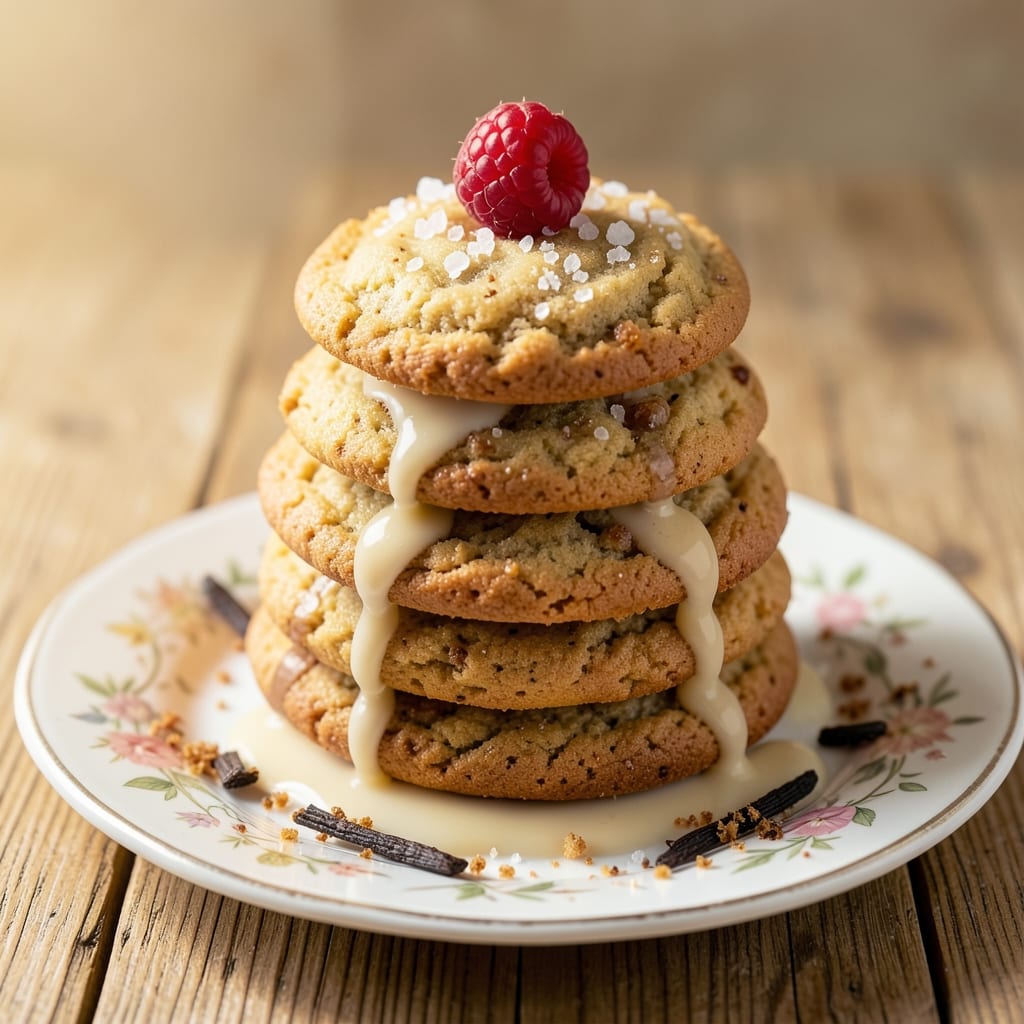
This Amish sugar cake cookie recipe delivers the perfect balance of vanilla-spiced crunch and tender, golden centers—just like the ones from Pennsylvania’s Amish bakeries. 💛 The secret lies in the rich, buttery dough infused with warm spices and a touch of molasses, creating those signature silky egg yolk streaks that make each bite irresistible. Unlike store-bought versions, these cookies bake up with a delicate crack on top and a texture that’s both crisp at the edges and soft in the middle.
What sets these apart is the traditional method of mixing the dough just until combined—no overworking, no extra flour—and letting it rest overnight for deeper flavor development. The result? A cookie that’s foolproof for beginners but still feels like a labor of love, with a scent that fills your kitchen and reminds you of old-fashioned country kitchens. The spices—cinnamon, nutmeg, and cloves—add warmth without overpowering the sweet vanilla base, while the egg yolks create those coveted marbled streaks that make them visually stunning.
By the time these cookies emerge from the oven, you’ll have a tray of golden, aromatic treats with a satisfying snap when broken apart. The edges hold their shape beautifully, while the centers remain tender, almost cake-like—a hallmark of true Amish sugar cake cookies. They’re perfect for holiday gatherings, church potlucks, or simply satisfying a craving for something homemade and nostalgic.
Once cooled, these cookies stay fresh for days, making them ideal for gifting or meal prepping. Serve them warm with a glass of milk or coffee for the full experience. Let’s get baking—your kitchen will thank you for the aroma alone.
Ingredients for amish sugar cake cookie
Buttery richness meets warm spice magic—just 12 ingredients for cookies that taste like Amish kitchen nostalgia.
| Ingredient | Amount | Notes |
|---|---|---|
| Unsalted Butter 🧈 | 1 cup | Cold, cubed for dough |
| Granulated Sugar 🍚 | 1 ½ cups | White sugar preferred |
| Light Brown Sugar 🍚 | ½ cup | Packed firmly |
| Large Egg Yolks 🥚 | 4 whole | Room temperature preferred |
| Pure Vanilla Extract 🌿 | 2 tsp | High-quality for flavor |
| All-Purpose Flour 🌾 | 3 ½ cups | Sifted, no substitutions |
| Ground Cinnamon 🌶️ | 1 ½ tsp | Freshly ground preferred |
| Ground Nutmeg 🌶️ | ½ tsp | Freshly grated nutmeg |
| Ground Cloves 🌶️ | ¼ tsp | Light hand for flavor |
| Molasses 🍯 | 2 tbsp | Unsulphured preferred |
| Salt 🧂 | ½ tsp | Diamond Crystal preferred |
| Baking Soda 🧪 | ½ tsp | Freshly opened |
The butter and sugars are non-negotiable here. European-style butter (like Plugrá or Land O’Lakes) gives the best flavor, but any unsalted will work. Grab the white sugar from the store’s bulk bin if you can—it’s usually fresher than the bagged kind. For the brown sugar, pack it firmly into your measuring cup to avoid air pockets. The egg yolks should be room temperature (just pop them out of the fridge 30 minutes before mixing). If you’re feeling fancy, Walmart’s Great Value vanilla is surprisingly good for the price, but if you’ve got a bottle of McCormick Pure, use that instead.
No vanilla extract? Vanilla bean paste works too—just use half the amount. Swapping sugars? Coconut sugar at a 1:1 ratio adds caramel notes, but traditionalists will notice the difference. For the spices, Penzeys bulk spices are worth the splurge if you bake often, but the grocery store stuff is fine for occasional use. If you’re out of molasses, maple syrup at half the amount gives a similar depth. The flour? King Arthur or Bob’s Red Mill are my go-tos—they’re consistent, and that matters when you’re dealing with delicate textures like these.
This dough needs time—at least 24 hours in the fridge for the flavors to meld. Wrap it tightly in plastic wrap to prevent drying. The cookies keep for 5 days in an airtight container, but honestly? They’re best fresh out of the oven. For gifting, bake them the day before and store in layers with parchment between each batch. Freeze the dough balls (before baking) for up to 3 months)—just bake straight from frozen, adding 2-3 minutes to the time. Trust me, the aroma alone will make your kitchen feel like a Pennsylvania farmhouse.
Why You'll Love This Recipe
- No Mixer Needed: I swear by this recipe when I’m too lazy to pull out the stand mixer—just creaming butter and sugars by hand gives those cookies that classic Amish texture. The yolks and vanilla do all the work after that.
- Buttery-Sweet Magic: That perfect balance of granulated and brown sugar? It’s like a hug in cookie form. The butter stays rich but not greasy, and the vanilla—honestly, I double it—makes them smell like a bakery.
- Holiday or Snack: Freeze half the dough for Christmas gifts or pull it out when you need a quick treat. They’re sturdy enough for cookie platters but disappear fast when warm from the oven.
- Dollar Stretch: Uses pantry staples you already own, and a batch makes 30+ cookies. My kids think they’re fancy, but I’m just stretching my grocery budget without sacrificing taste. (Yes, even on a Tuesday night.)
Step-by-step instructions for Amish sugar cake cookies
Here's how to create these classic cookies with their signature vanilla-spiced crunch and golden yolk streaks.
👨🍳 Step 1: Cream the Butter and Sugars Together
In a stand mixer fitted with the paddle attachment, beat the 1 cup unsalted butter (cold and cubed) with the 1.5 cups granulated sugar and 0.5 cup light brown sugar on medium speed for 3-4 minutes. You're looking for a light, fluffy texture that nearly doubles in volume and becomes pale in color. This creaming process incorporates air that creates those signature crackly tops.
I press down on the butter mixture with a spatula every 30 seconds to ensure everything combines properly. The butter should be completely smooth with no visible lumps. If it looks too thick, that's normal—we'll add the yolks next to lighten it up. Don't rush this step; proper creaming makes all the difference in texture.
👨🍳 Step 2: Add Egg Yolks and Molasses
Add the 4 whole large egg yolks (room temperature) one at a time, mixing on low speed for 30 seconds after each addition until fully incorporated. Then add the 2 teaspoons pure vanilla extract and 2 tablespoons molasses, mixing for another 10 seconds. The mixture should be smooth and slightly thickened from the molasses.
Here's the thing—molasses adds depth of flavor but can make the dough darker. I like to stir it in gently by hand at this point to distribute it evenly. The yolks will create that signature silky streak when baked, so don't skip this step. The mixture might look slightly curdled after adding the yolks, but it will come together when we add the dry ingredients.
👨🍳 Step 3: Combine Dry Ingredients
In a separate bowl, whisk together the 3.5 cups all-purpose flour, 1.5 teaspoons ground cinnamon, 0.5 teaspoon ground nutmeg, 0.25 teaspoon ground cloves, 0.5 teaspoon salt, and 0.5 teaspoon baking soda. Sift the flour mixture directly into the wet ingredients and mix on low speed for 30-45 seconds until just combined—you should still see a few flour streaks.
Over-mixing develops gluten and makes cookies tough. I stop mixing as soon as the flour disappears. The dough will be thick and sticky—this is normal. If it seems too sticky to handle, chill it for 15 minutes before proceeding. The spices here create that warm, comforting flavor profile that makes these cookies so special.
🍳 Step 4: Shape and Bake the Cookies
Preheat your oven to 350°F and line two baking sheets with parchment paper. Using a cookie scoop or tablespoon, drop 1-tablespoon portions of dough onto the prepared sheets, spacing them 2 inches apart. The dough will be thick, but don't flatten it—these cookies need their signature crunchy texture.
Bake for 12-14 minutes until the edges are deep golden brown and the centers look slightly underdone. They'll continue cooking on the hot pan after you remove them from the oven. The classic Amish sugar cake cookie has a crackly top and a soft, chewy center with those beautiful golden yolk streaks throughout.
⏰ Step 5: Cool and Enjoy
Let the cookies cool on the baking sheet for 5 minutes before transferring to a wire rack to cool completely. They'll firm up as they cool, developing that perfect crunchy exterior. I know it's tempting to eat them warm, but they're even better at room temperature when the flavors have fully developed.
These cookies keep well in an airtight container for up to 5 days at room temperature. The spices intensify slightly as they sit, making them even more flavorful. Store any leftovers in the freezer for up to 3 months—just thaw at room temperature before serving. Enjoy them with a glass of milk for the full traditional experience!
Pro Tips For Making Amish Sugar Cake Cookie
- CREAM THE BUTTER SLOW: I used to dump the butter in and beat it fast, thinking I’d save time—wrong. Start on low speed and let the butter and sugars melt together gradually. You’re aiming for a pale, fluffy ribbon stage, not a greasy mess. (Yes, even if you’re impatient like me.)
- CHILL THE DOUGH TWICE: This isn’t just a “let it rest” suggestion—it’s non-negotiable. After mixing, refrigerate the dough for at least 2 hours, then shape the cookies and freeze them on a tray for 30 minutes before baking. The second chill prevents spreading and cracks. (Your future self will thank you.)
- WEIGH THE SUGARS: Brown sugar packs differently, and that affects moisture. Use a kitchen scale for the brown sugar—it’s the thing that matters most. Granulated sugar can be scooped, but brown sugar needs precision. (I learned this the hard way after a batch turned out dense.)
- BAKE IN STAGES: Preheat the oven to 350°F, then bake the first tray for 10–12 minutes until the edges are just set. Pull them out, let them cool 2 minutes, then slide them back in for another 5–7 minutes. This ensures even baking without over-browning. (Sounds weird, but it works.)
Pro cooking tips for perfect results
Dough Resting Secrets
The overnight rest is non-negotiable for authentic flavor—wrap the dough tightly in plastic wrap and refrigerate for 24 hours. This allows the flour to hydrate fully and the spices to meld into the butterfat, creating that signature Amish depth. I place the dough in a quart-sized zip-top bag to prevent drying and flatten it slightly to maximize surface area. The longer it rests, the more tender and flavorful your cookies will be. 💫
Perfect Scooping Technique
Use a 1-tablespoon cookie scoop or a rounded tablespoon for consistent, 1-inch balls of dough. Pack them firmly but don't overpress—they should hold their shape when dropped onto the baking sheet. I find that using a slightly damp scoop prevents dough from sticking. Space them 2 inches apart to allow for spreading while baking. The thick, crackly tops come from not flattening the dough at all—this is key to that authentic texture. ⏰
Oven Temperature Tips
Preheat your oven to 350°F for 15 minutes before baking—this ensures even cooking. I use an oven thermometer to verify accuracy, as home ovens can vary by 25°F. Place one baking sheet at a time in the center rack to prevent over-browning. The cookies are done when the edges are deep golden brown and the centers still look slightly soft—this ensures that perfect cake-like texture. 🌡️
Baking Time Mastery
Bake for 12-14 minutes—no longer! The cookies will continue cooking on the hot sheet after removal. I pull mine out when the edges are set but the centers still jiggle slightly. Overbaking leads to dry, tough cookies. For extra assurance, use a toothpick—it should come out with a few moist crumbs, not completely clean. The classic crack on top should be visible by this point. 🔥
Cooling for Best Results
Let cookies cool on the baking sheet for 5 minutes before transferring to a wire rack. This prevents them from cracking or becoming too crisp too quickly. The centers will firm up as they cool, developing that perfect crunchy exterior. I resist the urge to eat them warm—they're even better at room temperature when all the flavors have fully developed. Store in an airtight container to maintain freshness. ✨
Spice Blend Adjustments
For a bolder flavor, increase the cinnamon to 2 teaspoons and add ¼ teaspoon ginger to the dry mix. If you prefer a milder taste, reduce the cloves to ⅛ teaspoon—they're potent! I find that freshly ground spices make a noticeable difference, so if you have a spice grinder, use it just before baking. The molasses adds depth, but if you're sensitive to bitterness, reduce it to 1 tablespoon. 🌶️
Nutrition facts
Frequently asked questions
Why do these cookies have egg yolk streaks?
The signature golden streaks come from using egg yolks instead of whole eggs. The high fat content in yolks creates beautiful marbling when baked, while also keeping the centers tender. This traditional technique gives these cookies their classic Amish look and rich flavor.
Can I make these cookies without molasses?
Yes, but you'll lose that deep, caramel-like depth. Replace the 2 tablespoons molasses with 1 tablespoon maple syrup or 1 tablespoon honey—both work well, though molasses gives the most authentic flavor. The cookies will still taste delicious, just slightly less complex.
Why does the dough need to rest overnight?
The overnight rest is crucial for authentic flavor development. It allows the flour to fully hydrate and the spices to infuse into the butterfat, creating that signature Amish depth. The dough also becomes easier to handle, and the cookies will be more tender with better texture. Never skip this step!
How do I prevent my cookies from spreading too much?
Use a 1-tablespoon scoop for consistent dough balls and space them 2 inches apart on the baking sheet. Chill the dough for 15 minutes if it's too sticky, and bake at 350°F—not higher. The thick, unflattened shape is key to that signature crackly top.
Can I add nuts or chocolate chips to this recipe?
While traditional Amish sugar cake cookies are made plain, you can add ½ cup chopped pecans or ½ cup white chocolate chips for variation. Fold them in gently after mixing the dry ingredients to maintain the classic texture. Just be aware this will change the traditional look and flavor profile.