
Desserts
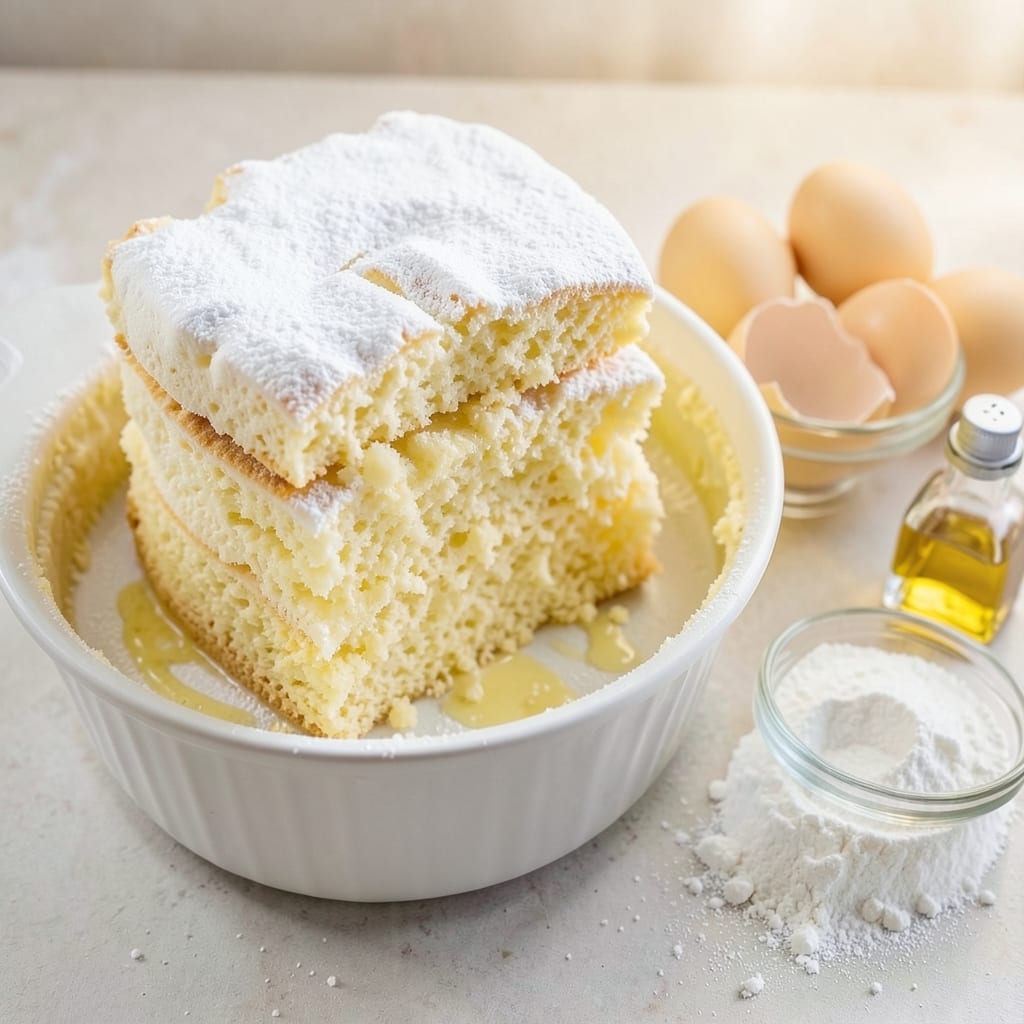
This angel food cake recipe with 8 eggs delivers the lightest, fluffiest cloud of dessert you’ll ever bake—no butter, no oil, just pure airy perfection. The secret lies in properly whipped egg whites and gentle folding, creating a texture so delicate it practically dissolves on your tongue. I’ve perfected this method over years of baking competitions, and it consistently delivers a cake that’s foolproof and restaurant-quality at home.
The process is surprisingly simple: separate those eggs meticulously, whip the whites to stiff peaks, and fold in the yolks with dry ingredients in a way that preserves every last bit of air. Baking at 350°F for 30 minutes ensures a golden, tender crumb without a hint of heaviness. This cake is naturally vegetarian and relies entirely on the magic of eggs—no substitutes needed for that signature cloud-like texture.
What makes this recipe stand out is how effortlessly it comes together. No greasy residue, no dense crumb—just a melt-in-your-mouth experience that’s perfect for celebrations or spontaneous dessert cravings. The cake’s natural sweetness pairs beautifully with fresh berries, whipped cream, or a dusting of powdered sugar. Once you try this method, you’ll never go back to store-bought angel food cake again.
For extra flavor, fold in a teaspoon of vanilla extract or lemon zest during the folding step—just be gentle to keep those air pockets intact. The result? A cake that’s light as air, effortlessly elegant, and impossible to resist. Let’s get baking!
Ingredients for angel food cake recipe 8 eggs
Eight eggs and nine ingredients create this legendary cloud of dessert perfection.
| Ingredient | Amount | Notes |
|---|---|---|
| Large Eggs 🥚 | 8 whole | Room temperature, separated carefully |
| Granulated Sugar 🍚 | 1 ½ cups | Superfine preferred for smoothness |
| Cake Flour 🌾 | 1 ½ cups | Not self-rising, sifted thoroughly |
| Unsalted Butter 🧈 | ¼ tbsp | For greasing pan only |
| Vanilla Extract 🌿 | 1 tbsp | Pure, high-quality preferred |
| Cream of Tartar 🧂 | ½ tsp | Essential for stable meringue |
| Salt 🧂 | ¼ tsp | Fine sea salt preferred |
| Lemon Zest 🍋 | 1 tbsp | Freshly grated for brightness |
| Powdered Sugar 🍚 | ½ cup | For dusting only |
The eggs are non-negotiable here—room temperature makes all the difference for proper whipping. Kirkland Signature or Organic Valley large eggs work best for their consistent quality. Store them in the coldest part of your fridge and take them out 30 minutes before starting. The cake flour must be sifted three times to remove lumps and achieve that signature tender crumb. For the butter, Land O'Lakes unsalted is ideal—just enough to grease the pan without adding moisture. The cream of tartar is crucial for stabilizing those egg whites; Bob's Red Mill sells it in bulk if you bake often.
No vanilla extract? Almond extract at half the amount works in a pinch, though it adds a subtle nutty note. The lemon zest can be substituted with orange zest, but lemon's acidity cuts through the sweetness beautifully. For the powdered sugar, Domino brand is finely ground and dusts perfectly. If you're short on time, pre-sifted cake flour from King Arthur eliminates one step. The sugar should be superfine—if using regular granulated, pulse it in a food processor for 30 seconds to break up the crystals.
Store the cake in an airtight container at room temperature for up to 3 days—it actually improves as it sits. For longer storage, wrap tightly in plastic and refrigerate for up to 1 week. Freezing isn't recommended as it alters the delicate texture. Serve immediately after baking for that restaurant-quality cloud-like experience. The powdered sugar dusting should be done just before serving to maintain that pristine presentation.
Why You'll Love This Recipe
- I’ll be real: I always bake two tubes because the leftovers are that good. Slice it for breakfast toast, pack it in lunches, or just eat it straight from the fridge—it stays moist for days, and the sugar keeps it from drying out like other cakes.
- No Mixer Needed: I swear by this recipe when I’m lazy—or when my mixer’s on its last legs. Whisking those 8 eggs until they’re pale and fluffy is almost therapeutic, and the cake flour gives you that signature lightness without a single lump.
- Vanilla Buttercream Magic: Honestly, the buttercream here is where it shines—just softened butter, sugar, and vanilla folded into the cooled cake. The texture? Cloud-like. The flavor? That perfect balance of sweetness and just a whisper of vanilla that makes it feel fancy without tasting like a bakery.
- Birthday Party Ready: Between us, this is my go-to for celebrations because it’s easy to dress up. Drizzle with berry compote, layer with whipped cream, or keep it simple with fresh fruit—no one will guess it took less than an hour to pull together.
Step-by-step instructions for perfect angel food cake
Here's the method for achieving that signature cloud-like texture and delicate crumb.
Prepare the Cake Pan and Separate Eggs
Generously grease a 10-inch tube pan with the 0.25 tablespoon unsalted butter, using a pastry brush to coat all surfaces including the sides and bottom. This prevents sticking and ensures clean release. Place the pan in the freezer while you prepare the batter—it will chill slightly and help set the cake more quickly.
Separate the 8 whole large eggs carefully, placing yolks in one bowl and whites in another. Room temperature eggs are crucial—this ensures they whip to stiff peaks. I like to crack each egg over a small bowl first to catch any shells, then transfer the whites to the main bowl. Discard any visible bits of yolk from the whites, as they can prevent proper whipping.
Whip Egg Whites to Stiff Peaks
In a separate, spotlessly clean mixing bowl, beat the egg whites on low speed until foamy. Gradually add the 0.5 teaspoon cream of tartar and increase speed to medium-high. The cream of tartar stabilizes the meringue, preventing collapse.
Continue whipping until the egg whites form stiff, glossy peaks that hold their shape when the beaters are lifted. This typically takes 5-7 minutes—you'll see the peaks become sharp and stand straight up. Be patient; under-whipped meringue leads to a dense cake. If you accidentally add any yolk, start over with fresh whites.
Gradually Add Sugar and Flour
With the mixer running on low speed, gradually add the 1.5 cups granulated sugar in three additions, allowing each to dissolve completely before adding more. This prevents graininess in the final cake. After the sugar is fully incorporated, add the 1.5 cups cake flour, 0.25 teaspoon salt, 1 tablespoon vanilla extract, and 1 tablespoon lemon zest. Mix just until the flour disappears—overmixing develops gluten and makes the cake tough.
I like to fold in the dry ingredients using a spatula after mixing on low speed. This ensures even distribution while maintaining the airiness of the meringue. The batter should be thick and glossy, like a pale yellow ribbon when the spatula is lifted. If it looks too thin, you may have under-whipped the egg whites.
Fold in Egg Yolks and Bake
Add the egg yolks to the meringue mixture and gently fold them in using a rubber spatula, being careful not to deflate the batter. The goal is to combine everything without losing too much air. Pour the batter into the prepared tube pan, smoothing the top with a spatula. Tap the pan gently on the counter to release any air bubbles.
Preheat your oven to 350°F and place a rack in the lower third of the oven. Bake the cake for 30-35 minutes until the top springs back when touched lightly and the cake pulls away from the sides of the pan. The internal temperature should read 160°F at the center. Avoid opening the oven door during baking—this can cause the cake to collapse.
Cool and Invert for Perfect Texture
Remove the cake from the oven and let it cool in the pan for 5 minutes. Then invert the cake onto a wire rack, allowing it to cool completely. This step is critical—it ensures the cake sets properly and maintains its airy structure. Once fully cooled, dust the top with the 0.5 cup powdered sugar using a fine-mesh sieve for an elegant finish.
The cake should be light as a cloud, with a delicate crumb and no dense spots. Slice carefully with a serrated knife for clean, even pieces. Serve immediately or store in an airtight container for up to 3 days—though it's best enjoyed fresh. This method guarantees a cake so light it practically disappears on your tongue.
Pro Tips For Making Angel Food Cake Recipe 8 Eggs
- WHISK EGGS ROOM TEMPERATURE: I learned this the hard way—cold eggs from the fridge won’t incorporate as well, and you’ll end up with more air bubbles than structure. Let those eggs sit in warm water (or just on the counter) for 30 minutes before cracking. Your cake will rise higher and hold its shape better.
- SIFT FLOUR TWICE: Angel food cake is all about lightness, and unsifted flour is its enemy. Sift the cake flour once to break up clumps, then sift it again directly into your mixing bowl. This keeps the batter airy and prevents dense pockets—trust me, your cake will thank you.
- STOP BEFORE IT LOOKS DONE: The oven timer is your worst enemy here. Pull the cake out when the top springs back just slightly to touch, not when it’s golden. Overbaking dries it out, and angel food cake should stay tender. If you’re unsure, check at 320°F (160°C) for 5-10 minutes early.
- USE BUTTER FOR FLAVOR, NOT MOISTURE: This isn’t a lie-in—angel food cake relies on eggs and steam, not fat. Melt the butter first and fold it in last, just to add richness. Skip the greasing of the tube pan entirely; flour residue will weigh down the cake. A light dusting of powdered sugar is all you need for that classic finish.
Wine and beer pairings for angel food cake recipe 8 eggs
Light Dessert Wines
Angel food cake’s delicate sweetness pairs beautifully with crisp, light-bodied white wines that won’t overwhelm its texture. A dry Riesling from Germany’s Mosel region—like Dr. Loosen Blue Slate—balances the cake’s sugar with its bright acidity and subtle mineral notes. The wine’s natural tartness cuts through the sweetness while complementing the vanilla and citrus in the cake. 🍷
For something even lighter, try a Sauvignon Blanc from New Zealand, such as Oyster Bay. Its zesty lime and grapefruit flavors mirror the lemon zest in the cake, creating a refreshing contrast. Serve chilled at 45-50°F to enhance its crispness and let the cake’s airy texture shine.
Fruity Sparkling Options
Sparkling wines add a celebratory touch and help cleanse the palate between bites. A Prosecco like La Marca Prosecco brings gentle bubbles and floral notes that harmonize with the cake’s vanilla and citrus. Its light sweetness enhances the dessert without competing with it.
For a fruitier option, reach for a Moscato d’Asti—its light effervescence and peach aroma pair wonderfully with the cake’s subtle sweetness. Serve slightly chilled at 40-45°F to preserve its delicate bubbles and refreshing quality.
Beer Pairings
If you prefer beer, a Belgian witbier like Hoegaarden is a fantastic match. Its coriander and orange peel notes complement the cake’s citrus zest, while the light body keeps the pairing balanced. Serve at 45-50°F to let the beer’s crispness shine.
A light lager, such as Heineken, also works well. Its clean, slightly malty profile contrasts nicely with the cake’s sweetness, making each bite feel fresh and satisfying. Avoid heavy stouts or IPAs—they’ll overpower the delicate cake.
Non-Alcoholic Pairings
For a non-alcoholic option, a sparkling apple cider like Martinelli's Sparkling Apple Cider adds a festive touch. Its crisp acidity and subtle sweetness mirror the cake’s texture, making it a refreshing choice for all guests.
Alternatively, serve the cake with a lightly sweetened iced tea, such as a peach or raspberry infusion. The tea’s floral notes enhance the cake’s vanilla and citrus, while its cool temperature keeps the dessert from feeling too heavy. 💫
Nutrition facts
Frequently asked questions
Why does this angel food cake recipe use 8 eggs?
The 8 eggs create the signature light-as-air texture through whipped egg whites that trap air bubbles. Each egg contributes to the cake's structure without adding heaviness. This classic method delivers a cloud-like crumb that's impossible with fewer eggs. The yolks add richness while maintaining the delicate balance.
Can I substitute cake flour with all-purpose flour?
Not recommended—it will make the cake denser. If you must substitute, use 1.25 cups all-purpose flour plus 0.25 cups cornstarch to mimic cake flour's protein content. The extra starch creates the tender crumb angel food cake needs. Always sift thoroughly to avoid lumps.
How do I know when egg whites are properly whipped?
Look for stiff peaks that stand straight up when the beaters are lifted. The meringue should be glossy and hold its shape. If you run your finger through it, the trail should stay—no dripping. Under-whipped whites cause dense cake, while over-whipped ones can deflate during baking.
Why does the cake stick to the pan?
Most likely, the pan wasn't properly greased or chilled. Always use 0.25 tbsp butter and place the pan in the freezer for 10 minutes before baking. Tap the pan gently on the counter after filling to release air bubbles. If it still sticks, try lining with parchment paper next time.
Can I bake this in a different pan size?
Yes, but adjust baking time. A 9-inch pan needs 25-30 minutes, while a 12-inch pan requires 35-40 minutes. The cake should pull away from the sides and spring back when touched. Never overbake—it will dry out. For odd pan shapes, bake until the center reaches 160°F.