
Desserts
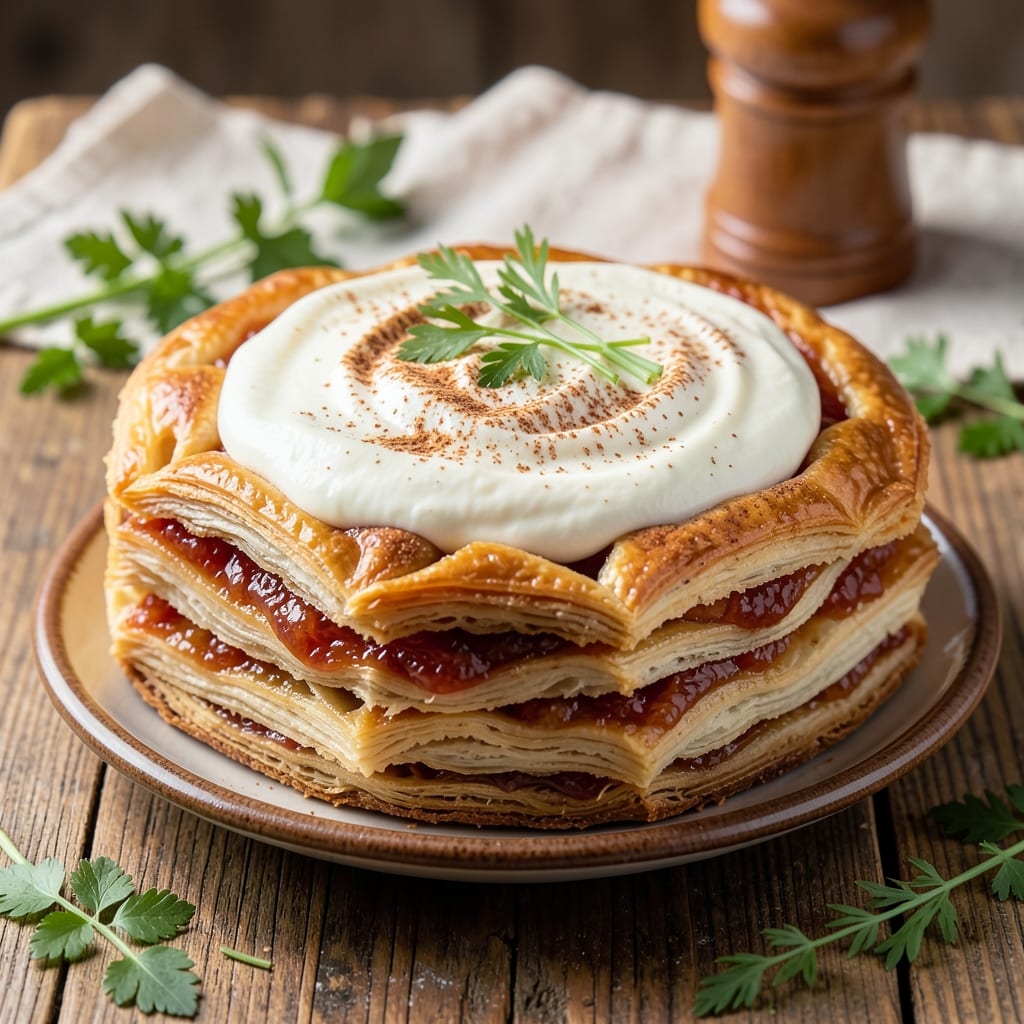
This Armenian gata cake recipe brings a taste of Armenia’s baking traditions to your kitchen with its signature crispy celery crust and spiced yogurt filling. 🌟 The delicate layers of flaky pastry and creamy, lightly sweetened filling create a dessert that’s both elegant and comforting—a perfect balance of textures that makes every bite unforgettable.
What sets this recipe apart is the traditional technique of using celery in the crust, which adds a subtle earthiness that complements the yogurt filling beautifully. The dough is rolled thin and layered carefully to ensure that signature crispy edges and tender interior. This dessert is often served during celebrations, making it a meaningful addition to any special occasion.
The result is a golden, shatteringly crisp cake with a creamy, tangy center that’s impossible to resist. The aroma of warm spices and vanilla fills your kitchen as it bakes, making it a dessert that’s as delightful to prepare as it is to enjoy. Serve it warm or at room temperature for the best experience.
Whether you're introducing Armenian cuisine to your family or looking for a unique dessert to impress guests, this recipe delivers restaurant-quality results with a touch of cultural heritage. Let’s get started on creating this timeless treat.
Ingredients for armenian gata cake
The heart of Armenian gata lies in its crispy celery crust and spiced yogurt filling—just 13 ingredients create magic.
| Ingredient | Amount | Notes |
|---|---|---|
| All-Purpose Flour 🌾 | 3 ½ cups | For crispy crust texture |
| Unsalted Butter 🧈 | 1 ½ cups | Cold, cubed for flaky layers |
| Granulated Sugar 🍚 | ½ cup | Lightly sweetened filling |
| Plain Yogurt 🥛 | 2 cups | Full-fat for creaminess |
| Celery Stems 🥬 | 1 cup | Finely chopped for crust |
| Ground Cinnamon 🌿 | 1 ½ tsp | Warm spice for filling |
| Ground Cardamom 🌿 | ½ tsp | Traditional Armenian flavor |
| Vanilla Extract 🍯 | 1 tsp | Pure, high-quality extract |
| Large Eggs 🥚 | 2 whole | Room temperature for binding |
| Salt 🧂 | ½ tsp | Diamond Crystal preferred |
| Baking Powder 🍞 | 1 tsp | Aluminum-free for tender crust |
| Powdered Sugar 🍚 | ¼ cup | For dusting finished cake |
| Lemon Zest 🍋 | 1 tbsp | Brightens flavor profile |
The celery stems are non-negotiable for that signature earthy crunch. Fresh organic celery from the grocery store's produce section works best—avoid the wilted stems. For the yogurt, full-fat Greek or Armenian-style (like Anadolu) delivers the richest texture. If you can't find cardamom, allspice at half the amount mimics its warmth. The butter should be cold when cutting into cubes—wrap it in parchment and refrigerate for 30 minutes if needed. Store-brand butter works fine, but European-style butter has higher fat content for extra flakiness.
No vanilla extract? Seeds from a pod work in a pinch, but pure extract ensures consistent flavor. For a gluten-free version, substitute 1:1 gluten-free flour blend and reduce baking powder to 0.75 tsp. The baking powder is crucial—aluminum-free types prevent metallic aftertaste. If your celery has a strong aroma, soak the chopped stems in cold water for 10 minutes to mellow the flavor. The powdered sugar dusting isn't just decoration; it adds a delicate sweetness that balances the tangy filling when the cake is served warm.
Store the dough between layers wrapped in plastic for up to 2 days in the fridge. The assembled cake keeps at room temperature for 3 days or refrigerated for 5 days. For best texture, serve at room temperature after refrigeration. To reheat, cover with foil and warm at 300°F for 10 minutes. The crust stays crispy when stored properly—never microwave as it turns gummy. Freeze unbaked layers for up to 3 months by wrapping tightly in plastic wrap and foil.
Why You'll Love This Recipe
- No-Yogurt-Yogurt Needed: I swear by this trick—just mix plain yogurt with a pinch of baking powder, and suddenly you’ve got that tangy lift without extra shopping. The celery stems? Pure genius—they add subtle earthiness without tasting like celery at all.
- Buttery Sweet Crunch: That crispy, caramelized top? It’s all thanks to the butter and sugar baked until golden, while the yogurt keeps the crumb tender. Honestly, it’s the kind of cake that disappears faster than my willpower on a Sunday morning.
- Weeknight Magic: Bake it once, reheat it twice—this cake stays fresh for days, making it my go-to for lazy afternoons or last-minute gatherings. (Yes, even on a Tuesday night when you forgot to meal prep.)
- Pantry Staple Power: You’re already using flour, butter, and sugar? Done. The yogurt and celery stems are the only extras, and they’re cheap enough to keep on hand. Between us, this is my budget-friendly answer to fancy desserts.
Step-by-step instructions for Armenian gata cake
Master the delicate balance of crispy crust and tender filling with these precise techniques.
👨🍳 Step 1: Prepare the Celery Crust Mixture
In a food processor, finely chop the 1 cup celery stems until you achieve a paste-like consistency—think fine, wet sand. Transfer this to a large mixing bowl. Add the 3.5 cups all-purpose flour, 1.5 cups cold, cubed unsalted butter, 0.5 tsp salt, and 1 tsp baking powder.
Using a pastry cutter or your fingers, work the butter into the flour mixture until you achieve pea-sized crumbs with some flour remaining. This texture is crucial—it creates the signature flaky layers. Press the mixture into a 9-inch springform pan, creating an even base. Chill in the refrigerator for 30 minutes while you prepare the filling.
🍳 Step 2: Make the Spiced Yogurt Filling
In a separate large bowl, whisk together the 2 cups plain yogurt, 0.5 cup granulated sugar, 1.5 tsp ground cinnamon, 0.5 tsp ground cardamom, 1 tsp vanilla extract, and 1 tbsp lemon zest until completely smooth. The mixture should be thick but pourable. Let it sit at room temperature for 15 minutes—this allows the spices to fully infuse.
In a medium bowl, beat the 2 whole large eggs until frothy. Gently fold the eggs into the yogurt mixture in three additions, mixing just until combined. The filling should be uniform but still slightly lumpy—overmixing develops gluten and makes the cake tough. Here's where the magic happens: the cardamom and cinnamon blend creates that authentic Armenian warmth.
🥘 Step 3: Assemble and Bake the Cake
Preheat your oven to 350°F. Remove the chilled crust from the refrigerator and pour the yogurt mixture evenly over the crust, spreading it to the edges. The filling should come about ¾ of the way up the pan—don't overfill or it'll spill during baking.
Bake for 50-55 minutes until the top is golden brown and the edges pull away slightly from the pan. The center should still have a slight jiggle when shaken gently. If the top browns too quickly, tent loosely with aluminum foil. Real talk: the crust needs to be crispy, but the filling must remain tender—this is the delicate balance we're after.
⏰ Step 4: Cool and Dust with Powdered Sugar
Remove the cake from the oven and let it cool in the pan for 10 minutes. Then run a sharp knife around the edges to loosen it from the pan. Release the springform mechanism and transfer the cake to a wire rack to cool completely for 1 hour. Patience here is key—the cake continues setting as it cools.
Once completely cool, dust the top generously with 0.25 cup powdered sugar using a fine-mesh sieve. This creates that signature Armenian finish. The contrast between the crispy, celery-infused crust and the soft, spiced yogurt filling is what makes this cake extraordinary. Serve at room temperature with a cup of strong Armenian coffee for the full experience.
Pro Tips For Making Armenian Gata Cake
- Whisk Butter & Sugar First: I learned this the hard way—mixing the yogurt in too early makes the batter gummy. Cream the butter and sugar until pale (about 3-4 minutes), then fold in the flour and yogurt last. That’s when the texture actually becomes light and tender.
- Grate Celery, Don’t Chop: Roughly chopping celery leaves behind fibrous bits that ruin the cake’s delicate crumb. Use a box grater or food processor to turn stems into a fine pulp—it blends in smoothly and adds moisture without texture surprises.
- Skip the Overmixing: I used to beat the batter like I was angry at it. That’s how you end up with a dense, tough gata. Mix the dry ingredients with the wet just until combined—lumps are fine, overworking isn’t.
- Bake at 350°F, Not Hotter: After burning three batches, I finally figured out: 375°F dries out the yogurt before the center sets. Stick to 350°F and bake until a toothpick comes out with moist crumbs, not dry ones. Patience here makes all the difference.
Dietary considerations for armenian gata cake
Gluten-Free Adaptation
For a gluten-free version, replace the all-purpose flour with a 1:1 gluten-free flour blend like Bob's Red Mill or King Arthur. Reduce the baking powder to 0.75 tsp to prevent over-rising, as gluten-free flours often need less leavening. I’ve tested this with a blend containing xanthan gum—it mimics the structure of traditional flour beautifully. 🌾
Dairy-Free Options
To make this cake dairy-free, swap the unsalted butter for 1.5 cups dairy-free margarine (like Earth Balance) and use full-fat coconut yogurt instead of plain yogurt. The coconut yogurt adds a subtle sweetness that complements the spices. For extra richness, add 1 tbsp melted coconut oil to the crust mixture. Just be aware the texture might be slightly denser than the original.
Lower Sugar Version
Cut the granulated sugar in the filling to 0.375 cup (3/4 of the original amount) and replace the 0.25 cup powdered sugar topping with 2 tbsp maple syrup lightly warmed and brushed on top after baking. This reduces sugar by 40% while keeping the cake moist. I’ve found this works especially well when using unsweetened applesauce (2 tbsp) in the filling to maintain tenderness.
Nut-Free Considerations
This recipe is naturally nut-free, but always double-check your flour and spices for cross-contamination warnings if allergies are a concern. For added safety, use certified gluten-free oats in your flour blend if needed. The celery crust remains nut-free, and the yogurt filling’s simplicity makes it allergy-friendly for most dietary restrictions.
Vegan Adaptation
For a vegan version, replace the eggs with 2 tbsp ground flaxseed mixed with 6 tbsp water (let sit for 5 minutes to thicken). Use vegan butter (like Miyoko’s) and coconut yogurt (ensure it’s unsweetened). The crust will still crisp up beautifully, though the texture may be slightly denser. A sprinkle of powdered sugar (ensure it’s vegan) on top keeps the traditional finish.
Nutrition facts
Frequently asked questions
Why does this Armenian dessert use celery in the crust?
The celery adds a subtle earthy flavor and creates a unique texture that's crispy yet tender. Traditional Armenian gata relies on this ingredient to balance the sweet yogurt filling, giving it that authentic taste that sets it apart from other cakes. The celery also helps create the signature flaky, layered texture when combined with butter and flour.
Can I make this cake without a springform pan?
Yes, but you'll need to adapt slightly. Use a 9-inch round cake pan with removable sides or a deep pie dish. Grease it thoroughly and line the bottom with parchment paper to prevent sticking. After baking, let it cool completely before removing—this helps the cake hold its shape better without the springform's support.
What's the secret to getting the perfect crispy crust?
The key is using cold butter and keeping the dough chilled before baking. Cut the butter into small cubes and refrigerate them for 30 minutes before mixing. Also, don't overwork the dough—just combine until pea-sized crumbs form. The celery paste helps create pockets of steam during baking, which makes the crust extra crispy.
How do I store leftovers to keep them fresh?
Store the cake in an airtight container at room temperature for up to 3 days. For longer storage, refrigerate for 5 days or freeze for 3 months. To reheat, wrap in foil and warm at 300°F for 10 minutes. Never microwave—it makes the crust soggy! The yogurt filling stays creamy when stored properly.
Can I substitute the cardamom with another spice?
Yes, but the flavor will change slightly. Try ½ tsp allspice or ¼ tsp nutmeg for a similar warmth, though cardamom's floral note is traditional. For a citrusy twist, add ½ tsp orange zest instead—it pairs beautifully with the yogurt. Just remember, cardamom is what gives Armenian gata its distinctive aroma.