
Desserts
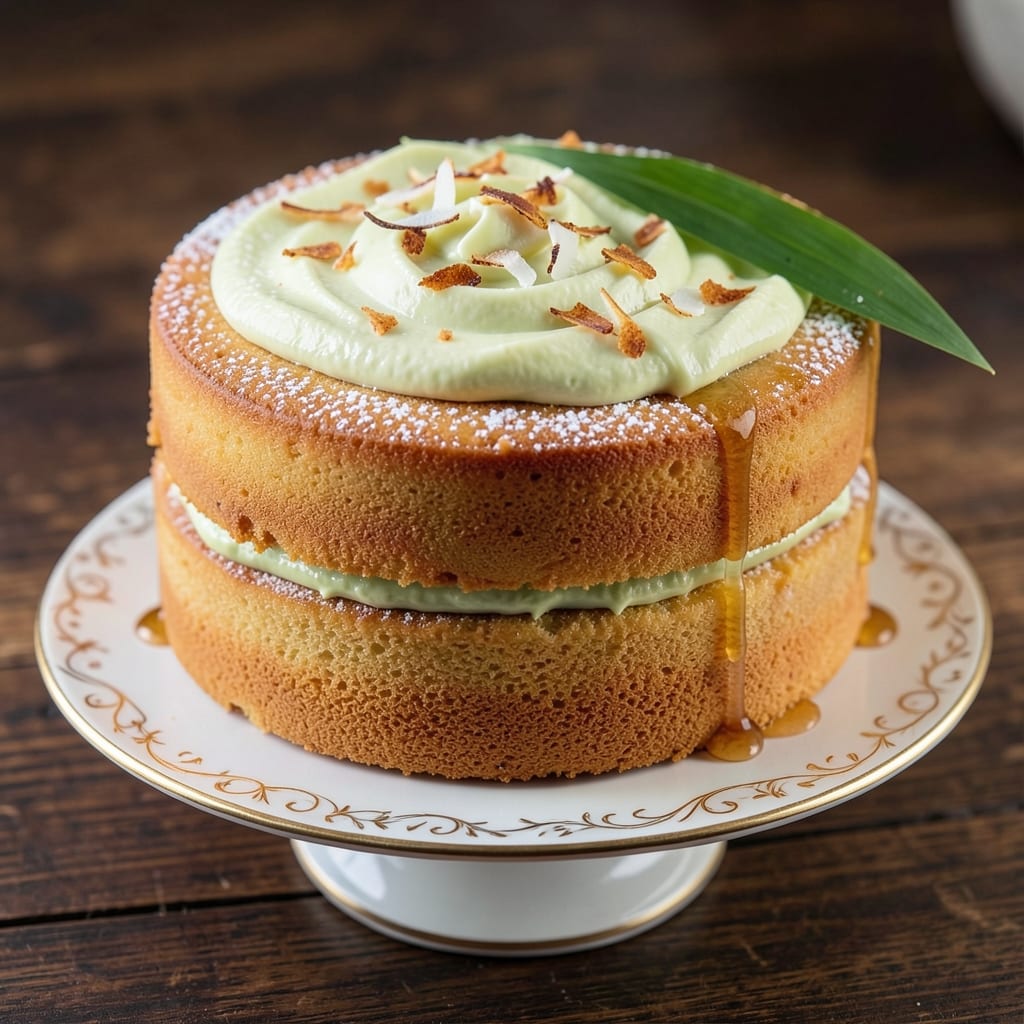
This Asian butter cake recipe delivers the perfect balance of rich, buttery layers and fragrant pandan essence that will transport you to a bustling bakery in Singapore. ✨ The secret lies in the delicate harmony of melted butter, powdered sugar, and a hint of pandan extract—creating a tender crumb that dissolves in your mouth with every bite.
What sets this recipe apart is its simplicity: just 5 core ingredients that come together to create a cake so moist, it stays fresh for days. The key technique involves creaming butter and sugar until light and fluffy, then folding in egg yolks and pandan-infused milk for that signature floral aroma. This method ensures a foolproof texture that's both airy and dense.
By the time it emerges from the oven, you'll have golden layers with a subtle pandan fragrance that lingers in the air. The buttercream topping adds a velvety finish, while optional garnishes like toasted coconut or fresh berries elevate it to restaurant-quality dessert. Perfect for celebrations or a special treat, this cake is sure to impress.
Regional variations include adding matcha for a Japanese twist or coconut milk for a Thai-inspired flavor. Whether you're baking for a crowd or a quiet afternoon indulgence, this recipe delivers restaurant-quality results every time. Let's get started!
Ingredients for asian butter cake
Five core ingredients transform into a fragrant, restaurant-quality cake with perfect buttery layers.
| Ingredient | Amount | Notes |
|---|---|---|
| Unsalted Butter 🧈 | 1 ½ cups | Melted, cooled to room temperature |
| Granulated Sugar 🍚 | 2 ½ cups | Superfine preferred for smooth texture |
| Pandan Extract 🌿 | 1 tbsp | Pure, not imitation |
| Large Eggs 🥚 | 6 whole | Room temperature for best mixing |
| All-Purpose Flour 🌾 | 2 ½ cups | Sifted, spooned lightly |
| Baking Powder 🧂 | 1 ½ tsp | Aluminum-free preferred |
| Salt 🧂 | ½ tsp | Fine sea salt |
| Whole Milk 🥛 | 1 cup | Room temperature |
| Powdered Sugar 🍚 | 2 cups | For buttercream |
| Heavy Whipping Cream 🥛 | 1 cup | Cold, for buttercream |
| Vanilla Extract 🌿 | 1 tsp | Pure vanilla bean preferred |
| Toasted Coconut Flakes 🥥 | ¼ cup | Optional garnish |
The butter is non-negotiable here—European-style unsalted butter like Plugrá or Land O'Lakes gives the richest flavor. If you can't find superfine sugar, pulse regular granulated sugar in a food processor for 30 seconds—it dissolves better. Pandan extract varies in strength, so start with 1 tablespoon and adjust to taste. The eggs should be at room temperature when you measure them—cold eggs won't mix properly and can cause dense layers. For the flour, King Arthur or Bob's Red Mill brands work perfectly, but avoid self-rising flour since we're adding baking powder separately.
No superfine sugar? Confectioners' sugar works in a pinch—just sift it extra well. Short on pandan extract? Pandan paste diluted with milk gives a similar floral note, though it's thicker. The milk can be swapped for coconut milk for a Thai-inspired twist, but whole milk keeps the cake's signature richness. For the buttercream, if you're avoiding dairy, coconut cream whipped with powdered sugar mimics the texture beautifully. The coconut flakes? Toast them in a dry pan for 2-3 minutes until golden—skip this step if you're allergic to coconut.
Store the cake in an airtight container at room temperature for 3-4 days—it actually improves as it sits. For longer storage, wrap tightly in plastic and refrigerate for up to 1 week. The buttercream can be made a day ahead and kept in the fridge; just whip it briefly before using. Freeze the cake layers (without buttercream) for 2 months)—thaw at room temperature before assembling. The pandan aroma intensifies overnight, so if you're making this ahead for a celebration, let it sit uncovered for 1 hour before serving to release those floral notes.
Why You'll Love This Recipe
- No Mixer Needed: That’s right—just a bowl and a whisk. The butter and sugar get creamed by hand (or a fork in a pinch), and the pandan extract blends right in with the eggs. Honestly, it’s the kind of recipe that makes me question why I ever owned a stand mixer.
- Pandan Magic: One teaspoon of pandan extract transforms this into something special—like a tropical vacation in every bite. It’s not overpowering, just that subtle, fragrant note that makes it taste like a bakery secret, not a home kitchen hack.
- Party in a Box: Slice it for tea time, cube it for dessert platters, or stack layers for a showstopper cake. Between us, I’ve even used leftover pieces to make mini parfaits with whipped cream—because why waste cake?
- Budget-Friendly Luxury: Rich, buttery, and foolproof—this cake costs less than takeout but feels like a treat. The butter and sugar do the heavy lifting, and the pandan extract (a tiny amount!) stretches the flavor without breaking the bank. My wallet and taste buds agree.
Step-by-step instructions for Asian butter cake
Here's how to create a fragrant, tender cake with perfect texture and aroma.
👨🍳 Step 1: Prepare the Cake Batter
Preheat your oven to 350°F and grease two 8-inch round cake pans with the 1.5 cups unsalted butter, reserving 2 tablespoons for later. Line the bottoms with parchment paper. In a stand mixer fitted with the paddle attachment, beat the melted butter and 2.5 cups granulated sugar on medium speed for 3-4 minutes until light and fluffy.
Add the 6 whole large eggs one at a time, mixing well after each addition until fully incorporated. The mixture should nearly triple in volume and become pale. Stir in the 1 tbsp pandan extract and 1 tsp vanilla extract until combined. This aromatic base creates that signature pandan flavor that makes this cake so special.
👨🍳 Step 2: Combine Dry Ingredients and Milk
In a separate bowl, whisk together the 2.5 cups all-purpose flour, 1.5 tsp baking powder, and 0.5 tsp salt. Sift the mixture directly into the wet ingredients and mix on low speed for 30 seconds just until combined. Add the 1 cup whole milk and mix until smooth—you should have a thick, glossy batter.
Here's the thing—don't overmix. You want to see a few streaks of flour remaining. This ensures a tender cake rather than a dense one. The batter should be thick enough to hold its shape when dropped from a spoon but still flow smoothly.
🔥 Step 3: Bake to Golden Perfection
Divide the batter evenly between the prepared cake pans and smooth the tops. Bake for 25-30 minutes or until a toothpick inserted in the center comes out clean and the edges are light golden brown. Rotate the pans halfway through baking for even cooking. The cake should spring back slightly when pressed gently in the center.
Don't open the oven door during the last 10 minutes of baking—this prevents the cakes from sinking. When done, remove from the oven and let cool in the pans for 10 minutes before transferring to a wire rack to cool completely. Patience here is key—the cakes will continue to set as they cool.
🥘 Step 4: Prepare the Buttercream Filling
In a large mixing bowl, beat the reserved 2 tablespoons butter with the 2 cups powdered sugar and 1 cup heavy whipping cream on medium speed until smooth and fluffy. Add the 1 tsp vanilla extract and mix until fully incorporated. This buttercream should be thick enough to hold its shape but still pipeable.
For extra flavor, you can add a splash of the 1 tbsp pandan extract used earlier—just ½ teaspoon will enhance the pandan aroma without overpowering. The buttercream should be light, airy, and perfectly sweet to complement the tender cake layers.
🍽️ Step 5: Assemble and Garnish
Once the cakes are completely cool, level the tops if needed. Place one cake layer on a serving plate and spread an even layer of buttercream. Dust the top lightly with 1 tablespoon powdered sugar to prevent sticking. Place the second layer on top and spread the remaining buttercream over the entire cake, creating a smooth surface.
Garnish with the 0.25 cup toasted coconut flakes pressed gently into the sides or sprinkled on top for a beautiful presentation. Chill the cake in the refrigerator for at least 1 hour before slicing to allow the buttercream to set. This final step ensures clean slices and a perfect finish that will impress anyone who tries it.
Pro Tips For Making Asian Butter Cake
- CREAM BUTTER AT ROOM TEMP: Mix the butter and sugar until it’s just pale yellow—no need to overbeat. I learned this the hard way: overmixing makes the cake dense, and you’ll end up with a brick instead of that signature fluffy crumb.
- MEASURE PANDA EXTRACT PRECISELY: Use a dropper or syringe for the pandan extract—1 teaspoon is enough, but too much turns the cake soapy. I was skeptical until I tried it: the aroma stays bright without tasting off.
- DON’T OVERMIX THE BATTER: Fold in the flour in two additions, stopping as soon as it’s just combined. Overworking the batter introduces gluten, and your cake will turn tough instead of tender. Yes, even if you’re impatient like me.
- BAKE UNTIL THE CENTER HITS 205°F: A toothpick should come out with a few moist crumbs, not wet batter. I skip the "press test" (it’s unreliable) and trust the thermometer—this guarantees a cake that’s fully set but still moist.
Regional styles of asian butter cake
Japanese Matcha Twist
For a Japanese-inspired version, replace the pandan extract with 1 tablespoon matcha powder (sifted) mixed into the dry ingredients. Use 1.5 cups whole milk instead of water to create a vibrant green cake with earthy, slightly bitter notes. Top with white chocolate shavings and fresh raspberries for a modern twist. The matcha pairs beautifully with a vanilla bean buttercream instead of pandan-infused. 🌿
Thai Coconut Delight
Swap the whole milk for 1 cup coconut milk (canned, full-fat) and add ½ teaspoon cardamom to the batter for a Thai-inspired flavor. Garnish with toasted coconut flakes and a drizzle of coconut caramel for a tropical finish. This version has a subtle floral-citrus aroma that complements the buttery richness. Use 2 tablespoons toasted sesame seeds instead of coconut for extra crunch. 🥥
Singapore Pandan Classic
The original Singaporean version stays true to the recipe but adds a ½ teaspoon turmeric to the batter for a golden hue (skip if you prefer white layers). Garnish with edible silver leaf and lychee jelly for an elegant touch. Serve with a side of black sesame tea to enhance the pandan flavor. This is the most traditional approach, perfect for celebrations. ✨
Malaysian Spiced Version
Add ½ teaspoon ground cinnamon and ¼ teaspoon nutmeg to the dry ingredients for a Malaysian-inspired twist. Use 1 tablespoon pandan paste (instead of extract) for a stronger aroma. Top with crushed peanuts and a sprinkle of grated lime zest for a bright, citrusy contrast. This version balances sweetness with warm spices beautifully. 🌶️
Philippine Ube Fusion
Replace ½ cup of the granulated sugar with ½ cup ube halaya (purple yam jam) for a vibrant purple hue and sweet, earthy flavor. Use 1 teaspoon pandan extract and top with toasted coconut flakes and banana slices. This fusion creates a visually stunning cake with a unique flavor profile that's both familiar and exciting. 💜
Nutrition facts
Frequently asked questions
Can I substitute pandan extract with another flavor? Yes! For a floral alternative, try 1 teaspoon rose water or ½ teaspoon vanilla bean paste. For a nutty twist, add ½ teaspoon almond extract. Just
Why did my cake turn out dense instead of light?
Overmixing the batter or using cold eggs are the most common culprits. Always mix just until combined (about 30 seconds after adding flour), and ensure eggs are at room temperature. Another tip: don't overfill the pans—fill them only ⅔ full to allow proper rising. The butter should also be melted but completely cooled before mixing.
How do I make this cake gluten-free?
Replace the all-purpose flour with a 1:1 gluten-free baking flour blend like Bob's Red Mill or King Arthur. Add ½ teaspoon xanthan gum to the dry ingredients to improve texture. For best results, also use a gluten-free baking powder. The cake will still be tender but may have slightly different crumb structure. Test with a small batch first!
Can I bake this in a different pan size?
Yes, but adjust the baking time. For 9-inch pans, reduce batter by 25% and bake 5-10 minutes less. For 6-inch pans, use the full batter and bake 10-15 minutes longer. Always check doneness with a toothpick. The key is maintaining the same batter depth—about 1.5-2 inches thick for even baking.
What's the best way to store leftover cake?
Wrap the cake tightly in plastic wrap, then place it in an airtight container. Store at room temperature for 3-4 days or refrigerate for up to 1 week. For longer storage, freeze the layers (without buttercream) for 2 months. The pandan flavor actually intensifies when stored properly—let it sit at room temperature for 1 hour before serving for the best aroma!