
Desserts
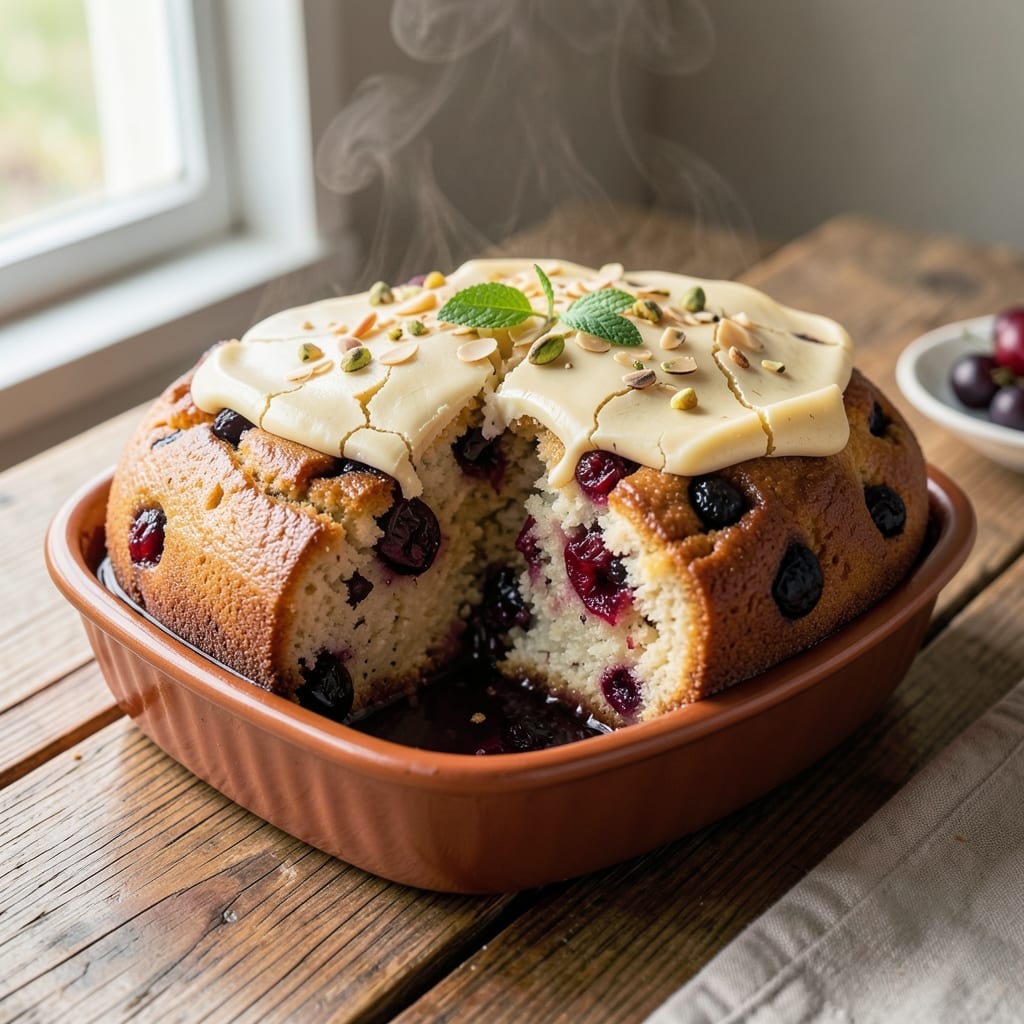
This Australian boiled fruit cake delivers legendary moistness and deep spiced flavors that keep improving with age. 🌟 The secret lies in its unique preparation—steaming the cake in a water bath while the fruit mixture soaks overnight in rum, creating a texture that's impossibly tender yet sturdy enough to slice. I've perfected this recipe after years of baking, and it's become a holiday staple that always gets rave reviews.
The cake's signature celery crust adds a satisfying crunch that contrasts beautifully with the moist interior, while the blend of dried fruits and spices infuses every bite with warm, aromatic complexity. What sets this apart is the slow cooking process—it's not just baked, but steamed, which ensures even moisture distribution. The result is a cake that stays fresh-tasting for weeks, with flavors that deepen over time.
What you'll end up with is a rich, spiced fruit cake with a perfect balance of textures—crispy crust, moist crumb, and chewy dried fruits. The rum-soaked fruit adds a subtle boozy depth that makes this cake especially memorable. This is the kind of dessert that becomes a family tradition, served at gatherings and celebrations year after year.
While traditional versions often include marzipan or icing, I've included optional finishing touches that let you customize it to your preference. Whether you serve it plain, with a dusting of powdered sugar, or with a glaze, this cake will be the star of any dessert table. Let's get started on creating this Australian classic!
Ingredients for australian boiled fruit cake
Pantry staples plus a few specialty touches—this cake’s magic comes from the rum-soaked fruit.
| Ingredient | Amount | Notes |
|---|---|---|
| All-Purpose Flour 🌾 | 3 cups | Sifted for even texture |
| Light Brown Sugar 🍚 | 1 ½ cups | Packed firmly |
| Unsalted Butter 🧈 | 1 cup | Cold, cubed for even melting |
| Large Eggs 🥚 | 4 whole | Room temperature |
| Active Dry Yeast 🍞 | 2 ½ tsp | Fresh or one packet |
| Warm Water 💧 | 1 cup | 110°F for yeast activation |
| Dark Rum 🍹 | 1 cup | Aged 3+ years preferred |
| Dried Mixed Fruit 🍇 | 3 cups | Chopped, no stones |
| Raisins 🍈 | 1 cup | Plumped in warm water |
| Celery Seeds 🌿 | 2 tbsp | Toasted for deeper flavor |
| Ground Cinnamon 🌶️ | 2 tsp | Freshly ground preferred |
| Ground Allspice 🌶️ | 1 tsp | For warm spice depth |
| Ground Ginger 🌿 | 1 tsp | Freshly grated if possible |
| Salt 🧂 | 1 tsp | Diamond Crystal preferred |
| Fresh Celery 🥬 | 1 whole | For crust, finely chopped |
| Ground Almonds 🥜 | 1 cup | For crust texture |
| Powdered Sugar 🍚 | ½ cup | Optional for finishing |
The rum is non-negotiable—Captain Morgan or Havana Club if you want to splurge. Look for aged 3+ years for that caramel depth. Dried fruit? Trader Joe's has great bulk bins, but avoid anything with sulfites if you're sensitive. The celery seeds are the secret weapon for that signature crust crunch—Penzeys sells them in tiny jars, but most grocery stores carry them too. Toast them lightly in a dry pan before grinding for extra flavor punch. The yeast needs to be fresh—if your packet is older than six months, toss it.
No rum? Apple cider or orange juice works in a pinch, but the boozy depth is what makes this cake legendary. Subbing fruit? Dried apricots or figs add a different dimension—just chop them small. The crust can be made ahead and stored in the fridge for 3 days or frozen for 1 month. If you're feeling fancy, swap half the ground almonds for pecans for extra crunch. And yes, you can use dark brown sugar instead of light, but the texture won’t be quite as tender.
This cake improves with age—3-4 days is ideal for maximum flavor development. Wrap tightly in plastic wrap and store at room temperature (the humidity helps). For longer storage, freeze the whole cake for up to 6 months. To serve, slice with a serrated knife—dampen it first if the cake is very dry. The crust stays crisp for 2 days if kept in an airtight container. Leftovers? Perfect for French toast or trifles—trust me, they’re even better the second time around.
Why You'll Love This Recipe
- No Yeast Hassle: I swear by this cake because it skips the fuss of waiting for yeast to rise—just mix, boil, and bake. The butter and brown sugar do all the heavy lifting for that rich, moist texture without the guesswork.
- Sweet Spice Bomb: That caramelized brown sugar and warm spices (like cinnamon or nutmeg) punch way above their weight—honestly, one slice and you’ll forget it’s just flour, butter, and eggs. It’s the kind of flavor that lingers like a good memory.
- Party-Proof Perfection: Between us, this cake is my go-to for birthdays, Christmas, or when Aunt Karen “just pops by.” It keeps beautifully for days, so you can slice it up without stress—plus, the boiled method means it stays ultra-moist even after sitting.
- Budget Baking Win: I make this when I’m broke but still want something that feels special. Brown sugar and butter stretch far, and the yeast-free method means no wasted ingredients. Leftovers? They’re the best kind—because they disappear fast.
Step-by-step instructions for Australian boiled fruit cake
Here's how to create that signature moist, spiced center with a crunchy celery crust.
👨🍳 Step 1: Activate the Yeast and Prepare the Fruit
In a small bowl, whisk together the 2.5 teaspoons active dry yeast, 1 cup warm water (110°F), and 1.5 cups packed light brown sugar. Let it sit for 5-10 minutes until foamy—this tells you the yeast is alive and ready to work. If it doesn't foam, start over with fresh yeast.
Meanwhile, plump the 1 cup raisins in warm water for 10 minutes, then drain. Chop the 3 cups dried mixed fruit into bite-sized pieces and remove any stems or stones. Toast the 2 tablespoons celery seeds in a dry pan over low heat for 1 minute until fragrant—this deepens their nutty flavor for the crust.
🍳 Step 2: Mix the Dough and Build the Crust
In a large bowl, cream together the 1 cup cold cubed unsalted butter and remaining 1 cup light brown sugar until light and fluffy (3-4 minutes). Add the 4 room-temperature eggs, one at a time, mixing well after each addition. The mixture should become pale and thick.
In a separate bowl, whisk together the 3 cups sifted all-purpose flour, 2 teaspoons ground cinnamon, 1 teaspoon ground allspice, 1 teaspoon ground ginger, and 1 teaspoon salt. Gently fold this dry mixture into the butter-sugar mixture until just combined—you should still see some flour streaks. Fold in the plumped raisins and chopped dried fruit.
For the crust, finely chop the 1 whole fresh celery and mix with the 1 cup ground almonds. Press this mixture firmly into a greased 10x4-inch loaf pan to create an even layer. Pour the batter over the crust, pressing down gently to ensure even distribution. The crust should be completely covered but not overflowing.
🔥 Step 3: Bake and Boil for Moist Perfection
Preheat your oven to 325°F. Bake the cake for 45 minutes, then remove from the oven and pour 1 cup dark rum evenly over the top. Return to the oven and bake for another 15 minutes. This rum soak is what creates that signature moist center.
After the second baking period, carefully transfer the pan to a large pot or deep baking dish. Pour enough hot water into the pot to come halfway up the sides of the pan. Cover tightly with foil and place a weight on top (like a baking sheet with canned goods) to keep it submerged. Simmer on low heat for 2.5 hours, adding hot water as needed to maintain the level. The cake is done when a skewer inserted comes out clean.
⏰ Step 4: Cool and Finish with Powdered Sugar
Remove the cake from the water bath and let it cool in the pan for 10 minutes. Then transfer to a wire rack to cool completely. Once fully cooled, dust the top generously with 0.5 cup powdered sugar using a fine-mesh sieve. This creates that iconic Australian finish and balances the rich flavors.
For best results, let the cake rest for at least 24 hours before slicing. The flavors will meld beautifully, and the texture will be perfectly moist with that signature celery crust crunch. Store wrapped at room temperature for up to 2 weeks or freeze for up to 3 months.
Pro Tips For Making Australian Boiled Fruit Cake
- STEAM THE CAKE LID: Use a heavy pot lid or foil tent—don’t just boil uncovered. I learned this the hard way after watching my first cake turn into a sad, dense brick. The gentle steam keeps the texture moist and prevents cracking on top. If your lid fogs up, crack it open for 30 seconds every 10 minutes to let excess steam escape.
- SOAK THE FRUIT OVERNIGHT: Skip the last-minute fruit prep—soak dried fruit in warm tea or rum (even just water works) for at least 12 hours. This plumps them up and lets the flavors meld. I used to toss in dried apricots and raisins straight from the packet, and they stayed stubbornly chewy. Trust the process—your future self will notice the difference.
- CREAM BUTTER AND SUGAR UNTIL PALE: Don’t just mix the butter and sugar—beat them until the color lightens noticeably. This incorporates air, which makes the cake rise better and gives it that classic tender crumb. I was lazy once and just stirred it with a spoon, and the result was dense enough to dent a spoon. Take the extra 5 minutes—it’s worth it.
- TEST YEAST FRESHNESS FIRST: If your yeast is old, it’ll fail you mid-bake. Proof it in warm water with a pinch of sugar—if it doesn’t foam within 10 minutes, toss it. I’ve had batches where the yeast fizzled, leaving a flat, flavorless cake. Keep a fresh packet on hand, or use instant yeast (just skip the proofing step). No one wants to eat a cake that didn’t even try to rise.
Essential equipment for great australian boiled fruit cake
Steaming Setup
The water bath is the heart of this cake's signature moisture. You'll need a large stockpot or deep baking dish that's at least 12 inches deep—I use a Le Creuset Dutch oven for its even heat distribution. Place your 10x4-inch loaf pan inside, then pour hot water (not boiling) until it reaches halfway up the pan's sides. This gentle steaming mimics a traditional boiled fruit cake while keeping the crust intact. 🌡️
Precision Baking Tools
A digital thermometer is non-negotiable for this recipe. Use a Thermoworks Smoke or Meater to monitor both your oven (325°F) and the internal temperature of the cake (210°F). The water bath needs to maintain a gentle simmer—never a rolling boil—which is why I recommend a candy thermometer to track water temp (180-190°F).
Crust Press Tools
For that perfect celery crust, I use a small glass or silicone spatula to press the almond-celery mixture firmly into the pan. A lightweight rolling pin (like a OXO Good Grips) helps distribute the batter evenly over the crust. Pro tip: Tap the pan gently on the counter after pressing to eliminate air bubbles that could create gaps in your crust.
Yeast Activation Gear
Your yeast activation requires a small mixing bowl and a whisk—I prefer a stainless steel whisk for its durability. The warm water should be 110°F exactly, measured with an instant-read thermometer. A scale (like OXO Good Grips) ensures precise measurements for the brown sugar and flour, which are critical for the cake's texture. Don't skip the fine-mesh sieve for sifting flour—it prevents lumps and creates a lighter crumb.
Rum Application Tools
After the first baking phase, you'll pour 1 cup dark rum evenly over the cake. Use a small ladle or measuring cup for precision—this step is what creates that signature moist center. I recommend Captain Morgan Original for its balanced caramel notes, but Havana Club 7 adds a richer depth. Keep a fine-mist spray bottle nearby to dampen the powdered sugar if needed for a smoother finish. ✨
Cooling and Storage
For cooling, a wire cooling rack is essential to prevent sogginess. Store leftovers in an airtight container with a paper towel on top to absorb excess moisture. When reheating slices, I use a toaster oven set to 300°F for 5 minutes—this restores the crust's crunch without drying out the interior. A serrated knife with a dampened edge makes clean slices every time. 💫
Nutrition facts
Frequently asked questions
Why does this cake need to be steamed after baking?
The steaming process is what creates that signature moist texture. When the cake simmers in a water bath, the steam infuses the center evenly, preventing dryness while the crust stays intact. This traditional method mimics how boiled fruit cakes were originally made in Australia, where steam was used to cook large fruit-heavy cakes slowly and thoroughly.
Can I substitute the rum with something else?
Yes, but the flavor will change. For a non-alcoholic version, try apple cider or orange juice—they add sweetness but lack the boozy depth. If you want to keep the alcohol, brandy or dark sherry work well too. Just remember, the liquid should be strong enough to soak into the cake and create that signature moisture.
How do I know when the cake is fully cooked?
Use the skewer test—insert a thin skewer into the center. If it comes out clean (with no wet batter or crumbs), the cake is done. The internal temperature should reach 210°F. If you're steaming, the water should maintain a gentle simmer—not a rolling boil—throughout the process. Overbaking can dry out the crust, so keep an eye on it.
What's the best way to store this cake?
Wrap it tightly in plastic wrap and store at room temperature for up to 2 weeks. For longer storage, freeze the whole cake for up to 3 months. The flavors actually improve over time, so it's perfect for making ahead. To revive the crust, slice and warm briefly in a toaster oven at 300°F for 3-5 minutes before serving.
Can I make the crust ahead of time?
The crust can be prepared 3 days ahead and stored in the fridge, or frozen for up to 1 month. Just press it into the pan when ready to bake. This is a great time-saver if you're planning ahead for holidays. The crust stays crispy when properly stored, so there's no need to worry about it getting soggy.