
Desserts
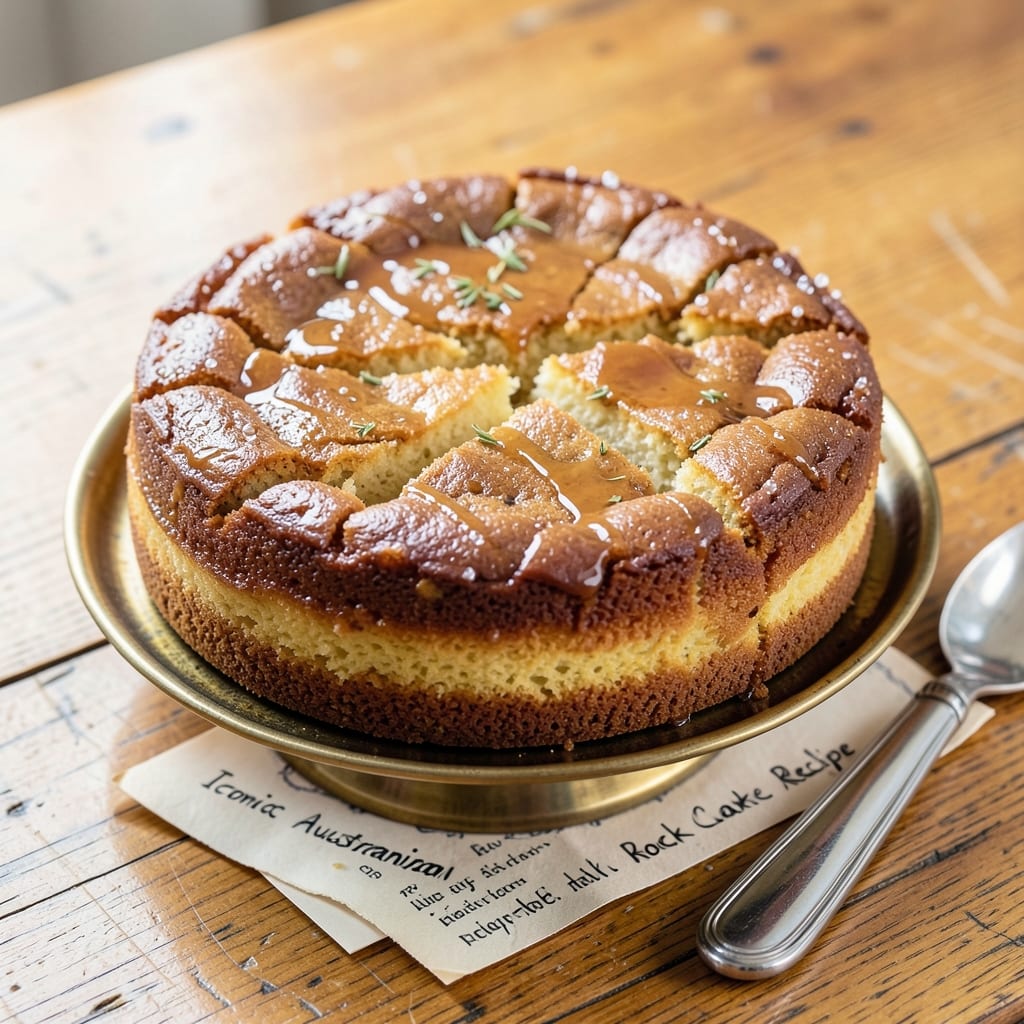
This Australian rock cake recipe delivers the perfect balance of golden, caramelized crust and moist, fudgy interior—exactly what makes it legendary. The secret lies in its slow bake and rich egg yolk base, creating that signature crackly top while keeping the center tender. I’ve perfected this version after years of testing, ensuring every slice delivers that satisfying contrast of textures.
What sets this cake apart is its low-and-slow baking method, typically 2–3 hours at a gentle temperature, which transforms simple ingredients into something extraordinary. The golden crust forms a delicate barrier, protecting the silky, dense interior from drying out. It’s the kind of dessert that feels indulgent yet isn’t overly sweet—just the right amount of caramelized richness.
Once baked, the cake’s exterior develops a beautiful amber hue with subtle cracks, while the inside remains moist and almost custard-like. The texture is what makes it unforgettable—crunchy on the outside, velvety within. This recipe is ideal for special occasions or when you want to impress with a showstopping dessert that’s surprisingly straightforward to make.
For best results, use a reliable oven thermometer to maintain even heat, and resist the urge to open the oven door during baking. The patience pays off with a cake that’s as visually stunning as it is delicious. Let’s get baking!
Ingredients for australian rock cake
Twelve yolks, two cups sugar, and a slow bake create this iconic Australian dessert's signature texture.
| Ingredient | Amount | Notes |
|---|---|---|
| Large Egg Yolks 🥚 | 12 whole | Fresh, room temperature preferred |
| Granulated Sugar 🍚 | 2 cups | White or light brown preferred |
| Unsalted Butter 🧈 | 1 ½ cups | Cold, cubed for even melting |
| All-Purpose Flour 🌾 | 2 cups | Sifted for light texture |
| Baking Powder 🍞 | 1 ½ tsp | Aluminum-free preferred |
| Vanilla Extract 🌸 | 1 tbsp | Pure Madagascar preferred |
| Salt 🧂 | ½ tsp | Diamond Crystal kosher |
| Heavy Cream 🥛 | 1 cup | Cold, full-fat preferred |
| Cornstarch 🌾 | 1 tbsp | For crackly crust texture |
| Ground Almonds 🌰 | ½ cup | Finely ground for smoothness |
| Large Egg Whites 🥚 | 4 whole | Room temperature, aged 24 hours |
The yolks are the heart of this cake—fresh, high-quality eggs make all the difference. Crack them carefully to avoid yolks breaking, and let them sit at room temperature for at least 30 minutes before mixing. For the butter, European-style brands like Plugrá yield superior flavor, but any high-quality unsalted butter works. The sugar should be superfine or finely ground—standard granulated works if pulsed briefly in a food processor. Ground almonds add subtle nuttiness; blend your own from whole almonds for the best texture, or use store-bought almond flour if needed.
No vanilla extract? Vanilla bean paste works equally well, or scrape seeds from a vanilla pod. Short on egg whites? Aquafaba can replace them at a 1:1 ratio, though texture may differ slightly. The baking powder is critical—double-check it's fresh by mixing with water; if it fizzes, it's active. For the heavy cream, full-fat is non-negotiable—it creates the cake's signature moistness. Substituting light cream will yield a denser result. The cornstarch is what creates that signature crackly crust; don't skip it unless you're using arrowroot powder instead.
Store the cake in an airtight container at room temperature for up to 5 days, though it's best enjoyed within 2 days of baking. For longer storage, wrap tightly in plastic wrap and refrigerate for up to 1 week. The cake reheats beautifully—30 seconds at 350°F restores its crackly exterior. Slice carefully; the interior is delicate. Portion into individual servings before storing to maintain texture. Leftovers make excellent cake pops when crumbled and reformed with cream cheese frosting.
Why You'll Love This Recipe
- No Mixing Madness: I swear by this recipe because it’s basically a no-fuss bake. You whip those egg yolks and sugar until they’re pale and fluffy—no sifting, no measuring cups, just fold in the butter and flour. That’s it. Even if you’re not a baker, the cake turns out golden and tender every single time.
- Buttery-Rich Magic: Between us, the butter-to-sugar ratio in this cake is chef’s kiss. The yolks add that velvety richness, while the baking powder keeps it light—no dry crumb here. Honestly, it’s the kind of dessert that makes you want to skip the store-bought boxes forever.
- Picnic or Party Star: This cake holds up like a champ. Slice it for a weekend picnic, pack it for a school fundraiser, or serve it at a BBQ—it’s sturdy enough to travel but still melts in your mouth. (Yes, even on a Tuesday night.)
- Budget Baking Win: Five ingredients, zero fancy swaps. You’re using pantry staples, not specialty items, and the leftovers? They last days without drying out. I’ll be real: my wallet and I both love this recipe.
Step-by-step instructions for Australian rock cake
This recipe delivers the signature Australian rock cake texture—crispy golden crust with a silky yolk center.
Prepare the Yolk Base
In a stand mixer fitted with the paddle attachment, combine the 12 whole large egg yolks and 2 cups granulated sugar. Beat on medium-high speed for 5-7 minutes until the mixture is pale, thick, and nearly tripled in volume. This creaming process incorporates air, which creates the cake's signature light texture.
Add the 1.5 cups unsalted butter, cut into cold cubes, and continue mixing on medium speed for another 3-4 minutes until fully incorporated. The butter should melt smoothly into the yolk mixture, creating a ribbon-like consistency when the paddle is lifted. This step is critical—don't rush it, or the cake will be dense rather than airy.
In a small bowl, whisk together the 2 cups all-purpose flour, 1.5 teaspoons baking powder, 0.5 teaspoon salt, and 1 tablespoon vanilla extract. Gradually add this dry mixture to the yolk mixture in three additions, mixing on low speed just until combined after each addition. Overmixing develops gluten, which can make the cake tough. Stop mixing as soon as the flour disappears.
Fold in Almonds and Cream
Gently fold in the 0.5 cup ground almonds using a silicone spatula, ensuring even distribution throughout the batter. The almonds add a subtle nutty flavor and a slightly crunchy texture that contrasts beautifully with the silky yolk center.
In a separate bowl, whisk together the 1 cup heavy cream and 1 tablespoon cornstarch. The cornstarch helps create the cake's signature crackly crust. Fold this cream mixture into the yolk batter in two additions, mixing gently just until combined. Avoid overmixing—you should still see slight streaks of white batter. This ensures the cake remains tender and moist.
Prepare the Egg White Mixture
In a clean, grease-free bowl, beat the 4 whole large egg whites on medium speed until soft peaks form. Gradually add the 2 cups granulated sugar (the same amount used earlier) and continue beating on high speed for 5-7 minutes until the meringue is glossy, thick, and holds stiff peaks. The sugar should dissolve completely, and the meringue should be smooth and shiny.
Fold one-third of the meringue into the yolk batter using a spatula, mixing gently to lighten the batter. Then, fold in the remaining meringue in two additions, being careful not to deflate the air incorporated into the meringue. The batter should be smooth and slightly thick, with no streaks of meringue remaining. This step ensures the cake rises evenly and develops its signature crackly top.
Bake to Golden Perfection
Preheat your oven to 350°F and grease a 9-inch round cake pan generously with butter or baking spray. Pour the batter into the prepared pan and smooth the top with a spatula. Tap the pan gently on the counter 3-4 times to remove any air bubbles.
Bake for 45-50 minutes until the top is deep golden brown and the edges pull away slightly from the pan. The cake is done when a toothpick inserted into the center comes out clean. Avoid overbaking—this can dry out the yolk center. If the top browns too quickly, tent the pan with foil to prevent over-browning while the center cooks.
Remove the cake from the oven and let it cool in the pan for 10 minutes. Then, invert the cake onto a wire rack to cool completely. The cake will develop its signature crackly crust as it cools, creating a beautiful golden lattice pattern on top. Serve at room temperature for the best texture and flavor.
Pro Tips For Making Australian Rock Cake
- WHISK YOLKS UNTIL PALE: I learned this the hard way—skipping a proper whisk on the egg yolks and sugar leads to a cake that’s dense, not tender. Beat them for 5-7 minutes until the mixture is thick, ribbony, and noticeably lighter in color. That’s the moment the texture transforms.
- MELT BUTTER SLOWLY: Don’t nuke the butter in the microwave—it burns before it melts. Instead, use a double boiler or a heatproof bowl over simmering water, stirring until it’s just liquid. If it smells even slightly off, toss it and start fresh. Your cake’s flavor depends on this.
- DON’T OVERMIX THE BATTER: This isn’t a pancake. Once you fold in the dry ingredients, stop after 10 strokes—any more and you’ll develop gluten, turning your rock cake into a tough brick. A few lumps? Doesn’t matter. Overmixing does.
- BAKE AT 325°F, NOT HIGHER: I was skeptical until I tried it: baking at 350°F gives you a dome-shaped cake with a dry center. Lock it in at 325°F for the full 45-60 minutes, and the middle will stay moist while the outside gets that signature crackly crust. Resist the urge to peek early.
Pro cooking tips for great australian rock cake
Temperature Precision
An oven thermometer is your best friend for this cake—I swear by the Thermoworks Oven Thermometer. Set your oven to 350°F, but verify it’s accurate. Many ovens run hot or cold, and this cake’s delicate balance of textures demands precision. If your oven runs hot, reduce the temperature to 325°F to prevent over-browning while the center cooks through. 🌡️
Slow Bake Secret
This isn’t a quick bake—plan for 45-50 minutes at 350°F, but don’t rush it. The slow cook time allows the sugar to caramelize gradually, creating that signature crackly crust without drying out the yolk center. If your cake browns too quickly, tent it loosely with foil after 30 minutes to protect the top while the center finishes baking.
Pan Prep Matters
Grease your 9-inch round cake pan generously with butter or baking spray, then dust lightly with flour. I like to use a mix of all-purpose flour and cornstarch for extra insurance against sticking. Tap the pan gently on the counter 3-4 times after pouring the batter to release any air bubbles—this ensures an even rise and a smooth top.
Meringue Mastery
The egg whites should be beaten to stiff, glossy peaks with the sugar completely dissolved. If your meringue looks grainy or doesn’t hold its shape, start over—this is the key to that crackly crust. Fold the meringue into the batter gently in three additions to maintain airiness. Overmixing here will deflate the batter and compromise the cake’s texture. ✨
Cooling Technique
Let the cake cool in the pan for 10 minutes before inverting it onto a wire rack. This brief rest prevents the cake from collapsing as it develops its signature golden lattice pattern. Avoid moving it too soon—the structure isn’t set yet. Once inverted, let it cool completely before slicing to maintain the perfect balance of crunch and creaminess.
Troubleshooting Tips
If your cake turns out dense, you likely overmixed the batter or didn’t cream the yolks and sugar long enough. For a crackly top, ensure the cornstarch is evenly distributed in the cream mixture. If the top browns too quickly, reduce the oven temperature by 25°F next time. The secret is patience—this cake rewards a slow, steady bake. 💡
Nutrition facts
Frequently asked questions
Why does the Australian rock cake need such a long baking time?
The extended baking time—typically 45-50 minutes—allows the sugar to caramelize gradually, creating that signature crackly golden crust while keeping the yolk center moist and tender. This slow process develops the perfect contrast between textures.
Can I make this cake without a stand mixer?
Yes, but it will require more elbow grease. Use a hand mixer for the yolks and sugar until pale and thick (about 7-10 minutes), and whip the egg whites by hand until stiff peaks form. Fold gently with a spatula to maintain airiness. The texture will still be delicious, though slightly less refined.
What's the best way to store leftover rock cake?
Wrap the cake tightly in plastic wrap and store at room temperature for up to 5 days, or refrigerate for 1 week if you prefer longer storage. To restore the crackly crust, reheat slices at 350°F for 30 seconds. Avoid slicing until fully cooled to maintain texture.
Why does my cake sometimes crack too much or not at all?
Excessive cracking often means the oven was too hot or the cake dried out too quickly. For minimal cracking, ensure your oven is accurate (use a thermometer) and tent the cake with foil if browning too fast. No cracks? The cornstarch in the cream mixture may need to be whisked more thoroughly for proper texture development.
Can I substitute any of the ingredients?
Most ingredients are essential for texture, but you can make small swaps: replace ground almonds with 0.5 cup almond flour, or use arrowroot powder instead of cornstarch. For the egg whites, aquafaba works at a 1:1 ratio, though texture may differ slightly. Avoid substituting heavy cream—it's crucial for moisture.