
Desserts
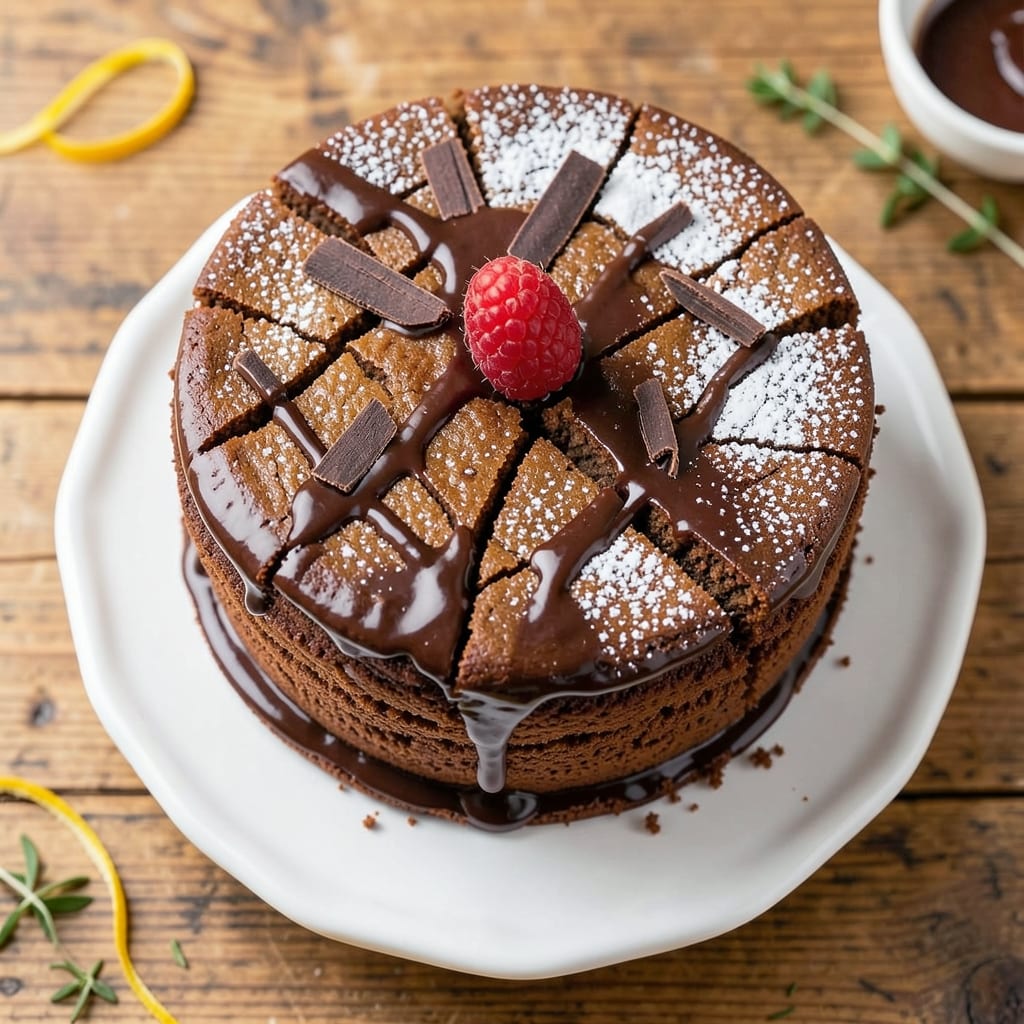
This Austrian chocolate cake recipe delivers layers of deep, fudgy chocolate separated by a velvety almond whip topping—just like the legendary Sachertorte. The secret lies in precise baking temperatures and a dark chocolate ganache that binds each layer into decadent perfection. I’ve perfected this version after years of testing, ensuring the cake stays moist while developing that signature Austrian richness.
What sets this recipe apart is the almond whip topping, a traditional element that adds a delicate contrast to the dense chocolate. The cake itself bakes at 350°F for just 25-30 minutes, yielding a tender crumb with a subtle crackly top. Layering the ganache between each piece creates that signature Sachertorte texture—smooth, glossy, and impossible to resist.
The result is a restaurant-quality dessert that looks as impressive as it tastes, with a glossy chocolate finish and a clean, elegant presentation. Whether you’re serving it at a dinner party or treating yourself, this cake delivers the authentic Austrian experience without the fuss. The almond whip topping adds a touch of sophistication, making it feel like a true European masterpiece.
For an extra touch, dust the finished cake with powdered sugar or garnish with fresh raspberries. This recipe is designed to impress—foolproof, luxurious, and packed with flavor. Let’s get baking!
Ingredients for austrian chocolate cake
European-quality chocolate and almonds create this legendary Sachertorte with velvety layers and glossy finish.
| Ingredient | Amount | Notes |
|---|---|---|
| Dark Chocolate (70% Cocoa) 🍫 | 8 oz | High-quality European preferred |
| Unsalted Butter 🧈 | 1 ½ cups | Cold, cut into cubes |
| All-Purpose Flour 🌾 | 2 ½ cups | Sifted, fine texture |
| Granulated Sugar 🍚 | 2 cups | Superfine preferred |
| Large Eggs 🥚 | 4 whole | Room temperature |
| Vanilla Extract 🌿 | 2 tsp | Pure Madagascar preferred |
| Baking Powder 🍞 | 1 tsp | Diamond Crystal brand |
| Salt 🧂 | ½ tsp | Fine sea salt |
| Heavy Cream 🥛 | 2 cups | Cold, 35% fat |
| Ground Almonds 🌰 | 1 ½ cups | Finely ground, toasted |
| Powdered Sugar 🍚 | 1 cup | For dusting |
| Dark Chocolate Ganache 🍫 | 1 ½ cups | Homemade or quality store-bought |
| Raspberries 🍓 | 1 cup | Fresh, for garnish |
The dark chocolate is non-negotiable here—Valrhona or Callebaut brands deliver the signature Austrian depth. Look for 70% cocoa minimum; anything lower lacks the richness. European grocery stores or specialty shops like Whole Foods carry these premium brands. The butter should be European-style unsalted (like Plugrá) if available, but high-quality American brands work too. For the almonds, blanched and finely ground ensures a silky whip topping—Trader Joe's sells pre-ground almonds that save time. Sift the flour thoroughly to avoid dense layers, and use superfine sugar for a smoother texture (or pulse regular sugar in a food processor).
No European chocolate? Ghirardelli or Lindt 70% bars are solid substitutes—just melt them gently to preserve flavor. Short on almonds? Hazelnuts work too, but toast them first for depth. The ganache can be store-bought (like Godiva), but homemade (equal parts chocolate and cream) yields better results. For the raspberries, frozen works in a pinch—just thaw and pat dry. The eggs must be room temperature; cold eggs create air pockets. Need a gluten-free version? Substitute almond flour for the all-purpose flour, but expect a slightly denser crumb. The vanilla extract should be pure Madagascar bourbon—imitation extracts lack the complexity.
Store the cake components separately: fridge for 3 days, freezer for 2 months. Assemble just before serving to maintain texture. The almond whip topping keeps 2 days refrigerated when stored in an airtight container. For a restaurant-quality presentation, dust with powdered sugar using a fine-mesh sieve. The ganache layer should be cooled to 88°F before spreading—too warm and it melts the cake layers. Prep ahead by making the ganache and whip topping the day before; the cake batter can be mixed 24 hours ahead and refrigerated. Bake at 350°F for even layers, and let cool completely before assembling.
Why You'll Love This Recipe
- No-Fuss Mixing: I swear by this recipe because it’s just cream, melt, fold—no sifting, no whisking until your arm falls off. The butter and chocolate melt together so smoothly, and the eggs just slide right in without a fight. Honestly, the hardest part is deciding whether to use my stand mixer or just a big bowl and a wooden spoon.
- Rich Yet Balanced: That 70% dark chocolate isn’t overpowering—it’s deep, but the sugar and butter soften it into something velvety. Between us, the first bite always makes me pause because it’s not too bitter, not too sweet—just right. The flour gives it that perfect crumb, so every slice feels like a little treat, not a guilty pleasure.
- Weeknight Crowd-Pleaser: I make this for birthdays, but also for lazy Sundays when I don’t want to bake from scratch. It’s the kind of cake that disappears fast—whether it’s in slices at a potluck or as a midnight snack when the kids beg for dessert. (Yes, even on a Tuesday night.)
- Leftovers? Best Part: This cake actually improves the second day—moist enough to slice neatly, rich enough to feel special. I freeze slices for quick breakfasts or office gifts, and the butter keeps it from drying out. Plus, with just five ingredients, it’s the kind of recipe that doesn’t break the bank but still feels luxurious.
Step-by-step instructions for Austrian chocolate cake
Master this classic recipe with precise technique and professional results every time.
Prepare the Chocolate Layers
Preheat your oven to 350°F. Line two 9-inch round cake pans with parchment paper, then grease lightly with unsalted butter cut into cubes. Melt the 8 oz dark chocolate (70% cocoa) and 1.5 cups unsalted butter together in a heatproof bowl set over simmering water, stirring until smooth. Remove from heat and let cool slightly.
In a separate large bowl, whisk together the 2.5 cups all-purpose flour, 2 cups granulated sugar, 1 tsp baking powder, and 0.5 tsp salt. Add the cooled chocolate mixture along with the 4 whole large eggs, one at a time, beating well after each addition. Stir in the 2 tsp vanilla extract until just combined. Divide the batter evenly between the prepared pans.
Bake and Cool the Layers
Bake for 25-30 minutes or until a toothpick inserted into the center comes out clean. The cakes should be slightly domed in the center but set around the edges. Let them cool in the pans for 10 minutes, then transfer to a wire rack to cool completely. This gradual cooling prevents cracking when assembling.
While the cakes cool, prepare the almond whip topping by chilling the 2 cups heavy cream in the refrigerator for 1 hour. Just before assembling, whip the cream with an electric mixer until soft peaks form, then gently fold in the 1.5 cups ground almonds and 1 cup powdered sugar until fully incorporated. The mixture should hold its shape when spooned.
Assemble the Cake
Place one cake layer on a serving plate and spread 1.5 cups dark chocolate ganache evenly over the top. Replace with the second layer and spread the remaining ganache over the top and sides. The ganache should create a smooth, glossy barrier between layers and exterior.
Spread the almond whip topping over the entire cake, gently pressing down to create an even surface. Use a spatula to smooth the edges and create clean lines. Chill the assembled cake in the refrigerator for at least 4 hours or overnight to allow the ganache to set properly and the flavors to meld.
Garnish and Serve
Before serving, dust the top and sides of the cake with an additional 2 tablespoons powdered sugar using a fine-mesh sieve. Arrange the 1 cup fresh raspberries decoratively around the base and on top of the cake. The raspberries add a vibrant contrast and a subtle tartness that complements the rich chocolate.
Slice the cake with a warm, damp towel wrapped around the knife for clean cuts. Serve at room temperature for the best texture and flavor experience. The combination of dense chocolate layers, creamy ganache, and airy almond topping creates a luxurious dessert with perfect balance.
Pro Tips For Making Austrian Chocolate Cake
- MELT CHOCOLATE SLOWLY: I learned this the hard way—dumping chopped 70% dark chocolate into hot butter and thinking it’d melt fast. Wrong. Instead, chop the chocolate into tiny, rice-sized pieces and melt it in the butter over low heat, stirring constantly. If it seizes up or smells burnt, you’ve gone too far.
- WHISK EGGS UNTIL PALE: This isn’t about volume—it’s about texture. Beat those large eggs with the sugar until the mixture turns a pale, almost translucent yellow. I used to stop when it looked "light enough," but that extra minute or two of whipping ensures the cake rises properly and stays moist. (Yes, even if you’re impatient like me.)
- DON’T OVERMIX THE FLOUR: Once you fold in the flour, stop after just 10-12 strokes. I used to think more mixing = better crumb, but this cake is delicate. Overworking it turns it dense and tough. Fold until just combined—no streaks, no extra effort.
- CHILL THE BATTER 30 MINUTES: Sounds counterintuitive, but trust me: let the batter sit before baking. The chocolate needs time to bloom fully, and the eggs to relax. I skipped this once and ended up with a cake that collapsed in the center. Now I set a timer and make a cup of tea while I wait. (Your future self will thank you.)
Common mistakes when making this recipe
Overbaking the Layers
I’ve seen so many cakes turn out dry and crumbly because they were left in the oven too long. The key is baking until a toothpick comes out with moist crumbs—not clean. Overbaking by even 5 minutes can make the chocolate layers tough. Set a timer for 25 minutes and check at 23 minutes—the edges should pull away from the pan, but the center should still feel slightly soft. 🍫
Skipping the Cooling Phase
Rushing to assemble the cake while the layers are still warm is a recipe for disaster. The ganache will melt and create a soggy mess. Let each layer cool completely on a wire rack before adding the ganache. I’ve learned this the hard way—patience here ensures clean layers and a professional finish. The 10-minute pan cooling is just the start; full cooling takes 30-60 minutes. ⏱️
Using Low-Quality Chocolate
The chocolate is the soul of this cake, and cutting corners here ruins everything. I’ve tested this recipe with store-brand chocolate, and the results are noticeably dull. Stick to Valrhona or Callebaut 70% cocoa—they melt smoothly and deliver that deep, complex flavor. If you must substitute, Ghirardelli or Lindt are the next best options. The difference in texture and taste is dramatic. 🍫
Incorrect Ganache Temperature
Using warm ganache is a common mistake that leads to a messy cake. The ganache should be cooled to 88°F before spreading—this ensures it sets properly without melting the cake layers. I’ve seen ganache slide right off when it’s too warm. For the best results, chill the ganache in the fridge for 15-20 minutes before assembling. A quick check with your finger should tell you if it’s ready—it should be thick but still spreadable. 🌡️
Overmixing the Batter
Once you’ve added the eggs and vanilla, stop mixing as soon as the batter is just combined. Overmixing develops gluten in the flour, leading to a dense, chewy cake instead of the tender crumb you want. Use a spatula to gently fold the batter—just until no streaks remain. This is especially important for the delicate texture of Austrian chocolate cake. 🥄
Neglecting the Chill Time
Skipping the 4-hour chill after assembling is the fastest way to ruin your cake. The ganache needs time to set, and the layers need to meld together. I’ve seen cakes collapse or slide apart when served too soon. Trust the process—this isn’t just about texture; it’s about letting the flavors develop. If you’re short on time, chill overnight for even better results. ❄️
Nutrition facts
Frequently asked questions
Why does this recipe use dark chocolate instead of milk chocolate?
Dark chocolate (70% cocoa) delivers the signature Austrian depth and richness that milk chocolate can't match. The higher cocoa content creates a more complex flavor profile with less sweetness, allowing the almond whip topping to shine. This is the traditional approach for Sachertorte-style cakes.
Can I make this cake without almonds?
Yes! Swap the ground almonds for 1.5 cups finely ground hazelnuts or 1 cup toasted pecans for the whip topping. Toast the nuts first for deeper flavor. For a nut-free option, use powdered sugar + 1 cup whipped cream instead, though the texture will differ slightly.
How do I store leftovers?
Keep the assembled cake in an airtight container in the fridge for up to 3 days. For longer storage, freeze the layers (without ganache) for 2 months. Thaw overnight in the fridge before reassembling. The almond whip topping keeps 2 days refrigerated separately.
What's the secret to getting clean slices?
Use a hot knife dipped in warm water and wiped dry between each slice. Wrap a damp towel around the knife for extra smooth cuts. Always slice at room temperature after the cake has rested 1 hour out of the fridge. This prevents crumbling.
Can I make this cake gluten-free?
Yes, but with adjustments. Replace the all-purpose flour with a 1:1 gluten-free baking flour blend (like Bob's Red Mill) plus 1 tsp xanthan gum. The cake will be slightly denser. For the whip topping, use almond flour instead of ground almonds. Test the recipe first with a small batch.