
Desserts
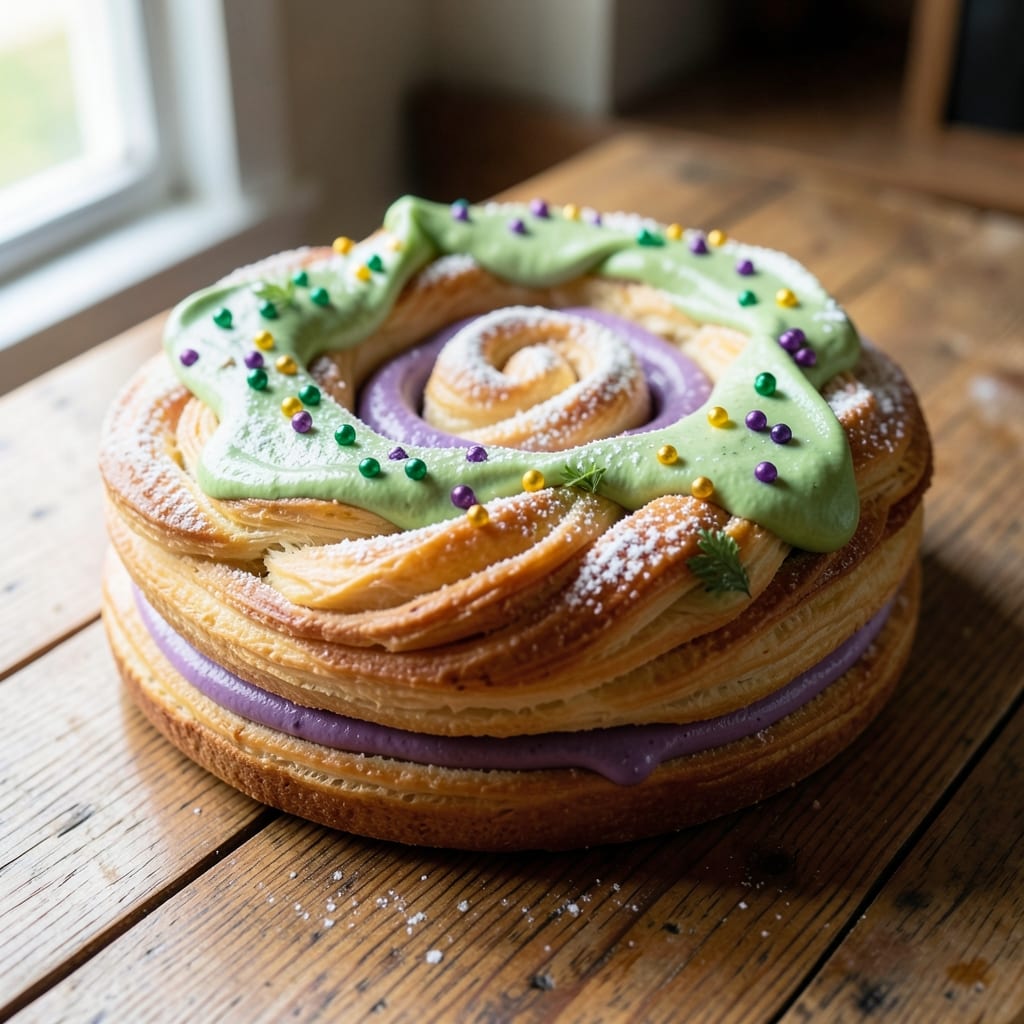
This authentic King Cake recipe from New Orleans captures the heart of Mardi Gras tradition—rich brioche dough, sweet praline filling, and vibrant purple, green, and gold glaze that shimmer like Carnival lights. 💛 The secret lies in the yeast ratio and slow fermentation, which create that signature tender crumb and deep, buttery flavor that sets it apart from ordinary cinnamon rolls.
What makes this recipe truly special is the balance between tradition and technique. The dough requires patience—allowing it to rise overnight develops complex flavors and a light, airy texture. Inside, a praline or cream cheese filling adds richness, while the iconic three-color glaze symbolizes justice, faith, and power, making every bite a celebration of New Orleans culture.
By the time it emerges from the oven, your King Cake will be golden and fragrant, with a glaze that crackles as it cools. The trinket hidden inside adds excitement, turning dessert into a game. Whether served at a Mardi Gras party or as a festive treat, this recipe delivers the authentic taste of New Orleans.
Perfect for sharing with a crowd, this King Cake is a labor of love that rewards with every slice. The combination of buttery dough, sweet filling, and vibrant glaze creates a dessert that’s as visually stunning as it is delicious. Let’s bring the magic of New Orleans to your kitchen.
Ingredients for authentic king cake recipe from new orleans
Twelve ingredients to recreate New Orleans magic—brioche dough, vibrant colors, and praline sweetness.
| Ingredient | Amount | Notes |
|---|---|---|
| All-Purpose Flour 🌾 | 4 cups | Sifted for light texture |
| Granulated Sugar 🍚 | ½ cup | Divided for dough and filling |
| Unsalted Butter 🧈 | 1 cup | Cold, cubed for brioche |
| Large Eggs 🥚 | 3 whole | Room temperature for best rise |
| Active Dry Yeast 🍞 | 2 ½ tsp | Instant yeast works too |
| Warm Whole Milk 🥛 | 1 cup | 110°F for yeast activation |
| Salt 🧂 | ½ tsp | Kosher or sea salt |
| Purple Food Coloring 🎨 | ¼ tsp | Gel or liquid, vibrant hue |
| Green Food Coloring 🎨 | ¼ tsp | Gel or liquid, vibrant hue |
| Yellow Food Coloring 🎨 | ¼ tsp | Gel or liquid, vibrant hue |
| Praline Filling 🍬 | 1 ½ cups | Store-bought or homemade |
| Powdered Sugar 🍚 | 2 cups | For glaze and dusting |
| Glass Beads or Small Toy 🎭 | 1 piece | Traditional Mardi Gras trinket |
The yeast is non-negotiable for that signature brioche rise. Fresh yeast from the refrigerated section works best, but instant yeast is fine if you dissolve it in the warm milk first. For butter, Land O'Lakes or Plugrá are my go-tos—cold cubes incorporate better than softened butter. The flour should be sifted to avoid dense dough, and King Arthur or Gold Medal brands are ideal. Food coloring can be tricky—Wilton gel colors are the most vibrant and won’t bleed through the dough. If you can’t find praline filling, homemade pecan praline or cream cheese work beautifully too.
No purple food coloring? Blue and red gel colors mixed get you close. The dough needs to rest twice—don’t skip this step—it’s what makes it tender. For a gluten-free version, swap the flour for a 1:1 gluten-free blend, but expect a denser texture. The hidden trinket should be small enough to swallow easily—plastic beads or a tiny plastic baby are traditional. If you’re feeling fancy, add a gold leaf flake to the glaze for extra New Orleans flair. The filling can be divided—half praline, half cream cheese—for variety.
Freshly made dough keeps for 24 hours in the fridge, wrapped tightly in plastic. The glaze stays glossy for 3 days if stored properly, but the cake itself is best eaten within 48 hours for that fresh-baked magic. Freeze dough balls for up to 3 months—just let them rise at room temp before baking. The trinket? Store it separately until serving to avoid losing it in the dough. And trust me, the aroma alone will have your kitchen smelling like Bourbon Street.
Why You'll Love This Recipe
- Here’s what sold me: that dough stays fresh for days, and the slices? Even better reheated with a sprinkle of powdered sugar. I’ve fed a crowd with two batches—zero waste, all flavor. Budget win.
- No Yeast Fuss: I swear by this dough—just toss in the yeast with warm water and sugar, let it sit while I sip coffee. No kneading, no waiting hours; that rich butter and sugar combo does all the work while you get on with your day.
- Buttery Sweet Magic: That first bite? Warm, pillowy dough wrapped around a gooey sugar center—like a hug in cake form. The butter isn’t just there; it’s the star, making every slice taste like a New Orleans bakery secret.
- Carnival Ready: Between us, this is the only king cake recipe that actually feels like Mardi Gras. Slap on purple, green, and gold icing, hide that plastic baby, and boom—you’ve got the party starter without the stress of last-minute orders.
Step-by-step instructions for authentic New Orleans king cake
Here's how to create a traditional Mardi Gras king cake with rich brioche dough and vibrant colors.
👨🍳 Step 1: Activate the Yeast and Prepare the Dough
In a small bowl, whisk together the 1 cup warm whole milk (about 110°F) with 2.5 teaspoons active dry yeast and ¼ cup of the granulated sugar. Let it sit for 5-10 minutes until it becomes frothy and bubbly—this confirms the yeast is active. If it doesn't bubble, your yeast may be dead or the milk too hot.
In a large mixing bowl, combine the 4 cups sifted all-purpose flour and ½ teaspoon salt. Make a well in the center and pour in the yeast mixture, 3 whole large eggs, and 1 cup cold cubed unsalted butter. Mix with a wooden spoon until a shaggy dough forms, then turn it out onto a lightly floured surface and knead for 8-10 minutes until smooth and elastic.
🍳 Step 2: First Rise and Incorporate Colors
Place the dough in a lightly greased bowl, cover with a damp towel, and let it rise in a warm place for 1-2 hours or until doubled in size. While it rises, prepare three separate bowls with ½ cup warm water each. Add ¼ teaspoon purple food coloring to one, ¼ teaspoon green food coloring to another, and ¼ teaspoon yellow food coloring to the last.
Divide the risen dough into three equal portions and roll each into a 12-inch log. Gently stretch each log into a 16-inch oval shape and place one colored dough on a parchment-lined baking sheet. Repeat with the other two colors, spacing them evenly. Cover loosely and let rise for another 30-45 minutes until puffy.
🥘 Step 3: Assemble and Fill the King Cake
Preheat your oven to 350°F. Working quickly, gently press the three colored dough ovals together to form a single round cake. Pinch the edges firmly to seal. Using a sharp knife, make 6-8 even cuts around the circumference, but don't cut all the way through—leave the bottom intact. This creates the traditional "king cake" shape.
Roll out 1.5 cups praline filling into a log and place it in the center of the cake. Gently press the edges together to encase the filling completely. Place the 1 piece glass beads or small toy inside one of the sections before sealing. This hidden trinket determines who gets to wear the plastic crown!
🔥 Step 4: Bake to Golden Perfection
Bake the king cake for 25-30 minutes until it's deep golden brown and sounds hollow when tapped on the bottom. The edges should pull away slightly from the pan, and the internal temperature should reach 190°F. Be careful not to overbake—king cakes are delicate and can dry out quickly.
Remove from the oven and let cool for 10 minutes before carefully transferring to a wire rack. This resting period prevents the cake from collapsing when you decorate it. While it cools, whisk together 2 cups powdered sugar with 1-2 tablespoons warm water to make a smooth glaze.
🎨 Step 5: Glaze and Decorate Traditionally
Drizzle the powdered sugar glaze evenly over the cooled cake, letting it drip down the sides. For an authentic touch, add purple, green, and gold sprinkles around the edges to represent Mardi Gras. The colors should be vibrant and evenly distributed—this is what makes a true New Orleans king cake visually stunning.
Serve immediately with a plastic Mardi Gras crown for the lucky finder of the hidden trinket. The cake should be tender, slightly sweet, and rich with praline filling. Slice carefully through the cuts you made earlier—this ensures clean, even portions that showcase all three colors beautifully.
Pro Tips For Making Authentic King Cake Recipe From New Orleans
- Proof at 75°F: DESCRIPTION: Skip the warm oven trick—yeast wakes up best in a cozy 75°F spot (like your fridge’s bottom shelf). I learned this the hard way when my dough rose unevenly after rushing it near the stove. Give it 1–2 hours until it’s puffy and jiggly, then punch it down once—no need to overwork it.
- Brown That Butter: DESCRIPTION: The butter in this dough needs to be nutty and golden, not pale. Melt it in the mixing bowl, then watch it like a hawk—it’s ready when it smells like caramel and tiny brown bits cling to the bottom. Skim those bits off before adding wet ingredients, or your cake will taste bitter.
- No Overmixing: DESCRIPTION: Once you add the eggs, mix just until combined—lumpy is fine. I used to beat this dough until it looked silky, and it turned out dense. The gluten gets overworked, and that’s a one-way ticket to a sad, heavy cake. Stop when the flour’s just incorporated.
- Chill the Dough: DESCRIPTION: After shaping, wrap the dough in plastic and refrigerate it overnight. This isn’t optional—it lets the gluten relax, so your cake rises evenly and doesn’t collapse when baking. I know, it’s tempting to bake it fresh, but trust me: the texture changes for the better.
Perfect pairings for authentic king cake recipe from new orleans
Mardi Gras Drinks
Pair your King Cake with a Sazerac—New Orleans' iconic whiskey cocktail—to complete the Mardi Gras experience. The mix of bourbon, absinthe, and bitters complements the cake's sweetness while adding a sophisticated kick. For a non-alcoholic option, try Hurricane Punch with its tropical fruit flavors and rum-free base. 🍹
Another local favorite is Café Brûlot, a spiced coffee cocktail with a flaming orange peel. The warm spices mirror the praline filling's depth, making it a perfect match. Serve it alongside the cake for a cozy, festive touch.
Coffee Pairings
New Orleans-style café au lait—equal parts strong coffee and steamed milk—cuts through the richness of the King Cake beautifully. The warmth of the coffee enhances the buttery brioche dough. For a modern twist, try a vanilla latte with a sprinkle of cinnamon on top. 💛
If you prefer espresso, a doppio (double shot) provides enough bitterness to balance the cake's sweetness. The bold flavors create a delightful contrast that keeps every bite interesting.
Seasonal Beverages
During winter months, a mulled wine with cinnamon and cloves pairs wonderfully with the warm spices in the praline filling. The alcohol in the wine also enhances the cake's buttery richness. For a lighter option, sparkling apple cider adds a refreshing crunch. ❄️
In summer, swap to iced tea with a splash of lemon—its acidity cleanses the palate between rich bites. For a festive touch, add a mint sprig and a lemon slice to the glass for garnish.
Wine Pairings
A sweet Moscato d'Asti from Italy brings a fruity sweetness that harmonizes with the King Cake's glaze and filling. The light bubbles also refresh your palate between bites. For a drier option, a Riesling with its citrus notes provides a nice contrast to the cake's richness. 🍷
If you prefer red wine, a light Pinot Noir offers enough fruitiness to complement the praline without overpowering the brioche dough. The subtle earthiness balances the sweetness beautifully.
Nutrition facts
Frequently asked questions
Why does the dough need two rises?
The first rise activates the yeast and develops flavor, while the second rise after shaping creates that signature light, airy texture. Skipping either step can result in a dense cake that lacks the traditional brioche tenderness. Think of it like letting bread proof—patience pays off with a better texture!
Can I make this cake without food coloring?
Yes! Use natural alternatives like turmeric (golden), beet juice (purple), or spinach (green) for vibrant colors. These work best when mixed into the dough during the first rise. The flavors will be subtly different but still authentic to New Orleans' tradition of colorful celebration.
What's the best way to hide the trinket?
Place the trinket in one of the dough sections before sealing the cake, then gently press it deeper into the center. For extra security, tuck it near the middle of the filling log. If you're worried about it falling out during baking, wrap it in a tiny piece of dough first—this keeps it safely inside until serving.
How do I store leftover King Cake?
Keep it in an airtight container at room temperature for up to 3 days. For longer storage, freeze the cake (without glaze) for 1 month). Reheat slices in the oven at 300°F for 5 minutes to restore freshness. The glaze will need reapplying after freezing—just brush with a little water and powdered sugar.
Can I make this gluten-free?
Yes, but expect a denser texture. Use a 1:1 gluten-free flour blend with xanthan gum, and increase the yeast by 0.5 teaspoon. Let the dough rise longer (up to 3 hours) since gluten-free dough ferments differently. The colors and glaze will still look beautiful, but the texture won't be as light as traditional.