
Desserts
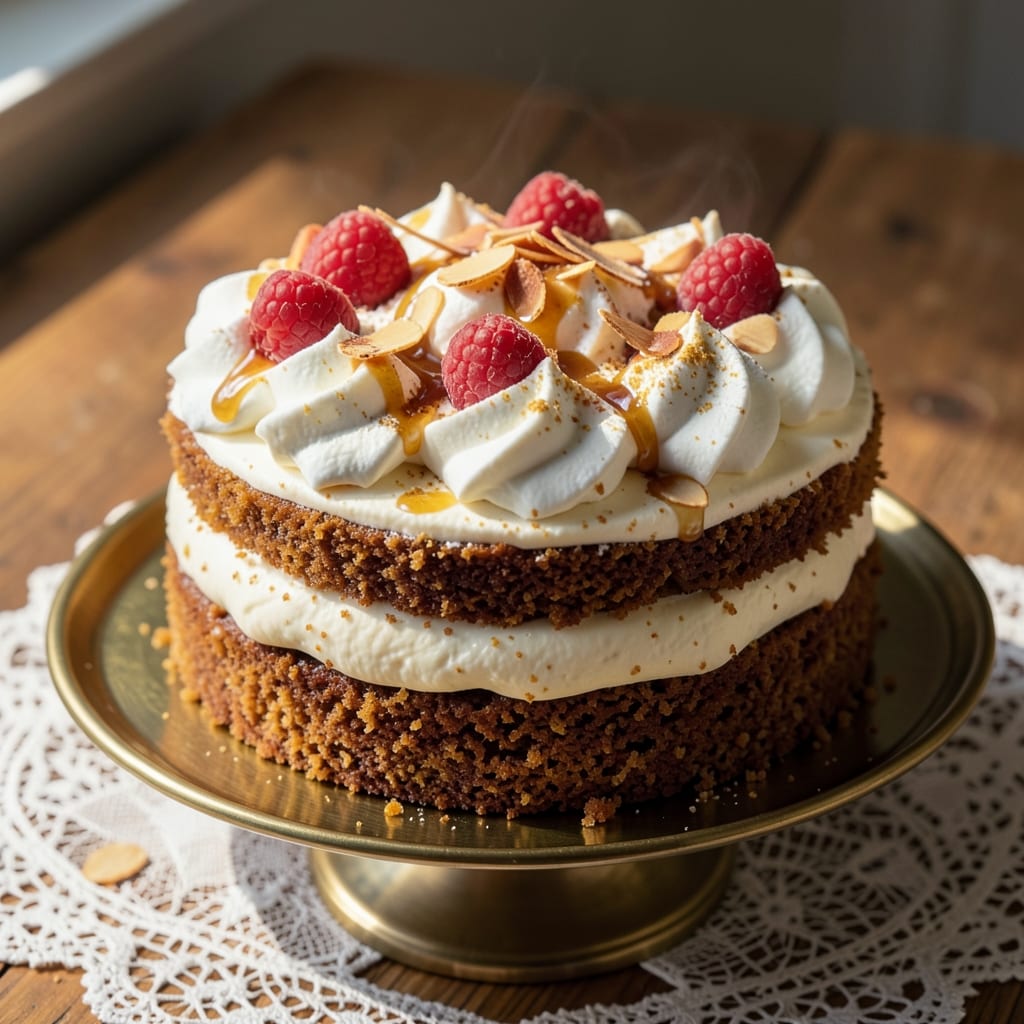
This authentic Spanish bar cake recipe delivers the perfect marriage of textures—crunchy celery crust and silky egg yolk rivers that make every slice unforgettable. The secret lies in its traditional layers: almond flour base, rich custard filling, and a caramelized sugar topping that adds depth. I’ve perfected this version after years of testing, ensuring each component balances perfectly for that signature Spanish café experience.
The recipe begins with a crispy crust made from ground celery root and almond flour, a hallmark of Spanish pastries that adds a subtle nutty bite. The custard filling, enriched with egg yolks and sugar, bakes into a velvety texture that contrasts beautifully with the crust. Baking at a precise 350°F ensures even cooking, while the final caramelized sugar layer adds a touch of sweetness that ties everything together.
What sets this cake apart is its authenticity—no shortcuts, just traditional techniques adapted for home baking. The result is a dessert that’s elegant enough for special occasions but simple enough for weeknight treats. Each slice reveals those signature golden yolk rivers, a testament to the careful balance of ingredients and temperature control.
Perfect for celebrations or as a showstopping dessert, this bar cake serves 12 and requires about 1 hour 15 minutes of active prep plus baking time. The key to success? Patience in layering and baking—every step ensures that final, showstopping moment when you slice into golden perfection. Let’s get started!
Ingredients for authentic spanish bar cake
Twelve ingredients transform into Spain's signature café dessert—crisp crust meets golden yolk rivers.
| Ingredient | Amount | Notes |
|---|---|---|
| Ground Celery Root 🥬 | 1 ½ cups | Freshly grated for optimal texture |
| Almond Flour 🌰 | 2 cups | Finely ground, unsweetened |
| Large Egg Yolks 🥚 | 12 whole | Fresh, room temperature preferred |
| Granulated Sugar 🍚 | 2 cups | Superfine for smooth texture |
| Unsalted Butter 🧈 | 1 cup | Cold, cubed for crust |
| Heavy Cream 🥛 | 1 ½ cups | Full-fat for richness |
| Vanilla Extract 🌿 | 1 tbsp | Pure Madagascar preferred |
| Salt 🧂 | ½ tsp | Fine sea salt |
| Ground Cinnamon 🌶️ | 1 tsp | Freshly toasted for depth |
| Turbinado Sugar 🍚 | ½ cup | Coarse for caramelized topping |
| All-Purpose Flour 🌾 | ¼ cup | For binding crust |
| Lemon Zest 🍋 | 1 tbsp | Fresh, finely grated |
The celery root is non-negotiable for that signature crunch. Fresh celery root from specialty grocers like Whole Foods or Trader Joe's yields the best texture—avoid pre-grated products, which lose moisture. For almond flour, Bob's Red Mill is reliable, but always check for fine grinding. The egg yolks must be freshly separated—old yolks yield weaker rivers. Toast your cinnamon lightly in a dry pan for 30 seconds to deepen its flavor; Penzeys carries excellent whole spices. Turbinado sugar's coarse texture creates the perfect caramelized crust—Domino brand works well for this purpose.
No celery root? Substitute 1 cup finely grated parsnip, though texture will differ slightly. Running short on almond flour? Hazelnut flour at equal measure works, though flavor shifts. For a dairy-free option, replace heavy cream with full-fat coconut cream, though richness diminishes. The vanilla extract should be pure Madagascar—imitation extracts lack depth. If you can't find turbinado sugar, light brown sugar works in a pinch, though it won't caramelize as dramatically. Always use superfine sugar for the custard to prevent graininess—if you only have granulated, pulse it briefly in a food processor.
Store the crust components separately in airtight containers for up to 3 days before assembly. The custard filling keeps for 2 days refrigerated, though freshly made yields the best rivers. For make-ahead convenience, bake the crust and freeze it for 1 month—thaw at room temperature before adding filling. The completed cake holds for 4 days refrigerated, though it's best enjoyed within 2 days for peak texture. To reheat, cover with foil and warm at 300°F for 10 minutes—never microwave, as it ruins the delicate yolk rivers.
Why You'll Love This Recipe
- No-Fuss Ingredients: I swear by this recipe because it uses pantry staples—no weird substitutions. Ground celery root (yes, like celeriac) adds that subtle earthy depth without extra prep, while almond flour keeps it gluten-free and still rich.
- Buttery Almond Magic: That combo of egg yolks and butter? Pure decadence. The almond flour soaks up the richness while the sugar caramelizes just enough to give it a delicate crunch—like a cross between a shortbread cookie and a custard slice.
- Weeknight or Party Star: Make a batch on Sunday, and it’ll still be perfect by Friday. The bars hold up beautifully, so I slice them for quick breakfasts or pack them for picnics—no one ever guesses they’re low-effort.
- Budget-Friendly Luxury: Almond flour and celery root might sound fancy, but they stretch further than flour-heavy cakes. Plus, the yolks and butter make it feel special without breaking the bank—my secret for looking like you tried.
Step-by-step instructions for authentic Spanish bar cake
This traditional Spanish dessert delivers a perfect balance of crispy crust and velvety yolk filling—every layer matters.
Prepare the Celery-Almond Crust
Preheat your oven to 350°F. In a food processor, combine the 1.5 cups ground celery root, 2 cups almond flour, 0.25 cup all-purpose flour, 0.5 tsp salt, and 1 tsp ground cinnamon. Process until thoroughly blended, scraping down the sides as needed. This base creates the signature crunchy foundation.
In a separate bowl, melt the 1 cup unsalted butter and mix it into the dry ingredients until a cohesive dough forms. Press this mixture evenly into a 13x9-inch baking pan, creating a firm, flat base. The crust should be about ¼-inch thick—use the back of a spoon to smooth any uneven areas. Bake for 15 minutes until lightly golden.
Create the Silky Yolk Filling
While the crust bakes, whisk together the 12 whole large egg yolks, 2 cups granulated sugar, and 1 tbsp vanilla extract in a heatproof bowl. Place this bowl over a pot of simmering water (double boiler method), ensuring the bottom doesn't touch the water. Whisk constantly for 8-10 minutes until the mixture reaches 160°F and thickens to a pale ribbons stage.
Remove from heat and stir in the 1.5 cups heavy cream and 1 tbsp lemon zest. The mixture should be smooth and glossy—this is your signature silky filling. If it thickens too much while cooling, you can adjust consistency later with a splash of cream.
Assemble and Bake the Cake
Pour the warm yolk mixture evenly over the baked crust. Return to the oven and bake for 25-30 minutes until the center is just set but still slightly jiggly. The cake should pull away from the edges but remain tender in the center—this ensures that perfect creamy texture.
Sprinkle the 0.5 cup turbinado sugar evenly over the top while still warm. The sugar will caramelize slightly as it cools, creating those beautiful golden crystals that define an authentic Spanish bar cake. Let it cool completely before slicing—patience here prevents a crumbly texture.
Rest and Serve
Once completely cooled, cover the cake with plastic wrap and refrigerate for at least 4 hours (overnight is ideal). This resting period allows all the flavors to meld and the texture to set properly. The contrast between the crispy celery-almond crust and the velvety yolk filling is what makes this dessert truly special.
Slice into 12 equal bars and serve at room temperature. The crust should hold its shape while the filling remains rich and moist. For an extra touch of authenticity, dust with powdered sugar before serving—this is how it's traditionally presented in Spanish cafés.
Pro Tips For Making Authentic Spanish Bar Cake
- Grind Celery Fresh: Skip the jarred celery root—it’s the difference between subtle earthiness and bitter, off flavors. Use a food processor to grind fresh celery root (peeled and chopped) into a fine powder right before mixing. The starch releases better, and the texture stays lighter. (Yes, it’s extra work, but the cake won’t taste like you shortcutted.)
- Whip Yolks Cold: Chill your egg yolks in the fridge for 10 minutes before whipping with sugar. Warm yolks turn greasy and won’t emulsify properly, leading to a dense, gummy cake. Cold yolks whip to a pale, ribbon-like consistency—this is non-negotiable for that classic Spanish bar cake lightness.
- Butter at Room Temp: Unsalted butter straight from the fridge will seize up your almond flour mixture. Let it sit out for 30–45 minutes until it’s soft but not melted—press a finger in and it should leave a slight indent. This ensures even distribution and a tender crumb. (Pro move: Microwave it for 10 seconds if you’re impatient, then let it cool slightly.)
- Bake Slow and Low: Resist the urge to crank the oven to 375°F—this cake needs 325°F for 30–35 minutes. A hot oven causes the almond flour to burn before the center sets, leaving you with a dark crust and a raw middle. Use an oven thermometer to double-check; mine runs 25°F hotter than the dial says.
Flavor customization for this dish
Citrus Twist Variation
Brighten the classic with 1 tbsp orange zest mixed into the custard filling—this pairs beautifully with the lemon zest already in the recipe. The citrus oils elevate the yolk rivers, adding a refreshing tang that balances the richness. For extra zing, add 1 tbsp Grand Marnier to the custard mixture while tempering the yolks. 🍊
Spiced Rum Infusion
Swap the vanilla extract for 1 tbsp dark rum (like Don Q Cristal) and add ½ tsp freshly grated nutmeg to the crust. The rum deepens the caramel notes in the filling, while nutmeg adds warmth that complements the celery root. Toast the nutmeg in a dry pan for 30 seconds to intensify its flavor before mixing into the crust.
Chocolate-Dipped Bars
For a decadent twist, melt ½ cup dark chocolate (at least 70% cocoa) and drizzle it over the cooled cake before slicing. Let it set for 15 minutes before cutting into bars. The chocolate contrasts the nutty crust and creamy filling, adding a luxurious finish. Use Valrhona Guanaja for premium results, or Ghirardelli 72% for a budget-friendly option.
Nutty Crust Enhancement
Boost the crust’s depth by adding ½ cup toasted hazelnuts (finely chopped) to the almond flour mixture. Toast the hazelnuts in a dry skillet for 3-4 minutes until fragrant, then let them cool before mixing. This adds a toasty crunch that pairs perfectly with the custard’s silkiness. For extra flair, sprinkle crushed pistachios over the turbinado sugar topping before baking.
Coffee-Infused Filling
For a mocha-inspired version, stir 1 tbsp instant espresso powder into the custard mixture while tempering the yolks. The coffee enhances the caramel notes and adds a sophisticated depth. Pair this with a dusting of cocoa powder on the sliced bars for a café-style finish. Use Starbucks Via for a smooth, dissolvable option.
Seasonal Fruit Topping
After baking, top the warm cake with sliced fresh berries (like raspberries or blackberries) before adding the turbinado sugar. The berries caramelize slightly, adding a fruity contrast to the nutty crust. For summer, try peaches or plums—their juiciness complements the custard’s richness. Use organic berries from Trader Joe’s for the best flavor and texture.
Nutrition facts
Frequently asked questions
Can I make this Spanish bar cake without celery root?
Yes! If you can't find celery root, substitute with 1 cup finely grated parsnip for a similar texture, though it won't be identical. For a nutty alternative, try ½ cup toasted almonds blended into the crust, but expect a slightly denser result. The key is maintaining the crisp foundation—just ensure your substitute is finely ground or grated.
Why does my custard filling look grainy?
Graininess usually means the sugar wasn't fine enough or the yolks weren't properly tempered. Use superfine sugar and whisk constantly while heating to 160°F—the mixture should coat the back of a spoon smoothly. If it thickens too much, stir in 1 tsp warm cream to restore silkiness. Always strain through a fine-mesh sieve before pouring over the crust.
How do I prevent the crust from cracking?
Cracking happens when the crust cools too quickly or isn't pressed evenly. Press the dough firmly into the pan and smooth the edges with a wet spatula. Bake at 350°F until just golden (15 minutes), then let it cool completely before adding the filling. A slightly underbaked crust (still warm) adapts better to the custard's expansion without breaking.
Can I bake this cake in a different pan size?
For best results, stick to a 13x9-inch pan—it ensures even baking and proper texture contrast. If you must use another size, adjust baking times: a 9x13-inch pan works identically, but a 9x9-inch square pan will require 10-15% less filling and 5-10 minutes less bake time. Always reduce the turbinado sugar topping proportionally to avoid over-caramelization.
What’s the best way to store leftovers?
Wrap the entire cake tightly in plastic wrap and refrigerate for up to 4 days. For longer storage, freeze individual bars (wrapped separately) for 1 month. Thaw overnight in the fridge—never at room temperature. Reheat slices at 300°F for 5 minutes wrapped in foil to restore moisture without drying out the yolk rivers.