
Appetizers
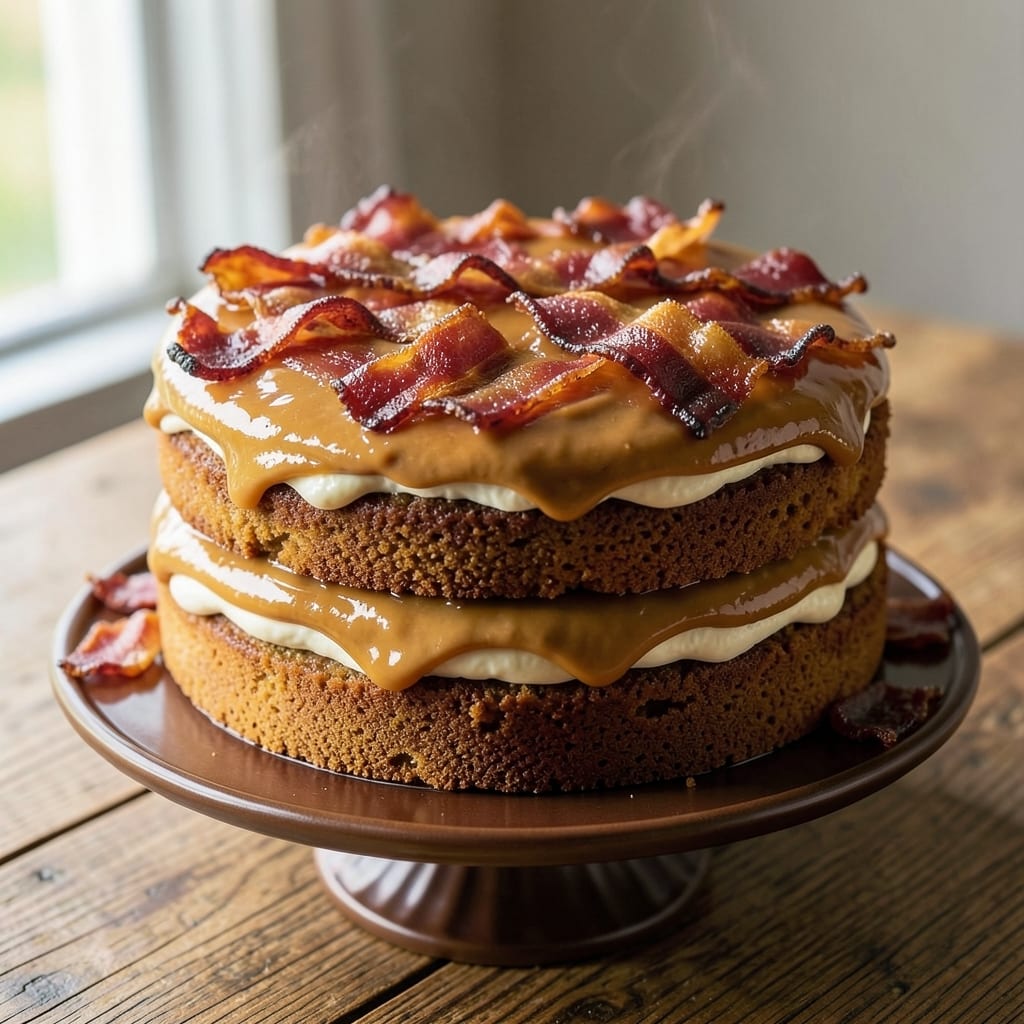
This bacon butterscotch cake flips dessert expectations by marrying crispy bacon with rich butterscotch frosting—creating layers of smoky-sweet perfection that’ll have guests asking for seconds. The secret lies in balancing salty, caramelized bacon with velvety butterscotch, a technique that transforms an ordinary cake into a showstopper. I’ve perfected this recipe over years of baking experiments, ensuring every slice delivers that ideal harmony of sweet and savory.
The cake itself is moist and tender, thanks to a simple yet effective batter that incorporates bacon bits throughout for subtle smokiness. The real magic happens with the frosting—a luscious butterscotch glaze that ties everything together, its caramel undertones complementing the bacon’s richness. This isn’t just dessert; it’s an experience that turns a simple cake into a conversation starter.
What makes this recipe stand out is its foolproof method—no fancy equipment or advanced techniques required. You’ll achieve perfectly moist layers and a glossy frosting that clings beautifully, all while keeping prep under 30 minutes. The result? A cake that looks as impressive as it tastes, with each bite offering a perfect balance of textures and flavors.
Serve it at gatherings where you want to impress, or enjoy a slice solo when you crave something unexpected. The contrast of bacon’s smokiness against the sweet frosting is addictive, making this cake a standout for both casual and special occasions. Ready to bake something unforgettable?
Ingredients for bacon butterscotch cake
Sweet meets savory in this crowd-pleasing cake—where crispy bacon and buttery caramel collide in perfect layers.
| Ingredient | Amount | Notes |
|---|---|---|
| All-Purpose Flour 🌾 | 3 cups | Sifted for light texture |
| Granulated Sugar 🍚 | 2 cups | White or light brown |
| Packed Brown Sugar 🍚 | 1 cup | For moist crumb |
| Baking Soda 🧂 | 1 tsp | Ensures proper rise |
| Baking Powder 🧂 | 1 ½ tsp | Double-acting for lift |
| Salt 🧂 | ½ tsp | Diamond Crystal preferred |
| Unsalted Butter 🧈 | 1 cup | Cold, cubed for creaming |
| Large Eggs 🥚 | 2 whole | Room temperature |
| Vanilla Extract 🍯 | 1 tbsp | Pure, not imitation |
| Buttermilk 🥛 | 1 cup | Fresh for tang |
| Cooked Bacon 🥓 | 1 ½ cups | Crumbled, smoky flavor |
| Butterscotch Chips 🍬 | 1 ½ cups | For caramelized pockets |
| Butterscotch Syrup 🍯 | ½ cup | For glaze richness |
| Heavy Cream 🥛 | ½ cup | Cold for stable glaze |
| Powdered Sugar 🍚 | 2 cups | For smooth frosting |
The bacon makes this cake unforgettable. Thick-cut bacon from Costco or Trader Joe's gives the best smoky flavor—cook it until crispy, then crumble finely. For butterscotch chips, Guittard brand has the richest caramel notes, but store-brand works too. The butterscotch syrup? Smucker's is my go-to, but any butterscotch-flavored syrup will do. Pro tip: toast the crumbled bacon in the oven at 350°F for 5 minutes after baking—it intensifies the flavor without drying out the cake.
No butterscotch chips? Chopped butterscotch candy bars (like Heath) in a pinch, though they melt differently. Short on buttermilk? Mix 1 tbsp vinegar or lemon juice with 1 cup milk—it’s a classic swap. The cake layers can be made ahead and stored in the fridge for 2 days before frosting. For extra richness, fold 2 tbsp sour cream into the batter. And if you’re feeling fancy, add a pinch of cinnamon to the frosting for warmth.
This cake stays moist for 3 days at room temperature, wrapped tightly in plastic. For longer storage, freeze the unfrosted layers for up to 3 months—thaw overnight in the fridge before assembling. The frosting can be made 1 day ahead and reheated gently if it thickens. Serve at room temperature for the best texture—let it sit for 30 minutes after frosting. Leftovers? They’re even better the next day—trust me.
Why You'll Love This Recipe
- One-Bowl Wonder: I swear by this recipe when I’m in a rush—just toss everything into one bowl, mix, and bake. No fussing with multiple pans or measuring cups scattered across the counter.
- Sweet-Savory Magic: That crispy bacon crumbled into the cake? It’s like a grown-up dessert—rich butterscotch with a smoky, salty punch that keeps me reaching for seconds.
- Party or Picnic: Slice it for a birthday spread or pack it in a cooler for a tailgate—it holds up beautifully. Honestly, I’ve served it at everything from book club gatherings to backyard BBQs.
- Budget Baking: Flour, sugar, and bacon? You’re already using pantry staples. The butterscotch extract (or chips) adds depth without breaking the bank, and leftovers reheat like a dream.
Step-by-step instructions for bacon butterscotch cake
Here's how to build layers that balance smoky bacon with rich butterscotch perfection.
Cream Butter and Sugars for Maximum Fluffiness
In a stand mixer fitted with the paddle attachment, beat the cold, cubed unsalted butter on medium speed for 2-3 minutes until light and fluffy. This process incorporates air, which creates that signature tender crumb. Gradually add the 2 cups granulated sugar and 1 cup packed brown sugar, mixing on medium-high speed for another 3-4 minutes until the mixture is pale and thick.
Here's the thing—you want to see the butter and sugars nearly double in volume and become ribbony when you drag the paddle through it. If it still looks grainy, keep mixing for another minute. This step is non-negotiable for that bakery-style texture we're after.
Incorporate Wet Ingredients and Fold in Dry Components
Add the 2 whole large eggs, one at a time, mixing on low speed for 30 seconds after each addition until fully incorporated. Scrape down the sides of the bowl to ensure everything gets mixed in. Then add the 1 tablespoon vanilla extract and mix for 10 seconds to combine.
In a separate bowl, whisk together the 3 cups sifted all-purpose flour, 1 teaspoon baking soda, 1.5 teaspoons baking powder, and 0.5 teaspoon salt. With the mixer on low speed, gradually add the dry ingredients to the wet mixture, mixing just until combined. You should still see some flour streaks—overmixing develops gluten and makes the cake tough. This is where patience pays off.
Fold in Bacon and Butterscotch Chips for Maximum Flavor
Remove the bowl from the mixer and gently fold in the 1.5 cups cooked bacon and 1.5 cups butterscotch chips using a silicone spatula. Work quickly but carefully to avoid deflating the batter. The bacon adds that irresistible smoky depth, while the butterscotch chips create pockets of caramelized goodness in every bite.
Don't skip this step—it's what makes this cake stand out. The bacon should be evenly distributed, and the butterscotch chips should be scattered throughout. If you're worried about the chips sinking, fold them in last, just before pouring the batter into the pans.
Bake the Layers to Perfect Doneness
Preheat your oven to 350°F and grease two 9-inch round cake pans or line them with parchment paper. Divide the batter evenly between the pans. Bake for 25-30 minutes, or until a toothpick inserted into the center comes out clean. The edges should be golden brown, but the top might still look slightly underdone—this is normal.
I press down gently on the center of each cake with my finger during the last 5 minutes of baking. This prevents doming and ensures even cooking. Let the cakes cool in the pans for 10 minutes, then transfer them to a wire rack to cool completely. This cooling step is crucial—it allows the layers to set properly before frosting.
Prepare the Butterscotch Glaze and Assemble
In a small saucepan, combine the 0.5 cup butterscotch syrup and 0.5 cup heavy cream. Heat over medium-low heat, stirring constantly, until the mixture reaches a gentle simmer. Remove from heat and let it cool slightly, then whisk in the 2 cups powdered sugar until smooth and glossy.
Once the cake layers are completely cool, place one layer on a serving plate. Spread about 1/3 of the glaze over the top, then add the second layer. Drizzle the remaining glaze over the top and sides of the cake. Use a spatula to smooth any excess glaze. The cake should have a glossy, caramelized finish that's just begging to be sliced.
Pro Tips For Making Bacon Butterscotch Cake
- Measure Brown Sugar Right: Pack that brown sugar like you’re stuffing a Thanksgiving turkey—no air gaps. I learned this the hard way when my cake turned out denser than a brick. Use a spoon to scoop it into the cup, then level with a knife. Trust me, the texture difference is worth the extra 10 seconds.
- Don’t Overmix the Batter: Once you add the flour, stop stirring after just combining—two or three turns max. I used to beat this like I was trying to win a baking contest, and my cakes ended up tough enough to chew. The goal is a loose batter, not pancake dough.
- Bake Until the Toothpick Test Lies: Check for doneness at 10 minutes before the recipe’s suggested time. Stick a toothpick in the center—if it comes out with moist crumbs (not wet batter), you’re golden. I’ve pulled cakes out too early more times than I’ll admit, and they’d collapse like a house of cards.
- Crumble Bacon First, Then Soak: Chop the bacon into ¼-inch pieces before soaking it in butterscotch syrup. It absorbs flavor faster this way, and you avoid that weird, half-raw bacon texture in the middle of your cake. Let it sit for 15 minutes—no need to rush. Patience here makes a real difference.
Essential equipment for this dish
Stand Mixer Essentials
Your stand mixer is the backbone of this recipe—it’s how you achieve that light, airy texture. I swear by my KitchenAid Artisan Series with the paddle attachment for creaming butter and sugars. The paddle’s flat surface ensures even mixing without over-developing gluten. If you don’t have a stand mixer, a hand mixer works in a pinch, but you’ll need to mix in 30-second bursts to avoid overheating the butter. 💫
Precision Baking Tools
For even layers and perfect doneness, invest in a 9-inch round cake pan—I use Wilton Perfect Results pans with removable bottoms for foolproof baking. A digital thermometer (like Thermoworks Thermapen) ensures your oven is at 350°F—critical for consistent results. Don’t skimp on parchment paper or baking spray (I love Baker’s Joy) to prevent sticking, especially with the bacon bits.
Measuring with Accuracy
This recipe demands precise measurements, especially for the dry ingredients. Use a scale for the powdered sugar and butterscotch chips to avoid lumps—Oxo Good Grips is my go-to. For the brown sugar, pack it firmly into your measuring cup to avoid under-sweetening. A microplane comes in handy for zesting lemon peel (optional) if you want to brighten the frosting. Every gram counts when balancing sweet and smoky flavors! ✨
Frosting Tools for Pro Results
The butterscotch glaze needs smooth application, so grab a small saucepan (I use All-Clad Stainless) for heating the syrup and cream. A silicon spatula helps spread the glaze evenly between layers, while a bench scraper smooths the sides. For garnishing, crushed peppermint or toasted pecans add texture—just toast them in a 350°F oven for 5-7 minutes until fragrant. 🍯
Optional Extras for Elevation
Want to take it further? A piping bag with a star tip lets you decorate the top with butterscotch ribbons for a bakery finish. For serving, a cake stand (like West Elm’s Acorn) keeps the cake elevated and elegant. And if you’re feeling fancy, a candle warmer keeps the frosting glossy during gatherings. These tools aren’t mandatory, but they make the final presentation chef’s kiss. 🔥
Nutrition facts
Frequently asked questions
Why does this cake need bacon if it's a dessert?
The bacon adds a surprising depth of flavor that cuts through the sweetness, creating a perfect balance. The smoky, salty notes from the crispy bacon enhance the caramel richness of the butterscotch, making each bite more complex than traditional cakes. It’s like adding a savory contrast to the sweet—think of it as the perfect pairing for your taste buds!
Can I make this cake without butterscotch chips?
Swap them for chopped butterscotch candy bars (like Heath) or even caramelized brown sugar mixed with a pinch of salt. For extra richness, fold in 2 tbsp sour cream to the batter. The chips just add pockets of gooey goodness, but the cake will still be delicious without them.
How do I prevent the cake layers from crumbling when frosting?
Let the layers cool completely before assembling to avoid sogginess. If they’re still warm, chill them in the fridge for 15-20 minutes first. Also, spread a thin layer of frosting between layers to act as a "glue." Work quickly but carefully to keep the structure intact—patience is key!
Can I bake this cake in a different pan size?
Yes, but adjust the baking time. For an 8-inch pan, bake 20-25 minutes; for a 10-inch pan, bake 30-35 minutes. The cake should always be checked with a toothpick. If using a different shape (like a loaf pan), reduce the oven temperature by 25°F to prevent over-browning.
What’s the best way to store leftover cake?
Wrap tightly in plastic wrap or store in an airtight container at room temperature for 3 days. For longer storage, freeze the unfrosted layers for up to 3 months. Thaw overnight in the fridge before frosting. The flavors actually improve as the cake sits—it’s even better the next day!