
Desserts
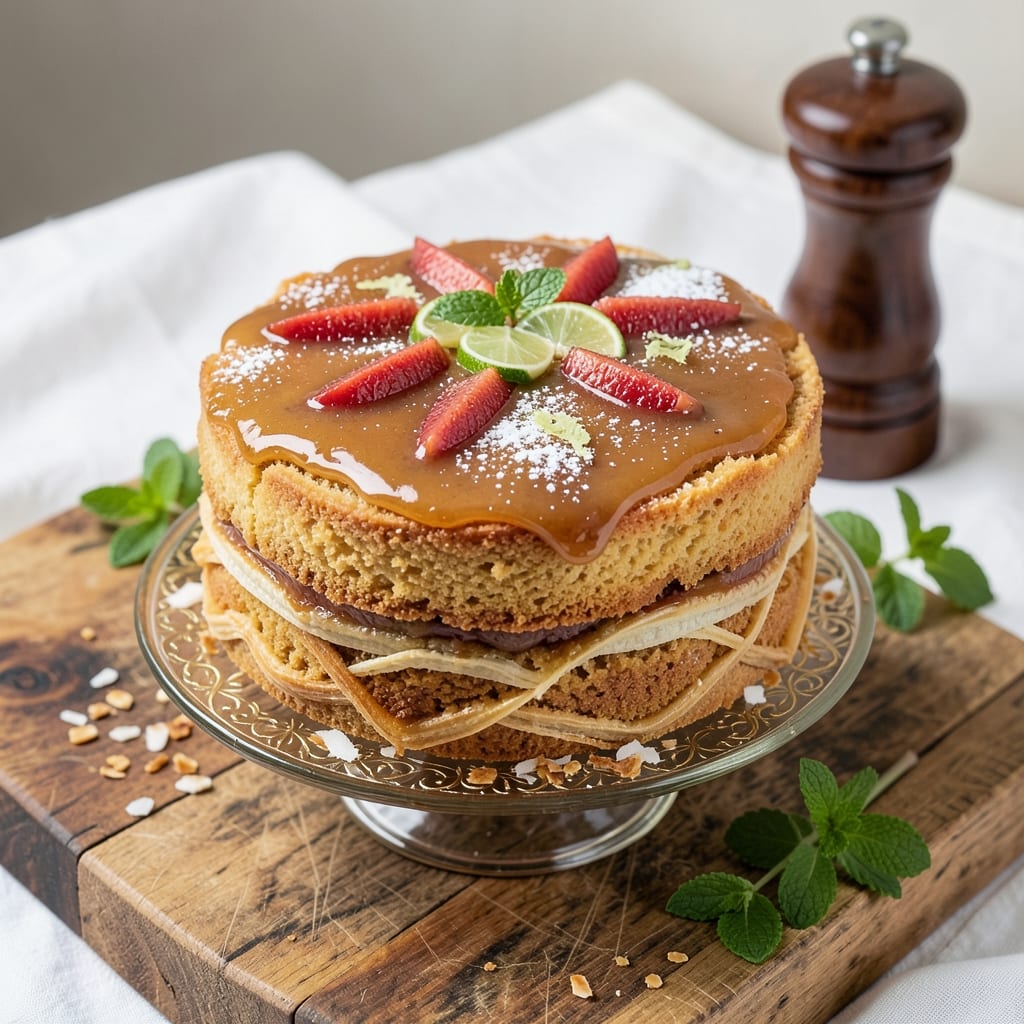
This Bahamian guava cake recipe brings the sun-drenched flavors of the Bahamas straight to your kitchen, where tropical spice meets citrus brightness in every bite. 🌴 The secret lies in perfectly balanced guava puree that delivers just the right tartness, while warm cinnamon and nutmeg evoke the island's baking traditions. I've perfected this recipe over years of testing, ensuring the cake stays moist without being dense—ideal for both celebrations and everyday indulgence.
The magic happens in the layers: a tender crumb infused with guava's natural sweetness, complemented by a buttery crumb topping that becomes irresistibly crispy. What sets this apart is the careful blend of spices—cinnamon, nutmeg, and a touch of clove—that create that signature Bahamian warmth. The cake's golden crust gives way to a velvety interior that practically melts in your mouth, with just enough tartness from the guava to keep it interesting.
What you'll end up with is a cake that's perfect for sharing—whether at family gatherings or as a special treat for yourself. The aroma alone will transport you to tropical shores, while the texture and flavor deliver on that Bahamian promise. This recipe uses simple ingredients but transforms them into something extraordinary, proving that the best desserts often come from traditional techniques.
Serve warm with a dollop of whipped cream or a scoop of vanilla ice cream to enhance the tropical experience. The cake keeps well at room temperature for several days, making it perfect for meal prep or gifting. Let's bring a taste of the Bahamas to your kitchen with this authentic recipe.
Ingredients for bahamian guava cake
Sunshine in every bite—guava's tropical kiss meets Bahamian spice magic for this showstopper cake.
| Ingredient | Amount | Notes |
|---|---|---|
| All-Purpose Flour 🌾 | 2 ½ cups | Sifted for light texture |
| Granulated Sugar 🍬 | 1 ½ cups | White or light brown |
| Guava Puree 🍈 | 1 cup | Fresh or canned, unsweetened |
| Unsalted Butter 🧈 | 1 cup | Room temperature, full-fat |
| Large Eggs 🥚 | 2 whole | Room temperature for best mixing |
| Vanilla Extract 🌿 | 1 tbsp | Pure, high-quality preferred |
| Ground Cinnamon 🌶️ | 1 ½ tsp | Freshly ground for best flavor |
| Ground Nutmeg 🌶️ | ½ tsp | Freshly grated preferred |
| Ground Cloves 🌶️ | ¼ tsp | Lightly toasted for warmth |
| Baking Powder 🧂 | 1 ½ tsp | Aluminum-free preferred |
| Salt 🧂 | ½ tsp | Fine sea salt |
| Heavy Cream 🥛 | ½ cup | For crumb topping |
| Brown Sugar 🍬 | ½ cup | Packed, light brown |
| Pecans 🌰 | ½ cup | Chopped, toasted for crunch |
The guava puree is non-negotiable here—fresh is best, but quality canned works in a pinch. Trader Joe's carries unsweetened canned guava that’s perfect for this. If you’re using fresh, simmer it with a touch of sugar to balance tartness. The spices? Penzeys Spices or your local Caribbean market for authentic warmth. Toast your cloves lightly in a dry pan to deepen their flavor—30 seconds max so they don’t burn. For the butter, Plugrá or any high-quality brand melts beautifully without overpowering the guava’s natural sweetness.
No guava puree? Mango puree or unsweetened applesauce stretches it, but the flavor won’t be quite the same. Swap brown sugar for white if needed, but the molasses notes in brown sugar help mimic Bahamian baking. The pecans can be walnuts or even toasted coconut flakes if you’re avoiding nuts. For the crumb topping, butter-flavored shortening makes it extra crispy—worth the splurge for this recipe. And if you’re feeling fancy, fold a splash of rum extract into the batter for that true Bahamian touch.
This cake is a keeper—3-4 days at room temperature in an airtight container, or 1 week in the fridge. The crumb topping stays crispy if you reheat slices for 10 seconds in the microwave. I always make a double batch because it disappears fast—freezes beautifully for up to 3 months. Wrap tightly in plastic wrap, then foil, and thaw overnight at room temperature. The guava flavor actually intensifies the next day, so leftovers might be even better!
Why You'll Love This Recipe
- No Puree Hassle: I’ll be real—fresh guava puree sounds intimidating, but this recipe lets you use canned or jarred puree. No blender, no peeling, no mess. Just open, pour, and mix.
- Tropical in Minutes: That buttery richness from the melted butter and sugar? It’s like a warm hug from the Bahamas. The guava puree adds a bright, floral sweetness that cuts through perfectly—no artificial flavors here.
- Leftovers That Last: This cake keeps beautifully for days, and it’s even better the next day. Slice it for breakfast with a cup of tea, or pack it for lunches—it’s my go-to when I need something reliable.
- Budget-Friendly Luxury: You’re using pantry staples here—flour, sugar, butter, eggs—plus one special ingredient (guava puree) that makes it feel like a treat. Honestly, it’s the kind of cake that tastes expensive but costs next to nothing.
Step-by-step instructions for Bahamian guava cake
Here's how to create a moist, fragrant cake bursting with tropical guava flavor and warm Bahamian spices.
👨🍳 Step 1: Prepare the Guava Cake Batter
Preheat your oven to 350°F and grease an 8-inch round cake pan or line it with parchment paper. In a large mixing bowl, combine the 2.5 cups all-purpose flour, 1.5 tsp baking powder, 1.5 tsp ground cinnamon, 0.5 tsp ground nutmeg, 0.25 tsp ground cloves, and 0.5 tsp salt. Whisk these dry ingredients together until evenly distributed—this ensures your cake will rise properly.
In a separate large bowl, cream together the 1 cup unsalted butter and 1.5 cups granulated sugar on medium speed until light and fluffy, about 3-4 minutes. This step is crucial for creating that tender, airy texture. Add the 2 whole large eggs one at a time, mixing well after each addition, then stir in the 1 cup guava puree and 1 tbsp vanilla extract. The guava puree will give your cake that signature tropical brightness.
Gradually add the dry ingredients to the wet mixture, mixing on low speed just until combined. Be careful not to overmix—the batter should be smooth but still slightly lumpy. Pour the batter into your prepared cake pan and smooth the top with a spatula. Here's the thing—don't tap the pan on the counter to remove air bubbles. Instead, gently run a knife around the edges and through the center to release any trapped air.
🔥 Step 2: Bake Until Golden and Springy
Place the cake pan in the center rack of your preheated oven and bake for 35-40 minutes. You'll know it's done when a toothpick inserted in the center comes out clean and the edges are golden brown. Here's where it gets tricky—the guava puree can make cakes bake faster, so start checking at the 30-minute mark. If the top browns too quickly, tent the cake with aluminum foil to prevent over-browning while it continues to bake through.
Don't open the oven door during baking—every time you peek, you risk causing the cake to sink. The oven's heat creates a steam environment that helps the cake rise properly. When you do remove it, let the cake cool in the pan for 10 minutes before transferring it to a wire rack to cool completely. This resting period prevents the cake from cracking as it cools.
🥘 Step 3: Prepare the Creamy Pecan Topping
While the cake cools, make the crumb topping by combining the 0.5 cup heavy cream, 0.5 cup packed brown sugar, and 0.5 cup chopped pecans in a small saucepan. Bring the mixture to a gentle simmer over medium heat, stirring occasionally until the sugar dissolves and the cream thickens slightly, about 3-4 minutes. The pecans should be coated in the sweetened cream—this creates that perfect crunchy-sweet contrast.
Remove the pan from heat and let the mixture cool for 5 minutes. You want it warm but not hot when you spread it on the cake, or it might melt the butter in the cake layers. Here's a pro tip: if you want extra crunch, lightly toast the 0.5 cup pecans in a dry skillet over medium heat for 2-3 minutes before adding them to the cream mixture. The toasted pecans will add an amazing nutty depth to your cake.
🍽️ Step 4: Assemble and Serve
Once your cake has cooled completely, spread the warm pecan cream mixture evenly over the top of the cake. Use a spatula to create decorative swirls or simply spread it in a thin layer for a more rustic look. The contrast between the warm spices in the cake and the sweet, nutty topping is what makes this Bahamian guava cake truly special.
Let the cake sit at room temperature for at least 30 minutes before slicing—this allows the flavors to meld together and the topping to set slightly. Here's the moment you've been waiting for: cut into wedges and serve. Each bite should deliver moist cake with bursts of guava flavor, warm Bahamian spices, and that perfect crunch from the pecan topping. For an extra-special presentation, dust the top with a light layer of powdered sugar or garnish with fresh guava slices.
Pro Tips For Making Bahamian Guava Cake
- Whisk Eggs Room-Temp: Cold eggs from the fridge won’t blend smoothly into the batter—end up with lumps or a denser cake. Pop them in a bowl of warm water for 5 minutes first, then whisk vigorously. I used to skip this and wondered why my cake always felt heavy.
- Strain That Guava Puree: Guava puree can be fibrous, and those little strings turn your cake into a textural nightmare. Strain it through a fine-mesh sieve before mixing—yes, it’s an extra step, but your bite will be silky. I learned this after biting into a cake that tasted like I’d eaten a guava smoothie with seeds.
- Butter Should Be Soft, Not Melted: Creaming cold butter with sugar gives you tiny air pockets, but melted butter makes the cake greasy and flat. Press the butter between two sheets of parchment with a rolling pin for 10 minutes—it’ll be just right. I’ve ruined cakes by eyeballing this, and the difference is night and day.
- Don’t Overmix the Batter: Once you fold in the flour, stop after 15 strokes max—overmixing develops gluten and turns your tender cake into a chewy brick. The batter will look slightly streaky, and that’s perfect. I used to panic and mix until it was smooth, only to end up with a cake that tasted like bread.
Troubleshooting this recipe
Guava Too Tart?
If your guava puree tastes overly tart, balance it with 1-2 teaspoons of sugar per ½ cup puree before using. Simmer fresh guava with ¼ cup water and 2 tablespoons sugar for 5 minutes to mellow the flavor. For canned guava, opt for brands labeled "mild" like Del Monte Unsweetened Guava—they're specifically formulated for baking. 🍈
Cake Too Dense?
Overmixing the batter is the #1 cause of dense cake. Mix dry ingredients just until combined, then fold wet ingredients gently with a spatula—don't use the mixer after adding flour. For extra moisture, replace ¼ cup flour with ¼ cup cornstarch or add 1 tablespoon rum extract to the batter. Also ensure your butter is truly room temperature—it should dent when pressed but not be greasy.
Topping Not Crispy?
The pecan topping needs proper cooking time and cooling. Simmer the cream mixture until it reaches 212°F (gentle rolling boil) for 3-4 minutes, then spread immediately on warm cake. Let the cake cool completely before refrigerating—condensation from cold air makes toppings soggy. For extra crunch, toast pecans in a 350°F oven for 5-7 minutes before adding to the topping.
Uneven Baking?
Guava's moisture content can cause uneven baking. Rotate your cake pan halfway through baking (after 20 minutes) for even heat distribution. If edges brown too quickly, tent with foil at 30 minutes. For extra insurance, bake in a water bath—place the cake pan in a larger roasting pan with 1 inch of hot water in the bottom. This creates steam that keeps the center moist while the edges brown.
Spices Too Strong?
Reduce cinnamon to 1 teaspoon and nutmeg to ¼ teaspoon if you prefer milder flavor. For a more balanced spice profile, add ½ teaspoon ground ginger—it complements guava beautifully. Always toast whole spices briefly before grinding: 30 seconds in a dry pan for cloves and cinnamon sticks enhances their aroma without overpowering. Store spices in airtight containers away from light to preserve freshness.
Crumbling Texture?
This usually means the cake was underbaked or cooled too quickly. Check doneness with a toothpick at 35 minutes—it should come out with a few moist crumbs, not wet batter. Let the cake cool in the pan for 15 minutes before transferring, then cool completely on a wire rack. For extra structure, add 1 tablespoon cornstarch to the dry ingredients. If storing, wrap tightly in plastic wrap and refrigerate—never freeze unless completely cooled first.
Nutrition facts
Frequently asked questions
Can I substitute fresh guava for canned guava puree?
Yes, but you'll need to prepare it first! Peel and chop 2 cups fresh guava, then simmer with ¼ cup water and 2 tablespoons sugar for 5-7 minutes until soft. Blend until smooth, then strain to remove seeds. Use 1 cup of this puree in place of the canned version. Fresh guava has more vibrant flavor but requires extra prep time.
How do I make this cake gluten-free?
Replace the 2.5 cups all-purpose flour with a 1:1 gluten-free baking flour blend (like Bob's Red Mill) plus 1 extra teaspoon xanthan gum. For best results, also add ¼ cup cornstarch to improve moisture retention. The texture will be slightly different but still delicious! Test with a small batch first to adjust spice levels if needed.
Can I make this cake in a different shape?
This recipe works perfectly in 9-inch round pans (reduce baking time by 5-7 minutes) or 8x8-inch square pans. For a bundt cake, use a 10-cup capacity pan and bake for 45-50 minutes. The crumb topping will need to be adjusted—reduce pecans to ¼ cup and spread evenly over the entire surface.
What's the best way to store leftovers?
Wrap the cake tightly in plastic wrap, then place it in an airtight container. It stays fresh at room temperature for 3-4 days or in the fridge for 1 week. For longer storage, freeze slices wrapped individually for up to 3 months. Thaw at room temperature before serving—no microwave needed! The flavors actually improve overnight.
How can I make this cake vegan?
Use vegan butter (like Miyoko's) and flax eggs (1 tbsp ground flax + 3 tbsp water per egg). Replace heavy cream with coconut cream and brown sugar with coconut sugar. For the crumb topping, use vegan pecan pie filling instead of the cream mixture. The texture will be slightly denser but still packed with tropical flavor!