
Desserts
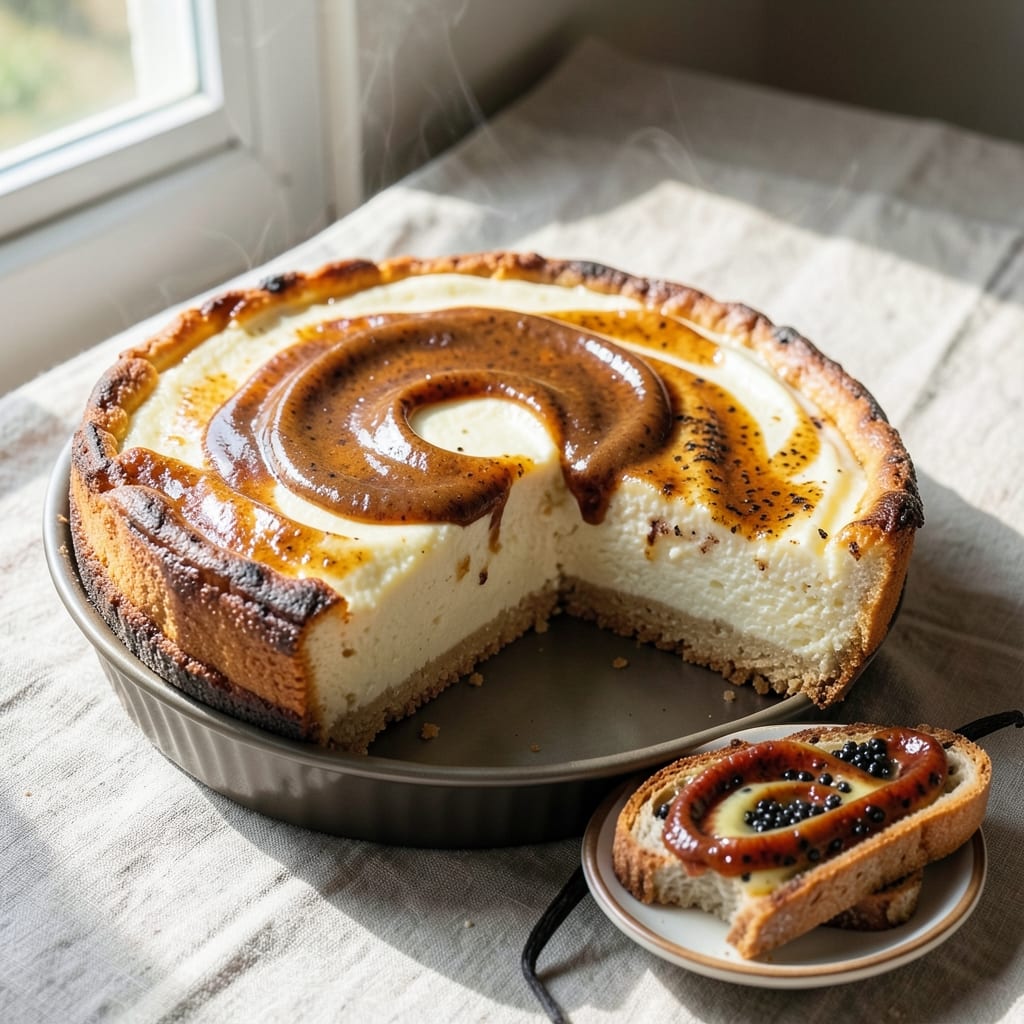
This baked cheesecake recipe Australia delivers the perfect balance of creamy texture and rich flavor using a no-crack water bath technique—a foolproof method that works every time. 🌟 The secret lies in slow baking and precise temperature control, ensuring a silky center and golden crust without a single crack. Inspired by Australian baking traditions, this recipe incorporates local touches like a Vegemite-infused crust and optional bush berry swirls for a uniquely Down Under twist.
The water bath method is the key to success here, creating a gentle heat that prevents cracks while allowing the cheesecake to set evenly. With a vanilla bean swirl running through the center, each slice offers layers of creamy vanilla custard and subtle floral notes. This recipe also adapts seamlessly to regional dairy preferences, whether you're using full-fat cream cheese or locally sourced Australian butter.
What sets this cheesecake apart is its restaurant-quality finish—smooth, jiggly, and perfectly set, with a crust that holds its shape. The 350°F (175°C) oven temperature and baking time of 60-75 minutes ensure consistent results, while the cooling process (including a mandatory fridge rest) guarantees that first slice is flawless. No more soggy bottoms or uneven textures—just a cheesecake that tastes like it came from a patisserie.
Whether you're serving it at a family gathering or treating yourself to a decadent dessert, this recipe delivers foolproof results with minimal fuss. The vanilla bean swirl adds an elegant touch, while the Vegemite crust (or classic digestive biscuit base) gives it an Australian flair. Ready to bake a cheesecake that impresses? Let’s get started.
Ingredients for baked cheesecake recipe australia
Australian-inspired ingredients for a foolproof water bath cheesecake with restaurant-quality texture.
| Ingredient | Amount | Notes |
|---|---|---|
| Full-Fat Cream Cheese 🧀 | 32 oz | Room temperature, high-fat for creaminess |
| Granulated Sugar 🍚 | 1 ½ cups | White or caster sugar preferred |
| Large Eggs 🥚 | 4 whole | Room temperature, separated |
| Vanilla Bean Paste 🌿 | 2 tbsp | High-quality, Madagascar preferred |
| All-Purpose Flour 🌾 | ¼ cup | Sifted, for smooth batter |
| Vegemite 🍞 | 2 tbsp | For crust, optional bush berry swirl |
| Digestive Biscuits 🍪 | 1 ½ cups | Crushed for crust base |
| Unsalted Butter 🧈 | ½ cup | Melted, for crust binding |
| Heavy Cream 🥛 | 1 cup | Full-fat, for vanilla swirl |
| Vanilla Extract 🌿 | 1 tsp | Pure, for additional flavor |
| Salt 🧂 | ¼ tsp | Fine sea salt for balance |
| Baking Powder 🍞 | ½ tsp | For crust lift |
| Bush Berries 🍓 | 1 cup | Optional, for swirl (fresh or frozen) |
The cream cheese is non-negotiable—full-fat varieties like Philadelphia ensure that signature silky texture. Room temperature is critical; don’t skip this step. For the crust, Vegemite delivers that uniquely Aussie touch, but digestive biscuits (like Arnotts) form the sturdy base. If you prefer a classic approach, skip the Vegemite entirely. Butter matters here too—local Australian brands like Patricia Farms add richness, though any high-quality unsalted works. For the vanilla swirl, Madagascar vanilla bean paste elevates the flavor beyond extract, but high-quality extract is a solid backup.
No vanilla bean paste? Double the extract—just know it won’t be as complex. Substitute bush berries with raspberries or strawberries if unavailable, though the tartness balances the sweetness perfectly. Heavy cream can be swapped for whipped coconut cream for a lighter texture (though it won’t be as rich). Egg substitutes like aquafaba (3 tbsp per egg) work in a pinch, but separated yolks are key for stability—don’t overmix the batter. Digestive biscuits can be replaced with graham crackers if needed, but the crust will lack that signature crunch. Vegemite crust is optional but adds depth; omit if you prefer a neutral base.
Store the cream cheese mixture in an airtight container for up to 2 days before baking—this ensures even room temperature. Crust components (butter + biscuits) can be prepped a day ahead and kept refrigerated. Once baked, cool completely before refrigerating—at least 4 hours—for optimal texture. Fully chilled, it keeps for 4-5 days in the fridge or 3 months frozen (wrap tightly in plastic). Reheat slices at 300°F (150°C) for 10 minutes to restore creaminess—though it’s best served straight from the fridge.
Why You'll Love This Recipe
- No-Fuss Bake: This cheesecake goes in the oven and forgets about it—no water bath, no fuss. The crust’s just flour and sugar pressed into the pan, so it’s basically five minutes of prep before you’re done.
- Vanilla Hit: That little vanilla bean paste makes all the difference—smooth, rich, and way better than artificial. The cream cheese stays creamy but sets just right, so every bite is pure comfort.
- Weeknight Crowd-Pleaser: Serve it warm with berries for dinner, slice it for brunch, or pack leftovers for lunch. Honestly, I’ve fed this to book club, BBQs, and even my picky teen—no complaints.
- Leftovers That Last: It keeps beautifully for days, so you can bake once and enjoy it all week. The flour in the crust adds a subtle texture that makes it feel special, even reheated. (Yes, even on a Tuesday night.)
Step-by-step instructions for baked cheesecake with Australian flair
Master the water bath technique to create a silky, crack-free cheesecake with bold Aussie flavors.
👨🍳 Step 1: Prepare the Crust with Digestive Biscuits
Preheat your oven to 350°F and grease a 9-inch springform pan generously with butter. Crush 1.5 cups of digestive biscuits into fine crumbs using a rolling pin or food processor. This texture is crucial for a sturdy base that won't crumble during baking.
In a bowl, mix the crushed biscuits with 0.5 cup melted unsalted butter and 2 tbsp vegemite until evenly combined. The vegemite adds that signature Australian umami depth while binding the crust. Press the mixture firmly into the bottom of your prepared pan, creating an even layer. Use the back of a measuring cup to compact it tightly.
🍳 Step 2: Whip the Cheesecake Batter to Perfection
In a large mixing bowl, beat the 32 oz full-fat cream cheese until completely smooth and lump-free. This step is critical—any lumps will translate to texture issues in your finished cheesecake. Gradually add 1.5 cups granulated sugar while continuing to beat on medium speed until fully incorporated and the mixture lightens in color.
Add the 4 whole large eggs one at a time, beating well after each addition. Incorporate 2 tbsp vanilla bean paste, 1 tsp vanilla extract, 0.25 tsp salt, and 0.5 tsp baking powder. The vanilla bean paste provides that intense Madagascar vanilla flavor that elevates this beyond standard recipes. Beat the mixture just until smooth—overmixing introduces air that can cause cracks during baking.
🥘 Step 3: Create the Vanilla Cream Swirl
In a separate bowl, whip 1 cup heavy cream to soft peaks. This lighter texture will create beautiful swirls through your cheesecake. Fold in 1 tbsp vanilla bean paste (reserved from your earlier measurement) for enhanced flavor. The cream should maintain its volume but remain spreadable enough to create clean swirls.
Carefully pour half of the cheesecake batter into your prepared crust. Using the back of a spoon, create gentle swirls through the batter. Then pour the remaining batter over the top. Gently swirl the vanilla cream through the batter using a knife in a figure-eight motion. This technique creates those stunning marbled patterns while keeping the texture light. Avoid overmixing—the cream should remain visible in the swirls.
🔥 Step 4: Bake with Water Bath for No-Crack Perfection
Place your springform pan inside a larger roasting pan. Pour hot water into the roasting pan until it reaches about halfway up the sides of the springform pan. This water bath creates gentle, even heat that prevents cracking. Bake at 350°F for 75-85 minutes until the edges are set but the center still jiggles slightly when shaken.
Here's the key: the cheesecake should be just set but not fully firm. If you remove it too early, it may collapse. If it looks fully set, it's likely overbaked. The water should be hot but not boiling when you pour it—this helps maintain consistent temperature. Remove from the oven and let cool completely at room temperature before refrigerating.
⏰ Step 5: Chill and Serve with Bush Berry Garnish
Transfer the cheesecake to the refrigerator and chill for at least 6 hours, preferably overnight. This long chilling time is essential for developing the proper texture. The cheesecake should be firm but still slightly yielding when served. If you're in a hurry, chill for 4 hours minimum, but expect slightly softer slices.
Before serving, garnish with 1 cup bush berries arranged artistically on top. These native Australian berries add a vibrant contrast to the creamy cheesecake. Cut into wedges using a sharp knife dipped in hot water and wiped clean between slices. This prevents smudging and gives you clean, professional-looking portions every time.
Pro Tips For Making Baked Cheesecake Recipe Australia
- Preheat to 150°C: This isn’t a typo—your oven needs to be exactly 150°C (300°F) for the full hour of baking. I used to crank it higher for "faster results," but the cheesecake would either collapse or bake unevenly. That low-and-slow temp guarantees a smooth, set texture without cracking. (Yes, even if your oven runs hot—use an oven thermometer to confirm.)
- Scrape the Vanilla: Don’t just stab the vanilla bean and call it a day. Split it lengthwise, scrape out every last seed with a knife, and mix those seeds into the batter. The paste alone isn’t enough—those tiny black specks are where the real vanilla magic hides. (Trust me, your taste buds will notice.)
- Avoid Overmixing the Batter: Once you fold in the flour, stop after three turns—no more. I learned this after making a dense, cake-like cheesecake that tasted more like a cross between a slice and a brick. Overmixing develops gluten, and that’s the last thing you want in a silky cheesecake. Keep it light and airy.
- Cool Gradually: Resist the urge to pop it out of the oven and onto the bench. Let the cheesecake cool inside the oven for 30 minutes with the door slightly ajar. Then, run a knife around the edges and slide it out—this prevents the crust from sticking and the center from sinking. (Your patience here saves you from a soggy mess.)
Creative variations of this baked cheesecake recipe australia
Vegemite Twist
For an authentic Aussie flavor, incorporate 2 tbsp Vegemite into the crust mixture—it adds a savory depth that pairs surprisingly well with sweet cheesecake. I blend it with the melted butter and crushed biscuits, pressing it firmly into the pan. This umami kick cuts through the richness, creating a balanced first bite. For extra boldness, add 1 tsp Vegemite to the vanilla cream swirl before folding it into the batter. 🌟
Bush Berry Swirl
Replace the vanilla cream with a bush berry compote for a native Australian twist. Simmer 1 cup bush berries (like Davidson plum or finger lime) with 2 tbsp sugar and 1 tsp lemon juice until thickened. Cool completely, then fold into the batter instead of the vanilla cream. The tartness brightens the cheesecake, while the vibrant color makes it visually stunning. Use fresh berries for best results, but frozen works in a pinch.
Lemon Myrtle Zest
Infuse the crust with 1 tsp lemon myrtle powder (available at specialty stores) for a uniquely Australian citrus note. Mix it with the Vegemite and butter before pressing into the pan. For the filling, add 1 tbsp lemon myrtle-infused simple syrup (simmer equal parts sugar and water with lemon myrtle leaves, then strain) to the batter. This floral-citrus flavor elevates the cheesecake to restaurant-quality sophistication. 💛
Golden Syrup Glaze
Top your baked cheesecake with a golden syrup glaze for a caramelized finish. Warm ½ cup golden syrup with 2 tbsp heavy cream and 1 tsp vanilla extract until smooth, then drizzle over the chilled cheesecake. Let it set for 30 minutes before serving. This Australian pantry staple adds a buttery-sweet contrast that complements the tangy crust and creamy filling perfectly.
Coconut Crust Adaptation
Swap the digestive biscuit crust for a coconut version using 1.5 cups desiccated coconut mixed with ½ cup melted coconut oil and 1 tsp vanilla extract. Press firmly into the pan and bake for 10 minutes at 350°F (175°C) before adding the filling. This tropical twist works beautifully with the vanilla bean swirl and adds a nutty depth. It’s a great option if you’re avoiding gluten or want a lighter base.
Seasonal Fruit Toppings
Australia’s seasonal fruits transform this cheesecake into a regional masterpiece. In summer, top with passionfruit curd and mango slices. In winter, pair it with feijoa slices and pomegranate seeds. For a festive touch, add mulberry or Davidson plum jam drizzled over the top. These native fruits not only enhance flavor but also create stunning visual contrasts with the creamy cheesecake. 🍓
Nutrition facts
Frequently asked questions
Why does your recipe use a water bath for baking?
The water bath creates gentle, even heat that prevents cracks while ensuring the center sets properly. This method is especially important for Australian kitchens where humidity can affect baking times. The hot water maintains consistent 350°F (175°C) temperature throughout, giving you that perfect silky texture without overbaking.
Can I make this cheesecake without a springform pan?
Yes, but you'll need to adapt the technique. Grease a regular 9-inch cake pan thoroughly and line the bottom with parchment paper. After baking, let it cool completely before removing from the pan. For easier release, chill the cheesecake for 1 hour in the fridge before attempting to unmold. The water bath still works with regular pans—just place the pan inside a larger roasting dish.
How do I prevent cracks in my cheesecake?
Cracks usually happen from sudden temperature changes or overmixing. Avoid opening the oven door during baking, and let the cheesecake cool completely at room temperature before refrigerating. Also, don't overbeat the batter—just mix until smooth. For extra insurance, reduce the oven temperature to 325°F (160°C) for the last 10 minutes of baking.
What's the best way to store leftover cheesecake?
Wrap tightly in plastic wrap and store in the fridge for up to 5 days. For longer storage, freeze individual slices wrapped in plastic for 2-3 months. To serve frozen slices, let them thaw at room temperature for 30 minutes before reheating at 300°F (150°C) for 10 minutes to restore creaminess. The texture will be slightly softer but still delicious!
Can I substitute cream cheese with ricotta?
Not recommended for this recipe—cream cheese provides the signature rich, dense texture. Ricotta is much lighter and would result in a crumbly cheesecake. For a similar texture, you could try a mix of cream cheese and mascarpone (50/50 ratio), but the flavor will differ. Stick with full-fat cream cheese for that authentic baked cheesecake experience.