
Desserts
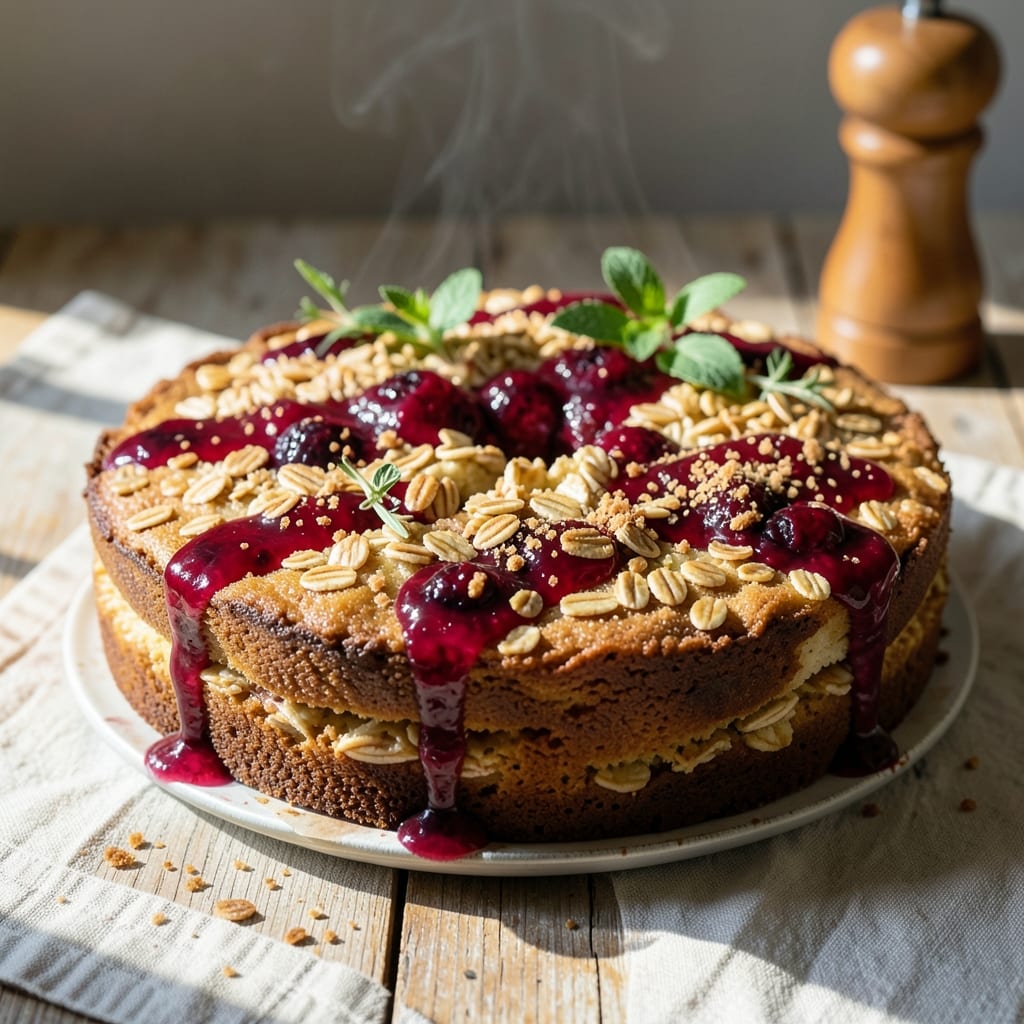
This baked oats cake recipe delivers the perfect balance of spiced warmth and moist layers that keep every slice tender for days. The secret lies in blending rolled oats with flour and baking powder to create a dense yet cake-like texture, while cinnamon and nutmeg infuse each bite with comforting aroma. I developed this recipe after years of perfecting the art of oat-based desserts that don't turn out dry or crumbly.
The beauty of this recipe is its versatility—it works equally well as a morning treat with coffee or an after-dinner dessert. The oats add subtle earthiness that pairs beautifully with warm spices, while the butter and brown sugar create that signature cake-like richness. What makes it truly special is how it stays moist for days when stored properly, making it perfect for meal prep or gifting.
What you'll achieve is a golden-brown cake with a tender crumb and subtle oat crunch, all held together by a spiced flavor profile that feels both nostalgic and sophisticated. The recipe uses simple pantry staples but delivers restaurant-quality results without requiring advanced techniques. Whether you're baking for a crowd or treating yourself, this cake delivers satisfaction in every bite.
For extra indulgence, consider adding a streusel topping or drizzle with caramel glaze. The recipe also adapts well to dietary needs—substitute plant-based butter for vegan versions or use almond flour for gluten-free variations. Let's get baking!
Ingredients for baked oats cake
These twelve ingredients blend spiced warmth with tender layers for a cake that stays moist for days.
| Ingredient | Amount | Notes |
|---|---|---|
| Rolled Oats 🌾 | 1 ½ cups | Old-fashioned, not quick oats |
| All-Purpose Flour 🌾 | 1 ½ cups | Sifted for even texture |
| Granulated Sugar 🍚 | ¾ cup | White or light brown |
| Light Brown Sugar 🍚 | ½ cup | Packed firmly |
| Unsalted Butter 🧈 | 1 cup | Cold, cubed for even mixing |
| Large Eggs 🥚 | 2 whole | Room temperature preferred |
| Vanilla Extract 🌸 | 1 tbsp | Pure, not imitation |
| Ground Cinnamon 🌶️ | 1 ½ tsp | Freshly ground preferred |
| Ground Nutmeg 🌶️ | ½ tsp | Freshly grated for depth |
| Baking Powder 🧂 | 1 tsp | Aluminum-free preferred |
| Salt 🧂 | ½ tsp | Fine sea salt |
| Milk 🥛 | ½ cup | Whole milk for richness |
| Dark Chocolate Chips 🍫 | ½ cup | Semisweet or dark |
The rolled oats are the heart of this cake, so avoid quick oats—their texture changes when baked. Bob's Red Mill or Quaker Old Fashioned are reliable brands. For the flour, sift it thoroughly to prevent dense pockets. The butter should be cold when creaming—cut it into cubes and let it sit at room temperature for 30 minutes before starting. Brown sugar should be packed firmly into the measuring cup; lightly tap the cup to settle it. The cinnamon and nutmeg should be freshly ground if possible, as pre-ground spices lose potency quickly. For the milk, whole milk adds richness, but 2% works in a pinch.
No rolled oats? Blitz quick oats in a food processor until they resemble flour, but expect slightly denser texture. Substitute brown sugar with an equal amount of granulated sugar, though the cake will be slightly less moist. For a dairy-free version, unsweetened almond milk or coconut milk works well, though the texture may be slightly lighter. The baking powder is crucial for lift—double-check expiration to ensure freshness. If you prefer a sweeter cake, add an extra 2 tbsp of granulated sugar. For a chocolate twist, swap the dark chocolate chips for white chocolate chips or butterscotch chips. The vanilla extract should be pure; imitation lacks the depth of flavor.
This cake keeps beautifully for 5-6 days when stored in an airtight container at room temperature, though it's best enjoyed within 3 days for peak moisture. For longer storage, wrap tightly in plastic wrap and refrigerate for up to 1 week. If freezing, slice the cake first, wrap each piece individually, and freeze for up to 3 months. To reheat, microwave a slice for 10-15 seconds or warm in a 200°F oven for 5 minutes to restore freshness. The cake reheats especially well with a drizzle of warm caramel sauce or a dusting of powdered sugar.
Why You'll Love This Recipe
- No Mixer Needed: I swear by this recipe on lazy mornings when I skip the food processor. Just pulse the oats in a food chopper until they’re fine—no floury mess, no extra bowls. That buttery brown sugar caramelizes into something seriously addictive with zero effort.
- Chewy-Crisp Magic: The rolled oats give it that perfect texture—soft in the middle, with a golden crust that’s almost crackly. Honestly, the combo of granulated sugar for structure and brown sugar for moisture makes it taste like a cross between a cookie and a cake. (Yes, even on a Tuesday night.)
- Crowd-Pleaser Basics: This is the cake I make when I need to feed a houseful without stress. The flour and butter base is familiar but elevated, and the oats add a wholesome touch that makes it feel special—no one will guess it’s basically a deconstructed granola bar.
- Budget Baking Win: I’ve made this for birthdays, book club meetups, and even as a “fancy” dessert after a potluck. The ingredients are pantry staples, and a single batch stretches to 12 servings. Between us, this is how I get cake on the table for under $5.
Step-by-step instructions for baked oats cake
Here's the method for a perfectly moist spiced oat cake with tender layers.
Preheat Oven and Prepare Dry Ingredients
Preheat your oven to 350°F and position a rack in the center of the oven. Grease an 8-inch round cake pan or line it with parchment paper, ensuring it reaches up the sides for easy removal. While the oven heats, combine the 1.5 cups rolled oats, 1.5 cups all-purpose flour, 1.5 teaspoons ground cinnamon, 0.5 teaspoon ground nutmeg, 1 teaspoon baking powder, and 0.5 teaspoon salt in a medium bowl. Whisk these ingredients together until evenly distributed and no flour streaks remain.
This dry mixture forms the foundation of your cake's texture. The rolled oats will add hearty texture while absorbing moisture throughout baking. Sifting the flour first ensures no lumps remain, which is crucial for that tender crumb structure we're after.
Cream Butter and Sugars
In a separate large mixing bowl, combine the 1 cup unsalted butter (cold, cubed), 0.75 cup granulated sugar, and 0.5 cup packed light brown sugar. Using an electric mixer on medium speed, beat these ingredients together for 3-4 minutes until light and fluffy. You'll notice the mixture nearly doubles in volume and becomes pale in color—this is the air incorporation that creates that tender cake texture.
The butter should be completely creamed with no visible sugar crystals remaining. If you're using room temperature butter, you might need to chill the bowl for 10 minutes before starting to prevent over-softening. This creaming process is where we build the cake's structure, so don't rush it.
Add Eggs and Wet Ingredients
Add the 2 whole large eggs, one at a time, mixing on low speed after each addition until fully incorporated. Then add the 1 tablespoon vanilla extract and mix for another 30 seconds. In a separate small bowl, combine the 0.5 cup milk with the dry spice mixture to create a smooth paste. With the mixer running on low speed, gradually add the dry ingredients to the wet mixture, alternating with the milk mixture.
Start and end with the dry ingredients to ensure proper distribution. Mix just until combined—you should still see some flour streaks. Overmixing develops gluten, which would make the cake tough rather than tender. The batter should be thick but pourable, similar to cookie dough consistency.
Fold in Chocolate Chips and Bake
Gently fold in the 0.5 cup dark chocolate chips using a spatula, being careful not to overmix. Pour the batter into your prepared cake pan and smooth the top with a spatula. Bake for 35-40 minutes or until a toothpick inserted in the center comes out clean. The cake should be golden brown on top and slightly pulled away from the sides of the pan.
I recommend checking for doneness at the 30-minute mark, as ovens vary. The cake is done when it springs back slowly when gently pressed in the center. If the top browns too quickly, tent the cake with aluminum foil after 20 minutes to prevent over-browning while ensuring even cooking.
Cool and Serve
Remove the cake from the oven and let it cool in the pan for 10 minutes. Then transfer it to a wire rack to cool completely. This cooling process allows the cake to set properly, preventing a gummy texture. Once fully cooled, you can slice and serve. The cake should be moist with a tender crumb and pockets of melted chocolate throughout.
For best results, store any leftovers in an airtight container at room temperature for up to 3 days. The flavors actually improve as it sits, with the spices deepening and the oats absorbing more moisture. Serve with a dusting of powdered sugar or a dollop of whipped cream for an elegant presentation.
Pro Tips For Making Baked Oats Cake
- TOAST THE OATS: DESCRIPTION: Toss the rolled oats in a dry skillet over medium heat for 3-4 minutes until they’re golden and fragrant—this deepens their flavor and prevents that raw, grainy texture in your cake. I learned this the hard way after biting into a slice that tasted like breakfast cereal.
- CREAM THE BUTTER WELL: DESCRIPTION: Beat the softened butter with the sugars until the mixture is light, fluffy, and holds a ribbon when the beaters are lifted—about 3-4 minutes. My grandmother swore by this, and she was right: skipping it makes the cake dense and heavy.
- DON’T OVERMIX THE BATTER: DESCRIPTION: Mix the wet and dry ingredients just until combined—lumpy is fine, but don’t overwork it. After burning three batches, I finally figured out that overmixing develops gluten, turning your tender oats cake into a tough, chewy brick.
- BAKE UNTIL THE CENTER SPRINGS: DESCRIPTION: The cake’s done when a toothpick comes out clean and the center bounces back slightly when pressed—usually around 30-35 minutes at 350°F. Sounds weird, but it works: cutting it too soon leaves you with a gummy mess.
Regional styles of baked oats cake
Scandinavian Cardamom Twist
In Sweden and Norway, cardamom is the star spice for oat cakes, replacing cinnamon entirely. Swap the cinnamon and nutmeg for 2 teaspoons ground cardamom and add 1 teaspoon orange zest to the batter for a bright, aromatic profile. Serve with a dusting of powdered sugar and a sprinkle of Lindt Excellence 70% dark chocolate shavings for a Nordic-inspired dessert.
Scandinavian bakers often use cardamom-infused syrup (simmer ¼ cup sugar with ½ cup water and 1 tsp cardamom pods for 10 minutes, then strain) to brush the cake layers. This adds moisture and depth—try it between cake layers if making a multi-tier version. 🌟
Southern U.S. Buttermilk Version
For a Southern-inspired take, replace the milk with ½ cup buttermilk and add ½ teaspoon baking soda to the dry ingredients. This creates a lighter, slightly tangy cake that pairs beautifully with peanut butter glaze (mix ½ cup peanut butter with ¼ cup powdered sugar and 2 tbsp milk). The buttermilk also enhances the oats' chewiness, making each bite heartier.
Southern cooks often top this cake with a pecan streusel made from ½ cup chopped pecans, ¼ cup brown sugar, and 2 tbsp melted butter. Sprinkle it over the batter before baking for a crunchy contrast. This variation is perfect for holiday gatherings and keeps well for 5 days when stored in an airtight container. 🥛
Japanese Matcha Oats Cake
Transform this recipe into a Japanese-inspired matcha version by replacing the cinnamon and nutmeg with 1.5 teaspoons high-quality matcha powder (like Ippodo Tea) and adding 1 teaspoon vanilla bean paste instead of extract. Reduce the flour to 1 cup to prevent bitterness. The matcha adds a vibrant green hue and earthy depth that pairs beautifully with white chocolate drizzle.
Japanese bakers often serve this cake with red bean paste (anko) or a dusting of kinako (roasted soybean flour). For extra indulgence, fold in ½ cup white chocolate chunks instead of dark chocolate. This variation is naturally gluten-free if using gluten-free flour blend and matcha provides antioxidants for a health-conscious twist. ✨
German Spiced Rum Cake
In Germany, oat cakes often incorporate warm spices with rum for a boozy twist. Replace the vanilla extract with 1 tablespoon dark rum (like Appleton Estate) and add ½ teaspoon ground cloves to the spice mix. Top the baked cake with a rum glaze (mix ½ cup powdered sugar with 2 tbsp rum and 1 tbsp milk) for extra moisture and depth.
German bakers also love adding dried cranberries or cherries to the batter for tart contrast. For a festive touch, sprinkle the top with coarse sugar before baking. This version pairs perfectly with a cup of Earl Grey tea or a glass of Riesling wine. The rum enhances the cake's keeping quality, making it ideal for holiday baking. 🍷
Nutrition facts
Frequently asked questions
Why does this oat cake stay moist longer than regular cakes?
The rolled oats absorb moisture during baking, then release it slowly to keep the cake tender. The combination of brown sugar and butter also helps retain moisture, while the baking powder creates a tender crumb structure that holds up better than dense flour-based cakes. Store it in an airtight container to lock in freshness for up to 5-6 days!
Can I make this cake without eggs?
Yes! Replace the 2 eggs with either 2 tablespoons ground flaxseed + 6 tablespoons water (let sit for 5 minutes to gel) or ½ cup unsweetened applesauce. The texture will be slightly denser but still moist. For best results, reduce the milk by 2 tablespoons to maintain proper consistency.
What's the best way to add extra flavor without changing the texture?
For subtle depth, try adding 1 teaspoon orange zest or ½ teaspoon almond extract to the wet ingredients. For warmth, swap the nutmeg for ½ teaspoon ginger. Avoid adding too much liquid (like juice) as it can make the cake gummy. The chocolate chips already provide rich flavor without altering the texture!
Why did my cake turn out dense instead of tender?
Overmixing the batter or using old baking powder are common culprits. Mix just until combined (about 30 seconds after all ingredients are incorporated) and check your baking powder's expiration date. Also ensure your butter is cold when creaming—room temperature butter can make the cake greasy. For extra tenderness, don't skip the 10-minute cooling period in the pan.
How can I make this cake gluten-free?
Replace the 1.5 cups all-purpose flour with 1.25 cups gluten-free 1:1 baking flour (like Bob's Red Mill) plus ¼ cup cornstarch. Add ½ teaspoon xanthan gum if your blend doesn't contain it. You may need to increase the milk by 2 tablespoons as gluten-free flours absorb differently. The texture will be slightly crumbly but still delicious!