
Desserts
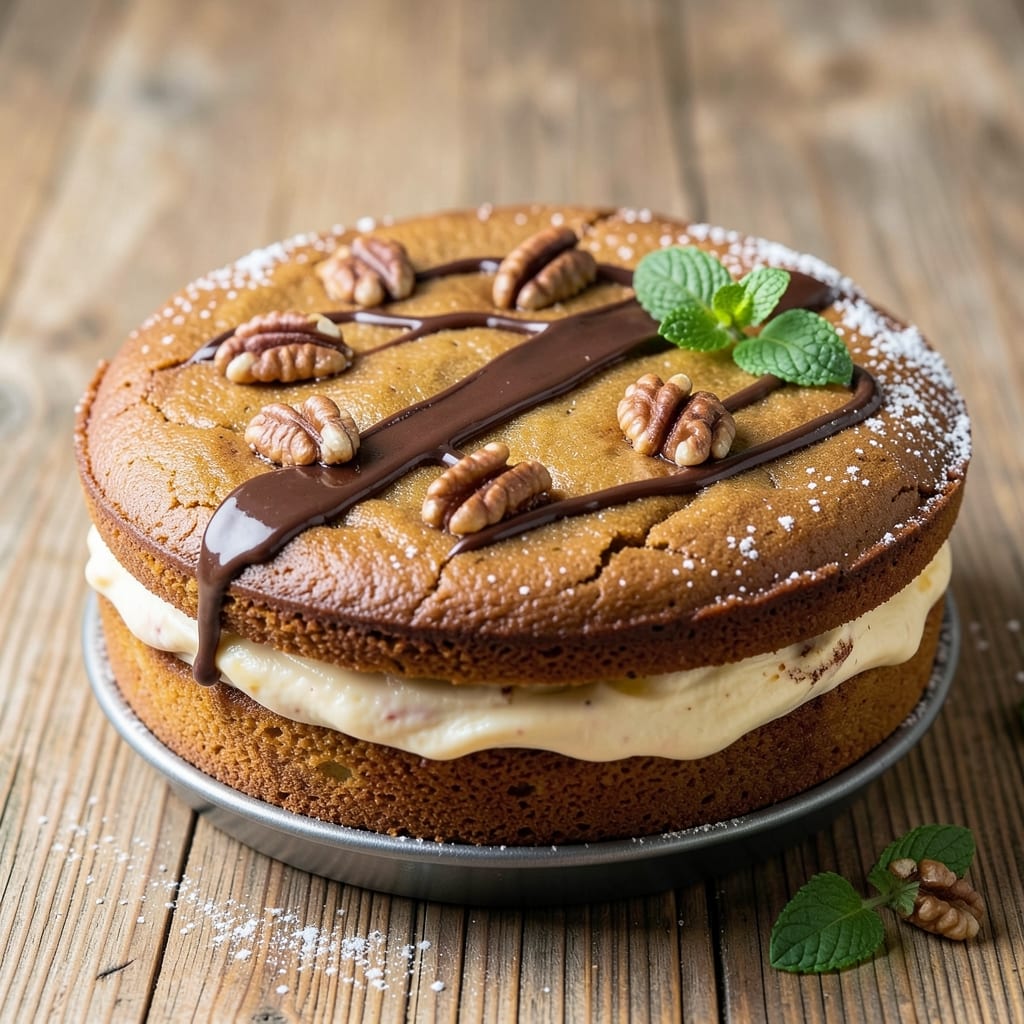
Mastering the perfect banana cake starts with the right oven temperature—350°F—where tender layers meet a caramelized top every time. This recipe transforms overripe bananas into a cake so moist, it stays fresh for days, with a crust that crackles just enough to satisfy. The secret lies in the science of baking: a warm oven traps steam, while a light dusting of flour on top ensures that golden, crispy finish without drying out the interior.
What sets this banana cake apart is its foolproof technique for achieving that signature texture—no dry crumbs or gummy centers. You’ll mix everything in a single bowl (no fancy equipment needed), then let the cake bake just long enough for the edges to pull away from the pan while keeping the middle tender. The result? A slice that’s rich, fragrant, and packed with natural sweetness from the bananas, without needing extra sugar.
This recipe is designed for beginners but delivers restaurant-quality results—moist, flavorful, and perfectly balanced. The warm oven temperature ensures even baking, while the caramelized top adds a touch of sophistication. Whether you’re baking for a crowd or treating yourself, the steps are straightforward, and the outcome is always impressive.
Optional garnishes like whipped cream or a drizzle of chocolate glaze elevate it further, but the cake shines on its own. Ready in about 50 minutes—including prep time—this is the kind of dessert that feels like a hug in every bite. Let’s get baking!
Ingredients for banana cake recipe oven temperature
Eight simple ingredients yield a moist, caramelized-top banana cake with restaurant-quality texture.
| Ingredient | Amount | Notes |
|---|---|---|
| Ripe Bananas 🍌 | 3 medium | Overripe with brown spots |
| All-Purpose Flour 🌾 | 2 cups | Sifted for light texture |
| Granulated Sugar 🍚 | 1 ½ cups | White or light brown |
| Unsalted Butter 🧈 | 1 cup | Softened to room temperature |
| Large Eggs 🥚 | 2 whole | Room temperature preferred |
| Baking Soda 🧂 | 1 tsp | Pure baking soda |
| Ground Cinnamon 🌿 | 1 tsp | Freshly ground preferred |
| Vanilla Extract 🍯 | 1 tsp | Pure vanilla extract |
| Salt 🧂 | ½ tsp | Fine sea salt |
| All-Purpose Flour 🌾 | 2 tbsp | For topping only |
| Granulated Sugar 🍚 | 2 tbsp | For topping only |
The bananas are everything here—overripe with brown spots means more natural sweetness and moisture. Trader Joe's or your local produce section usually has the best selection of ripe bananas in the late summer months. For the flour, King Arthur or Bob's Red Mill brands are my go-to for consistent baking results. The butter should be softened to room temperature—press your finger into it and it should leave a slight indent but not be fully melted. Pre-sifted flour saves time, but if you're doing it yourself, sift through a fine-mesh sieve to avoid lumps in your cake.
No ripe bananas? Frozen bananas work perfectly—thaw and drain excess liquid first. Substituting sugar? Coconut sugar or maple syrup at a 1:1 ratio keeps the cake moist, though it will have a slightly different flavor profile. The vanilla extract is non-negotiable here—imitation extracts lack the depth of flavor. For the topping, use the same flour and sugar you've already measured out—no need to buy extra. If you're concerned about the cake being too sweet, reduce the topping sugar to 1 tbsp instead of 2.
Store leftovers in an airtight container at room temperature for up to 3 days—though it's usually gone before then. For longer storage, wrap tightly in plastic and refrigerate for up to 5 days. The cake reheats beautifully in the microwave for 20-30 seconds—just enough to restore that warm, caramelized aroma. Freezing isn't recommended as the texture tends to become slightly dry, but if you must, wrap tightly and freeze for up to 2 months. Always let the cake cool completely before storing to prevent condensation.
Why You'll Love This Recipe
- No Mash Required: I’ll admit, I used to dread the sticky banana mess—but this recipe just calls for ripe ones, sliced straight into the batter. No food processor, no overmixing, just fold those soft slices right in. The butter and sugar blend into a thick, velvety dough that practically mixes itself.
- Sweet Without Syrup: That caramelized banana flavor? It’s the star. The ripe fruit turns the cake moist and subtly sweet, but the real magic is how the butter and eggs create this almost custardy texture—like a cross between a cake and a pudding. No one will believe it’s not loaded with frosting.
- Lunchbox Legend: Between us, this is my go-to for school lunches or office snacks. Cut into squares, it holds up for days without drying out. (Yes, even on a Tuesday night.) The sugar keeps it soft, and the eggs add that satisfying bite—no one ever leaves crumbs in their bag.
- Pantry Magic: I keep a stash of flour, sugar, and butter on hand anyway, and ripe bananas are basically free if you’ve got a fruit bowl. This recipe uses what’s already there, and the leftovers? They’re even better the next day—if they last that long. Honestly, it’s the kind of cake that makes grocery shopping feel less like a chore.
Step-by-step instructions for banana cake with perfect moisture
Mastering the oven temperature is key to achieving that signature caramelized top while keeping the interior moist and tender.
Preheat Oven to 350°F and Prepare Pan
Preheat your oven to 350°F—this temperature ensures even baking without drying out the cake. While the oven heats, generously grease an 8-inch round cake pan or line it with parchment paper for easy removal. I like to use a mix of butter and flour for the greasing—this prevents sticking and creates a clean release.
Lightly dust the prepared pan with the 2 tablespoons of all-purpose flour from your ingredients, tapping out any excess. This extra step prevents the cake from clinging to the sides as it bakes. Place the pan on a baking sheet to catch any potential drips from the caramelized top we're aiming for.
Mix Wet Ingredients for Even Moisture
In a large mixing bowl, combine the 3 medium ripe bananas with the 1 cup of softened unsalted butter. Mash the bananas thoroughly with a fork or potato masher until completely smooth—no lumps should remain. This step is crucial for distributing moisture evenly throughout the cake.
Add the 1.5 cups of granulated sugar, 2 whole large eggs, 1 teaspoon vanilla extract, and 0.5 teaspoon salt to the banana mixture. Whisk everything together until fully incorporated and the batter is smooth. The batter should be thick but pourable—this consistency ensures a moist crumb without being too dense.
Combine Dry Ingredients and Fold Gently
In a separate bowl, sift together the 2 cups of all-purpose flour, 1 teaspoon baking soda, and 1 teaspoon ground cinnamon. Sifting prevents lumps and aerates the dry ingredients, which helps create a lighter cake texture. Make a well in the center of the dry ingredients mixture.
Pour the wet ingredients into the well and gently fold everything together using a spatula. Be careful not to overmix—just combine until the dry ingredients are fully incorporated. The batter should be thick and slightly sticky, similar to a well-made brownie batter. If it seems too thick, you can add 1 tablespoon of milk (not listed in ingredients) to help with mixing, but work quickly to maintain the cake's structure.
Prepare Topping and Bake
In a small bowl, mix together the remaining 2 tablespoons of granulated sugar with the 2 tablespoons of all-purpose flour for the topping. This creates a simple but effective crumb topping that will caramelize beautifully on top of the cake. Sprinkle this mixture evenly over the batter in the prepared pan.
Pour the batter into the prepared pan and smooth the top with a spatula. Place the pan in the preheated oven and bake for 45-50 minutes. The cake is done when a toothpick inserted into the center comes out clean and the edges pull away slightly from the pan. Watch closely in the last 5 minutes—you want that caramelized top without burning.
Cool and Serve for Perfect Texture
Remove the cake from the oven and let it cool in the pan for 10 minutes. This brief cooling period allows the cake to set slightly and makes it easier to remove from the pan. Run a thin knife around the edges to loosen, then invert the cake onto a wire rack to cool completely.
The cake should have a moist, tender crumb with a caramelized, slightly crisp top. Serve warm or at room temperature for the best texture. If you prefer, you can dust the top with powdered sugar or add a dollop of whipped cream for an extra touch of elegance. The cake keeps well at room temperature for 2-3 days or can be refrigerated for up to 5 days.
Pro Tips For Making Banana Cake Recipe Oven Temperature
- Preheat to 350°F: DESCRIPTION: That’s the sweet spot for banana cake—any hotter, and the outside burns before the middle sets. I learned this the hard way when I cranked it to 375°F for "faster baking" and ended up with a charred crust and a gummy center. Give your oven 10-15 minutes to stabilize, and resist the urge to peek.
- Mash Bananas Thoroughly: DESCRIPTION: No lumps, no excuses. Use a fork first, then a potato masher or your hands to break down every speck of banana—this keeps the texture tender. I used to skip this and wondered why my cake had those weird chewy pockets. Trust me, the effort pays off.
- Don’t Overmix the Batter: DESCRIPTION: Stir just until the flour disappears—overmixing makes banana cake dense and tough. Fold in the dry ingredients with a spatula in a gentle "J" motion, and stop when there’s one tiny streak of flour left. Your future self (and your cake) will thank you.
- Test with a Toothpick: DESCRIPTION: Insert it into the center—if it comes out clean (or with one moist crumb), it’s done. I used to rely on time alone, but banana cakes vary wildly. A quick check at 30-35 minutes saves you from dryness or gooey centers. No guesswork.
Essential equipment for banana cake recipe oven temperature
Must-Have Baking Tools
For this banana cake, you’ll need just a few essential tools—no fancy equipment required. A standard 8-inch round cake pan (I use Wilton Perfect Results pans) is ideal, but an oven-safe skillet works too. A hand mixer or stand mixer simplifies mixing, but a sturdy whisk and spatula work perfectly if you prefer hand-mixing. 🌟
Oven Thermometer
Ovens vary wildly in accuracy, so a digital oven thermometer (like the Thermoworks Oven Thermometer) is worth the investment. Place it in your oven while preheating to 350°F—if it reads 325°F or lower, adjust your oven’s temperature up by 25°F to ensure proper baking. This small step guarantees consistent results every time.
Mixing Bowls
Use two medium mixing bowls—one for wet ingredients and one for dry—to keep things organized. A glass or stainless-steel bowl (like Pyrex or OXO) holds up well to mixing and is easy to clean. For the topping, a small ramekin or ramekin-sized bowl works perfectly for combining the flour and sugar.
Measuring Cups & Spoons
Precision matters in baking, so invest in a set of nested measuring cups (I love OXO Good Grips) and a set of measuring spoons for accuracy. For the bananas, a small kitchen scale (like Escali Primo) ensures consistency—3 medium bananas should weigh about 12 ounces. If you don’t have a scale, use the peel method: Peel the bananas, then measure them in a liquid measuring cup.
Wire Rack & Cooling Tools
A wire cooling rack (like OXO Good Grips) is a game-changer for letting the cake cool evenly. I also recommend a small offset spatula (for smoothing batter) and a paring knife (for testing doneness). If you’re lining your pan, parchment paper (cut to fit) makes removal effortless.
Optional Upgrades
For a caramelized top, a light dusting of flour on the batter before baking adds extra crunch. A pastry brush (for brushing melted butter on the pan) ensures even greasing. If you love garnishes, a piping bag (for whipped cream) or squeeze bottle (for chocolate glaze) adds a pro touch. These extras aren’t necessary but elevate the final presentation. ✨
Nutrition facts
Frequently asked questions
Can I use unripe bananas for this recipe?
No, this recipe requires overripe bananas with brown spots—they're naturally sweeter and add the perfect moisture. Unripe bananas will make the cake taste bland and may not yield the same tender texture. If you only have firm bananas, let them sit at room temperature for 1-2 days until they develop brown spots.
Why does my banana cake turn out dry?
Dry banana cake usually happens from overbaking or using underripe bananas. Always check doneness with a toothpick at 45 minutes—it should come out with moist crumbs, not clean. For extra moisture, add 2 tablespoons of milk or yogurt to the batter. Cover leftovers tightly to retain moisture.
Can I bake this cake in a different pan size?
Yes, but adjust baking time accordingly. For a 9-inch pan, bake 35-40 minutes at 350°F—the cake will be thicker. For a 6-inch pan, reduce time to 30-35 minutes. Use the toothpick test to determine doneness. The edges should pull away slightly from the pan while the center remains tender.
How can I make the caramelized top extra crispy?
For a more pronounced caramelized top, sprinkle the flour-sugar topping just before baking (not after) and broil for 1-2 minutes at the end. Watch closely to avoid burning! Another trick: Add 1 teaspoon of cornstarch to the topping mixture—it creates a glossy, crisp finish.
Can I substitute butter with oil?
You can replace the butter with ¾ cup vegetable or canola oil, but the texture will be slightly denser. For best results, use melted butter (not oil) to maintain the cake's lightness. If substituting, reduce the sugar by 2 tablespoons since oil is sweeter than butter.