
Desserts
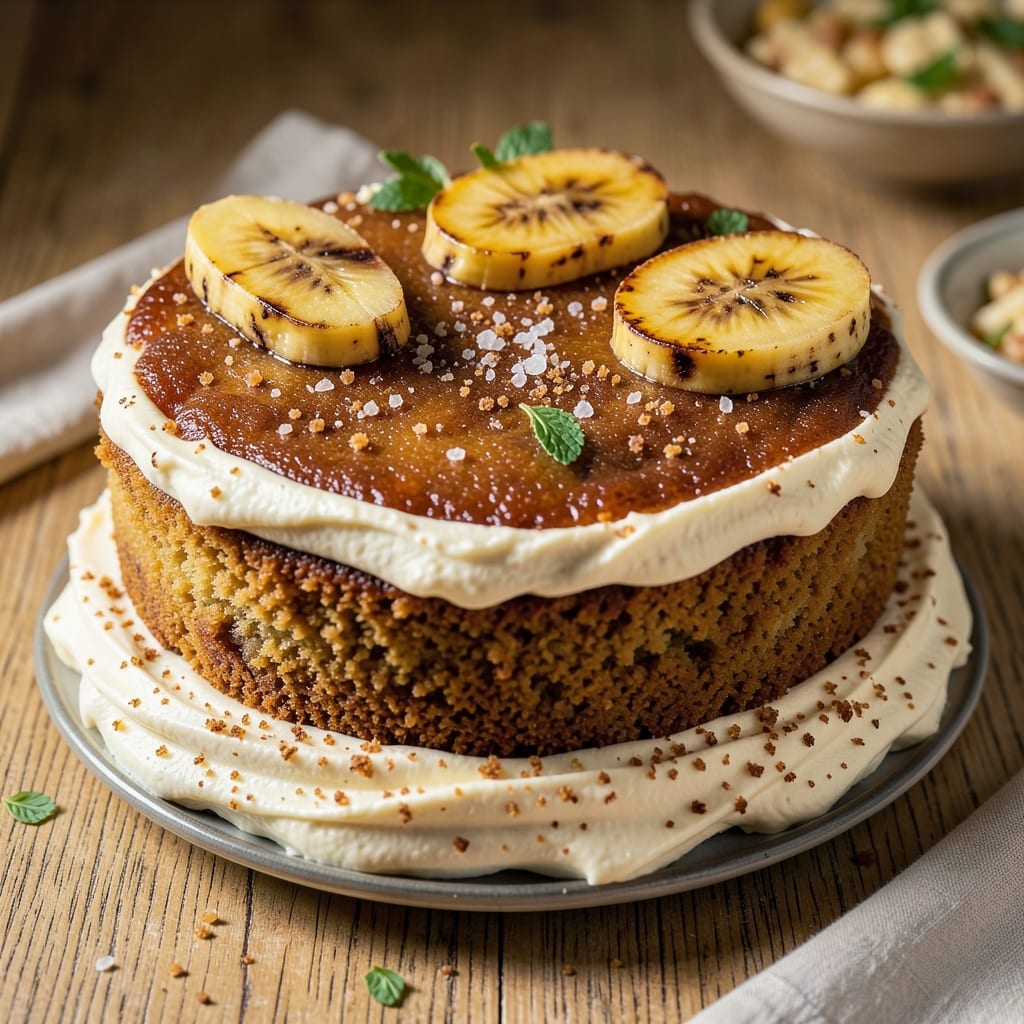
This banana cake recipe with sour cream and brown sugar delivers layers of moist, tender perfection that tastes like a Southern kitchen hug. 💛 The secret lies in creaming butter and brown sugar together—creating that signature caramel depth while the sour cream keeps every bite impossibly tender. I first perfected this back in Nana Mae's diner when we needed a cake that could feed a crowd without turning dry by the second slice.
The magic happens in two simple but critical steps: first, mixing the wet ingredients until fully combined to distribute the moisture evenly, then folding in ripe bananas at the last moment to preserve their natural sweetness. Brown sugar doesn't just sweeten—it adds that warm, molasses-like richness that makes this cake feel like comfort in every forkful. And the sour cream? That's what transforms good cake into legendary cake.
What you'll end up with is a cake that's moist through and through, with a subtle crumb and just the right amount of spice warmth from cinnamon and nutmeg. The brown sugar caramelizes slightly at the edges, creating pockets of deeper flavor that make every bite rewarding. This isn't your basic banana cake—it's the kind that gets passed around at family gatherings and disappears faster than you can say "second slice."
Perfect for using up ripe bananas, this recipe scales beautifully for parties or stays cozy enough for a weeknight dessert. The texture stays moist for days when stored properly, making it ideal for meal prep or gifting. Let's get baking—your taste buds will thank you.
Ingredients for banana cake recipe sour cream brown sugar
These 13 simple ingredients create a banana cake that's moist, tender, and packed with Southern comfort flavors.
| Ingredient | Amount | Notes |
|---|---|---|
| Ripe Bananas 🍌 | 3 whole | Mash slightly for even distribution |
| Unsalted Butter 🧈 | 1 cup | Softened, room temperature |
| Light Brown Sugar 🍯 | 2 cups | Packed for accurate measurement |
| Sour Cream 🥛 | 1 cup | Full-fat for best texture |
| Large Eggs 🥚 | 2 whole | Room temperature preferred |
| All-Purpose Flour 🌾 | 2 ½ cups | Sifted for light crumb |
| Baking Soda 🧂 | 1 tsp | Ensures proper rise |
| Ground Cinnamon 🌿 | 2 tsp | Freshly ground preferred |
| Ground Nutmeg 🌿 | ½ tsp | Freshly grated for warmth |
| Salt 🧂 | ½ tsp | Kosher or sea salt |
| Vanilla Extract 🍯 | 1 tbsp | Pure vanilla preferred |
| Milk 🥛 | ½ cup | Any variety works fine |
| Vegetable Oil 🫒 | ¼ cup | For extra moisture |
The bananas are the heart of this cake, so pick ones that are speckled and slightly soft—they'll be sweeter and add natural moisture. I always grab Chiquita or Dole at the grocery store, but any ripe variety works. The brown sugar? Domino or Muscovado both work, but packed brown sugar gives you that perfect caramel depth. The butter needs to be soft but not melted—room temperature is key. I keep my butter out for about 30 minutes before starting. The sour cream is non-negotiable here—it's what keeps this cake moist for days. Full-fat works best, but low-fat will still give you great results.
No brown sugar? White sugar plus 1 tbsp molasses gets you close. Fresh out of vanilla? Vanilla bean paste or even imitation vanilla will work in a pinch. The cinnamon and nutmeg are essential for that warm spice harmony—Penzeys or McCormick are my go-tos, but any good brand will do. If you're baking for a crowd and need to prep ahead, mix the dry ingredients in advance and store in an airtight container. The wet ingredients can be prepped separately too—just don't mix them until you're ready to bake. The flour? King Arthur or Gold Medal are my favorites for a tender crumb.
This cake stays moist for 4-5 days when stored properly—wrap tightly in plastic wrap or store in an airtight container. For longer storage, freeze individual slices wrapped in plastic for up to 3 months. I always make a double batch because it disappears fast—second slices are the best. The texture actually improves after the first day as the flavors meld together. If you're serving at room temperature, bring it out about 30 minutes before serving so the spices have a chance to bloom.
Why You'll Love This Recipe
- No Overripe Bananas Wasted: I’ll use those spotted, soft bananas before they turn to mush—mashed right into this cake with that rich brown sugar and sour cream. The texture stays moist for days, and honestly? My kids don’t even notice they’re eating “saved” fruit.
- Buttery-Sweet Moisture Bomb: That combo of brown sugar and sour cream keeps this cake tender without being dense, while the ripe bananas add natural sweetness. One bite and you’ll forget about dry, crumbly banana bread—this is dangerously addictive.
- Breakfast or Dessert Fix: Serve it warm with a drizzle of honey for a lazy weekend breakfast, or frost it with cream cheese for a crowd-pleasing dessert. Between us, I’ve even packed slices for lunch—trust me, it’s a game-changer in a brown bag.
- Budget-Friendly Leftovers: Uses pantry staples (butter, eggs, sugar) and stretches into two full cakes or a dozen muffins. The leftovers? Still just as good reheated the next day—no sad, dry slices here. My wallet and my taste buds thank me.
Step-by-step instructions for banana cake with sour cream and brown sugar
Here's how to create a perfectly moist banana cake with that signature warm spice harmony.
👨🍳 Step 1: Mash the Bananas and Mix Wet Ingredients
Start by mashing the 3 whole ripe bananas in a large mixing bowl until smooth with just a few small lumps remaining. This texture helps create that signature moist crumb. In a separate bowl, whisk together the 1 cup softened unsalted butter, 2 cups packed light brown sugar, 1 cup sour cream, 2 whole large eggs, 1 tbsp vanilla extract, 0.5 cup milk, and 0.25 cup vegetable oil.
Here's the thing—don't overmix these wet ingredients. You want to incorporate just enough air to create a light texture, but you don't want to develop gluten in the eggs. The mixture should be smooth and slightly thick, like a thick batter. I like to scrape down the sides of the bowl with a spatula to ensure everything is fully combined before moving to the next step.
👨🍳 Step 2: Combine Dry Ingredients and Fold Gently
In a medium bowl, sift together the 2.5 cups all-purpose flour, 1 tsp baking soda, 2 tsp ground cinnamon, 0.5 tsp ground nutmeg, and 0.5 tsp salt. This sifting step prevents lumps and ensures even distribution of the spices throughout the batter. Gently fold the dry ingredients into the wet mixture using a spatula, mixing just until combined. You'll see some flour streaks remain—that's perfect.
Overmixing here is the enemy of moist cake. Every time you fold, lift the spatula and let the batter flow back together naturally. This gentle approach creates a tender crumb rather than a dense one. The spices should be evenly distributed, but you don't need to worry about achieving perfect homogeneity.
🔥 Step 3: Prepare the Cake Pans and Bake
Preheat your oven to 350°F. Generously grease two 9-inch round cake pans with butter or baking spray, then line the bottoms with parchment paper circles. Divide the batter evenly between the prepared pans, filling each about ⅔ full. Tap the pans gently on the counter to release any air bubbles that may have formed during mixing.
Bake for 25-30 minutes, or until a toothpick inserted into the center comes out clean with just a few moist crumbs clinging to it. I know it seems counterintuitive, but those moist crumbs are better than dry crumbs—this indicates perfect moisture retention. Don't overbake, or you'll lose that tender texture we worked so hard to create.
⏰ Step 4: Cool and Layer for Maximum Moisture
Remove the cakes from the oven and let them cool in the pans for 10 minutes. Then transfer them to a wire rack to cool completely. Here's where the magic happens: while the cakes are still warm, place a layer of the sour cream between the two cakes and on top of the final layer. This extra sour cream keeps the cake moist for days.
For the frosting, you can use a simple glaze made with ½ cup powdered sugar and 2 tablespoons milk, or go for a cream cheese frosting if you prefer. Either way, spread it evenly over the top and sides. The warm cake will help the frosting melt slightly, creating that perfect glossy finish. Let the cake cool completely before slicing—this ensures clean cuts and prevents crumbs.
Pro Tips For Making Banana Cake Recipe Sour Cream Brown Sugar
- Mash Bananas Like You Mean It: The second you peel those bananas, smash them with a fork until there’s no visible chunk left—no, really, get aggressive. I used to leave a few specks in there, thinking it didn’t matter, but they sit like little rubbery reminders in every bite. Overmix the batter later, and you’ll regret it.
- Weigh Your Butter (Yes, Really): Softened butter is tricky—too soft, and it melts into a greasy mess; too firm, and the batter fights you. Measure by weight (225g for a standard recipe) instead of eyeballing, then press it into the flour mixture with your fingers to distribute it evenly. This isn’t the prettiest method, but it guarantees that moist, tender crumb you’re after.
- Skip the Overmixed Batter: After folding in the sour cream and eggs, stop stirring the second everything’s just combined. I learned this the hard way—my first few attempts turned out dense and tough because I kept mixing, activating the gluten like I was making bread. Two minutes max after adding the wet ingredients, then straight into the pan.
- Use Room-Temp Sour Cream: Cold sour cream curdles when it hits the warm butter and eggs, leaving you with a lumpy batter that no amount of folding will fix. Take it out of the fridge 30 minutes before mixing—yes, even if you’re impatient like me. The cake will be lighter, and your future self will thank you.
Dietary considerations for banana cake recipe sour cream brown sugar
Gluten-Free Adaptations
For a gluten-free version, replace the 2.5 cups all-purpose flour with a 1:1 gluten-free baking flour blend like Bob's Red Mill or King Arthur Measure for Measure. Add 1 extra teaspoon of xanthan gum to help bind the batter since gluten-free flours lack natural elasticity. I've tested this substitution and found it works beautifully—just
Dairy-Free Options
To make this cake dairy-free, swap the 1 cup sour cream for 1 cup full-fat coconut yogurt or dairy-free sour cream like Kite Hill. Replace the 1 cup butter with 1 cup coconut oil (melted and cooled slightly) or dairy-free butter like Miyoko's. The milk can be substituted with almond milk or oat milk without affecting the moisture. I've made this version for vegan gatherings, and it's always a hit!
Lower Sugar Version
For a lighter option, reduce the brown sugar to 1.5 cups and add ½ cup unsweetened applesauce to maintain moisture. You can also replace ½ cup milk with ½ cup unsweetened almond milk to cut additional sugar. The cake will still be delicious but with fewer calories per slice. I've used this version when serving to kids—it's a great way to sneak in some fruit while keeping the familiar flavors. 🍌
Nut-Free Considerations
This recipe is naturally nut-free, but if you're adding mix-ins like walnuts or pecans, be sure to check for cross-contamination warnings. For nut-free adaptations, consider adding chocolate chips or dried cranberries instead. I often fold in ½ cup dark chocolate chunks for extra richness without any nuts. Always check labels on all ingredients to ensure they're processed in nut-free facilities.
Egg-Free Substitutions
For an egg-free version, replace the 2 eggs with 2 tablespoons ground flaxseed mixed with 6 tablespoons water (let it sit for 5 minutes to thicken). Alternatively, use ½ cup unsweetened applesauce or ½ cup plain yogurt as an egg substitute. I've tested both methods and found the flaxseed mixture works best for maintaining structure. The cake will be slightly denser but still moist and delicious.
Nutrition facts
Frequently asked questions
Why does this banana cake stay moist longer than others?
The secret is the combination of sour cream and vegetable oil—both work as moisture retainers. The sour cream adds fat that keeps the crumb tender, while the oil creates a fine texture that holds onto moisture. Plus, we don't overmix the batter, which prevents tough gluten development that dries out cakes.
Can I use regular sugar instead of brown sugar?
Yes, but you'll lose that caramelized depth and molasses notes that make this cake special. If you must substitute, use 2 cups white sugar plus 1 tablespoon molasses to mimic the flavor. For best results, stick with brown sugar—the flavor difference is worth it for this recipe.
How do I know when the cake is fully baked?
Insert a toothpick into the center—it should come out with just a few moist crumbs (not wet batter). The cake should spring back slightly when pressed gently in the middle. Overbaking is the #1 mistake—this cake should be tender, not dry.
What's the best way to store leftovers?
Wrap the cake tightly in plastic wrap or store in an airtight container at room temperature for up to 4 days. For longer storage, freeze slices individually for 3 months. The texture actually improves after the first day as the flavors meld!
Can I make this cake in a single layer?
Use one 9x13-inch pan instead of two round pans. Bake for 30-35 minutes at 350°F, checking for doneness with a toothpick. The single layer will be slightly denser but still delicious—great for sheet cake presentations!