
Desserts
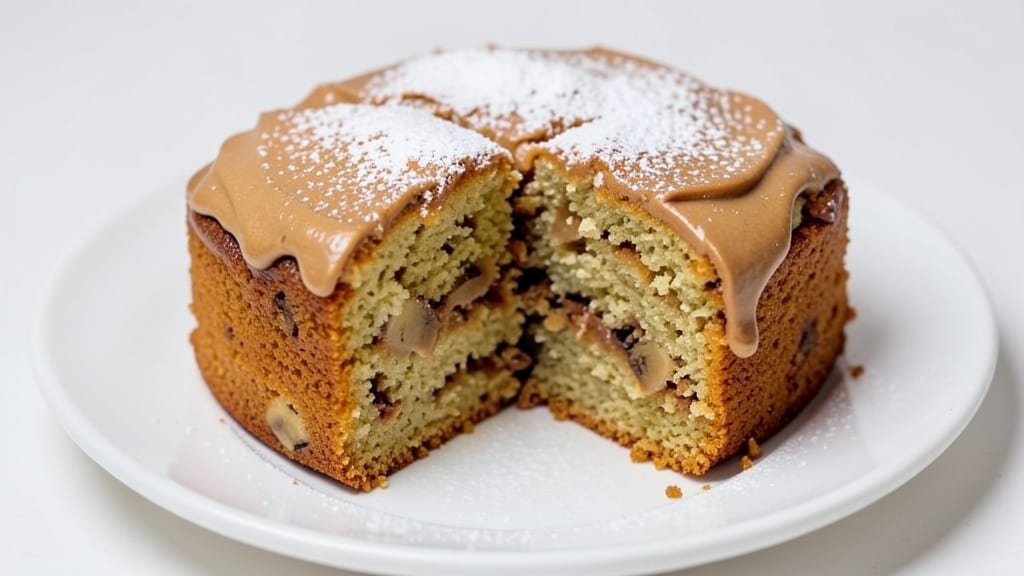
This banana cake recipe with peanut butter frosting delivers moist, tender layers that practically melt in your mouth, topped with a velvety-smooth peanut butter glaze that ties everything together. 💛 The secret lies in properly creaming butter and sugar, then gently folding in ripe bananas to maintain that signature cake texture without overmixing. I've perfected this recipe over years of baking—it's the kind that disappears faster than you can say "second slice."
The cake itself is a study in balance: rich from ripe bananas, lightly sweetened, and held together by a simple flour-buttermilk base. What makes it special is how the peanut butter frosting doesn't just sit on top—it soaks into the cake just enough to create a cohesive, nutty-sweet experience with every bite. The frosting requires no special equipment, just a few pantry staples and a food processor for that signature smooth consistency.
What you'll end up with is a cake that's moist enough to satisfy serious dessert lovers but not so dense it feels heavy. The peanut butter frosting adds that perfect crunch from powdered sugar and rich peanut flavor that complements the cake's natural sweetness. This isn't just dessert—it's comfort food in cake form, perfect for birthdays, potlucks, or whenever you need a little happiness on a plate.
For those who love texture, I recommend adding chopped peanuts or chocolate chips to the batter—just fold them in during the final mixing stage. And if you're feeling extra fancy, a dusting of powdered sugar or a sprinkle of crushed peanuts on top adds that restaurant-quality finish. Let's get baking!
Ingredients for banana cake recipe with peanut butter frosting
Eight simple ingredients transform into moist banana layers and velvety peanut butter frosting.
| Ingredient | Amount | Notes |
|---|---|---|
| Ripe Bananas 🍌 | 3 medium | Spotty and soft, not mushy |
| All-Purpose Flour 🌾 | 2 cups | Sifted for light texture |
| Granulated Sugar 🍚 | 1 ½ cups | Light brown sugar works too |
| Unsalted Butter 🧈 | 1 cup | Room temperature, full-fat |
| Large Eggs 🥚 | 2 whole | Room temperature for best mixing |
| Buttermilk 🥛 | 1 cup | Substitute with milk + 1 tsp vinegar |
| Baking Soda 🧂 | 1 tsp | Ensures proper rise |
| Salt 🧂 | ½ tsp | Kosher or sea salt |
| Vanilla Extract 🌿 | 1 tsp | Pure, not imitation |
| Peanut Butter 🥜 | 1 ½ cups | Creamy, natural style |
| Powdered Sugar 🍚 | 2 cups | Confectioners' sugar, sifted |
| Milk 🥛 | ¼ cup | Any kind, room temperature |
| Chopped Peanuts (optional) 🥜 | ½ cup | For texture in batter |
The bananas are non-negotiable—ripe means spotty and soft, not mushy. Trader Joe's or Whole Foods usually have the perfect ones, but check your fruit bowl first. Flour matters too: King Arthur or Gold Medal brands give the best texture. The butter should be room temperature—press a finger in, it should leave a slight indent. If it's too hard, microwave in 20-second bursts. For the peanut butter, creamy natural style is ideal—it adds richness without overpowering. I always grab the Jif or Skippy from the store brand section when on a budget.
No buttermilk? Mix 1 cup milk + 1 tsp vinegar, let sit 5 minutes. Short on powdered sugar? Sift granulated sugar—it won't be as fine but works in a pinch. The frosting ratio is key: 1.5 cups peanut butter to 2 cups powdered sugar gives that perfect balance. Want extra crunch? Fold in 0.5 cup chopped peanuts or chocolate chips during the final batter stage. The vanilla extract should be pure—imitation won't give that authentic flavor. And if you're feeling fancy, add a sprinkle of crushed peanuts on top before baking for that restaurant touch.
Store the cake in an airtight container at room temperature for up to 3 days, or in the fridge for up to 5 days. The frosting keeps well too—just seal it tightly. For longer storage, freeze the unfrosted cake layers for up to 2 months. Thaw at room temperature before frosting. I always make a double batch—this cake disappears fast, and leftovers make amazing breakfast sandwiches the next morning. Trust me on that.
Why You'll Love This Recipe
- No Mash Needed: I swear by this trick—just slice those ripe bananas right into the batter. No peeling, no smashing, and no sticky mess. The eggs and butter do all the blending work while you mix flour and sugar in under five minutes.
- Peanut Butter Magic: That creamy frosting isn’t just sweet—it’s rich, with the deep, nutty warmth of peanut butter cutting through the cake’s tender crumb. Honestly, the first time I tasted it, I nearly licked the bowl.
- Crowd-Pleaser Any Day: Bring this to a picnic, potluck, or even as a last-minute birthday treat. The frosting’s smooth texture and banana’s natural sweetness make it a hit with kids, adults, and anyone who’s ever wanted dessert now.
- Budget Buster: Ripe bananas? Often free if you’ve got a fruit bowl. Flour, sugar, and butter are pantry staples. A single batch feeds six, and leftovers? They disappear faster than I can say “second slice.” My wallet thanks me every time.
Step-by-step instructions for banana cake with peanut butter frosting
Here's how to create a perfectly moist banana cake with that irresistible peanut butter frosting.
👨🍳 Step 1: Prep Ingredients and Preheat the Oven
Start by preheating your oven to 350°F. While it heats, peel the 3 medium ripe bananas and mash them in a mixing bowl until completely smooth—no lumps allowed. This ensures your cake will be tender and moist. In a separate bowl, sift together the 2 cups all-purpose flour, 1 tsp baking soda, and 0.5 tsp salt. Sifting prevents lumps and guarantees a light texture.
Measure out the 1.5 cups granulated sugar and set aside. Softened 1 cup unsalted butter (it should be pliable but not melted) goes in the bowl with the bananas. Let it warm slightly in the bowl for 1 minute—this helps it blend more easily. Here's the thing—room temperature butter creates a smoother batter, so don't skip this step if your kitchen is chilly.
🍳 Step 2: Mix Wet Ingredients to Create a Smooth Batter
Using an electric mixer on medium speed, beat the butter and bananas together for 2-3 minutes until light and fluffy. This step is crucial for a tender cake. Gradually add the 1.5 cups granulated sugar while continuing to mix until fully incorporated. The mixture should look pale and slightly thickened—you'll see it nearly double in volume.
Add the 2 whole large eggs, one at a time, mixing well after each addition. Scrape down the sides of the bowl to ensure everything combines completely. Stir in the 1 cup buttermilk and 1 tsp vanilla extract until just combined. Here's where it gets fun—toss in the 0.5 cup chopped peanuts (if using) and mix briefly to distribute them evenly. Overmixing now can make your cake dense, so keep it gentle.
🥘 Step 3: Combine Dry Ingredients for Perfect Texture
With the mixer on low speed, gradually add the sifted dry ingredients to the wet mixture. Mix just until combined—you should still see small streaks of flour. This prevents developing too much gluten, which keeps your cake tender. If your batter looks too thick, add 1-2 tablespoons of milk to loosen it slightly. The perfect consistency should be like heavy pudding.
Real talk: Don't overmix. You'll know it's right when the batter coats the back of a spoon smoothly but still holds its shape. For an extra moist touch, fold in any remaining 0.25 cup milk if needed. Pour the batter into two greased and floured 9-inch round cake pans, filling them about two-thirds full. This gives your cake room to rise beautifully without overflowing.
🔥 Step 4: Bake Until Golden and Springy
Bake the cakes in the preheated oven for 25-30 minutes or until a toothpick inserted in the center comes out clean. Here's the moment that matters: the edges should be golden brown, but the tops might look slightly underdone—that's okay. The residual heat will finish cooking them as they cool. Don't open the oven door during baking—this causes the cakes to sink.
If your oven runs hot, start checking at the 20-minute mark. You want the cakes to be just set but still moist. Let them cool in the pans for 10 minutes before transferring to a wire rack to cool completely. This gradual cooling prevents cracking and keeps them tender. While they cool, you can start making the frosting—it's ready when the cakes are completely cool.
🍽️ Step 5: Make the Peanut Butter Frosting and Assemble
In a medium bowl, beat the 1.5 cups peanut butter and 2 cups powdered sugar together until smooth and creamy. Add the 0.25 cup milk and mix until fully combined. If it's too thick, add a splash more milk 1 teaspoon at a time until it reaches a spreadable consistency. Here's the secret—let the frosting sit for 5 minutes if it's too stiff from the peanut butter's natural oils.
Once your cakes are completely cool, level the tops if needed and spread the peanut butter frosting evenly between the layers and on the tops. For extra flair, sprinkle more chopped peanuts on top. Slice and serve immediately for the best texture, or refrigerate for up to 2 days if you're making this ahead. Each bite delivers that perfect harmony of moist banana cake and rich peanut butter frosting!
Pro Tips For Making Banana Cake Recipe With Peanut Butter Frosting
- Mash Bananas Thoroughly: I learned this the hard way—lumpy mashed bananas make for a dense, uneven cake. Use a fork first, then press through a fine-mesh sieve or strainer if you’re impatient like me. That extra step keeps the texture tender and prevents weird pockets of uncooked banana.
- Weigh Your Butter: That “softened butter” guesswork leads to dry cakes. Use room-temperature butter, then weigh it (1/2 cup is about 113g)—not scooping from the tub. Butter’s moisture content varies wildly, and this recipe doesn’t forgive sloppy measurements.
- Bake Until Slightly Under: The cake pulls away from the edges when just set, not golden. Overbaking turns it gummy, and no one wants a peanut butter frosting swamp. Check at 5 minutes before the recipe’s suggested time—your toothpick might have crumbs, but that’s fine.
- Frost While Warm: Cold cake = stiff frosting. Let the cake cool 10 minutes in the pan, then transfer to a rack for 15 minutes. The residual warmth makes the peanut butter frosting spread smoothly—no chipping or cracking. (Yes, even if you’re eager to eat it.)
Regional styles of this recipe
Southern Comfort Style
In the American South, this cake often gets a bourbon glaze drizzle instead of just frosting. After baking, mix 2 tbsp bourbon with ½ cup powdered sugar and 1 tbsp melted butter, then brush it over the warm cake layers. The alcohol cooks off, leaving behind a caramelized sweetness that pairs perfectly with the peanut butter. I like to add ½ tsp cinnamon to the cake batter for extra Southern flair. 💛
Midwest Classic
The Midwest version often includes walnuts instead of peanuts, giving it a heartier texture. Swap the 0.5 cup chopped peanuts for 0.5 cup walnuts and toast them lightly in a dry pan for 3-4 minutes before adding to the batter. This adds a nutty depth that balances the sweetness. Many Midwestern bakeries also serve this cake with a vanilla bean twist—add ½ tsp vanilla bean paste to the frosting for an extra aromatic touch.
West Coast Twist
On the West Coast, you'll often find chocolate variations incorporated into the peanut butter frosting. Mix 2 oz melted dark chocolate (60% cocoa) into the frosting while it's still warm for a rich, decadent flavor. Some bakers also add 1 tsp espresso powder to the cake batter to enhance the chocolate notes. The result is a sophisticated dessert that still feels approachable and comforting. 🌟
Canadian Maple Fusion
In Canada, maple syrup is often used to sweeten the frosting instead of sugar. Replace 1 cup of the powdered sugar with ¼ cup pure maple syrup for a distinctively Canadian flavor profile. The frosting will have a smoother texture and a subtle earthy sweetness that pairs beautifully with the banana cake. Add a pinch of sea salt to the frosting to balance the flavors—this is a popular trick among Canadian bakers.
Tropical Adaptation
For a tropical twist, swap the peanut butter frosting for a coconut-peanut butter hybrid. Mix 1 cup peanut butter with 1 cup coconut cream (chilled overnight) and 1.5 cups powdered sugar. This creates a lighter, almost mousse-like frosting that complements the cake's moisture. Add ½ cup toasted coconut flakes to the batter for extra texture, and garnish with fresh mango slices for a vibrant presentation. This version is perfect for summer gatherings. 🌴
European Elegance
In European bakeries, this cake often takes on a layered trifle approach. After baking, soak the cake layers in a simple syrup made with ½ cup water and ½ cup sugar, then layer with whipped cream and crushed amaretti cookies before adding the peanut butter frosting. The Italian influence shines through in this refined presentation, making it ideal for special occasions. For an extra touch, dust the top with cocoa powder before serving. ✨
Nutrition facts
Frequently asked questions
Can I use overripe bananas for this recipe?
Overripe bananas with brown spots actually make the cake extra moist and flavorful. Just make sure they're not mushy—squeeze gently to check. The darker the spots, the sweeter the flavor, so go for bananas that are soft but still hold their shape when peeled.
How do I fix peanut butter frosting that's too thick?
Add milk 1 teaspoon at a time while mixing until you reach a smooth, spreadable consistency. Let it sit for 5 minutes if it's still stiff—the peanut butter's natural oils will soften it over time. For extra insurance, warm the peanut butter slightly in the microwave (10 seconds) before mixing.
Can I make this cake in a single layer?
Yes! Use a 9x13-inch pan instead of round pans and bake for 30-35 minutes at 350°F. Spread the frosting evenly over the top and sides. This version works great for sheet cake servings or when you want a simpler presentation. Just reduce the frosting by about 1/3 cup since you're not layering.
Why did my cake turn out dense instead of moist?
Overmixing the batter is the most common culprit—stop mixing as soon as the dry ingredients disappear. Also check that your butter was room temperature (not melted) and that you didn't skip creaming it with sugar for 2-3 minutes. Another fix: replace 1/4 cup of the flour with 1/4 cup yogurt or applesauce in future batches for extra moisture.
How can I make this gluten-free?
Swap the all-purpose flour for a 1:1 gluten-free baking flour blend (like Bob's Red Mill) and add 1/2 teaspoon xanthan gum if your blend doesn't include it. Reduce the buttermilk by 2 tablespoons since gluten-free batters absorb more liquid. The texture will be slightly denser but still delicious with the peanut butter frosting.