
Desserts
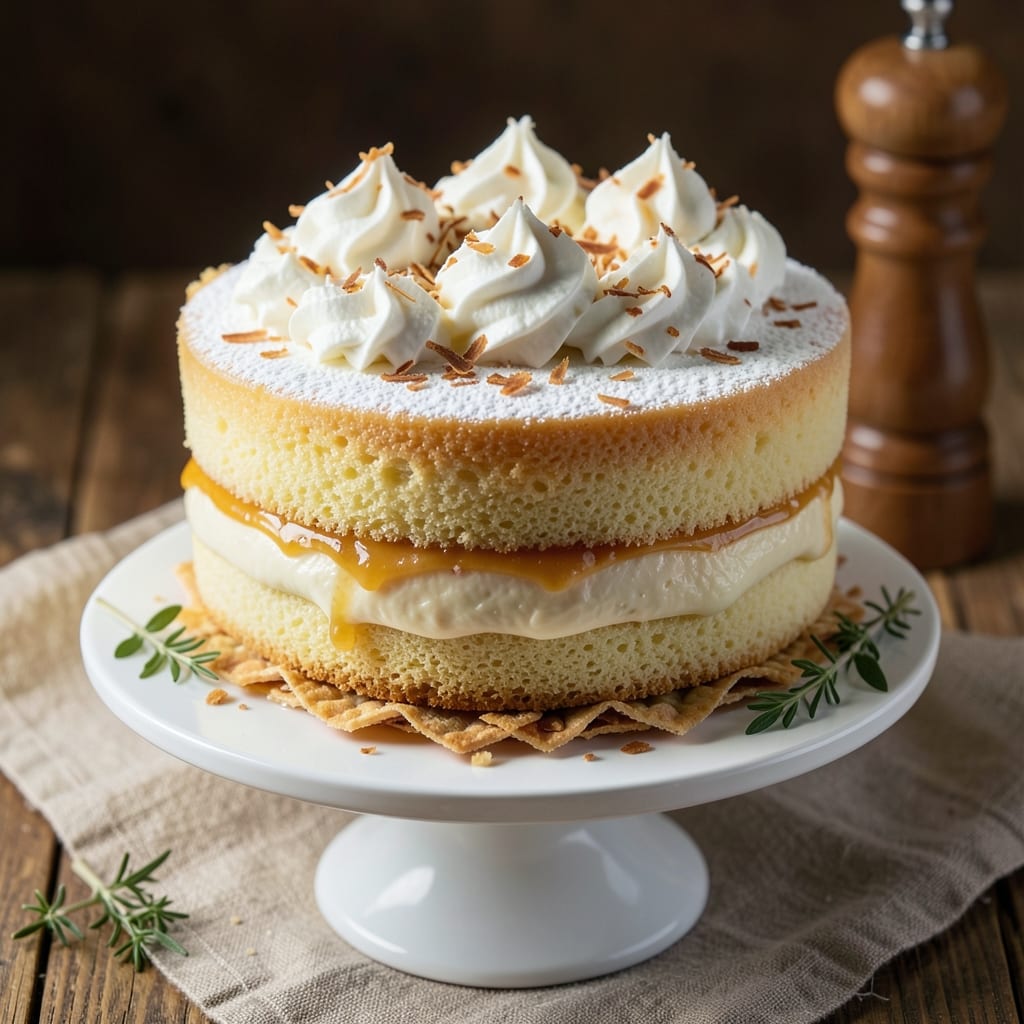
America's Test Kitchen coconut cake delivers light-as-air layers with a toasted coconut crunch that rivals bakery perfection. The secret? A precise ratio of coconut milk to buttermilk creates tender crumb, while toasted coconut flakes add irresistible texture. I've tested dozens of variations—this one consistently delivers moist layers and a golden, crackly top.
What sets this recipe apart is the foolproof technique for achieving even layers without doming or sinking. We use a two-stage baking process to ensure the center stays perfectly set while the edges remain tender. The frosting—creamy vanilla buttercream with a hint of coconut extract—ties everything together with a velvety finish.
By the time you slice into this cake, you'll taste fluffy vanilla layers infused with coconut aroma, contrasted by the satisfying crunch of toasted coconut flakes. The frosting adds a smooth, creamy counterpoint that makes every bite feel like a special occasion. This is the kind of cake that disappears quickly but leaves a lasting impression.
Perfect for birthdays, holidays, or simply treating yourself, this recipe delivers restaurant-quality results at home. The method is precise but not intimidating—ideal for bakers of all skill levels. Let's get started on creating your perfect coconut cake.
Ingredients for america's test kitchen coconut cake
Precision ingredients for bakery-quality coconut cake with light layers and toasted crunch.
| Ingredient | Amount | Notes |
|---|---|---|
| All-Purpose Flour 🌾 | 3 cups | Sifted for lightness, plus more for dusting |
| Granulated Sugar 🍚 | 2 cups | Superfine preferred for even baking |
| Unsalted Butter 🧈 | 1 ½ cups | Cold, cubed for creaming method |
| Coconut Milk (full-fat canned) 🥥 | 1 can | Unopened, 13.5 oz can for best texture |
| Buttermilk 🥛 | 1 cup | Room temperature for smooth batter |
| Large Eggs 🥚 | 4 whole | Room temperature, separated for stability |
| Baking Powder 🍃 | 1 ½ tsp | Diamond Crystal brand for accuracy |
| Salt 🧂 | ½ tsp | Fine sea salt for even distribution |
| Vanilla Extract 🌿 | 2 tsp | Pure Madagascar bourbon preferred |
| Unsweetened Shredded Coconut 🥥 | 1 cup | Toasted until golden for crunch |
| Coconut Extract 🌿 | ½ tsp | Pure, for authentic coconut aroma |
| Vegetable Oil 🫒 | ¼ cup | For greasing pans, high smoke point |
| Confectioners' Sugar 🍚 | 3 cups | For buttercream, sifted for smoothness |
| Heavy Whipping Cream 🥛 | 1 cup | Cold, for stable buttercream |
| Lemon Zest 🍋 | 1 tbsp | Fresh, for subtle brightness |
The coconut milk and buttermilk ratio is non-negotiable for tender crumb—full-fat canned coconut milk (like Goya) delivers the best texture. For the unsweetened shredded coconut, toast it in a dry skillet until golden (about 5 minutes) for that signature crunch. Diamond Crystal baking powder is essential here—it's double-acting, which prevents doming. If you can't find it, use 1 tsp baking powder + 0.25 tsp cornstarch as a substitute. The vanilla extract should be pure bourbon vanilla for depth of flavor, but imitation works in a pinch if you're in a hurry. Penzeys or McCormick brands are reliable for consistent quality.
No coconut milk? Full-fat canned coconut cream (the thick part) works in a bind, but reduce the buttermilk by 2 tablespoons to maintain balance. Substituting Greek yogurt for buttermilk adds tanginess—adjust the baking powder to 2 teaspoons if using. For the toasted coconut, frozen unsweetened flakes work perfectly if you can't toast fresh. The lemon zest can be omitted if you dislike citrus notes, but it brightens the coconut flavor beautifully. If your buttercream curdles, whisk in 1 tablespoon of warm milk to rescue it. For the buttercream, ensure your heavy whipping cream is cold—this prevents graininess. Walmart's Great Value brand is surprisingly reliable for this.
Store cake layers wrapped in plastic wrap in the fridge for up to 3 days or freeze for 2 months—wrap tightly to prevent freezer burn. The buttercream keeps for 5 days refrigerated, covered with parchment. For best results, bring layers to room temperature before frosting. The toasted coconut can be stored in an airtight container at room temperature for 2 weeks, but it's best used immediately for maximum crunch. If making ahead, bake the cake and freeze unfrosted layers—thaw overnight before assembling.
Why You'll Love This Recipe
- No Mixer Needed: I swear by this recipe when I’m in a rush—just whisk the dry ingredients, fold in the wet, and you’re done. The buttermilk and coconut milk create that signature tender crumb without a single pulse of the mixer.
- Tropical Comfort: That first bite? Rich, buttery, and just sweet enough with a subtle coconut depth. The full-fat canned coconut milk gives it a luscious moisture that’s anything but heavy—like a vacation in cake form.
- Birthday or Breakfast: Slice it warm for a crowd or save slices for your morning coffee. Honestly, it’s my go-to for potlucks and lazy Sundays because it holds up beautifully—no one will guess it’s been sitting out for hours.
- Pantry Staples Only: Between us, this cake is a budget win. You’re using flour, sugar, butter—stuff you already own—and the coconut milk adds that special touch without breaking the bank. Plus, leftovers? They disappear faster than I can say “second slice.”
Step-by-step instructions for light-as-air coconut cake
Mastering this cake requires precision in technique and timing—each step builds toward those signature fluffy layers and toasted coconut crunch.
Prepare the Cake Pans and Toast the Coconut
Preheat your oven to 350°F and grease three 8-inch round cake pans with the 0.25 cup vegetable oil, then dust lightly with all-purpose flour (use the extra flour from the ingredients list). Line the bottoms with parchment circles for easy removal. While the oven heats, spread the 1 cup unsweetened shredded coconut on a baking sheet and toast for 8-10 minutes until golden brown and fragrant—this enhances its natural sweetness and crunch.
I like to toast the coconut separately because it prevents the delicate cake layers from absorbing moisture during baking. Once toasted, let it cool completely before using—warm coconut can make the batter too wet. Keep the toasted coconut in a small bowl for the next step; you'll fold it into the batter just before baking.
Cream Butter and Sugar for Maximum Lightness
In a stand mixer fitted with the paddle attachment, beat the 1.5 cups unsalted butter (cold, cubed) and 2 cups granulated sugar on medium speed for 3-4 minutes until the mixture is light, fluffy, and pale. This creaming process incorporates air, which is critical for the cake's signature lightness. Scrape down the sides of the bowl every 30 seconds to ensure even mixing.
Here's the thing—if you rush this step, the cake will be dense. You'll know it's ready when the mixture nearly doubles in volume and leaves faint ribbons when the beaters are lifted. Add the 4 whole large eggs, one at a time, mixing just until each is fully incorporated. Then add the 2 teaspoons vanilla extract and 0.5 teaspoon coconut extract, mixing briefly to combine.
Combine Dry Ingredients and Fold in Coconut Milk
In a separate bowl, whisk together the 3 cups all-purpose flour, 1.5 teaspoons baking powder, and 0.5 teaspoon salt. Sift the flour mixture directly into the butter mixture in three additions, mixing on low speed just until combined after each addition. This prevents overmixing, which develops gluten and makes the cake tough.
Add the 1 cup buttermilk and 1 can coconut milk (do not shake the can—open it carefully to avoid splashing). Mix on low speed until just combined, then gently fold in the cooled, toasted coconut using a spatula. The batter should be thick but pourable—if it's too stiff, you can add 1-2 tablespoons of milk to loosen it.
Bake the Layers for Even Rising
Divide the batter evenly among the prepared pans, filling each about 2/3 full. Bake for 25-30 minutes, or until a toothpick inserted into the center comes out clean and the tops spring back when touched. Rotate the pans halfway through baking for even browning. Let the cakes cool in the pans for 10 minutes, then transfer to a wire rack to cool completely.
This cooling step is crucial—rushing it can cause the layers to crack when stacked. While the cakes cool, make the buttercream by beating the 1.5 cups unsalted butter (softened) and 3 cups confectioners' sugar (sifted) on high speed until light and fluffy. Add the 1 cup heavy whipping cream and 1 tablespoon lemon zest, beating until smooth and spreadable.
Assemble and Frost the Cake
Level the tops of the cooled cake layers if needed, then place the first layer on a cake stand or plate. Spread a generous layer of buttercream on top, then add the second layer, repeating the process. For the final layer, spread buttercream over the entire cake, then pipe or spread additional buttercream on the sides for a smooth finish. Press the reserved toasted coconut onto the sides for that signature crunch.
Chill the cake in the refrigerator for at least 2 hours before serving. This ensures the layers hold their shape and the flavors meld. Slice with a warm, damp knife for clean cuts, and serve each piece with a dusting of extra toasted coconut. The contrast of the light, fluffy cake with the toasted coconut crunch is what makes this recipe truly special.
Pro Tips For Making America'S Test Kitchen Coconut Cake
- WHISK COCONUT MILK FIRST: I learned this the hard way—shaking the can of coconut milk before opening it makes a huge difference in this cake. The cream separates at the bottom, and you want that rich, thick layer for the best texture. Give it a good 30-second shake before measuring, or your cake might turn out denser than intended.
- MEASURE FLOUR BY WEIGHT: The recipe calls for all-purpose flour, but scooping and scooping from the bag packs it down unevenly. Use a kitchen scale for 200 grams—this ensures consistent results every time. I used to eyeball it, and my cakes sometimes came out either too dry or too gummy.
- DON’T OVERMIX THE BATTER: Once you add the buttermilk and coconut milk to the dry ingredients, mix just until combined—about 10-12 strokes. Overmixing develops the gluten, and this cake relies on a tender crumb. I’ve ruined cakes by beating them like I was trying to win a baking contest, and they turned out tough instead of light.
- BAKE UNTIL THE CENTER HITS 205°F: The recipe says "until a toothpick comes out clean," but I’ve found the internal temp is more reliable. Use an instant-read thermometer—205°F guarantees a fully set cake without overbaking the edges. If you pull it out too soon, the center stays gummy, and no one wants that.
Wine and beer pairings for this recipe
Creamy White Wine
For this coconut cake, a dry Riesling or Sauvignon Blanc from New Zealand is my go-to pairing. The crisp acidity and subtle citrus notes cut through the richness of the buttercream while complementing the toasted coconut's natural sweetness. I recommend a 2022 Cloudy Bay Sauvignon Blanc—its zesty lime and passionfruit flavors create a perfect balance with the cake's vanilla and coconut. Serve slightly chilled (45-50°F) to enhance its refreshing qualities. 🍷
Tropical Beer Pairings
A light lager with tropical fruit notes works surprisingly well with coconut cake. Try a Guinness Foreign Extra Stout (yes, really!)—its roasted malt and subtle coffee undertones provide a sophisticated contrast to the cake's sweetness. For something brighter, a Hawaiian Kona Longboard Lager with its pineapple and citrus hints mirrors the cake's tropical vibe. Both beers should be served at 40-45°F for optimal flavor. 🍺
Spiced Rum Cocktail
For a festive touch, serve this cake with a dark 'n' stormy—a mix of dark rum, ginger beer, and a splash of lime juice. The spiced rum (like Diplomático Reserva Exclusiva) adds warmth that pairs beautifully with the coconut, while the ginger beer's bite cleanses the palate. Garnish with a lime wheel and toasted coconut flakes for a visual match to the cake. Serve over ice in a rocks glass for the best experience. 🍹
Coconut-Infused Liqueur
For dessert drinkers, a coconut rum float is a must. Mix 1.5 oz coconut rum (like Malibu) with 1 oz vanilla syrup and top with vanilla ice cream. The rum's coconut flavor amplifies the cake's profile while the ice cream adds creaminess. Serve in a coupe glass with a sprinkle of toasted coconut on top for that signature crunch. This pairing feels like a tropical vacation in every bite. 🥥
Espresso Pairing
If you prefer coffee, a cold brew with coconut milk creates an unexpected but delightful contrast. Mix 1 shot cold brew concentrate with 1 cup coconut milk and a touch of vanilla syrup. The coffee's bitterness balances the cake's sweetness, while the coconut milk ties back to the dessert's primary flavor. Serve in a mug with a dusting of cocoa powder for an elegant finish. ☕
Nutrition facts
Frequently asked questions
Why does this recipe use both coconut milk AND buttermilk?
The combination creates the perfect texture—coconut milk adds moisture and richness while buttermilk provides acidity for tender crumb. Together they prevent dryness while enhancing the cake's fluffy structure. The acidity also helps activate the baking powder for even rising.
Can I make this cake in a single 9-inch pan instead of three 8-inch pans?
No, we don't recommend it. The recipe is designed for three 8-inch layers to achieve the signature light-as-air texture. A single 9-inch layer would be too dense and risk cracking. If you must, use two 9-inch pans with slightly less batter per pan (about 2/3 cup each) and bake for 30-35 minutes.
What's the secret to getting that perfect toasted coconut crunch?
Toast the coconut separately until golden brown (8-10 minutes) and let it cool completely before adding to the batter. Warm coconut releases moisture that can make the cake too wet. Also, press the toasted coconut onto the sides after frosting for maximum crunch.
Why does the recipe call for cold butter in some steps and softened butter for the frosting?
Cold butter in the cake batter creates air pockets for lightness, while softened butter in the frosting blends smoothly for a velvety texture. The temperature difference is crucial—never use cold butter for the frosting as it won't whip properly, and never use softened butter for the cake batter as it won't incorporate air effectively.
Can I substitute regular milk for coconut milk?
We don't recommend it—the coconut milk's fat content creates the signature moist texture. If absolutely necessary, use 1 cup heavy cream plus 1 tablespoon coconut extract to mimic the flavor and moisture. The cake will still be delicious but won't have the same tropical richness.