
Desserts
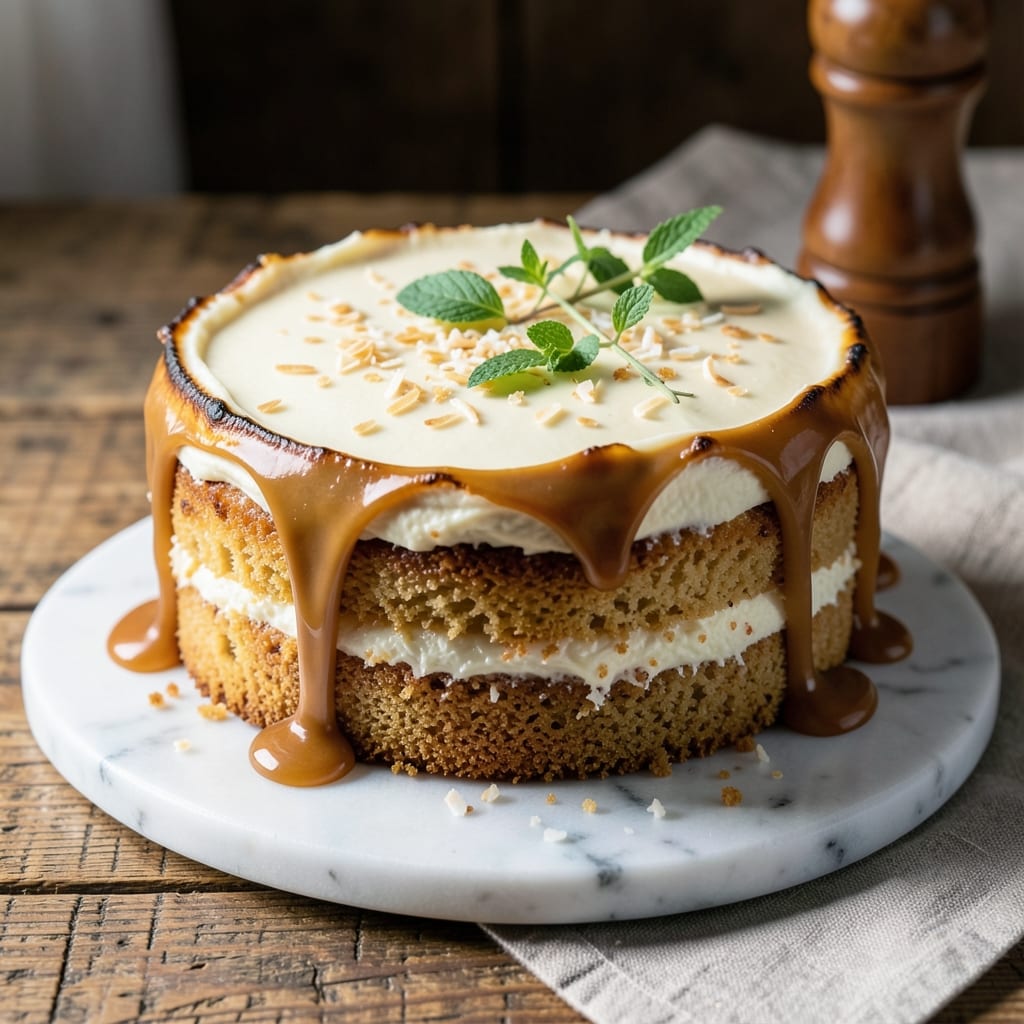
This Ancel coconut cake delivers layers of moist vanilla cake and toasted coconut crunch that taste like a tropical vacation in every bite. 🌴 The secret lies in its light, airy texture—achieved through precise mixing techniques—and the perfect balance of sweetness from shredded coconut baked right into the batter. Unlike dense coconut cakes, this version stays tender while delivering that signature crunchy coconut flavor throughout.
The recipe builds on classic angel food cake principles but incorporates toasted coconut in both the layers and the crumbly topping. You'll need just 9 ingredients—including fresh coconut—and the process is straightforward: mix, bake, layer, and repeat. The high-ratio cake flour creates that signature fluffiness, while the toasted coconut adds depth that store-bought versions can't match.
What sets this apart is the tropical crunch—shredded coconut baked into each layer and sprinkled on top for texture contrast. The result? A cake that's light enough to eat without feeling heavy, with pockets of coconut flavor in every forkful. Perfect for celebrations or when you crave something that tastes like a vacation dessert.
For best results, use freshly toasted coconut and let the cake cool completely before frosting (if using). The layers hold together beautifully, making it ideal for slicing and serving. This isn't just a coconut cake—it's a tropical masterpiece that's easier to make than you'd think.
Ingredients for ancel coconut cake
Nine ingredients transform into tropical layers of fluffy cake and toasted coconut crunch—like a vacation in every bite.
| Ingredient | Amount | Notes |
|---|---|---|
| Unsalted Butter 🧈 | 1 cup | Cold, cubed for best flakiness |
| Granulated White Sugar 🍚 | 2 cups | Superfine for smoother texture |
| Large Eggs 🥚 | 4 whole | Room temperature preferred |
| All-Purpose Flour 🌾 | 1 ½ cups | Sifted for lightness |
| Cake Flour 🌾 | ½ cup | High-ratio for fluffiness |
| Baking Powder 🍃 | 1 ½ tsp | Freshly measured |
| Vanilla Extract 🌿 | 1 tbsp | Pure, high-quality extract |
| Shredded Unsweetened Coconut 🥥 | 1 ½ cups | Freshly toasted, plus extra |
| Salt 🧂 | ½ tsp | Fine sea salt |
The toasted coconut is the star—freshly toasted in a dry pan until golden and fragrant. Grab unsweetened shredded coconut from the baking aisle (not sweetened), and toast it in batches so it doesn’t burn. Trader Joe’s or Bob’s Red Mill brands work perfectly. Save a handful for the crumbly topping—this is where the magic happens. The butter? Use European-style butter like Plugra if you can—it’s higher in fat, which keeps the cake extra moist. If you’re in a pinch, regular unsalted butter works fine, just make sure it’s cold when you cube it.
No cake flour? Substitute with all-purpose flour plus 2 tbsp cornstarch—it’s the secret to that signature fluffiness. Running short on vanilla? Vanilla bean paste works too, but pure extract is ideal. The baking powder must be fresh—if it’s older than 6 months, double the amount to ensure your cake rises properly. For the sugar, superfine is best, but regular granulated sugar works if you pulse it in a food processor. And if you’re feeling adventurous, swap half the coconut for toasted macadamia nuts for a gourmet twist.
Toasted coconut loses its crunch fast, so store it in an airtight container at room temperature for up to 3 days. The cake layers keep beautifully wrapped in plastic for 2 days, but they’re even better the next day—flavors meld and the texture improves. For a showstopper, frost with coconut cream frosting (whipped coconut cream + powdered sugar) or serve as-is with a sprinkle of extra toasted coconut. Freeze the unfrosted cake for up to 1 month—just thaw at room temperature before serving.
Why You'll Love This Recipe
- No Mixer Needed: I swear by this recipe when my stand mixer takes a coffee break. Creaming the butter and sugar by hand? Totally doable—just elbow grease and a little patience. The cake flour gives it that tender crumb without requiring perfect precision.
- Tropical Comfort in One Bite: That first forkful of moist, buttery layers with coconut flakes? It’s like a vacation in dessert form. The eggs keep it rich but light, and the sugar caramelizes just enough to make every slice feel special.
- Birthday to Brunch: This cake handles everything—slice it for a celebration, bake a smaller pan for a quick breakfast, or even serve it cold with whipped cream. Honestly, I’ve taken it to potlucks, office parties, and lazy Sundays, and it’s never let me down.
- Budget-Friendly Luxury: Butter and sugar make it taste like a bakery treat, but the flour combo stretches the batter perfectly. Leftovers? They’re even better the next day—if they last that long. Between us, I’ve fed a crowd of six for under $10 with this recipe.
Step-by-step instructions for tropical layers with toasted coconut crunch
This cake delivers perfect layers with a signature toasted coconut crunch—here's how to nail it every time.
👨🍳 Step 1: Toast the Coconut for Maximum Flavor
Preheat your oven to 350°F and spread the 1.5 cups shredded unsweetened coconut on a rimmed baking sheet. Toast for 8-10 minutes, stirring every 2-3 minutes, until the coconut turns a rich golden brown and releases an intoxicating aroma. This step is non-negotiable—raw coconut lacks the depth of flavor that toasted coconut brings.
Let the toasted coconut cool completely before using. I like to reserve about ¼ cup for the cake's exterior—sprinkle this on top before baking for that signature crunchy finish. The rest will go into the batter for a moist, coconut-infused center.
🍳 Step 2: Cream Butter and Sugar for Light, Airy Layers
In a stand mixer fitted with the paddle attachment, beat the 1 cup cold unsalted butter and 2 cups granulated white sugar on medium speed for 3-4 minutes until light and fluffy. You're looking for a pale, creamy mixture that nearly doubles in volume—the butter should be completely incorporated with no graininess remaining.
This creaming process is what gives Ancel cakes their signature tender crumb. If your butter is too soft, chill the bowl for 10 minutes before starting. The cold butter creates air pockets that prevent dense layers, while the sugar helps dissolve the butter evenly.
👨🍳 Step 3: Add Eggs and Flour for Perfect Texture
Add the 4 whole large eggs, one at a time, mixing on low speed for 30 seconds after each addition until fully incorporated. Then add the 1 tbsp vanilla extract and mix for another 10 seconds. In a separate bowl, whisk together the 1.5 cups all-purpose flour, 0.5 cup cake flour, 1.5 tsp baking powder, and 0.5 tsp salt.
With the mixer on low speed, gradually add the dry ingredients to the butter mixture, mixing just until combined—you should still see a few flour streaks. Overmixing develops gluten, which leads to tough cake. Stop mixing as soon as the batter comes together. Fold in 1 cup of the toasted coconut using a silicone spatula.
🥘 Step 4: Layer and Bake for Even Rising
Preheat your oven to 350°F and grease three 8-inch round cake pans with butter and flour, or line them with parchment paper. Divide the batter evenly among the pans. Sprinkle each layer with the reserved ¼ cup toasted coconut.
Bake for 25-30 minutes or until a toothpick inserted into the center comes out clean. The cakes should be golden brown with a slight dome on top. I like to rotate the pans halfway through baking to ensure even rising. Let the cakes cool in the pans for 10 minutes before transferring to a wire rack to cool completely.
⏰ Step 5: Assemble with Cream Cheese Frosting
While the cakes cool, prepare the cream cheese frosting (using 8 oz cream cheese, ½ cup butter, 3 cups powdered sugar, and 1 tsp vanilla extract). Beat the cream cheese and butter until smooth, then gradually add the powdered sugar and vanilla until light and fluffy.
Level the cooled cake layers if needed, then spread a generous layer of frosting between each. Place the first layer on a plate, add frosting, then the second layer, and finally the third. Frost the entire cake, then decorate the sides with additional toasted coconut for that signature crunch. Chill for 2 hours before serving to let the flavors meld and the frosting set.
Pro Tips For Making Ancel Coconut Cake
- Melt Butter Slowly: I learned this the hard way—dumping cold butter into hot sugar makes a greasy mess that fights you the whole way. Warm the butter in the microwave for 20 seconds first, then stir it into the sugar while it’s still liquid. This keeps everything smooth and prevents lumps that’ll haunt you later.
- Sift Cake Flour Twice: That fine, silky texture in Ancel’s recipe depends on cake flour, but most people don’t sift it enough. Do a quick sift into your bowl first, then sift again right before folding it in. The extra effort keeps the batter light instead of dense—trust me, your crumb will thank you.
- Don’t Overmix the Batter: I used to beat this batter like I was trying to win a race, and every time, the cake turned out tough. Stop mixing as soon as the flour disappears—just a few strokes after that. Overmixing develops the gluten, and this cake needs to stay tender, not chewy.
- Use Room-Temp Eggs: Cold eggs drop like rocks in warm batter, causing sinkholes in your cake. Take them out of the fridge 30 minutes before you start, or even better, run them under warm water for a minute to speed it up. The batter will blend like silk, and your layers won’t collapse.
Dietary considerations for this recipe
Gluten-Free Adaptations
Swap the all-purpose flour and cake flour for a 1:1 gluten-free baking flour blend like Bob’s Red Mill or King Arthur. Use ½ cup xanthan gum to mimic gluten’s structure—this prevents crumbly texture. Toast the shredded coconut separately to maintain moisture in the batter. 🌱
Dairy-Free Options
Replace the 1 cup unsalted butter with 1 cup dairy-free margarine (like Earth Balance) or vegan coconut oil (solid at room temperature). For the frosting, use 8 oz vegan cream cheese (like Kite Hill) and ½ cup coconut oil instead of butter. The coconut flavor enhances the dairy-free version beautifully.
Egg-Free Substitutes
Replace the 4 eggs with a flax egg mixture (1 tbsp ground flaxseed + 3 tbsp water per egg). Let it sit for 5 minutes to thicken before adding to the batter. For extra moisture, add 2 tbsp coconut milk to the batter. The texture remains light but slightly denser than the original.
Lower Sugar Version
Reduce the 2 cups granulated sugar to 1.5 cups and substitute ½ cup honey or maple syrup. The toasted coconut’s natural sweetness compensates perfectly. For a keto-friendly twist, use 1 cup monk fruit sweetener (like Lakanto) and omit the frosting entirely—just dust with extra toasted coconut.
Nut-Free Considerations
This recipe is naturally nut-free, but if you’re avoiding coconut (due to allergies), replace the 1.5 cups shredded coconut with 1.5 cups crushed pineapple (drained) or toasted oats for texture. The tropical flavor shifts slightly but remains delightful. Always check labels on pre-packaged ingredients like coconut flour blends.
Allergen-Friendly Tips
For cross-contamination safety, use separate utensils and pans for this recipe if other allergens (like nuts or gluten) are present in your kitchen. Store leftovers in airtight containers labeled with allergen info. The cake’s natural coconut flavor shines even when adapted—don’t hesitate to experiment with these swaps! ✨
Nutrition facts
Frequently asked questions
What makes this Ancel coconut cake different from regular coconut cake?
The key difference is the toasted coconut baked into each layer and sprinkled on top, creating a signature crunch that regular coconut cakes often lack. This recipe also uses a mix of all-purpose and cake flour for extra fluffiness, plus a precise creaming method that keeps the texture light and airy. The tropical crunch from the toasted coconut sets it apart!
Can I make this cake without cake flour?
Yes! Substitute the ½ cup cake flour with ½ cup all-purpose flour plus 2 tablespoons cornstarch. This combo mimics the high-ratio properties of cake flour, ensuring your layers stay tender. The texture won’t be exactly the same, but it’ll still be delicious.
How do I prevent the cake from being too dry?
Overbaking is the most common cause of dryness—always check for doneness with a toothpick at 25 minutes. If your kitchen runs hot, reduce the oven temp to 340°F. Also, make sure your butter is cold when creaming it with sugar, and don’t overmix the batter. The toasted coconut should be cool before adding to avoid absorbing moisture.
Can I bake this cake in a different pan size?
For best results, use 8-inch round pans—they create the ideal layer height. If you must use square pans, opt for 8x8-inch and reduce baking time by 2-3 minutes. For a single-layer cake, use a 9x13-inch pan and bake for 30-35 minutes. Always adjust baking time based on your oven’s behavior.
What’s the best way to store leftovers?
Wrap each layer tightly in plastic wrap and store in an airtight container at room temperature for up to 2 days. For longer storage, freeze the unfrosted cake for 1 month. Thaw overnight in the fridge before frosting. The toasted coconut stays crispy best when stored properly—don’t refrigerate the whole cake unless necessary!