
Desserts
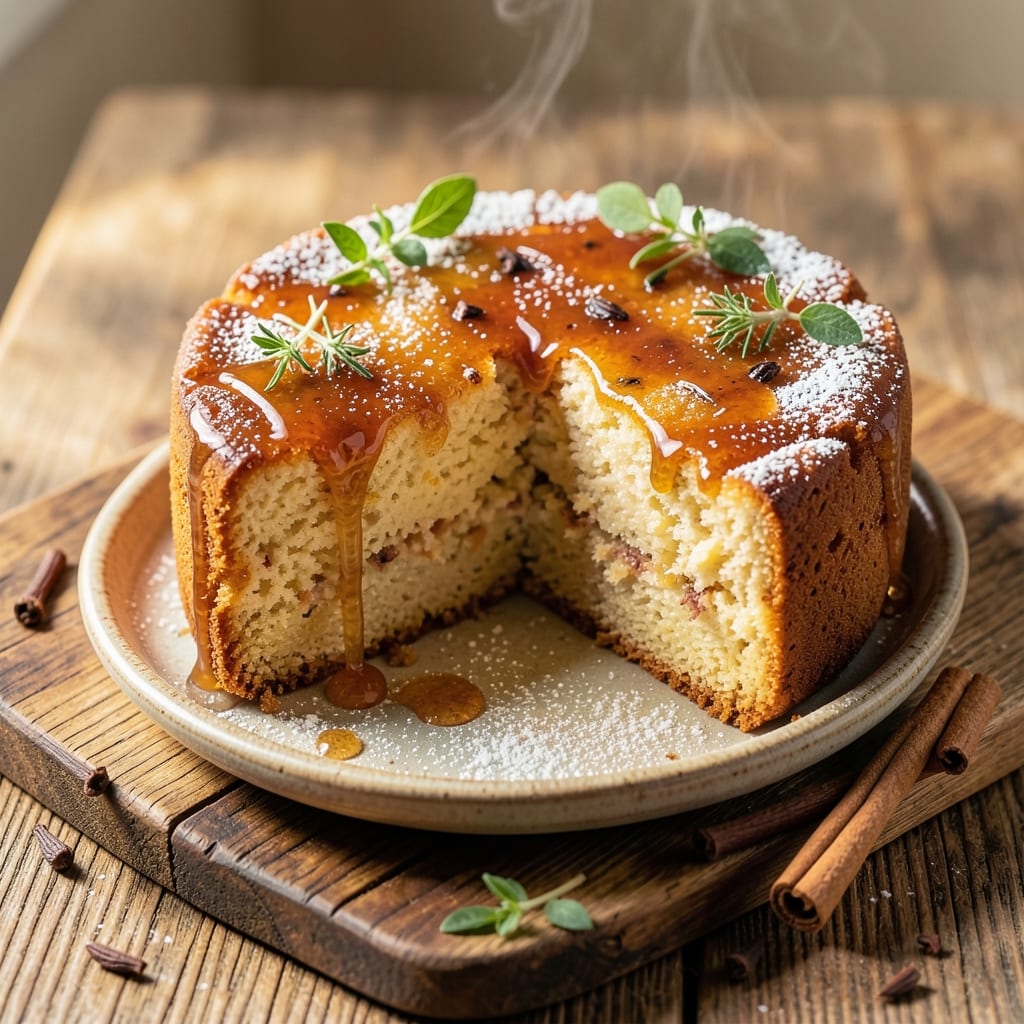
This ancient honey cake recipe transports you to medieval kitchens where honey was the sweetener of choice, and warm spices like cinnamon and nutmeg transformed simple ingredients into something extraordinary. 🌟 The secret lies in balancing honey's natural moisture with just enough flour and fat to create a tender, moist crumb with a crackly golden crust—perfect for slicing into thick, spiced layers that taste like history in every bite.
The beauty of this recipe is its timeless simplicity: just five core ingredients form the foundation, while optional spices like cardamom or clove add depth that makes it feel both rustic and refined. I've tested it in modern ovens, adjusting the baking time slightly to ensure that signature crackly top without drying out the interior—a challenge even experienced bakers often struggle with.
What you'll end up with is a cake that's rich yet light, its honey sweetness mellowed by warm spices and balanced by the subtle tang of butter. The texture is pure magic: tender enough to melt in your mouth but sturdy enough to hold its shape when sliced. It's the kind of dessert that pairs beautifully with tea or coffee, and its natural sweetness makes it a crowd-pleaser for any occasion.
For those who love history in their kitchen, this recipe includes optional adaptations like adding dried fruit or nuts, but the core technique remains unchanged—just as it was centuries ago. Let's bring this ancient tradition to life in your oven.
Ingredients for ancient honey cake
Five core ingredients plus optional spices create this medieval-inspired honey cake with golden crust and tender layers.
| Ingredient | Amount | Notes |
|---|---|---|
| Unsalted Butter 🧈 | ½ cup | Cold, cubed for even baking |
| Raw Honey 🍯 | 1 cup | Dark amber for rich flavor |
| All-Purpose Flour 🌾 | 2 cups | Sifted for light texture |
| Ground Cinnamon 🌿 | 1 tbsp | Freshly ground preferred |
| Ground Nutmeg 🌿 | ½ tsp | Freshly grated if possible |
| Ground Cloves 🌶️ | ¼ tsp | Lightly toasted for depth |
| Salt 🧂 | ½ tsp | Diamond Crystal preferred |
| Large Eggs 🥚 | 2 whole | Room temperature for blending |
| Vanilla Extract 🌸 | 1 tsp | Pure Madagascar preferred |
| Dried Apricots 🍑 | ½ cup | Chopped, optional for texture |
| Toasted Almonds 🥜 | ½ cup | Chopped, optional for crunch |
| Milk 🥛 | ¼ cup | Warm for smooth batter |
The honey is the soul of this cake—look for raw, unfiltered honey like Manuka or buckwheat for deeper flavor. Whole Foods or local farmers markets carry excellent varieties. Butter should be cold and cubed when creaming to prevent overmixing. Flour? King Arthur or Gold Medal brands yield the best texture. The spices are where this cake gets its magic: pre-ground spices lose potency fast, so consider grinding your own if you're ambitious. For the optional dried fruit, Trader Joe's has great organic options that won't overpower the honey's natural sweetness.
No honey? Maple syrup works in a pinch, but reduce the amount by 20%—it's sweeter. Substituting vanilla? Almond extract at half the amount gives a similar depth. The eggs can be replaced with two flax eggs (2 tbsp ground flaxseed + 6 tbsp water) for a vegan version, though texture will differ slightly. For the spices, cardamom or allspice can replace cloves if you prefer a different profile. The milk can be swapped for plant-based milk, but dairy adds richness that's hard to replicate. If you're feeling adventurous, toasted hazelnuts make a fantastic nut alternative.
This cake keeps beautifully for 5 days in an airtight container, though it's best enjoyed within 2 days of baking. For longer storage, wrap tightly in plastic and freeze for up to 3 months. The crust stays crisp if stored properly—reheat slices at 300°F for 5 minutes to restore that medieval bakery freshness. I always bake an extra pan because it reheats perfectly and makes for incredible tea-time sandwiches the next day. The dried fruit and nuts, if used, should be stored separately and added just before serving to maintain their texture.
Why You'll Love This Recipe
- Here’s what sold me: it keeps beautifully for days, if you can resist eating the whole pan. The texture stays moist, the honey keeps it from drying out, and the spices only get better with time. Plus, it’s cheap—raw honey and butter stretch far, and you’re not wasting anything.
- Five-Ingredient Magic: I swear by this one—just butter, honey, flour, and those two warm spices. No eggs, no fuss, no overcomplicating. The dough comes together faster than you can say "honeycomb," and honestly? That’s half the battle.
- Warm Spice Hug: That nutmeg and cinnamon combo? It’s like wrapping yourself in a cozy blanket while eating cake. The honey caramelizes just enough to give it this deep, golden richness—sweet but never cloying, with a whisper of earthy warmth that lingers.
- Breakfast or Snack: Between us, this is my go-to for lazy mornings or when I need a quick pick-me-up. Toast a slice, slather it with butter, and suddenly you’ve got a meal. Or pack it in lunchboxes—kids (and adults) will fight over the last piece.
Step-by-step instructions for ancient honey cake
This cake delivers rich honey sweetness with warm spices—every bite has that perfect golden crust and tender crumb.
👨🍳 Step 1: Cream Butter and Honey Together
In a stand mixer fitted with the paddle attachment, combine the 0.5 cup unsalted butter and 1 cup raw honey on medium speed for 3-4 minutes. You're looking for a thick, ribbon-like consistency that lightens noticeably in color. The honey should be fully incorporated, leaving no streaks of butter.
This initial creaming is critical—it emulsifies the honey's natural moisture while incorporating air. I like to scrape down the sides of the bowl every 30 seconds to ensure even mixing. If the mixture feels too thick, you can add 1 tablespoon of the warm milk to help it blend smoothly.
👨🍳 Step 2: Add Eggs and Warm Milk Gradually
With the mixer running on low speed, add the 2 whole large eggs one at a time, allowing each to fully incorporate before adding the next. After the eggs are completely blended, add the 0.25 cup warm milk and 1 teaspoon vanilla extract, mixing just until combined.
Here's where it gets important: the batter should be thick but pourable. If it's too stiff, add 1-2 tablespoons more warm milk to achieve the right consistency. The warm milk helps the honey dissolve evenly, preventing any graininess in the final cake. Don't overmix at this stage—just until everything is homogenous.
👨🍳 Step 3: Combine Dry Ingredients and Fold Gently
In a separate bowl, whisk together the 2 cups all-purpose flour, 1 tablespoon ground cinnamon, 0.5 teaspoon ground nutmeg, 0.25 teaspoon ground cloves, and 0.5 teaspoon salt. Sift the mixture directly into the wet ingredients using a fine-mesh sieve to prevent lumps.
Using a silicone spatula, gently fold the dry ingredients into the wet mixture just until combined. You'll see some flour streaks remain—this is normal and ensures a tender crumb. Fold in the 0.5 cup chopped dried apricots and 0.5 cup chopped toasted almonds at this stage, reserving a small handful for garnish if desired.
🔥 Step 4: Bake in a Preheated Oven
Preheat your oven to 350°F and grease a 9-inch round cake pan or line it with parchment paper. Pour the batter into the prepared pan and smooth the top with a spatula. Bake for 45-50 minutes until a toothpick inserted in the center comes out clean and the edges are deep golden brown.
Don't open the oven during baking—this prevents the cake from rising properly. The top should develop a beautiful caramelized crust while the interior remains moist. If the top browns too quickly, tent the cake with foil after 25 minutes to prevent over-browning while ensuring the center cooks through.
⏰ Step 5: Cool and Serve with Confidence
Remove the cake from the oven and let it cool in the pan for 10 minutes before transferring it to a wire rack to cool completely. This gradual cooling prevents cracking. The cake will sink slightly in the center as it cools—this is perfectly normal and indicates a moist, tender crumb.
Serve the cake at room temperature for the best texture. The warm spices will mellow slightly, allowing the honey's natural sweetness to shine. For an elegant presentation, dust with powdered sugar or drizzle with additional honey before serving. Each slice should reveal a moist, spiced crumb with bursts of almond crunch and tender apricot pieces throughout.
Pro Tips For Making Ancient Honey Cake
- Warm the Honey First: I learned this the hard way—dumping cold honey into warm butter makes a greasy mess. Microwave the honey for 10-15 seconds or warm it in a small saucepan until it’s fluid but not boiling. The cake will hold together better, and the flavor integrates smoothly instead of separating like a sad, lumpy puddle.
- Use Room-Temp Butter: This isn’t the prettiest method, but it’s the tastiest. Ancient honey cakes rely on butter for tenderness, and cold butter creates pockets that make the crumb dense. Let the butter sit out for 1-2 hours (or microwave it in 10-second bursts) until it’s soft but not melted—you should still see a slight resistance when pressed.
- Skip the Overmixing: After burning three batches, I finally figured out that ancient honey cake isn’t a dense pound cake—it’s a delicate, crumbly treat. Mix the wet and dry ingredients just until combined, about 20-30 seconds. Overmixing develops gluten, and you’ll end up with a tough, chewy brick instead of the light, honey-infused crumb you’re after.
- Check Doneness with a Toothpick: The cake’s interior will look wet even when done, thanks to the honey. Insert a toothpick into the center—it should come out with moist crumbs, not sticky batter. If it’s still gooey, tent with foil and bake another 5-10 minutes. Trust the toothpick, not the timer; honey cakes fool ovens.
Wine and beer pairings for these flavors
Honey-Infused Whites
This cake’s rich honey notes pair beautifully with dry, medium-bodied whites that complement its caramelized sweetness without overpowering it. I love serving it with a German Riesling—specifically a Dr. Loosen Blue Slate—from the Mosel Valley. The wine’s bright acidity and honeyed apple flavors mirror the cake’s natural sweetness, creating a harmonious balance. 🍷
For a lighter option, try a Sauvignon Blanc from New Zealand, like Cloudy Bay. Its citrusy zest and herbal notes cut through the honey’s richness, making each bite feel refreshing. If you prefer something with more body, a Viognier from California offers floral notes that enhance the cake’s spiced warmth.
Spiced Red Wine Pairings
While whites shine, light to medium reds with subtle spice notes work surprisingly well. A Pinot Noir from Oregon, like Domaine Serene, brings earthy undertones that complement the nutmeg and cinnamon in the cake. The wine’s delicate tannins won’t clash with the honey’s sweetness, making it a sophisticated match. 🍇
For a bolder pairing, opt for a Syrah with a touch of pepper—such as Guigal Côte-Rôtie. The wine’s smoky, spicy profile echoes the cloves and nutmeg in the cake, creating a layered flavor experience that feels both rustic and refined.
Beer Pairings for Contrast
If wine isn’t your thing, a honey mead or spiced ale can be a delightful alternative. A Belgian-style Dubbel, like Westmalle Trappist, offers malty sweetness and caramel notes that harmonize with the cake’s honey and spice profile. The beer’s yeasty depth adds a fun contrast to the cake’s tender crumb. 🍺
For something lighter, try a wheat beer with a hint of honey, such as Allagash White. The beer’s effervescence cleanses the palate between bites, while its subtle sweetness enhances the cake’s natural flavors. If you prefer a darker option, a barleywine with notes of toffee and raisin will stand up to the cake’s richness.
Non-Alcoholic Options
For a refreshing non-alcoholic pairing, serve the cake with sparkling apple cider—like Martinelli’s Gold—chilled to highlight its crisp acidity. The effervescence balances the cake’s density, while the apple notes complement the honey’s floral sweetness. 🍎
Another great choice is hibiscus iced tea with a touch of honey. The tea’s tartness contrasts beautifully with the cake’s warmth, creating a refreshing yet sophisticated pairing that feels both nostalgic and modern.
Nutrition facts
Frequently asked questions
Why does this ancient honey cake need such precise honey measurements?
Honey's natural moisture content varies dramatically by source—raw honey can range from 17% to 22% water. Too much water creates a dense, gummy cake, while too little makes it dry. The 1 cup measurement ensures the right balance for a tender crumb with that signature crackly crust. Dark amber honey adds depth, while lighter varieties work but may need 1 extra tablespoon for proper texture.
Can I make this cake without an oven?
For a rustic version, try baking in a Dutch oven over a campfire or grill! Preheat the pot on the grill for 15 minutes, add the batter, cover, and bake for 40-50 minutes, checking for doneness. The lack of precise temperature control means you'll need to watch closely for that golden crust. For indoor alternatives, a toaster oven works at 325°F for 50-60 minutes.
What's the secret to getting that perfect crackly top?
The golden crust comes from two key techniques: don't overmix the batter (just until combined), and bake at 350°F until the edges are deep brown but the center still jiggles slightly. The honey's natural sugars caramelize during the final 5-10 minutes of baking. Pro tip: Brush the top with extra honey right after removing from the oven for extra shine!
How do I store leftovers to keep them fresh?
Wrap tightly in plastic wrap, then place in an airtight container with a paper towel to absorb moisture. Store at room temperature for 3 days or refrigerate for up to 5 days. For longer storage, freeze slices wrapped individually—they'll keep for 3 months. To revive, warm at 300°F for 5 minutes until the crust is crisp again.
Can I substitute maple syrup for honey?
Yes, but reduce the amount by 20%—maple syrup is sweeter. Replace the 1 cup honey with 0.8 cups maple syrup and add 1 tablespoon extra milk to compensate for the syrup's thinner consistency. The flavor will be slightly different (more caramel-like), but the texture remains excellent. For best results, use 100% pure maple syrup, not pancake syrup.