
Desserts
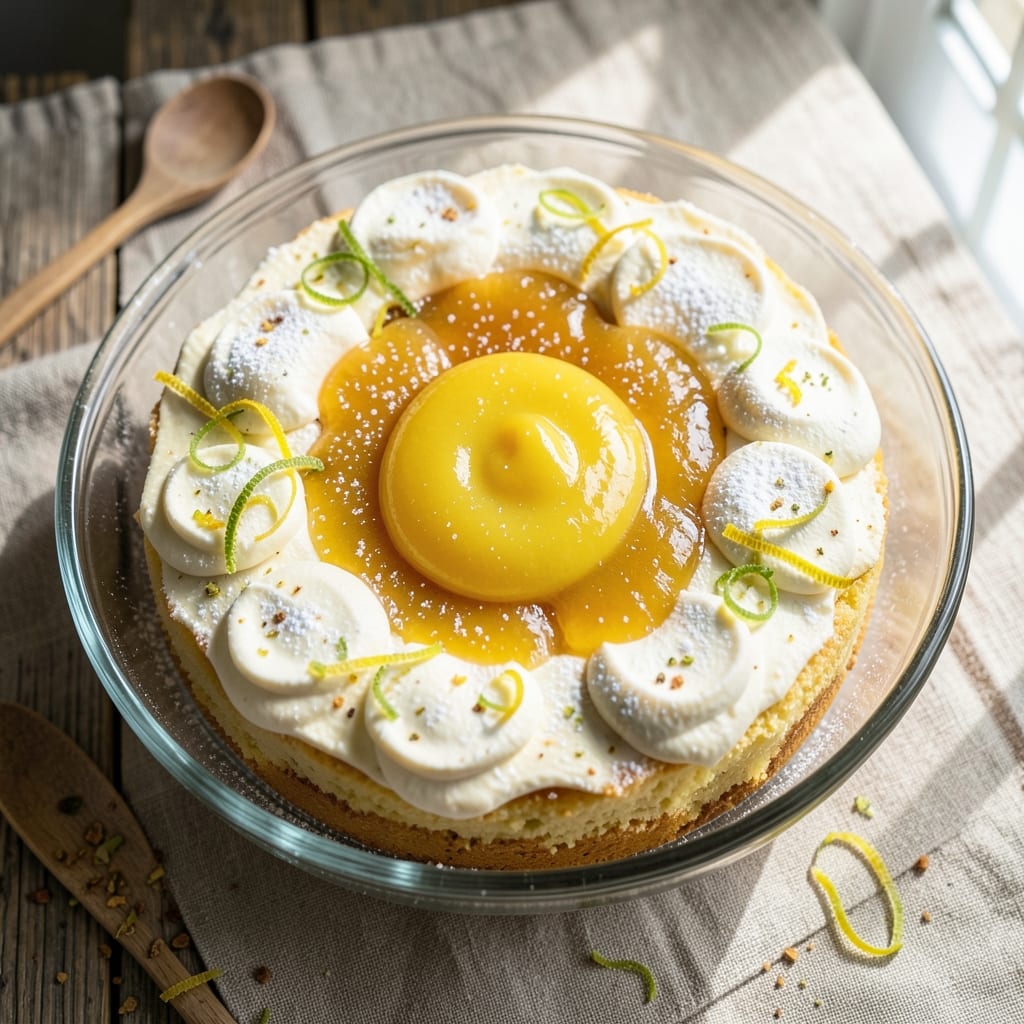
This anytime lemon cake recipe delivers the perfect balance of bright citrus and buttery frosting—ideal for breakfast, brunch, or an afternoon pick-me-up. The secret lies in zesty lemon zest and juice, which infuse the moist layers with vibrant flavor while keeping the texture tender. I’ve baked this recipe countless times, and it never fails to impress, whether served warm with tea or chilled as a refreshing treat.
What sets this recipe apart is its simplicity and versatility. With just a few basic ingredients—flour, sugar, eggs, and of course, plenty of lemon—you’ll achieve a cake that’s light yet rich, with a velvety crumb and a sweet-tart frosting that pairs beautifully with the citrusy layers. The recipe also includes a foolproof method for achieving a perfectly moist texture, ensuring every slice is as delicious as the first.
By the time you pull this cake from the oven, you’ll have a golden, fragrant dessert that’s ready to be sliced and served. The bright lemon flavor shines through, making it a standout treat for any occasion. Whether you’re hosting a casual gathering or simply craving something sweet, this recipe delivers restaurant-quality results with minimal effort.
Pair it with a dollop of whipped cream, fresh berries, or a sprinkle of powdered sugar for extra flair. The frosting can be adjusted to your preference—thicker for a more decadent finish or lighter for a delicate touch. Here’s how to make it, step by step, for a foolproof outcome every time.
Ingredients for anytime lemon cake
Bright citrus meets buttery richness—just these 12 ingredients transform into a cake that works for breakfast or dessert.
| Ingredient | Amount | Notes |
|---|---|---|
| All-Purpose Flour 🌾 | 2 ½ cups | Sifted for light texture |
| Granulated Sugar 🍚 | 2 cups | White or light brown |
| Unsalted Butter 🧈 | 1 ½ cups | Room temperature, full-fat |
| Large Eggs 🥚 | 4 whole | Room temperature preferred |
| Fresh Lemon Juice 🍋 | 1 cup | From 4-5 lemons |
| Lemon Zest 🍋 | 2 tbsp | Fine, from organic lemons |
| Baking Powder 🧂 | 2 tsp | Aluminum-free preferred |
| Salt 🧂 | ½ tsp | Fine sea salt |
| Vanilla Extract 🥛 | 1 tbsp | Pure, not imitation |
| Powdered Sugar 🍚 | 3 cups | For frosting, sifted |
| Heavy Whipping Cream 🥛 | 1 cup | Cold, full-fat |
| Butter 🧈 | ½ cup | Cold, for frosting |
The lemons are everything here. Organic lemons from the grocery store's produce section (not the sad ones in the citrus bin) give the best flavor. I grab Trader Joe's lemons—they're consistently juicy and zesty. For zest, use a microplane (the box graters leave too much pith). The butter? Full-fat, room temperature is non-negotiable—it creates that velvety crumb. If your butter's too cold, microwave it for 20 seconds to soften. And if you're using brown sugar, pack it tightly into the measuring cup for accurate sweetness.
No fresh lemons? Lemon extract or bottled juice works in a pinch, but add a pinch of salt to mimic the acidity. Swap powdered sugar for confectioners' sugar if that's what you've got—it's basically the same thing. The baking powder can be double-acting, but aluminum-free gives a lighter texture. For the frosting, if you don't want to whip cream, buttercream made with powdered sugar and softened butter is just as good. And if you're feeling fancy, add a splash of lemon extract to the frosting for extra zing. The cake layers can be baked ahead and stored at room temp for 2 days—just frost right before serving.
This cake keeps beautifully. Wrap the layers in plastic wrap, then foil, and store in the fridge for up to 5 days. The frosting? Slather it on right before serving—it's best when fresh and fluffy. For make-ahead magic, bake the cake, cool completely, then freeze the layers wrapped in plastic for up to 3 months. Thaw overnight in the fridge before frosting. And if you've got leftovers? Toasted lemon cake with a pat of butter is my go-to breakfast—trust me on that.
Why You'll Love This Recipe
- No Fuss, No Fail: I swear by this recipe—just mix, bake, and walk away. No fancy techniques, no last-minute grocery runs for specialty ingredients. The butter and eggs do all the heavy lifting while you measure dry ingredients in one bowl.
- Zesty Brightness Every Time: That first bite of moist crumb and tangy lemon? It’s like sunshine in cake form. The fresh juice cuts through the richness of the butter, and the sugar caramelizes just enough to give it a subtle depth—no artificial flavors needed.
- Weeknight or Celebration: Honestly, it’s my go-to for both. Serve it warm with a dollop of whipped cream for a lazy Sunday breakfast or slice it for a potluck—no one will guess it took less than 30 minutes. The simplicity makes it work anywhere.
- Leftovers That Don’t Suck: Between us, most cakes turn dry or sad after a day. Not this one. The butter keeps it tender, and the lemon keeps it from tasting stale. I’ve had slices for days, even reheated in the microwave—still delicious. Budget-friendly? Absolutely. Waste-free? Even better.
Step-by-step instructions for bright citrus layers with buttery frosting
Here's how to bake a lemon cake that's light, moist, and bursting with flavor every time.
Prep Ingredients and Preheat the Oven
Start by sifting together the 2.5 cups all-purpose flour, 2 tsp baking powder, and 0.5 tsp salt in a medium bowl. This ensures a light, airy texture without lumps. In a separate large bowl, cream together the 1.5 cups unsalted butter and 2 cups granulated sugar on medium speed until light and fluffy—about 3-4 minutes. You'll know it's ready when the mixture nearly doubles in volume and looks pale.
While the butter and sugar mix, preheat your oven to 350°F and grease two 9-inch round cake pans (or line them with parchment circles). I like to use a mix of butter and flour for greasing—just rub a little butter on the pans, then dust with flour, tapping out the excess. This prevents sticking and ensures easy release.
Mix Wet Ingredients and Combine
Add the 4 whole large eggs, one at a time, mixing well after each addition until fully incorporated. The mixture should be smooth and slightly thickened. Stir in the 1 cup fresh lemon juice, 2 tbsp lemon zest, and 1 tbsp vanilla extract until just combined. Here's the thing—don't overmix at this stage. You want to maintain as much air as possible for a tender crumb.
Gradually fold in the sifted dry ingredients in three additions, mixing just until each is incorporated. The batter will be thick but pourable. Divide it evenly between the prepared cake pans, spreading it out so it's level with the tops of the pans. This ensures even baking and consistent layers later.
Bake Until Golden and Springy
Bake the cakes for 25-30 minutes, or until a toothpick inserted into the center comes out clean and the tops spring back when gently pressed. I like to check at the 25-minute mark—your oven might run hot, so start testing early. The cakes should have a golden dome on top and pull away slightly from the edges of the pan.
Let the cakes cool in their pans for 10 minutes, then transfer them to a wire rack to cool completely. This step is crucial—cooling too quickly can cause cracking. While they cool, make a start on the frosting so everything's ready when the cakes are done.
Make the Lemon Buttercream Frosting
In a large bowl, beat the 0.5 cup cold butter until creamy—about 1-2 minutes. Gradually add the 3 cups powdered sugar, mixing on low speed until combined. Increase the speed to medium and beat for 2-3 minutes until light and fluffy. Add the 1 cup cold heavy whipping cream and beat for another 2 minutes until smooth.
Finally, stir in 2 tbsp lemon zest and 1 tbsp lemon juice for that bright citrus kick. If the frosting is too thick, add 1-2 teaspoons of milk to loosen it. The frosting should be spreadable but hold its shape—thick enough to pipe neatly but not so stiff it's difficult to work with.
Assemble and Frost the Cake
Once the cakes are completely cool, level the tops if needed using a serrated knife. Place one cake layer on a cake stand or plate, then spread a thin layer of frosting over the top to seal in any crumbs. This is the "crumb coat"—don't worry if it looks messy. Place the second cake layer on top and repeat the process.
Now for the fun part—spread or pipe the remaining frosting evenly over the entire cake. I like to use a spatula for a smooth finish, but you can also pipe it with a pastry bag and star tip for a decorative look. Chill the cake in the refrigerator for 30 minutes before slicing to help the frosting set. Serve at room temperature for the best flavor and texture!
Pro Tips For Making Anytime Lemon Cake
- Whisk Butter & Sugar First: DESCRIPTION: Cream the butter and sugar until it’s pale and fluffy—about 3-4 minutes with a stand mixer or until the ribbon stage. I used to skip this, and the cake turned out dense and dry. That extra time makes all the difference in texture.
- Measure Lemon Juice Precisely: DESCRIPTION: Use a scale or a proper measuring spoon—lemon juice varies wildly by fruit. A standard recipe calls for 3-4 tablespoons, but eyeballing it can make your cake taste either flat or overpoweringly sour. (Yes, even if you’re impatient like me.)
- Avoid Overmixing the Batter: DESCRIPTION: Fold in the flour just until combined—lumps are fine, but don’t overwork it. Overmixing develops gluten, which turns your tender lemon cake into a tough, chewy mess. Stop when the flour disappears, and resist the urge to stir again.
- Bake Until the Center Springs Back: DESCRIPTION: Test doneness with a toothpick—it should come out with a few moist crumbs, not wet batter. I learned this the hard way: underbaking leaves a gummy center, while overbaking dries it out. If unsure, add 2-3 extra minutes.
Essential equipment for this recipe
Mixing Essentials
For this lemon cake, your stand mixer is your best friend—it handles the buttercream perfectly and ensures a light, airy batter. I swear by my KitchenAid Artisan Series with the paddle attachment for creaming butter and sugar, and the whisk attachment for the frosting. If you don’t have a mixer, a hand mixer works just as well, but be prepared for a little extra elbow grease. For sifting dry ingredients, a fine-mesh sifter or even a wire mesh strainer over a bowl keeps everything light and fluffy. 🌾
Baking Tools
Two 9-inch round cake pans are non-negotiable—opt for light-colored metal pans if you have them, as they heat more evenly. I love Wilton Perfect Results pans for their consistent baking performance. Grease them with unsalted butter and dust with flour, or line them with parchment circles for easy release. A toothpick is essential for checking doneness, and a serrated knife comes in handy for leveling the cooled cake layers. For measuring, a liquid measuring cup and dry measuring cups with levelers ensure precision.
Frosting Gear
Your electric mixer (stand or hand) is key for the buttercream, but a spatula or offset spatula is just as important for spreading. For a polished look, a pastry bag with a star tip lets you pipe decorative swirls. If you’re going for a rustic finish, skip the piping and just spread with a spatula. A cooling rack keeps your cakes from getting soggy while they cool, and a cake stand elevates your final presentation. For extra flair, grab a fine-mesh sieve to dust powdered sugar on top.
Lemon Prep Tools
A microplane is a game-changer for zesting lemons—it’s faster and yields finer, more flavorful zest than a box grater. For juice, a handheld citrus juicer or even a fork and bowl works, but I prefer a reamer for maximum yield. Store-bought lemon juice is fine in a pinch, but fresh is always brighter. A small bowl for zest and a measuring cup for juice keep things organized. Pro tip: Roll your lemons on the counter before juicing to break open the juice sacs for easier extraction. 🍋
Nutrition facts
Frequently asked questions
Can I make this lemon cake without fresh lemons?
Yes! Use 1 cup bottled lemon juice and 2 teaspoons lemon extract for the zest. Add a pinch of salt to mimic the acidity of fresh lemons. For the frosting, add 1 extra teaspoon lemon extract to keep that bright citrus flavor. The texture will still be perfect—just the flavor might be slightly less vibrant.
How do I store leftovers?
Wrap the frosted cake tightly in plastic wrap, then foil, and store in the fridge for up to 5 days. For longer storage, freeze the unfrosted layers (wrapped in plastic) for up to 3 months. Thaw overnight in the fridge before frosting. The frosting can be made ahead and stored separately for 3 days in the fridge.
Why did my cake sink in the middle?
This usually happens if the oven was too hot or the cakes weren't baked long enough. Always check at 25 minutes with a toothpick—it should come out clean. Another common cause is opening the oven door too soon. Let the cakes bake undisturbed until they spring back when pressed. If it happens, try baking at 325°F next time for 30-35 minutes.
Can I use this recipe for a single-layer cake?
Simply use one 9-inch round pan and bake for 30-35 minutes at 350°F. Adjust the frosting quantity to about 1.5 cups for a single layer. This works great for cupcakes too—divide the batter into 12 cupcake liners and bake for 18-20 minutes at 350°F.
What's the best way to serve this cake?
Serve at room temperature for the best flavor and texture. Pair it with a dollop of whipped cream, fresh berries, or a sprinkle of powdered sugar. For a breakfast treat, slice it into thick pieces and toast lightly. The bright lemon flavor makes it perfect with hot or iced tea, coffee, or even sparkling lemonade!