
Desserts
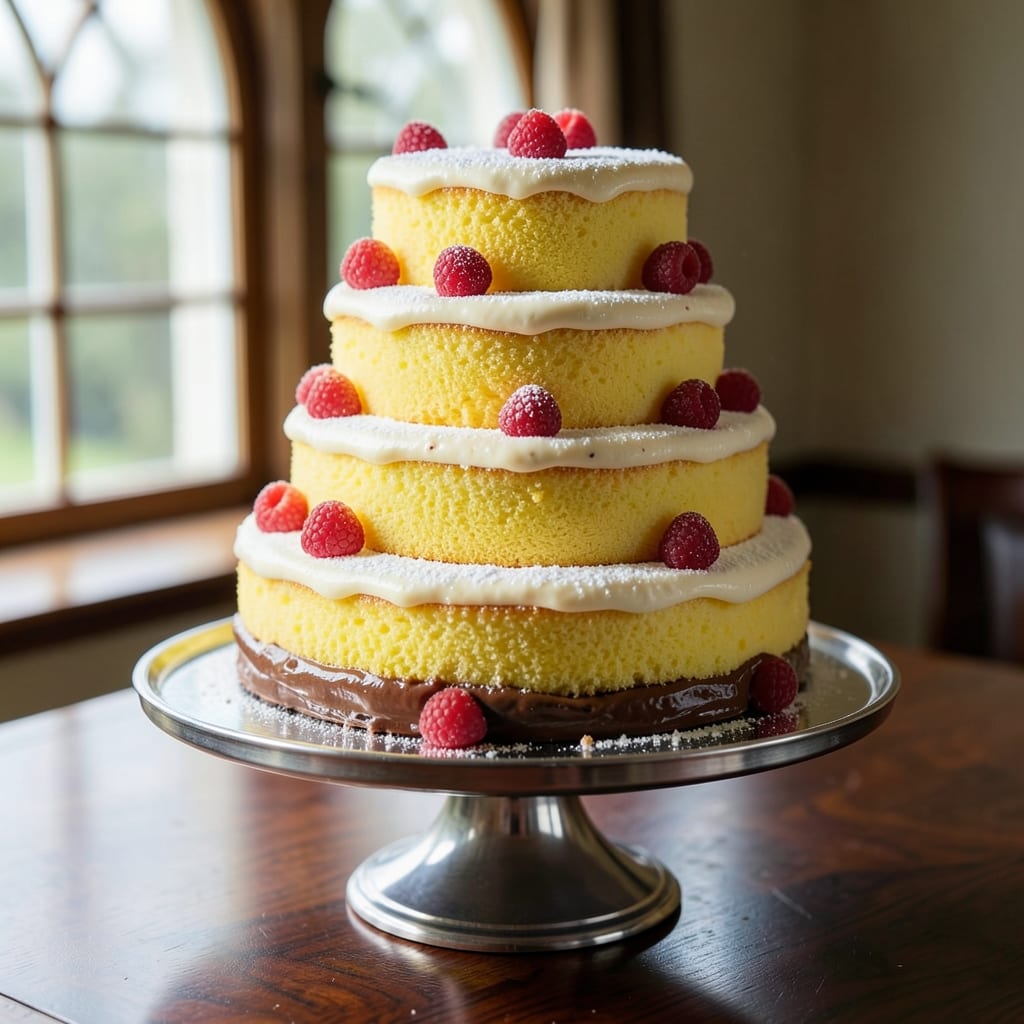
Award-winning yellow cake starts with the perfect balance of moisture and flavor—this recipe delivers layers so tender they practically melt in your mouth, with a buttery frosting that makes every bite feel like a celebration. 💛 The secret lies in precise mixing techniques and a few professional tricks that transform this classic into something extraordinary.
What sets this cake apart is its foolproof moisture system: cake flour, buttermilk, and a touch of sour cream work together to create a crumb that's light yet rich, with just enough structure to hold up to generous frosting. The vanilla extract isn't just an afterthought—it's the star, infused throughout for that signature award-worthy flavor.
By the time you're done, you'll have a cake with layers that slice cleanly, a texture that's neither dry nor gummy, and a frosting so smooth it looks like it belongs in a bakery case. The frosting isn't just sweet—it's creamy, with a perfect balance of butter and powdered sugar that stays stable in any temperature.
This recipe is designed to impress, whether you're entering a bake-off or simply treating yourself to a dessert that tastes like a professional made it. The techniques are straightforward, but the results are anything but ordinary—every slice will have people asking for the recipe.
Ingredients for award winning yellow cake
Twelve simple ingredients that deliver bakery-quality yellow cake every time.
| Ingredient | Amount | Notes |
|---|---|---|
| All-Purpose Flour 🌾 | 2 ½ cups | Sifted for light texture |
| Cake Flour 🌾 | 1 cup | Essential for tender crumb |
| Granulated Sugar 🍚 | 2 cups | White sugar preferred |
| Unsalted Butter 🧈 | 1 ½ cups | Room temperature, cubed |
| Large Eggs 🥚 | 4 whole | Room temperature |
| Buttermilk 🥛 | 1 cup | Fresh, not powdered |
| Sour Cream 🧀 | ½ cup | Full-fat for richness |
| Pure Vanilla Extract 🌿 | 2 tbsp | High-quality, not imitation |
| Baking Powder 🧂 | 2 tsp | Aluminum-free preferred |
| Salt 🧂 | ½ tsp | Fine sea salt |
| Powdered Sugar 🍚 | 4 cups | Sifted for smooth frosting |
| Heavy Whipping Cream 🥛 | 1 cup | Cold for stiff peaks |
| Vanilla Bean Paste 🌿 | 1 tbsp | For extra vanilla flavor |
The cake flour is non-negotiable here—it's what gives this cake that signature tender crumb. Bob's Red Mill or Gold Medal are my go-tos, but any reliable brand works. The butter needs to be room temperature, so take it out of the fridge 1-2 hours before baking. Eggs should be at room temperature too—cold eggs can cause the batter to curdle. For the vanilla, high-quality extract makes all the difference. I always double-check the bottle says 'pure vanilla extract'—no imitation stuff here. The buttermilk and sour cream work together to keep this cake moist for days.
No buttermilk? Mix 1 tbsp white vinegar or lemon juice with 1 cup milk and let sit for 5 minutes. Sour cream out of stock? Plain yogurt works in a pinch, though it adds a slight tang. Running low on powdered sugar? Granulated sugar blended into a fine powder is a decent substitute, though it won't be as smooth. The frosting can be made ahead—just whip it up and refrigerate for up to 3 days. Want extra flavor? Add 1 tsp lemon zest to the frosting for a bright twist. The cake layers can be baked a day ahead and stored at room temperature, covered tightly.
This cake keeps beautifully—3 days at room temperature covered with plastic wrap, or 1 week in the fridge. The frosting stays stable for 3 days at room temperature or 1 week refrigerated. I always bake mine in two 9-inch pans for perfect layers, but you can use one 10-inch pan if that's what you've got. For serving, slice with a hot knife—it makes the cleanest cuts ever. The cake freezes well too—wrap each layer tightly in plastic and freeze for up to 3 months. Thaw at room temperature before frosting.
Why You'll Love This Recipe
- No Mixer Needed: I swear by this recipe when I’m in a rush—just cream the butter and sugar, crack in the eggs, and fold. No electric mess, no sticky hands from overmixing, just a tender crumb that’s foolproof.
- Butter-Sugar Magic: That classic combo of creamed butter and sugar? It’s what makes this cake sing—rich, moist, and with that perfect balance of sweetness. Honestly, I’ve tried boxed mixes, but this one stands out every time.
- Double-Duty Flours: Here’s what sold me—the blend of all-purpose and cake flour gives it structure and lightness. It’s my go-to for birthdays, potlucks, or even just a fancy dessert when I’m craving something special.
- Leftovers That Last: Between us, this cake stays fresh for days if you wrap it right. I’ve had slices for breakfast, lunch, or dessert—no one ever complains. And if you freeze it? Even better.
Step-by-step instructions for award-winning yellow cake
Here's how to bake layers so tender they melt in your mouth—every time.
👨🍳 Step 1: Cream Butter and Sugar to Peak Perfection
In a stand mixer fitted with the paddle attachment, beat the 1.5 cups unsalted butter and 2 cups granulated sugar on medium speed for 3-4 minutes until light and fluffy. You're looking for a color change from pale yellow to a creamy, almost pale beige. This step is non-negotiable—it incorporates air that creates that signature tender crumb.
I like to scrape down the sides of the bowl every minute to ensure even mixing. The butter should be completely smooth with no graininess, and the mixture should nearly double in volume. If it's still grainy, keep mixing—this ensures maximum moisture in your cake. The reason we wait until the butter's room temperature is that cold butter won't cream properly, leading to dense cake.
👨🍳 Step 2: Add Eggs and Vanilla for Rich Flavor
Add the 4 whole large eggs, one at a time, mixing well after each addition until fully incorporated. I always like to let each egg mix completely before adding the next—this prevents curdling. Then add the 2 tablespoons pure vanilla extract and 1 tablespoon vanilla bean paste, mixing on low speed until just combined.
Here's the thing—vanilla bean paste gives that extra depth of flavor that regular extract can't match. The mixture should be smooth and slightly thickened. Don't overmix at this stage or you'll develop gluten in the eggs, which can make the cake slightly tough. The batter should look like a thick, pale yellow custard at this point.
👨🍳 Step 3: Combine Dry Ingredients and Wet Additions
In a separate bowl, whisk together the 2.5 cups all-purpose flour, 1 cup cake flour, 2 teaspoons baking powder, and 0.5 teaspoon salt. Sift the dry ingredients directly into the wet mixture on low speed, mixing just until combined—about 30 seconds. You should still see some flour streaks. Overmixing develops gluten, which makes cake tough.
Now add the 1 cup buttermilk and 0.5 cup sour cream alternately, mixing on low speed after each addition. The buttermilk adds moisture while the sour cream creates that ultra-tender crumb. The batter should be smooth but slightly thick. If it looks too thick, you can add 1-2 tablespoons of milk to help with spreading in the pans.
🥘 Step 4: Bake to Golden Perfection
Divide the batter evenly between three 8-inch round cake pans lined with parchment paper. I use a kitchen scale for this to ensure even distribution—each pan should have about 12 ounces of batter. Bake in a preheated 350°F oven for 25-30 minutes, or until a toothpick inserted in the center comes out clean with just a few moist crumbs.
Don't open the oven during baking—this causes the cakes to sink. You'll know they're done when the tops spring back when gently touched and the edges pull away slightly from the pan. Let the cakes cool in their pans for 10 minutes, then transfer to a wire rack to cool completely. This cooling step is crucial—it prevents the frosting from melting when you assemble.
🍳 Step 5: Whip Cream and Assemble Layers
In a chilled bowl, beat the 1 cup cold heavy whipping cream until soft peaks form. Gradually add the 4 cups powdered sugar and 1 tablespoon vanilla bean paste, beating until stiff peaks form. This frosting should be thick enough to hold its shape but still spreadable—like whipped cream that stands straight up when the beaters are lifted.
Level the cooled cake layers and place the first layer on a plate. Spread a generous layer of frosting, then repeat with the remaining layers. Frost the entire cake, then chill in the refrigerator for 30 minutes before serving. This ensures clean slices and prevents the frosting from sliding off. The cake should have that perfect balance of moist vanilla flavor with a smooth, buttery frosting that melts in your mouth.
Pro Tips For Making Award Winning Yellow Cake
- Sift the Flours Together: Mix your all-purpose and cake flour in a bowl first, then sift them together. I learned this the hard way—skipping it leads to dense layers, and nobody wants a brick for dessert.
- Cream Butter and Sugar Slowly: Use a stand mixer and let the butter and sugar blend on medium speed for at least 3-4 minutes. Rushing this step traps air poorly, and you’ll end up with a cake that’s more compact than fluffy.
- Room-Temp Eggs Only: Crack eggs into a bowl first, then let them sit for 10 minutes before adding them to the batter. Cold eggs make the batter thin and uneven, and your cake might sink faster than you’d like.
- Bake Until Internal Temp Hits 210°F: Pull the cake out when the center reads 210°F—yes, even if it still looks slightly underdone. I used to take it out too soon, and the texture was always off. This guarantees a moist, even bake.
Troubleshooting your award winning yellow cake
Dense or Dry Cake
Overmixing is the #1 cause of dense cake—stop mixing as soon as the dry ingredients disappear (about 30 seconds after adding them). If your cake turns out dry, check your baking time: 25-30 minutes at 350°F is perfect for 8-inch pans. For extra moisture, brush warm layers with 2 tbsp simple syrup (equal parts sugar + water, heated) before frosting. I've found that slightly underbaking by 1-2 minutes then letting cakes cool completely prevents dryness. 💧
Cracked Top or Sinking Layers
Cracks usually mean the oven was too hot or the batter was too thick. Preheat your oven for 15 minutes before baking, and use an oven thermometer to confirm it's actually 350°F. If your cake sinks, it likely didn't cool enough before frosting—wait until layers are completely cool to the touch. For prevention, tap pans gently on the counter before baking to remove air bubbles. I also recommend using lightly greased pans with parchment paper for even heat distribution. 🏋️
Frosting Too Soft or Melting
If your frosting slides off or melts too quickly, it's either too warm or not whipped enough. Always chill your mixing bowl and beaters before whipping the cream, and use cold heavy whipping cream straight from the fridge. For stability, add 1 tsp meringue powder to the frosting mixture. I've also had success adding 1 tsp unflavored gelatin dissolved in 1 tbsp warm water to the frosting—it firms up beautifully without altering taste. 🥶
Batter Too Thin or Runny
Thin batter usually means overmixed eggs or too much liquid. If this happens, fold in 1-2 tbsp additional cake flour to thicken. For prevention, mix eggs on low speed and add them one at a time, letting each fully incorporate before adding the next. I've found that measuring buttermilk and sour cream with a liquid measuring cup (not scooping directly from the container) gives more accurate results. If the batter still seems too thin, add 1 tbsp flour at a time until it reaches a thick, spreadable consistency. 🥄
Uneven Baking
Uneven baking often comes from inconsistent oven heat. Rotate your pans halfway through baking (after 15 minutes) for even cooking. If your oven has hot spots, place a baking sheet on the lower rack during baking to reflect heat upward. I've also had success with the "water pan" method: place a pan of hot water on the lower rack while baking to create steam, which helps even moisture distribution. Always use the middle rack for best results. 🔥
Nutrition facts
Frequently asked questions
Can I substitute cake flour if I don't have any?
Yes! Mix 1 cup all-purpose flour with 2 tablespoons cornstarch to replace 1 cup cake flour. Sift the blend well to avoid lumps. This keeps the cake tender by reducing gluten formation. The texture won't be identical, but it'll still be delicious.
Why does your recipe use both buttermilk and sour cream?
Buttermilk adds moisture and tang while sour cream creates that ultra-tender crumb. Together, they prevent dryness while keeping the cake light. Think of buttermilk as the hydration hero and sour cream as the texture enhancer—they work perfectly in this award-winning combo.
Can I bake this cake in a different pan size?
For 9-inch pans, reduce batter by 25% and bake 20-25 minutes. For 10-inch pans, increase batter by 50% and bake 30-35 minutes. Always use an oven thermometer to confirm 350°F—ovens vary! Adjust baking time based on toothpick test.
How do I make this cake gluten-free?
Replace all-purpose flour with a 1:1 gluten-free baking flour blend (like Bob's Red Mill) and use 1/2 cup extra gluten-free flour to replace the cake flour. Add 1/2 tsp xanthan gum if your blend doesn't include it. Keep all other ingredients identical—this maintains moisture and structure.
What's the best way to store leftovers?
Wrap tightly in plastic wrap at room temperature for 3 days, or refrigerate for 1 week. For longer storage, freeze layers (unfrosted) for 3 months). Thaw overnight in the fridge before frosting. The frosting stays fresh 3 days at room temp or 1 week refrigerated.