
Desserts
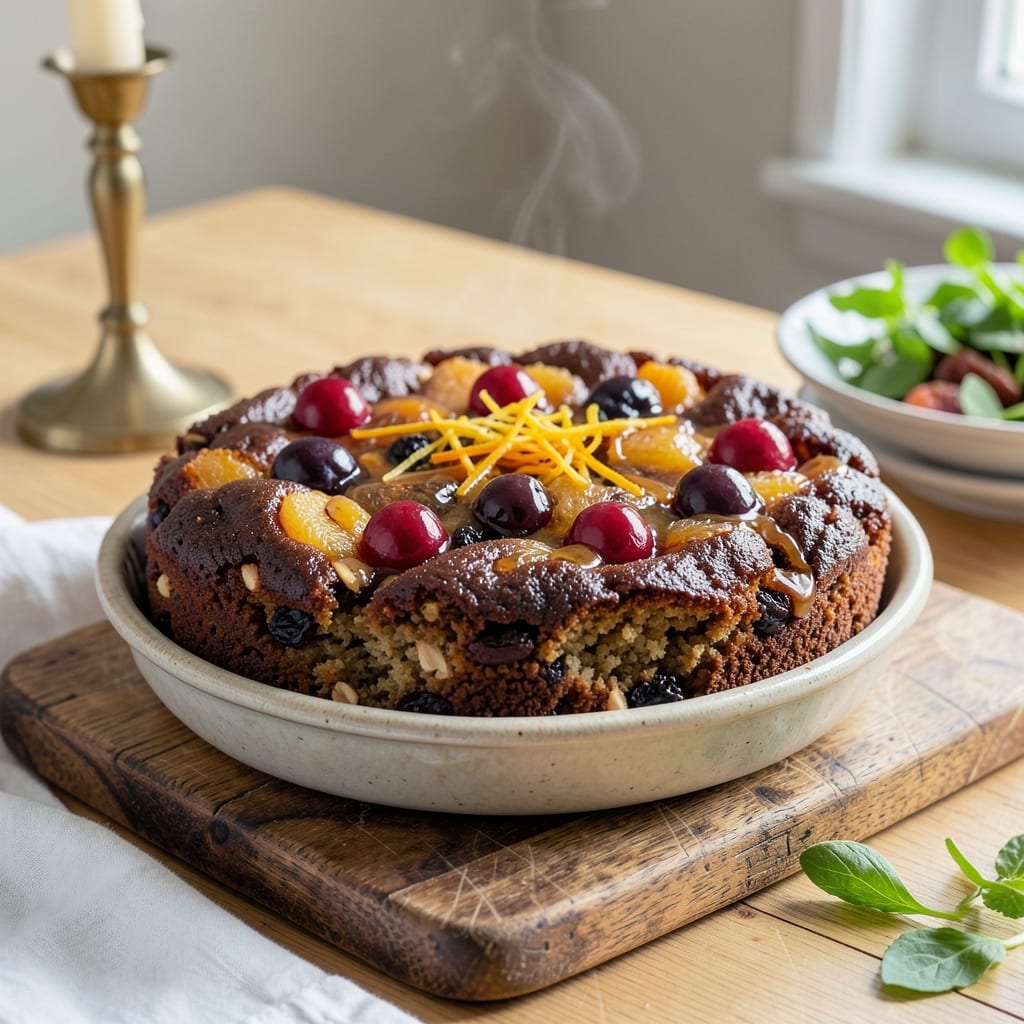
This baked fruit cake recipe delivers layers of moist, spice-infused goodness with a caramelized top that makes every slice irresistible. 💛 The secret lies in a precise balance of dried fruits, warm spices, and a simple syrup that keeps the cake tender for days. Unlike dense fruit cakes, this version stays light yet rich, perfect for holidays or special occasions.
What sets this recipe apart is the layering technique—alternating cake batter with soaked fruit creates distinct textures and flavors in each bite. The caramelized top isn’t just for show; it adds depth and a subtle crunch that contrasts beautifully with the soft interior. Baking at 325°F ensures even cooking without drying out the cake.
By the time it emerges from the oven, you’ll have a cake with a golden caramelized crust, fragrant with cinnamon and nutmeg, and layers of juicy fruit peeking through tender crumbs. The optional rum soak (or brandy) adds an extra layer of sophistication, but it’s entirely optional for a simpler version.
This recipe scales beautifully for gatherings, and leftovers only get better with time—ideal for making ahead. Whether you’re a seasoned baker or trying your hand at fruit cake for the first time, this method ensures foolproof results every time.
Ingredients for baked fruit cake
Twelve ingredients for a fruit cake that stays moist and fragrant for days, not weeks.
| Ingredient | Amount | Notes |
|---|---|---|
| All-Purpose Flour 🌾 | 3 cups | Sifted for even texture |
| Granulated Sugar 🍚 | 1 ½ cups | White or light brown |
| Light Brown Sugar 🍚 | ½ cup | Packed firmly |
| Unsalted Butter 🧈 | 1 cup | Cold, cubed for creaming |
| Large Eggs 🥚 | 4 whole | Room temperature |
| Vanilla Extract 🌿 | 2 tsp | Pure vanilla preferred |
| Dried Mixed Fruit 🍒 | 2 cups | Chopped almonds, cherries, citrus peel |
| Ground Cinnamon 🌶️ | 2 tsp | Freshly ground preferred |
| Ground Nutmeg 🌶️ | 1 tsp | Freshly grated nutmeg |
| Ground Ginger 🌶️ | 1 tsp | Freshly ground preferred |
| Salt 🧂 | ½ tsp | Fine sea salt |
| Light Corn Syrup 🍯 | ½ cup | For moisture retention |
| Dark Rum (optional) 🍹 | ¼ cup | For soaking fruit layers |
| Powdered Sugar 🍚 | 1 cup | For caramelized topping |
The dried fruit makes or breaks this cake. Gourmet Grocer or specialty stores carry the best chopped mixes—look for pieces with natural glaze, not artificial coatings. If using individual dried fruits (like cherries or citrus peel), chop them yourself for even distribution. The almonds add texture, so don’t skip them unless you’re avoiding nuts. For the spices, Penzeys or local spice shops offer freshly ground options that make a noticeable difference. Pre-ground spices work, but toast them lightly in a dry pan for 30 seconds to wake up their flavors.
No light corn syrup? Honey or agave nectar works in a pinch, but reduce other liquids slightly to maintain moisture balance. Skipping the rum? Brandy or orange liqueur adds depth without overpowering. For the caramelized topping, powdered sugar is non-negotiable—it creates that signature crunch. If you’re concerned about the cake being too sweet, reduce the granulated sugar by 2 tablespoons and add 1 extra tablespoon of corn syrup. The butter should be cold when creaming—this creates air pockets for a lighter texture, so don’t soften it too much.
This cake improves with age, so bake it 1-2 days ahead if possible. Wrap tightly in plastic wrap and store at room temperature for up to 5 days, or freeze for 3 months. To revive, brush with warm rum or simple syrup and reheat at 300°F for 10 minutes. The caramelized top hardens as it cools—this is normal. For serving, slice with a serrated knife dipped in hot water for clean cuts. Leftovers? They’re even better the next day—trust the process.
Why You'll Love This Recipe
- No Mixer Needed: I swear by this recipe because it’s all done by hand—no stand mixer, no fuss. The butter and sugars get creamed with a wooden spoon (or even a sturdy fork in a pinch), and the eggs come together like a dream. Honestly, it’s the kind of recipe that makes me feel accomplished without the stress.
- Rich Without Overpowering: That combo of brown sugar and butter? It’s pure comfort in every bite. The flour gives it structure, but the eggs keep it moist—no dry crumb here. Between us, it’s the kind of cake that tastes even better the next day, when the flavors have time to mingle.
- Holiday or Weeknight: I’ve made this for Christmas brunch and for a lazy Sunday afternoon. The same base works for any occasion—just swap the fruit (dried cherries, chopped apples, or even a splash of rum). It’s my go-to when I need something special but don’t want to spend hours baking.
- Leftovers That Don’t Suck: This cake actually gets better after a day or two, so you’re never stuck with stale slices. I’ll be real: I’ve reheated a piece the next morning with a little butter and called it breakfast. Budget-friendly? Absolutely. Versatile? You bet. And it’s always gone before it gets old.
Step-by-step instructions for baked fruit cake with caramelized top
Here's how to create a perfectly moist spice cake with rich fruit layers and a glossy caramelized finish.
👨🍳 Step 1: Prepare the Fruit Mixture
In a large bowl, combine the 2 cups dried mixed fruit with the 0.25 cup dark rum (optional) and 0.5 cup light corn syrup. Let this mixture soak for at least 30 minutes at room temperature—this ensures the fruit rehydrates and infuses with flavor. If you're using the rum, make sure to use a good-quality brand for the best taste. The fruit should look plump and slightly sticky when ready.
If you're not using rum, you can substitute with 0.25 cup orange juice or apple juice instead. This step is crucial for creating that signature moist texture that makes this cake special. Don't skip the soaking time—it makes all the difference in the final product.
🍳 Step 2: Cream Butter and Sugars
In a stand mixer fitted with the paddle attachment, beat the 1 cup cold unsalted butter with the 1.5 cups granulated sugar and 0.5 cup light brown sugar on medium speed for 3-4 minutes. The mixture should become light and fluffy, nearly doubling in volume. This creaming process incorporates air, which helps create that tender crumb we're after.
I like to press down on the butter occasionally to ensure it's fully incorporated. You'll know it's ready when the mixture is pale and holds its shape when you lift the paddle. If your butter isn't cold enough, the mixture might look greasy—if this happens, chill it in the fridge for 10 minutes before proceeding.
👨🍳 Step 3: Add Eggs and Vanilla
Add the 4 whole large eggs, one at a time, mixing on low speed after each addition until fully incorporated. Then add the 2 teaspoons vanilla extract and mix for another 30 seconds. The mixture should be smooth and slightly thickened. If you're using room-temperature eggs, they'll blend in more easily and create a lighter texture.
This is where the magic happens—the eggs bind everything together while the vanilla adds that warm, aromatic depth. Don't rush this step; proper mixing ensures a smooth batter without lumps. If you notice the mixture curdling slightly, don't worry—it will smooth out when you add the dry ingredients.
🥘 Step 4: Combine Dry Ingredients and Fruit
In a separate bowl, whisk together the 3 cups all-purpose flour, 2 teaspoons ground cinnamon, 1 teaspoon ground nutmeg, 1 teaspoon ground ginger, and 0.5 teaspoon salt. Gradually add this mixture to the wet ingredients, mixing on low speed just until combined. Add the soaked fruit mixture and mix on low speed for another 30 seconds to distribute everything evenly.
Here's the thing—don't overmix the batter. You want to see a few flour streaks remaining, as this prevents the cake from becoming tough. The batter will be thick and slightly sticky, which is perfect for creating that moist texture. If you're worried about the cake being too dense, trust the process—this is how you get that classic fruit cake texture.
🔥 Step 5: Bake and Caramelize the Top
Preheat your oven to 350°F and grease two 9-inch round cake pans. Divide the batter evenly between the pans and smooth the tops. Bake for 30-35 minutes or until a toothpick inserted in the center comes out clean. Let the cakes cool in the pans for 10 minutes, then transfer to a wire rack to cool completely.
Once cooled, place one cake layer on a serving plate. In a small saucepan, combine the 1 cup powdered sugar with 2 tablespoons water and bring to a boil over medium heat, stirring constantly. Let it boil for 2-3 minutes until it reaches a soft-crack stage (about 235°F). Immediately pour this caramel over the cake layer.
Top with the second cake layer and press gently. The caramel will create a beautiful glossy finish and add a touch of sweetness that complements the spiced fruit layers. Serve at room temperature for the best texture and flavor. This cake keeps well for up to 5 days in an airtight container, if it lasts that long!
Pro Tips For Making Baked Fruit Cake
- CREAM THE BUTTER SLOWLY: I learned this the hard way—dumping all the butter at once leaves lumps that never fully dissolve. Beat the butter and sugars together in 30-second bursts, scraping the bowl every 30 seconds, until you get a ribbon-like consistency. The extra effort guarantees a smoother, richer cake.
- USE ROOM-TEMP EVERYTHING: Cold eggs and butter are the enemy of even texture. Take eggs out 30 minutes before mixing, and let butter sit out until soft but not melted. I skip this when I'm lazy, but the cake turns out denser and more uniform when ingredients are at the same temperature.
- BAKE UNTIL 190°F INTERNAL: Your oven runs hotter than you think. Test doneness with a thermometer—pull the cake when the center hits 190°F (180°F if it’s a very large cake). I was skeptical until I tried it: underbaking leaves a gummy center, and overbaking dries it out.
- REST THE BATTER 30 MINUTES: This isn’t the prettiest method, but it’s the tastiest. After mixing, let the batter sit covered at room temp while you prep the pan. The flour absorbs moisture, and the fruit distributes evenly—no more sinking in the middle. (Yes, even if you're impatient like me.)
Wine and beer pairings for baked fruit cake
Sweet Wine Pairings
Fruit cake’s rich, spiced sweetness pairs beautifully with fortified wines that mirror its depth. A Muscat from Australia or Madeira from Portugal—especially the Malmsey variety—complements the dried fruits and caramelized top with their honeyed, nutty notes. The wine’s acidity cuts through the cake’s richness, while its sweetness enhances the spices. I always reach for a 1995 Madeira when serving this cake—it’s aged perfectly to match the cake’s complexity. 🍷
Spiced Rum Cocktails
If you’re serving the rum-soaked version, why not elevate it with a Dark 'n' Stormy or Spiced Rum Old Fashioned? A Diplomático Reserva or Appleton Estate rum adds warm vanilla and cinnamon notes that harmonize with the cake’s spices. For a non-alcoholic option, try a ginger-spiced tea with a splash of orange liqueur—it’s refreshing yet still celebratory. The ginger echoes the cake’s spice profile beautifully.
Light Beer Contrasts
For a surprising but delicious contrast, try a Belgian witbier like Hoegaarden or Stella Artois—their citrusy, peppery notes balance the cake’s sweetness and spice. The effervescence also cleanses your palate between bites. If you prefer darker beers, a Belgian dubbel with its caramel and raisin flavors works wonderfully. Just avoid heavy stouts—they’ll overpower the delicate fruit layers. 🍺
Coffee Pairing Secrets
After dinner, serve this cake with a dark roast coffee—specifically a Sumatra Mandheling or Yemen Mocha. The coffee’s bold, earthy notes contrast the cake’s sweetness, while its natural sweetness ties into the dried fruits. For an extra touch, drizzle a little vanilla syrup over the cake before serving—it echoes the vanilla extract in the recipe and ties everything together. Trust me, this combo is a crowd-pleaser.
Seasonal Adaptations
In summer, pair the cake with a Prosecco or Sparkling Moscato—their bubbles and light sweetness make it feel festive without overpowering. For winter, switch to a Port wine or Sherry—their rich, nutty profiles stand up to the cake’s depth. The key is matching the wine’s sweetness and body to the cake’s intensity. Always let the cake’s flavors guide your choice! ✨
Nutrition facts
Frequently asked questions about baked fruit cake
Why does my fruit cake turn out dry?
Overbaking is the #1 culprit! Fruit cakes are best when slightly underdone—they continue cooking as they cool. Use a toothpick test (it should come out with moist crumbs, not clean). Also, never skip the corn syrup—it's the moisture secret. For extra insurance, brush warm rum or simple syrup on cooled layers before serving.
Can I make this cake without rum?
Replace the 0.25 cup rum with 0.25 cup orange juice or apple juice for the fruit soak. The juice adds moisture and subtle sweetness without alcohol. For a non-liquid alternative, try 1 tablespoon orange zest mixed with the fruit—it brightens the flavors beautifully.
How do I store this cake for maximum freshness?
Wrap tightly in plastic wrap and store at room temperature for up to 5 days—it actually improves with age! For longer storage, freeze the whole cake (unfrosted) for up to 3 months. To revive, thaw overnight in the fridge, then brush with warm rum or simple syrup and reheat at 300°F for 10 minutes. The caramelized top hardens as it cools—this is normal!
What's the best way to slice this cake?
Use a serrated knife dipped in hot water and wiped dry between slices. This prevents crumbs and gives clean cuts. For the first cut, angle the knife slightly—this helps separate the layers without tearing. Serve at room temperature for the perfect texture.
Can I use fresh fruit instead of dried?
Fresh fruit won't work for this recipe—the moisture content would make the cake too wet. For fresh fruit lovers, try a separate recipe like a citrus upside-down cake. The dried fruit in this version keeps the texture perfect while adding concentrated sweetness and chewiness.