
Desserts
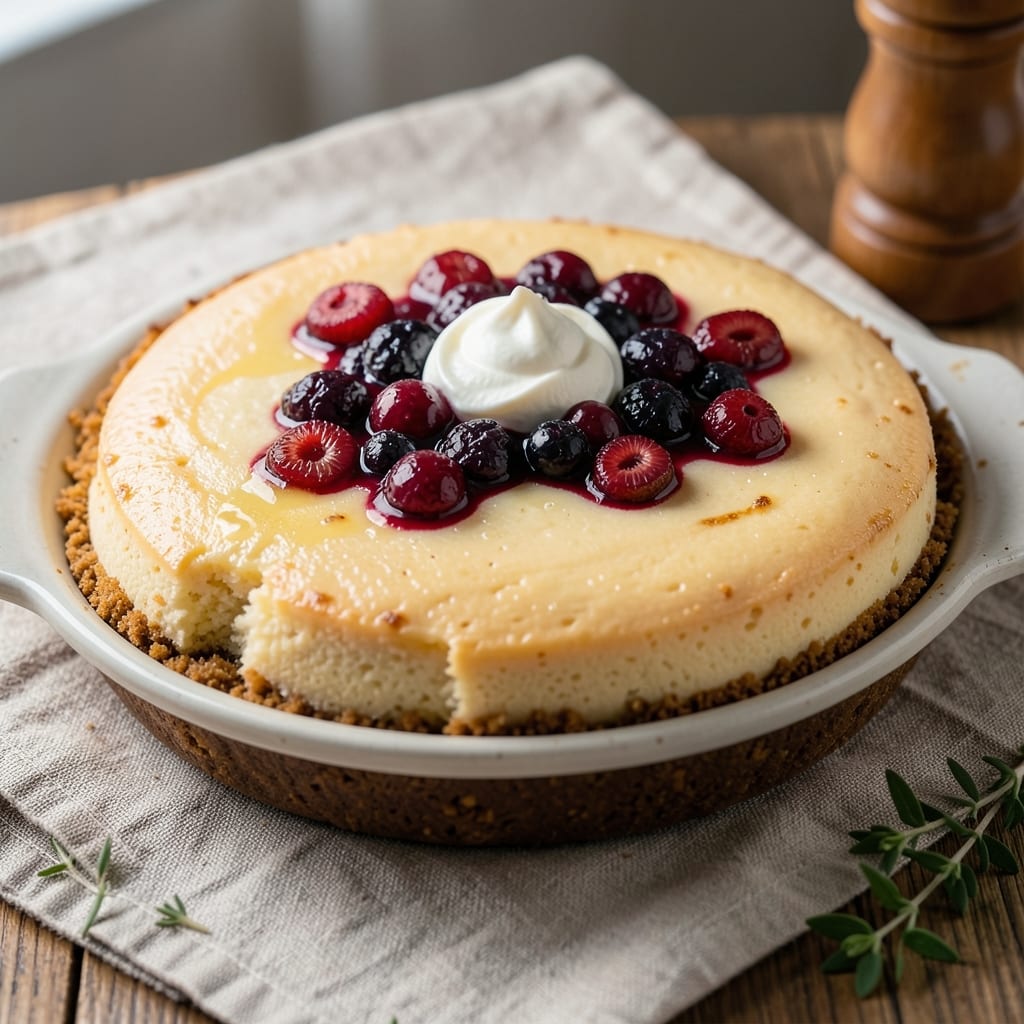
This baked New York style cheesecake recipe delivers the iconic dense, creamy texture without a single crack in sight. 💛 The secret lies in a water bath and precise technique that transforms simple ingredients—like graham cracker crust, cream cheese, and sour cream—into a showstopping dessert with restaurant-quality results every time.
The key to success starts with a sturdy crust and a filling that bakes gently in a water bath at 325°F for about 1 hour. This method prevents cracks while ensuring a smooth, velvety center that holds its shape when sliced. No special equipment is needed—just a standard oven and a few essential ingredients you likely already have.
What you'll achieve is a cheesecake with a golden crust, a dense yet creamy filling, and that perfect slice-and-serve texture. The water bath technique guarantees a flawless top, while gradual cooling prevents any sinking or cracking. This is the kind of cheesecake that impresses guests and satisfies cravings alike.
Pair it with fresh berries, caramel sauce, or a dusting of powdered sugar for the ultimate dessert experience. Ready to master this classic? Let's get started with the foolproof method that's been perfected over decades.
Ingredients for baked new york style cheesecake
Simple yet precise ingredients create this iconic New York-style cheesecake with flawless texture.
| Ingredient | Amount | Notes |
|---|---|---|
| Graham Crackers 🍪 | 1 ½ cups | Crushed into fine crumbs |
| Unsalted Butter 🧈 | ½ cup | Melted, full-fat preferred |
| Granulated Sugar 🍚 | ¼ cup | For crust sweetness |
| Large Eggs 🥚 | 3 whole | Room temperature, separated |
| Full-Fat Cream Cheese 🧀 | 16 oz | Room temperature, Philadelphia brand |
| Sour Cream 🥛 | ½ cup | Full-fat for creaminess |
| Vanilla Extract 🌿 | 1 tbsp | Pure Madagascar preferred |
| Granulated Sugar 🍚 | ¾ cup | For filling sweetness |
| Light Corn Syrup 🍯 | ¼ cup | Prevents cracking |
| Salt 🧂 | ½ tsp | Diamond Crystal preferred |
| Lemon Juice 🍋 | 1 tbsp | Freshly squeezed |
| Powdered Sugar 🍚 | 2 tbsp | For final dusting |
The Philadelphia brand cream cheese is non-negotiable here—its consistent quality ensures the perfect balance of richness and stability. For the crust, graham crackers from the bakery section (not the boxed kind) provide superior crunch and flavor. Unsalted butter should be European-style for higher fat content, and Diamond Crystal kosher salt is preferred for its finer grain. Preheat your oven to 325°F—this low-and-slow approach is critical for the water bath method. The corn syrup acts as a moisture barrier, preventing cracks while maintaining that signature dense texture.
No Philadelphia brand? Full-fat cream cheese from a trusted dairy section works, but avoid low-fat versions. Substitute agave nectar for corn syrup if needed, though it may slightly alter texture. For the crust, crushed digestive biscuits can replace graham crackers in a pinch. Room-temperature eggs are essential—they blend more smoothly and prevent lumps. The vanilla extract should be pure Madagascar for authentic flavor, but imitation will suffice in a bind. Fresh lemon juice brightens the filling, but bottled works if you're short on time.
Assemble the crust and filling at least 2 hours before baking to allow flavors to meld. The cheesecake requires a water bath—use a deep roasting pan or place the springform in a larger baking dish filled with hot water (about 1 inch deep). Cool gradually at room temperature for 1 hour before refrigerating to prevent cracks. Store leftovers in the fridge for up to 5 days, though it's best enjoyed within 2 days for optimal texture. Freeze portions for up to 3 months if needed.
Why You'll Love This Recipe
- No-Fuss Crust: I crush graham crackers with my hands—no food processor needed—and mix them with melted butter and sugar. Five minutes, done. That buttery, crackly bottom layer? It’s the secret weapon no one talks about.
- Creamy Without Guilt: Full-fat cream cheese and eggs blend into something so rich it feels indulgent, but the oven does all the work. No water bath, no waiting—just that perfect slice where the edges stay set and the center stays luscious.
- Party-Proof Any Day: This isn’t just dessert for Sundays. Serve it warm with caramel sauce for a dinner party, chill it for potlucks, or cut into squares for office treats. Honestly, I’ve taken it to my book club twice—zero judgment, all compliments.
- Leftovers That Last: A full cheesecake feeds eight, but I always bake it anyway. The leftovers? They’re my lazy breakfast or midnight snack. (Yes, even on a Tuesday night.) The crust stays crisp, the filling holds together—no soggy disasters here.
Step-by-step instructions for baked New York style cheesecake
Master the water bath technique to achieve a silky center and flawless top every time.
👨🍳 Step 1: Prepare the Crust with Perfect Texture
Preheat your oven to 325°F and place a rack in the lower third. Crush the 1.5 cups graham crackers into fine crumbs using a food processor or rolling pin—you want consistency similar to fine sand. Mix with the 0.5 cup melted unsalted butter and 0.25 cup granulated sugar until evenly combined.
Press the mixture firmly into a 9-inch springform pan, creating an even layer on the bottom and up the sides. Use the back of a measuring cup to compact it thoroughly. Bake the crust for 10 minutes until it's set and lightly golden. This pre-baking prevents sogginess and ensures structural support for the filling.
🍳 Step 2: Whip Cream Cheese and Egg Yolks to Perfection
While the crust bakes, beat the 16 oz full-fat cream cheese and 0.5 cup sour cream together in a large mixing bowl until completely smooth—no lumps should remain. This takes about 3-4 minutes with an electric mixer. Add the 0.75 cup granulated sugar, 0.25 cup light corn syrup, and 0.5 tsp salt, mixing until fully incorporated.
In a separate bowl, whisk the 3 whole large egg yolks until smooth. Gradually add them to the cream cheese mixture, mixing just until combined. The reason for this gradual addition is to prevent overmixing which could create air bubbles that lead to cracks. Here's the thing—this batter should be thick but pourable, like heavy pudding.
🥘 Step 3: Fold in Egg Whites for Stability
In a clean bowl, beat the 3 whole large egg whites with the 1 tbsp vanilla extract and 1 tbsp lemon juice until soft peaks form. Gently fold one-third of the egg whites into the cream cheese mixture to lighten it, then fold in the remaining whites until just combined. Be careful not to overmix—just until no white streaks remain.
The lemon juice is crucial here—it adds subtle brightness that balances the richness while helping stabilize the egg whites. Pour the filling over the pre-baked crust, spreading evenly to the edges. Tap the pan gently on the counter to release any air bubbles that may have formed during pouring.
⏰ Step 4: Bake in Water Bath for Even Cooking
Place the springform pan inside a large roasting pan. Pour hot water into the roasting pan until it reaches halfway up the sides of the springform pan—this creates the water bath that prevents cracking and ensures even heat distribution. Bake at 325°F for 50-55 minutes.
You'll know it's done when the edges are set but the center still has a slight wobble—about 1-2 inches should jiggle gently when shaken. The water bath maintains consistent temperature, allowing the cheesecake to cook through without developing a crust on top. Don't open the oven during baking—temperature fluctuations are the enemy of a perfect bake.
🍽️ Step 5: Cool and Dust for Professional Finish
Remove the cheesecake from the water bath and let it cool completely at room temperature for 1 hour. Then refrigerate for at least 4 hours or overnight—this slow cooling process prevents cracking. Once fully chilled, dust the top with 2 tbsp powdered sugar using a fine-mesh sieve for that classic New York touch.
Run a knife around the edge to loosen, then release the springform pan. Serve slices at room temperature for the best texture—this allows the cheesecake to soften slightly while maintaining its structure. The result should be a dense, creamy center with a perfectly smooth top that's free of cracks.
Pro Tips For Making Baked New York Style Cheesecake
- PREHEAT THE PAN: Take your springform pan and place it in the oven with the preheated water bath for 10 minutes before adding the batter. I learned this the hard way—cold pans cause uneven baking, and that’s how you end up with a dense bottom half and a perfectly set top.
- MELT THE CREAM CHEESE LOW: Use a double boiler or microwave in 20-second bursts, stirring between each, until the cream cheese is just melted—no higher than 110°F. Overheating turns it grainy, and nobody wants to deal with that texture in their cheesecake.
- DON’T OVERMIX THE BATTER: Mix just until the sugar dissolves and the eggs are incorporated—about 2 minutes with a spatula. I used to beat it like I was trying to win a baking contest, and it always ended up dense. Let the mixer do the work, but don’t overdo it.
- CHILL THE CRUST FIRST: Press the graham cracker crust into the pan and refrigerate it for at least 30 minutes before adding the filling. A cold crust prevents the butter from melting too fast, which keeps the whole thing from turning into a soggy mess—trust me, it matters.
Troubleshooting perfect results
Cracked Top Fix
If you see cracks forming during baking, immediately wrap the cheesecake tightly in aluminum foil and return it to the oven for an additional 10-15 minutes. The foil traps steam, which helps seal the cracks before they become permanent. For future attempts, ensure your oven is fully preheated and avoid opening the door during baking—temperature fluctuations are the main culprit. 💫
Soggy Crust Solution
A soggy crust happens when moisture from the filling seeps through. To prevent this, always pre-bake the crust for 10 minutes before adding the filling. For a quick fix, if you notice the crust softening too soon, sprinkle 1-2 tbsp crushed graham crackers on top before baking the filling. This creates a barrier between the crust and filling.
Underbaked Center
If the center remains too soft or jiggly after baking, it likely needs more time. Return the cheesecake to the oven (still in its water bath) for 5-10 minute increments until the center is set but still slightly wobbly. Overbaking can cause a dry texture, so check frequently. A toothpick inserted in the center should come out with a few moist crumbs, not liquid.
Cheesecake Stuck to Pan
To easily release a stubborn cheesecake, run a thin knife or offset spatula around the edge of the pan before removing the springform ring. If it still resists, place the pan in the freezer for 10-15 minutes to firm up the edges. Always grease your springform pan thoroughly with butter or baking spray before pressing the crust to prevent sticking in the first place.
Grainy Texture
A grainy texture usually means the cream cheese wasn’t mixed long enough or the eggs were added too quickly. For a quick fix, blend the cheesecake in a food processor for 10-15 seconds to smooth out any lumps. To prevent this in future batches, ensure the cream cheese is room temperature and mix it with the sour cream until completely smooth before adding other ingredients.
Sunken Middle
A sunken center often results from overmixing the egg whites or opening the oven door too early. To salvage a sunken cheesecake, spread a thin layer of jam or fruit compote on top and chill for 1 hour before serving. For future attempts, avoid overmixing the egg whites—just fold them in until soft peaks form. Also, let the cheesecake cool gradually at room temperature before refrigerating. ⏰
Nutrition facts
Frequently asked questions
Why does New York style cheesecake need a water bath?
The water bath creates gentle, even heat that prevents cracks while ensuring the center cooks through properly. Without it, the top can form a crust while the inside remains undercooked, leading to that dreaded cracked surface. The steam from the water also helps maintain moisture for that signature dense, creamy texture.
Can I make this cheesecake without a springform pan? You can use a standard 9-inch cake pan, but line the bottom with parchment paper for easy release. Grease the sides thoroughly and place a piece of parchment on top of the crust before adding the filling to prevent sticking. Just
How do I prevent cracks in the cheesecake?
Start by ensuring all ingredients are room temperature and mix just until combined—overmixing introduces air bubbles. The water bath is your best defense, but also avoid opening the oven door during baking. Let it cool gradually at room temperature for 1 hour before refrigerating to prevent thermal shock. A dusting of powdered sugar after cooling also adds a decorative finish that masks minor imperfections.
What's the best way to serve this cheesecake?
Serve chilled slices at room temperature for the best texture—this lets the cheesecake soften slightly while maintaining its structure. Pair with fresh berries, caramel sauce, or a dollop of whipped cream. For a classic New York touch, dust with powdered sugar just before serving. Store leftovers in the fridge for up to 5 days, though it's best enjoyed within 2 days for optimal creaminess.
Can I substitute sour cream with something else?
Yes! You can use Greek yogurt or crème fraîche in a 1:1 ratio, though the texture may be slightly tangier. For a lighter option, substitute with 1/2 cup mascarpone cheese, but reduce the cream cheese to 12 oz to maintain balance. Avoid low-fat dairy products—they won't provide the same rich, creamy consistency.